Seven days after Dallas, Jacqueline Kennedy summoned a journalist to her home in Hyannisport and spent four hours telling him what her husband’s presidency meant. She edited his notes by hand. The word “Camelot” appears nowhere in the historical record of John F.
Kennedy’s life. She invented it.
Those notes exist. They are preserved in the John F. Kennedy Presidential Library as part of Theodore H.
White’s personal papers, filed under “Camelot Documents.” White donated them in 1969 with one condition: no one could read them until a year after Jacqueline Kennedy’s death. She died in May 1994.
The library opened the file in May 1995.
The 34 pages are in White’s handwriting, with her corrections layered on top. She crossed out words. She refined her phrases.
She was 34 years old, a week into her widowhood, reviewing the first draft of American memory. White later described the conversation as sad, and it was. But grief and planning were not competing forces in that room.
They worked together.
She told him she was obsessed with the idea that her husband be remembered as a hero, then gave him the vocabulary to do it. A line from a Broadway musical album about a brief bright moment that ended. Life magazine published the article on December 6, 1963.
The phrase stuck for sixty years.
Here is what almost no one says about that night: she was not improvising. She had rehearsed doing exactly that. And she had rehearsed long before she ever met a Kennedy.
Her father was John Vernou Bouvier III, a blackjack player, a Wall Street broker with a permanent tan, a taste for other men’s wives, and a talent for losing money he never earned. His marriage to Janet Lee ended in 1940 in a Nevada courtroom, and it ended loudly. Divorce among their class was usually handled quietly, like a gas leak, with professionals and without telling the neighbors.
This one made headlines.
Jacqueline was 11 years old when she understood that a camera could end a marriage. She also absorbed the second half of that lesson, the more useful one: a camera could save a marriage.
Her mother remarried in 1942. Hugh D. Auchincloss came with real money from Standard Oil, an estate outside Washington called Merrywood, and a summer home in Newport called Hammersmith Farm.
Jackie grew up in both houses but owned neither. Her stepfather’s children would inherit. She and her sister Lee were guests in luxurious bedrooms.
That distinction matters. It explains her later choices more than any psychological analysis of her father. Her mother made the calculations plain.
Janet had been humiliated once by a charming poor man and was not about to let her daughters repeat the mistake.
The girl who grew up in that house had a particular set of skills. She was observant to the point of discomfort. She had a dry, sarcastic wit that people consistently underestimated.
And she was extremely good at controlling what others saw.
In 1951 she entered Vogue’s Prix de Paris writing contest and won, beating more than a thousand college students. The prize was six months in the magazine’s Paris office. She turned it down.
The pressure at home was pushing her back to Washington to begin her real career, which everyone understood to mean marriage.
Instead, she took a job at the Washington Times-Herald as a photographer-reporter, earning $42. 50 a week. Her job was to walk around the city, stop strangers, ask questions, photograph them, and publish the results.
She did this for nearly two years. She interviewed politicians, cab drivers, and congressmen, and at least once, the young senator she would marry.
She learned the importance of captions, how an image conveys an idea, and that the person asking the question controls the answer.
In 1952 she was briefly engaged to someone else. John Husted was a stockbroker from a good family. The engagement lasted about three months.
Husted later said her mother’s assessment of his income, about $17,000 a year, did not work in his favor. Janet had been married to a handsome man with money problems. She knew how that story ended.
At a Georgetown dinner party hosted by journalist Charles Bartlett and his wife Martha, Jacqueline Bouvier and John F. Kennedy finally sat side by side in 1951. He was 34 and a congressman.
She was 22. There was no spark. There was dinner, then not much, then a slow, erratic, deeply uncomfortable courtship conducted mostly by telephone from wherever he happened to be.
Everyone involved described his style the same way. No one called it romantic. He did not write love letters.
He sent postcards. He disappeared for long stretches. His womanizing was not a secret in Washington.
It was simply ignored. She knew. Her sister knew.
Her mother knew.
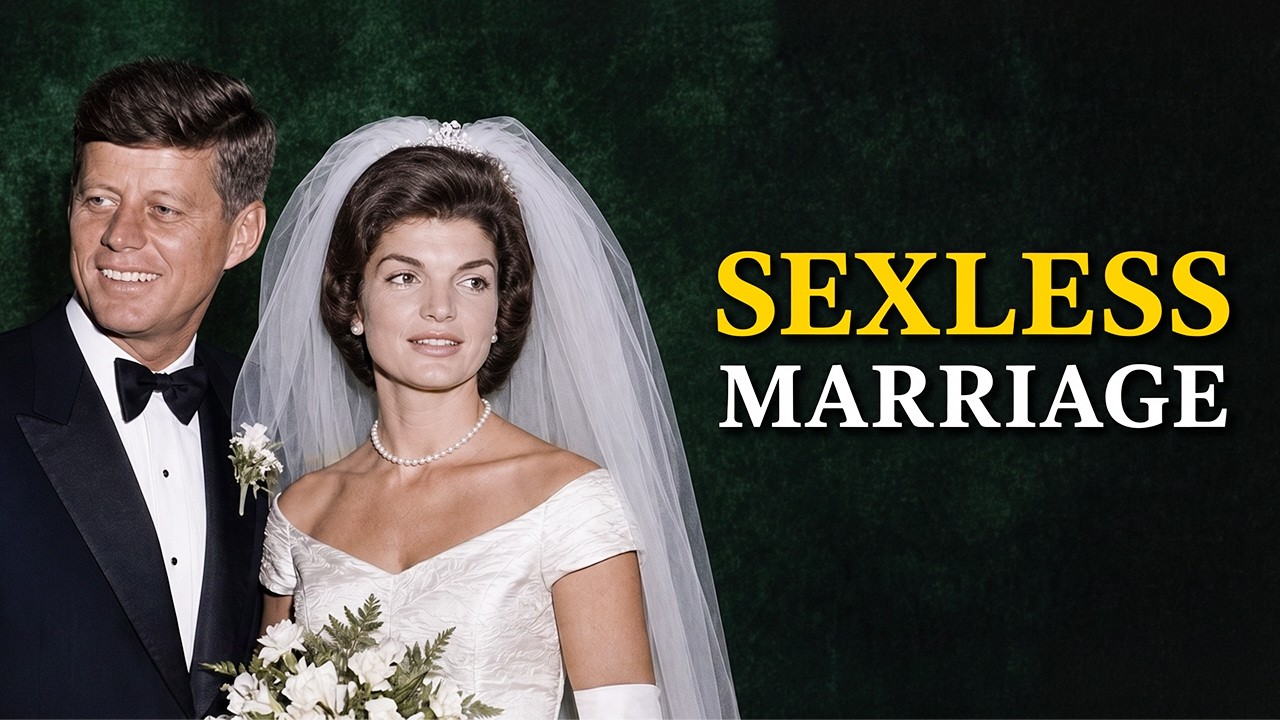
She married him anyway.
Look at what he actually offered her: escape from a house that was not hers, Catholicism, which meant more to her than people assumed, a family with real money rather than borrowed money, political standing in the only city where standing was the currency, and genuine charm. She was drawn to him by every reliable account. He was the first man she met who cared about image as much as she did.
The Kennedys were making their own calculations. Joseph P. Kennedy had a son he intended to make president.
What that son lacked was polish, a wife, or any answer to the charge that the Kennedys were rich Irishmen buying their way into American politics. Jacqueline Bouvier was Catholic, French, wealthy, articulate, beautiful, and socially impeccable. She solved the problem.
Joe Kennedy approved of her immediately, which was papal judgment in that household. The engagement was announced in late June 1953. It could have been announced earlier, but it was not.
The Saturday Evening Post was preparing a feature on the Senate’s most eligible bachelors. The Kennedys waited for it to publish first.
She was in London covering Queen Elizabeth’s coronation for the Times-Herald when the proposal arrived. Her last major professional act was covering the coronation of another young woman before the world. While she covered the event, a telegram arrived from Massachusetts.
She returned home. The paper published her drawings from the coronation. Then she stopped being a writer and became engaged.
The wedding itself was a model for the next ten years. On September 12, 1953, at St. Mary’s Church in Newport, she walked down the aisle with a man who was not her father.
It was not the groom’s family that barred Black Jack Bouvier from the church. It was her mother.
The family had spent weeks ensuring his marginalization. Accounts describe the pressure on him, his exclusion from wedding plans, and the campaign to keep him away from the microphone. He was found drunk in his hotel room.
The family brought Hugh Auchincloss to walk her to the altar instead. She learned about this shortly before the ceremony.
She married the most photographed bachelor in America without her father present, and smiled for 1,100 photographs.
The dress was designed by Ann Lowe, a Black designer who had dressed the Auchincloss and du Pont families for years. Ten days before the wedding, a water pipe burst in her Manhattan workshop, destroying most of the finished dresses. Lowe rebuilt them in just over a week, absorbing thousands of dollars in losses, and delivered on time.
When she arrived in Newport, she was directed to the back entrance. Her name never appeared in the coverage. The press described the dress as designed by a colored dressmaker.
Jackie later said she never liked the dress much. She had wanted something simpler. She wore what the mothers wanted.
The marriage settled into a pattern. The Kennedys did not live near each other. They lived in a compound.
Hyannisport was a compound, houses within walking distance, shared meals, and a competitive sports schedule expected of a 24-year-old woman with a riding background who cared nothing for American football. The sisters-in-law found her funny in a way that was not entirely friendly. Eunice reportedly called her “Deb.”
She gave as good as she got, imitating them brilliantly in private, but she felt like a minority everywhere.
Then there was the money, which was not her husband’s. Joe Kennedy controlled the family trusts. He decided what the sons received and when.
He managed media strategy, political operatives, whispers, and announcements. When a Kennedy needed to buy a house or bury a story, it went through the father.
Here is the part that surprises people. Joe was her ally. He genuinely liked her, defended her against his daughters, and gave her money when she overspent, which was constantly.
She married into a system where her financial security depended on her father-in-law, not her husband.
The early years were a series of temporary addresses. She miscarried in 1955. In October 1954, Kennedy nearly died.
His back was badly broken. The public was told it was a war injury, but the truth was worse. His spine was collapsing in a body already weakened by Addison’s disease, which the family denied publicly throughout the 1960 campaign.
The surgery he chose in the fall of 1954 was especially dangerous because of Addison’s. Surgeons warned him he might not survive. He insisted.
After surgery, he developed a severe infection that nearly killed him. She stayed beside him for months in Palm Beach while he lay bedridden, changing his dressings, reading to him, and organizing note cards for what became Profiles in Courage. The book won the Pulitzer Prize in 1957.
It was a book about political courage produced while its author was physically incapacitated and his wife worked as nurse and research assistant.
Now comes the part that nearly ended the marriage. In the summer of 1956, Jacqueline was pregnant and nearing her due date. She was staying at Hammersmith Farm with her mother.
He was in the Mediterranean on a rented yacht with friends, having just lost the Democratic vice-presidential nomination at the Chicago convention.
On August 23, she began hemorrhaging. She was taken to Newport Hospital, where she delivered a baby girl by emergency cesarean. The child was stillborn.
The New York Times ran a brief item the next day, noting only that the senator’s wife had lost her baby and was doing well.
Her husband was not contacted for several days. When word reached him, he did not return home immediately. The quote everyone uses comes from Senator George Smathers of Florida, who said he advised Kennedy to return to his wife if he wanted to become president.
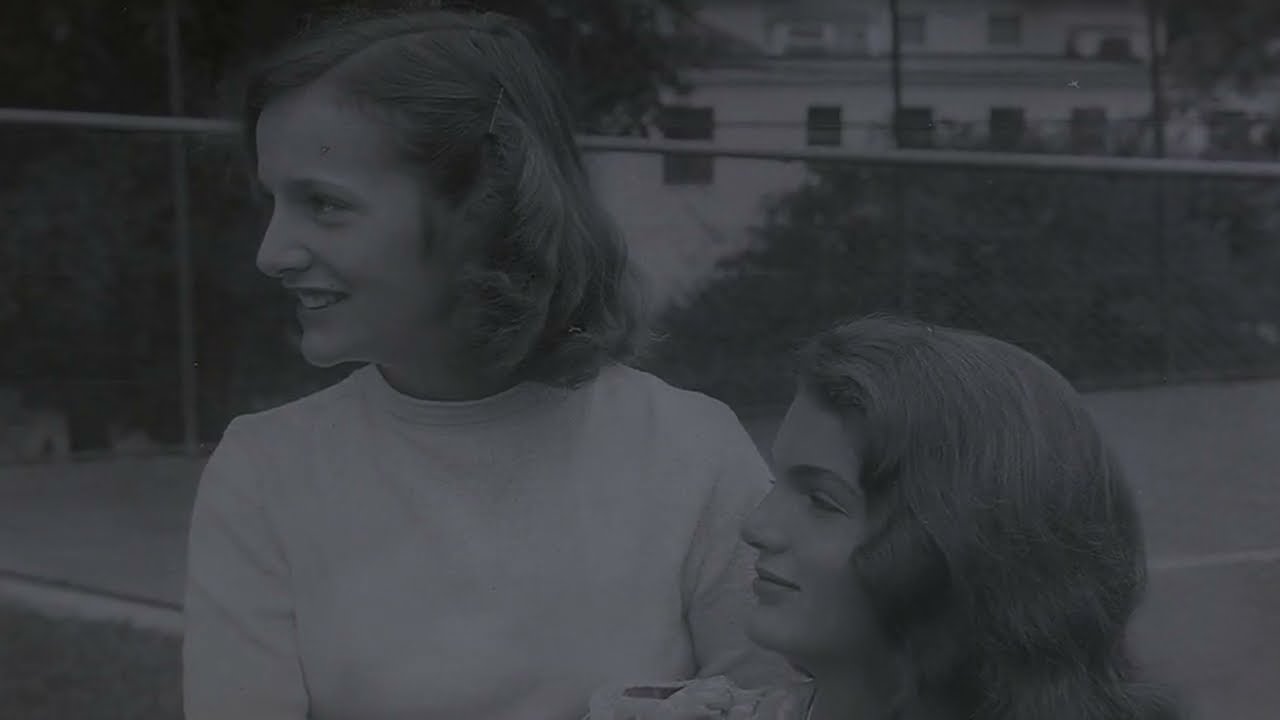
Smathers told this story years later, more than once, and the wording shifted. But the core fact is consistent and unchallenged. He stayed on the boat.
What brought him off it was political calculation, not personal feeling.
Robert Kennedy went to Newport. He handled the hospital, arranged the burial in Rhode Island, and buried his brother’s child. She secretly named the baby Arabella, though the grave was unmarked at the time.
Years later, after Dallas, she had the remains moved to Arlington to lie beside her father under a headstone reading “Daughter.”
She did not return to him quickly. She stayed at her mother’s house through the fall. Washington gossip columns reported the separation.
There is a persistent claim that Joseph Kennedy offered her money to stay in the marriage. The amount varies by teller. One million dollars in the version circulated for decades.
One hundred thousand for a child born in the version published in 2025, based on pages from unpublished diaries held by the family of a woman who had an affair with Kennedy at the time. Everyone who promoted this story had an interest in its truth. No evidence has emerged.
It may not have happened.
Here is what is documented, and it is more damning than any check. She came back. Within months, the house was sold.
They had bought Hickory Hill in Virginia, a big white house in McLean, and she spent her pregnancy decorating a nursery in it. There was no child to put in that room.
In 1957, they sold Hickory Hill to Robert and Ethel Kennedy, who then had four children and would eventually have eleven. They filled the house completely. She sold the nursery she had painted for her daughter to the brother who had buried her.
It was practical. It was also the clearest possible statement of her position in that family. The brother who handled the grave now owned the nursery.
She moved to Georgetown and started a new life.
Caroline arrived in November 1957, healthy, and something in him genuinely changed. Everyone who witnessed it says so. He was attached to his daughter in a way that astonished people who knew him.
John Jr. was born in late November 1960, three weeks after the election, several weeks early. His father was in Palm Beach.
He turned the plane around in the air when he got the call. This time, he needed no instruction.
They entered the White House in January 1961 with two small children. Within a year, she accomplished what no First Lady had done before. She took the national media that had spent a decade photographing her and began directing it.
On Valentine’s Day 1962, CBS broadcast a full hour of Jacqueline Kennedy walking through the White House explaining its contents. Some 80 million Americans watched.
She had quietly raised donations, formed a fine arts committee, hunted down Madison chairs and Lincoln china, and pushed for legislation making the collection permanent so the next family could not sell it. She wrote her own material. She did not use a script on camera.
The program won an Emmy, which she did not attend to accept.
The country saw a young wife proud of her husband’s house. What was actually happening was a woman who had once been paid $42.50 a week to photograph strangers demonstrating that she now controlled the frame.
She even went further. When she needed her own press secretary, she hired Pamela Turnure, a young woman who had worked in her husband’s Senate office and who, according to several biographers, had been involved with him. Historians disagree about how much Jackie knew and when.
What is not disputed is the arrangement. The woman managing the First Lady’s relationship with the American press was someone from her husband’s private life, sitting at a desk Jackie could see every day.
Inside the residence, the marriage settled into a pattern normal for their social class but shocking to everyone else. Separate bedrooms. Separate schedules.
She left Washington constantly. Glen Ora in Virginia, then Wexford, the house she built and named for her family’s county in Ireland. It was her house.
She designed it. She visited it whenever she did not want to be in the White House, which was often.
The names that matter are not the anonymous ones. Mary Pinchot Meyer, a Washington painter, sister-in-law of Ben Bradlee, and a woman closely connected to the Kennedy social circle. She attended their parties.
White House gate logs document her visits. This was not a hotel room in another city. It was in the house, among friends, at the dinner table.
Then there was Judith Campbell Exner. This was no longer a marital problem. It was a national security problem.
She was involved with Kennedy while also involved with Sam Giancana, the Chicago mob boss. The Senate Church Committee revealed the truth in 1975. White House phone logs show dozens of calls.
J. Edgar Hoover knew and used what he knew. Hoover lunched with the president in March 1962.
The calls stopped shortly after.
The First Lady of the United States was being humiliated by a pattern of behavior that gave the FBI director permanent leverage over her husband’s presidency. She knew more than she admitted in her polished account. Friends recorded her dry, precise jokes about the subject.
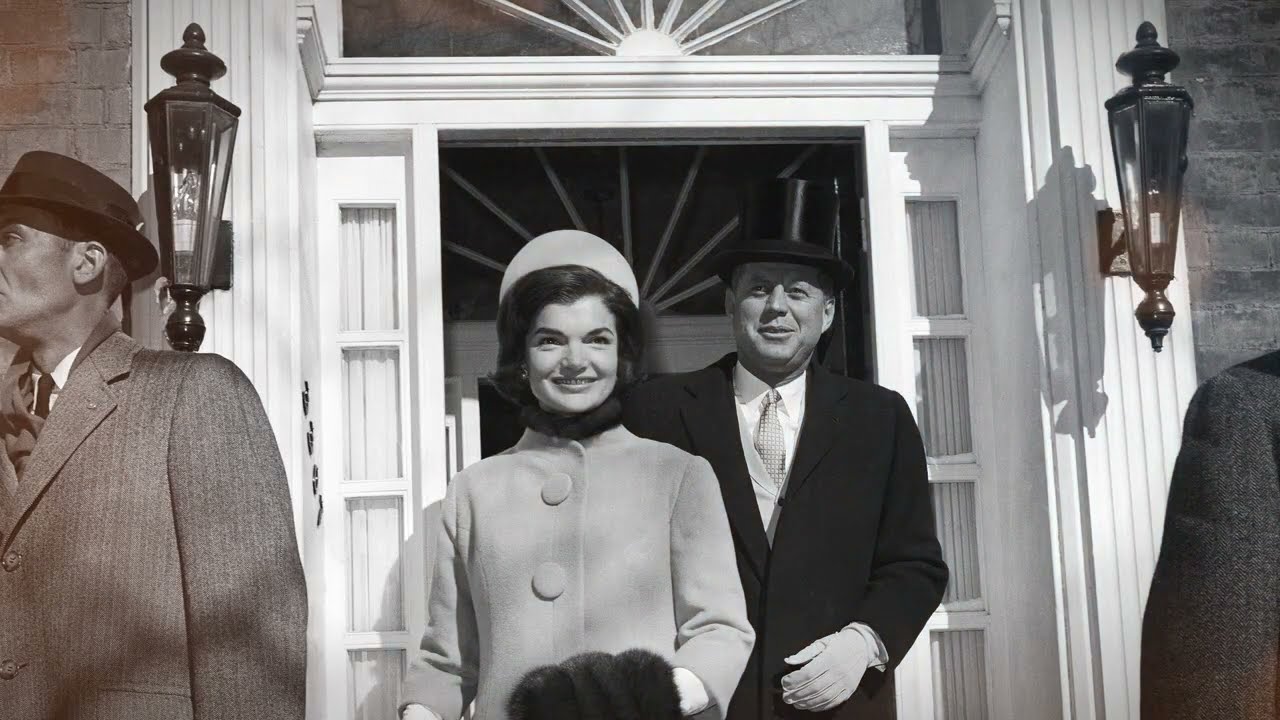
Once, at a reception, she introduced a young woman in French as her husband’s alleged mistress. This was not a deceived woman’s comment. It was a woman announcing to everyone that she saw everything.
She also stopped waiting for him to change and started charging for it. In 1962, she made an official tour of India and Pakistan without him and returned more famous than he was. She spent lavishly, alarming his staff.
In the fall of 1963, she did what truly alarmed the White House. She boarded Aristotle Onassis’s yacht in the Mediterranean. Christina was the most famous ship in Europe.
Onassis was under federal investigation in the United States. Photographs showed the president’s wife on deck. The administration was shocked.
Kennedy asked Franklin D. Roosevelt Jr. to accompany her, ostensibly for official respectability.
She went anyway and stayed longer than planned.
She came home owing him a debt, and both knew its value. He wanted her on a political trip to Texas in November. She agreed.
The trip happened because of what occurred two months earlier. On August 7, 1963, five and a half weeks before her due date, labor began in Hyannisport. She was flown to Otis Air Force Base hospital, where she gave birth to a son named Patrick Bouvier Kennedy.
His lungs were not fully developed. He was transferred to Boston Children’s Hospital, and his father followed. The President of the United States stayed at that hospital for nearly two days.
Patrick lived about 39 hours.
Kennedy went into the boiler room to be alone. Dave Powers, who was present, described him crying. Nurses described the same.
Later, he carried the small coffin in the church. Everyone who saw them afterward noticed the same change. He showed affection publicly for the first time, holding her hand in front of photographers, something he had never done.
Those closest to them believed something had genuinely healed.
This is real, and it is why the ending hurts so much. The marriage had about 15 weeks left.
Then came Dallas, the pink suit, and the decision. She was asked repeatedly during the return flight to change clothes. Lady Bird Johnson offered help.
She refused, explaining: “Let them see what they have done.” She kept it on through the oath of office, the arrival at Andrews Air Force Base, and the walk before the cameras at Bethesda. It was the last image she controlled during her husband’s presidency, and she made sure it said exactly what she wanted.
Then she took charge. The funeral was her production. She went to the Library of Congress to study photographs of Lincoln’s funeral and ordered the East Room rebuilt to its 1865 appearance.
Then she summoned Theodore White to Hyannisport on the 29th, gave him Camelot, edited his notes on the spot, and Life published it a week later.
Then she began closing doors. In 1964, she gave seven interviews about her husband to Arthur Schlesinger, then sealed the recordings. They were published in 2011, 47 years later, only with her daughter’s consent.
In 1966, she pursued William Manchester, the historian the family had personally hired to write the official account of the assassination. She had given him ten hours of interviews. When Look magazine bought serialization rights for over $600,000, she demanded cuts, offered Look $1 million to stop publication, and in late November sued a book she had commissioned.
The settlement came on January 16, 1967. About 1,600 words were cut from the magazine version and seven pages from the book. Among the deleted material: the contents of her handbag, a description of the president in his underwear, and the fact that she smoked, which she had hidden for three years.
She lost the public relations battle and won the text.
In October 1968, four months after Robert Kennedy was assassinated in Los Angeles, she married Onassis. She said she was afraid for her children, that they were killing Kennedys and her children were targets. The country was outraged.
She also negotiated the contract herself through lawyers, giving her money no Kennedy trustee could control. She was 39 years old and financially independent for the first time in her life.
She chose I. M. Pei to build the library.
She sat on the committee that reviewed every book about her husband. From 1975 until her death, she worked as a book editor in New York, first at Viking, then at Doubleday, reading manuscripts, cutting other people’s sentences, deciding what got published. She did this for 19 years.
She never wrote her memoirs.
That is the detail that should astonish you. The woman with the most requested story in America stayed in her office deciding which other stories deserved to be told, and never told her own.
Look at the pink suit again. It is in the National Archives. It has never been cleaned.
In 2003, Caroline Kennedy transferred ownership to the government with a deed of gift. It cannot be publicly displayed until 2013, and after that, family descendants can extend the restriction again. No living person will see it in a museum.
That suit was the last thing she wore as a wife and the first thing she used as a curator. She refused to take it off so the country would see the truth. Then she spent 30 years making sure the country saw only what she chose.
Both came from the same instinct.
The girl who watched a photograph destroy her parents’ marriage grew up knowing that the image outlasts the marriage, and she made her decisions accordingly. Her marriage was not a love story that ended in tragedy. It was an alliance that survived a stillbirth, a near separation, the sale of a nursery, an FBI file, a mistress on the payroll, and in its final three months became something like a real marriage before it became a monument.
She was not preserving Camelot. She was the only person who ever lived there, and she closed the door behind her.