On a Wednesday morning in October 2023, forensic genealogist Teresa Vang uploaded a DNA profile to a public ancestry database. By Thursday afternoon, she had a name. After thirty-eight years of silence, after a family had waited and a community had wondered, after the detective who had worked the case had carried its weight into retirement and then to his grave, the search had narrowed to one specific man: a sixty-one-year-old living in Duluth, Minnesota, who had coached youth hockey for twenty years and run a hardware business on Piedmont Avenue. He had been invisible to the investigation for nearly four decades.
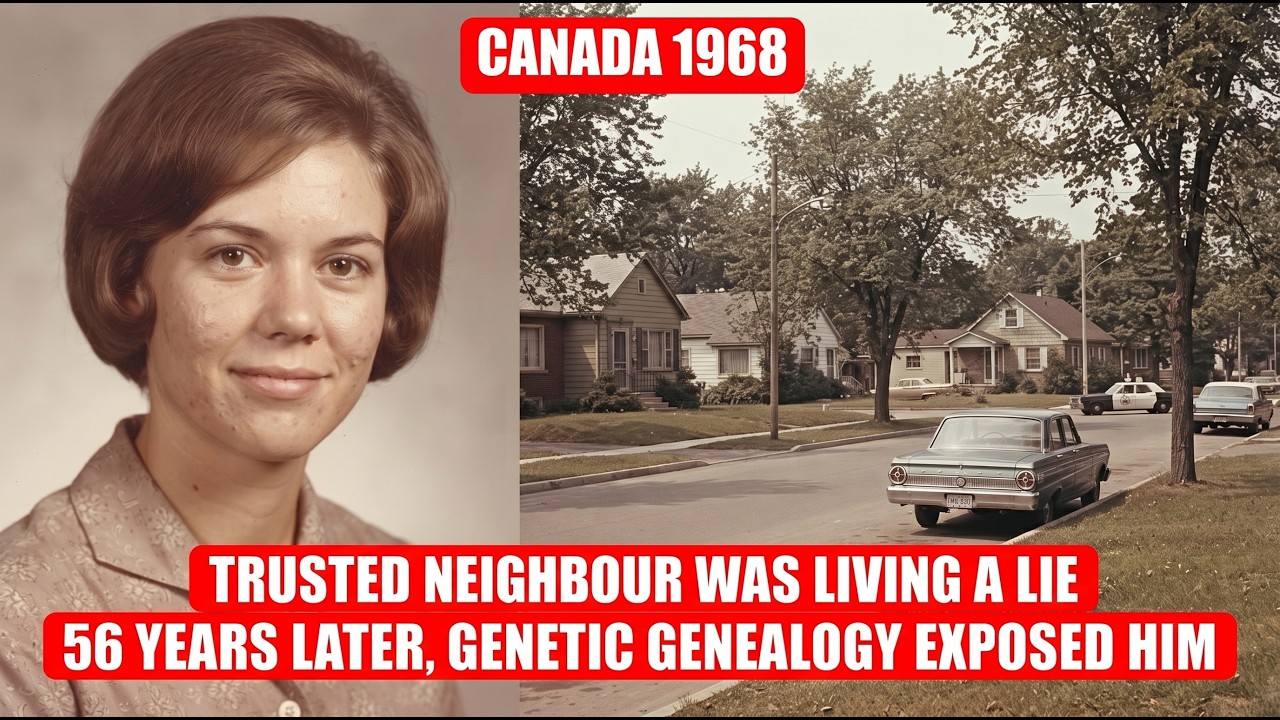
To understand what those twenty-four hours meant, it is necessary to understand the thirty-eight years that came before them, and the young woman at the center of it all. Duluth sits at the western tip of Lake Superior, where the Saint Louis River runs down through hillside neighborhoods and empties into the largest freshwater lake on Earth. In February, the cold comes off that lake in a way locals simply accept as the terms of living there, with wind chills that can drop to forty below. In 1986, the city had a population of around eighty-two thousand.
Big enough to have its own rhythms and neighborhoods, small enough that the hockey rinks were the center of community life from October through March, that the church fish fries drew the same families for three generations. Susan Mattson was known in that city. She was twenty-four that winter. She had grown up in Duluth, graduated from Denfeld High School in 1979, and was in her final year of a social work degree at the University of Minnesota-Duluth.
Her field placement at a family services center on West 2nd Street demanded thirty hours a week on top of her coursework, sitting in rooms with families in crisis, learning the kind of patience that can only be built from people whose problems do not resolve on a schedule. Her supervisor had written to the department chair that Susan was the best student placement she had seen in eleven years. Susan lived in a second-floor apartment on East 4th Street with her college roommate, Kristen. She drove a 1982 Honda Civic with a temperamental heater, supplemented by a sleeping bag kept on the back seat from November through April.
She was saving money to move to Minneapolis after graduation, with a job interview lined up at a child welfare agency in March. She called her mother, Diane, every Sunday evening from the kitchen phone. In her last calls, she talked about what she would do when she had her own place, her own kitchen, her own Sunday evenings to arrange however she wanted. On the evening of Thursday, the thirteenth of February 1986, Susan left the Family Services Center at 6:15 p.
m. , said good night to her supervisor, and walked through the parking lot to her car. Four inches of snow had fallen that afternoon. Her tracks in the snow were the last documented evidence of her movement.
She never came home. Kristen noticed at 10:00 that night. She called the center, got no answer, and called Susan’s parents. By midnight, Duluth police had a missing person report.
The Civic was found the following morning on a side street three blocks from the center. The heater had been running, the engine warm, the gas tank almost empty, as though it had idled for hours. Susan’s footprints led to the driver’s side door and stopped. Then came a disturbance in the snow, a scuffle investigators would later determine, and a second set of prints, larger, men’s size eleven or twelve.
The trail ended at the curb. The investigation was led by Detective Sergeant Warren Blaine of the Duluth Police Department. He was forty-two, a Duluth native, a methodical and unflashy investigator who had spent sixteen years working every variety of crime the city produced. Colleagues said he took the Mattson case with a particular deliberateness, as though he understood from the first morning that this one would require everything he had.
Susan’s body was found on the twentieth of February, a week after her disappearance, by a snowmobiler on the frozen surface of a pond in the Fond du Lac neighborhood. She had been there since close to the night she vanished. The cause of death was manual strangulation. She had not been robbed.
Nothing had been taken from her. Biological material was collected at the scene, but in 1986, the forensic technology to analyze DNA did not yet exist for practical criminal investigation. The evidence was carefully cataloged and stored. It would wait for thirty-seven years.
Blaine’s investigation in the months that followed was exhaustive. He identified forty-one persons of interest in the first six months, ran down every lead, every reported sighting, every name that surfaced through the center, the university, the neighborhood, the hockey community Susan had grown up in. He interviewed and re-interviewed, cross-referenced, and drove the routes himself at night in February to understand what the killer would have seen and known. He kept coming back to one name: a twenty-three-year-old man named Dennis Holt, seen in the vicinity of the center that evening, with no documented reason to be there.
Holt was known to the center tangentially, a former client from years prior, nothing active. He had no criminal record. He was cooperative, articulate, and looked Blaine in the eye at every interview. Blaine interviewed him four times between February and July of 1986 but could never get past his alibi, technically sufficient, though with gaps Blaine could not fully close.
Without a DNA comparison, there was no case to bring. The active investigation was suspended in late 1987. The case went cold. Warren Blaine retired from the Duluth Police Department in 2001 after a heart attack his doctors attributed in part to occupational stress.
He was fifty-seven. He told his wife the night before he turned in his badge that the Mattson case was the one he would carry. He carried it until he died in 2014 at seventy. His case notes, meticulous and complete, filling two full binders, were stored with the Mattson evidence kit in the cold case archive.
Diane Mattson drove past the Family Services Center on West 2nd Street every week for thirty years. Not deliberately; it was simply on the route between her house and the grocery store. Every time the building came into view, she thought of her daughter walking across that parking lot in the snow at 6:15 on a February evening, and not coming home. Carl Mattson died in 2009 without ever hearing an answer.
Their younger daughter, Amy, became a social worker, working in a different building in a different city, in the same kind of rooms Susan had been learning to sit in when she died. By 1996, ten years on, the reward posted by the family had produced nothing usable. By 2010, Susan had been gone for twenty-four years, as long as she had lived. The hockey rinks where she had grown up watching games were still running.
The families were different. The coaches were different. One coach from a rink on the north side of the city had been running his hardware franchise on Piedmont Avenue since 1995. He had a good reputation.
He was the kind of man in a community who makes a community feel like a community. In 2012, the Duluth Police Department’s Cold Case Unit submitted the Mattson biological evidence for DNA analysis. The technology had improved, but the conditions of the evidence, outdoor recovery, extreme cold, time, had degraded the material beyond what the 2012 methods could resolve. The submission returned inconclusive.
The kit went back into the archive. The case stayed cold for eleven more years. Teresa Vang joined the Minnesota Bureau of Criminal Apprehension’s Forensic Genealogy Unit in 2021. She had a background in both molecular biology and genealogical research, a combination that had become one of the most consequential skill sets in cold case investigation since the Golden State Killer’s identification in 2018.
She had worked forty-six cases before the Mattson file reached her desk. She knew that the word “inconclusive” in forensic evidence is not the same as “nothing. ”
In July 2023, a new submission of the Mattson evidence was processed using the most current low-template DNA extraction methodology, a method capable of constructing a genetic profile from quantities of degraded material that would have been considered non-viable only five years earlier. The sample, stored continuously since 1986 under conditions Warren Blaine’s meticulous cataloging had kept stable, produced a complete male profile in September 2023.
Teresa Vang uploaded it to GEDmatch, a public genealogy database, on the morning of Wednesday, October 4, 2023. The process works by identifying distant relatives of the unknown profile, third and fourth cousins, and building outward through public records, obituaries, census data, and family trees until the branches converge on a single individual of the right age, sex, and location. In some cases it takes weeks; in some, months. In the Mattson case, the matches were unusually specific, the family trees unusually well documented, and the geographic convergence unusually clean.
By Thursday afternoon, less than twenty-four hours later, she had a candidate. The candidate was a sixty-one-year-old man in Duluth. He had lived there his entire life. In 1986, he had been twenty-three.
His name was Dennis Holt. Teresa Vang pulled up the Mattson case file and found Warren Blaine’s interview notes from February, March, May, and July of 1986. Four interviews with a young man who had looked Blaine in the eye and answered every question and gone home. She read the notes slowly.
Then she called the BCA’s cold case coordinator. Confirmation of the match required a surreptitious reference sample from Dennis Holt, a technique now standard in investigative genetic genealogy cases. A beverage cup recovered from a public parking area outside his hardware franchise in November 2023 provided the DNA comparison. The match was confirmed on November 29, 2023.
Dennis Holt was arrested at his home on the morning of December 14, 2023. He was sixty-one. He had spent the thirty-eight years since Susan Mattson’s death building a life in the same city where he had ended hers, coaching children of families who trusted him, running a business with his name on the sign. He answered the door, saw the officers, said nothing, and was handcuffed on his own front step in the December cold, the same kind of cold that had covered Susan’s tracks in the snow on the night of February 13, 1986.
The Duluth News Tribune ran the arrest on its front page. Former players from the youth hockey program, now men in their thirties and forties who had learned the game from Dennis Holt and trusted him with their children, came forward. Every one of them used the same word: stunned. Diane Mattson was eighty years old when she received the call from the BCA.
Amy drove to Duluth to be with her. Diane sat with the news for a long time before she said anything. Then she said she wished Carl had lived to see it. Dennis Holt was charged with first-degree murder in January 2024.
He entered a plea of not guilty. As the case proceeds toward trial, the DNA evidence built through investigative genetic genealogy is expected to be the centerpiece of the prosecution’s case. The technique has now been used to solve more than three hundred cold cases in the United States since 2018. It requires only that a distant relative, someone who joined an ancestry website to find out where their grandparents came from, has submitted a sample.
Warren Blaine had written Dennis Holt’s name in his notebook in February 1986. He had circled it. He interviewed him four times and was forced to let him go. He died in 2014 without knowing he had been right.
The database confirmed in twenty-four hours what his instincts had told him in the first week of the investigation, thirty-eight years before. He did not get to see it. That is one of the things this case cost that no arrest can repay. Susan Joelle Mattson was twenty-four years old.
She drove a 1982 Honda Civic with a bad heater and kept a sleeping bag on the back seat through the Minnesota winter. She was working thirty hours a week at a family services center on top of her coursework, saving for her own place, her own kitchen, her own Sunday evenings. She left tracks in the snow in a parking lot on West 2nd Street on the evening of February 13, 1986, that led to her car door and stopped. Thirty-eight years later, a profile built from biological material preserved through a Minnesota winter and three and a half decades of careful storage ran a database search that took less than twenty-four hours to return a name.
A name that Warren Blaine had written in his notebook in the first week of the investigation. A name that for thirty-eight years had belonged to a man coaching youth hockey and running a hardware franchise in the same city where he had left those tracks in the snow. The twenty-four hours is the number that goes in the title.
The thirty-eight years is the number that matters.