On October 21, 2011, a Michigan state trooper pulled over a small Lincoln pickup truck traveling east on Interstate 94 near Chelsea, Michigan, about sixty miles west of Detroit. Behind the wheel sat an 87-year-old man wearing earbuds, his skin tanned like a gardener’s. A drug-sniffing dog circled the truck and then sat down. In the covered truck bed, agents found suitcases packed with 104 kilograms of cocaine, valued at roughly three million dollars on the street.
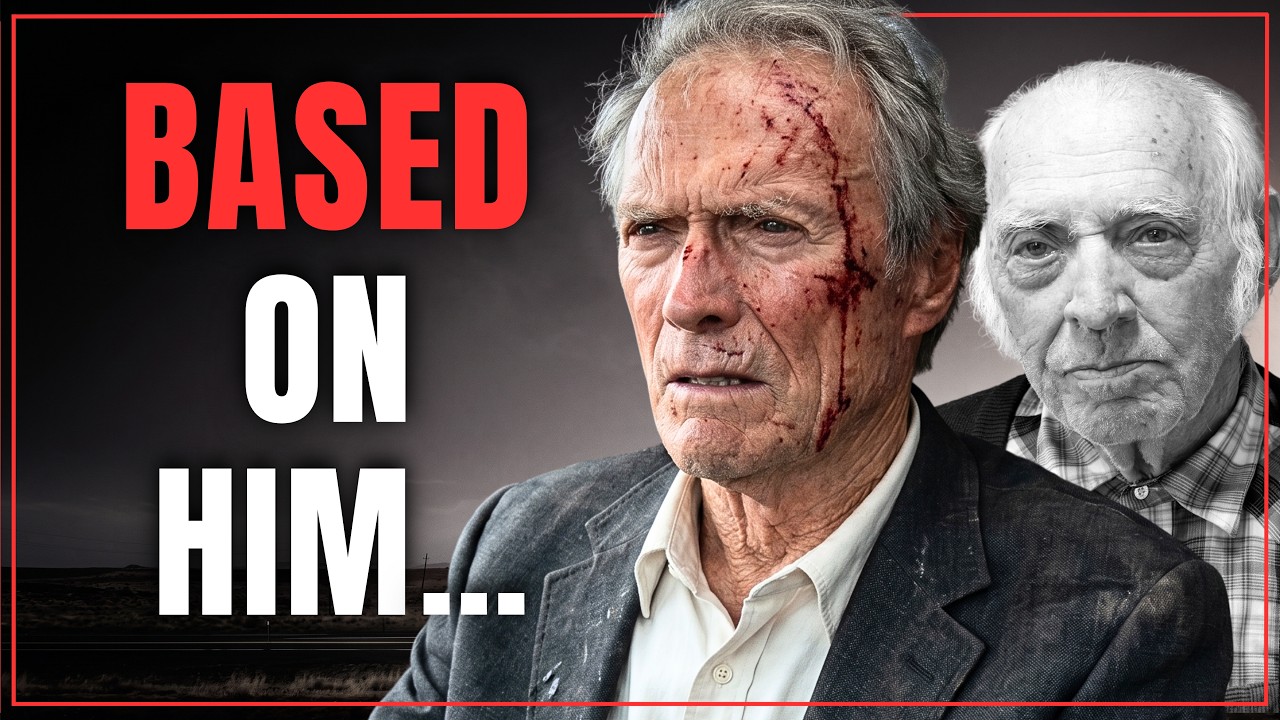
The driver was a decorated World War II veteran. In that moment, on the shoulder of a Michigan highway, the longest and strangest smuggling run in Sinaloa Cartel history came to an end. His name was Leo Sharp. To the flower world, he was a legend, one of America’s most celebrated daylily breeders, a man whose award-winning blooms appeared in catalogs sent to gardeners around the globe.
To the cartel, he was El Tata, the Grandfather. Their oldest, most trusted, and least suspected mule. A man who moved cocaine by the hundreds of kilograms across the country while looking like everyone’s grandfather. If you have seen The Mule, you know the Hollywood version.
Clint Eastwood turned him into Earl Stone. The real story is stranger. Leo Earl Sharp was born on May 7, 1924, in Michigan City, Indiana. His childhood was poor, shaped by the Great Depression in the Midwest.
When World War II broke out, Sharp joined the U. S. Army and ended up in the Italian campaign, where he witnessed some of the war’s most brutal fighting against fortified German positions. He returned home with a Bronze Star.
He rarely spoke about how he earned it. Men of that generation usually did not. After the war, Sharp built a quiet American life. But somewhere along the way, he found the thing that would define him for the next half century: flowers.
Specifically, daylilies. Sharp did not just grow them; he hybridized them. Hybridizing daylilies is slow, obsessive work. You take pollen from one flower and brush it onto another.
You harvest the seeds, plant them, and wait years to see what you have made. Most crosses fail. Sometimes you get something no one on earth has ever seen, and you have the right to name it. Sharp did this thousands of times, season after season, chasing new colors and forms the way other men chase money.
He established a nursery called Brookwood Gardens in Michigan and turned it into a name known to collectors around the world. Over decades, he introduced dozens of new cultivars, earned honors in the daylily world, and traveled the country speaking to horticultural societies. Collectors reportedly paid a hundred dollars or more for a single plant of his newest creation. By the early 2000s, mail-order flower sales had moved to the internet.
Sharp, now in his eighties, refused to adapt. He was a man of catalogs and handshakes in an age of clicks and shipping labels. Orders dried up, but the bills did not stop. Through the 2000s, the farm that was his life’s work slid toward failure.
The man who had beaten the Depression, the German army, and eight decades of hard living suddenly faced an enemy he could not outwork: debt. That was the soil in which this story really grew. Not greed. Not a thirst for excitement.
An old man watching his life’s work die and searching for any way to save it. The door opened through his own fields. Sharp’s farm employed Mexican workers, and through one of those relationships, according to the accounts, Sharp was introduced to men connected to the Sinaloa Cartel, the massive trafficking organization run by Joaquín “El Chapo” Guzmán. The offer sounded almost innocent: drive.
Pick up a load in the Southwest, drive it to Michigan, get paid in cash. Sharp said yes. With that single decision, an octogenarian flower breeder became a cog in the largest drug machine in the Western Hemisphere. The scheme was smarter than it looked.
Highway interdiction relies on profiles: young men, rental cars, out-of-state plates on certain corridors, nervous behavior. Leo Sharp was the absolute opposite of every profile in the books. A white-haired World War II veteran in a small pickup, rooted in Indiana with a completely clean record. No officer on earth would look at that man and see a quarter ton of cocaine.
The Detroit cartel cell handled distribution. Sharp drove south and west, picked up loads in Arizona, then hauled them nearly two thousand miles northeast to Michigan. He slept in motels, paid cash, and obeyed every speed limit. An invisible old man on the highways he had known all his life.
Deliveries were arranged like commercial freight runs, with pre-arranged exchange points around Detroit. His pay was reportedly about one thousand dollars per kilogram delivered. A single 100-kilogram load meant roughly one hundred thousand dollars for a few days of driving. The loads grew because the cartel trusted El Tata more than anyone else on the road.
Wiretapped calls later showed cell members speaking of him with genuine affection. Their grandfather. Their old man. Their Tata.
Prosecutors eventually said he transported shipments ranging from 100 to 300 kilograms at a time, trip after trip, year after year. Court records confirmed trips in 2010 and 2011, though people linked to the operation claimed he had been driving far longer, perhaps for much of a decade. The government’s final tally was staggering: more than a ton of cocaine delivered, more than a million dollars earned by a man collecting Social Security. While all this was happening, Sharp never stopped being Leo Sharp.
He kept tending his fields. He kept corresponding with flower collectors. He lived two complete lives at once, flower legend and cartel courier. And for years, neither world knew the other existed.
He was stubborn. He argued with his handlers. He kept his own schedule, took the routes he wanted, stopped where he pleased. Handlers who tried to give him a phone found the old man simply would not answer.
He showed up when he decided to, a white-haired dot somewhere along two thousand miles of highway, eating at roadside diners while a fortune in cocaine sat outside. The most violent trafficking organization in the hemisphere patiently tolerated a cranky old man because he always, always delivered his goods. In a business built on fear, Leo Sharp possessed a currency stronger than fear: reliability. What did he do with the money?
According to accounts that emerged later, he invested most of it in the life the internet had taken from him: the farm, the flowers, property including land in Hawaii where he could grow year-round. The money bought him what he actually wanted, which was never a gold watch or a sports car. It bought another season in the dirt. Meanwhile, in Detroit, the DEA had opened a major investigation into the local Sinaloa distribution cell.
Special Agent Jeff Moore worked the case; he is the real-life figure behind Bradley Cooper’s character. By 2011, investigators were using wiretaps. Federal wiretaps are not simply switched on. Agents must convince a judge that normal methods have failed, and the authorization lasts about thirty days before they must renew it, justifying every extension with new results.
Call after call, the Detroit team mapped the cell’s stash houses, suppliers, and couriers. Through those wires slipped a name that did not make sense: Tata. The Grandfather. An old man.
Some agents doubted he was real. A courier in his eighties sounded like a legend passed among smugglers, or maybe a code name for something else entirely. But the recordings indicated Tata was moving the next shipment. The DEA faced the problem all wiretap cases face.
If they hit Sharp directly with federal agents, the cell would instantly realize their phones were monitored, and months of investigation into the larger network would collapse. So they did what agencies typically do. They arranged for the arrest to look like a random occurrence. A routine Michigan State Police traffic stop on the highway.
The cartel would blame bad luck on the road rather than a wiretap. This is called source protection. October 21, 2011. Interstate 94 near Chelsea.
Sharp, 87 years old, heading east with 104 kilograms of Sinaloa Cartel cocaine in the truck. The best years of his strange second career were over. The lights came on. He pulled to the side of the road.
The officer walked up to a harmless-looking truck and found an old man who had spent years lecturing garden clubs. This time, there was nothing to say. The dog barked. The bags came out of the truck bed one after another.
Agents logged the seizure at 104 kilograms, 229 pounds of cocaine stacked on the shoulder of a Michigan highway next to a veteran’s pickup. Sharp was charged in Detroit as part of a broad conspiracy case against the cartel’s Michigan operations, one of more than a dozen defendants tied to the cell. His lawyers raised his age, his health, and his declining mental faculties. In October 2013, at 89 years old, Leo Sharp stood in federal court and pleaded guilty to conspiracy to distribute cocaine.
As part of the deal, he forfeited hundreds of thousands of dollars in cash and assets, drug money recovered from the flowers it had been feeding. On May 7, 2014, his ninetieth birthday, prosecutors asked for five years in prison, arguing that a ton of cocaine remains a ton regardless of the driver’s age. The defense asked for house arrest, telling the court Sharp suffered from dementia and that the cartel pressured him to keep transporting when he tried to stop. Those coercion claims were never fully resolved.
What was documented was what the old man himself told Judge Nancy Edmunds in a trembling voice before she imposed her sentence: “I’m truly heartbroken that I did what I did. ” The judge weighed his military record and his deteriorating mind against a ton of cocaine. Age and honor did not erase the harm such a quantity does on American streets. She sentenced him to three years in federal prison.
He turned ninety the same day. In 2015, about a year behind bars, Sharp was released early due to his declining health. He returned home to die among the people and plants he had left behind. On December 12, 2016, Leo Sharp died in Michigan at the age of 92.
The war hero, the flower legend, and the cartel grandfather were buried in the same grave. In June 2014, weeks after the sentencing, The New York Times published a long article by Sam Dolnick, “The 90-Year-Old Drug Mule for the Sinaloa Cartel. ” Hollywood read it. Clint Eastwood, then in his late eighties, saw something personal in it.
Screenwriter Nick Schenk wrote a script from Dolnick’s article. On December 14, 2018, two years after Sharp’s death, The Mule opened in theaters, directed by and starring Eastwood as Earl Stone, alongside Bradley Cooper, Dianne Wiest, Michael Peña, Laurence Fishburne, and Andy García. The film cost roughly fifty million dollars and grossed nearly 170 million dollars worldwide. The spine of the film is real.
The decorated veteran and award-winning daylily farmer, ruined when his business failed to keep up with the internet, recruited as a cartel mule and adored by his handlers. Caught on Interstate 94 in an investigation that a DEA agent helped build. Sentenced in his nineties. All real.
The surrounding details are invented: Earl Stone’s broken family, the estranged daughter, the granddaughter’s wedding, the deathbed reconciliation with his wife. That entire emotional engine was written for the film. The cartel’s lavish party at the Mexican compound, the new leader who takes away Earl’s freedom, the beatings on the roadside by cartel enforcers, all invented drama. The film softened the scale.
Earl Stone looks like a man who made only a few trips. The real El Tata moved cocaine by the ton over years for the most powerful trafficking organization on earth. The organization’s story continued without its grandfather. The Detroit cell was dismantled by the same investigation that brought down Sharp.
El Chapo Guzmán was captured in Mexico in February 2014, escaped prison through a tunnel in July 2015, was recaptured in January 2016, and was extradited to the United States, where a Brooklyn jury convicted him on all counts in February 2019. He is serving life plus thirty years in a supermax prison in Colorado. The cartel replaced him. It replaced El Tata too.
That is the machine. Every part of it is replaceable, even the beloved ones. In gardens across America, Leo Sharp’s daylilies still bloom. The cultivars he hybridized and named are still sold, bought, and traded by enthusiasts.
His real life’s work outlived his crime. It just could not pay for itself. The lesson of El Tata is not that a good man turned evil or that an evil man fooled us.
It is that when a person’s life’s work collapses, the line between the garden and the highway becomes thinner than anyone wants to believe.