On a bitter January morning in 1781, in the open pastures of South Carolina known locally as Cowpens, Banastre Tarleton believed the war was about to hand him another easy victory. His battalion had marched hard all night, men hungry and exhausted, horses worn down, but the scent of triumph pushed them forward. Tarleton, the young lion of the British cavalry, had chased Daniel Morgan for days. Now the Americans were trapped against the Broad River, with nowhere left to run.
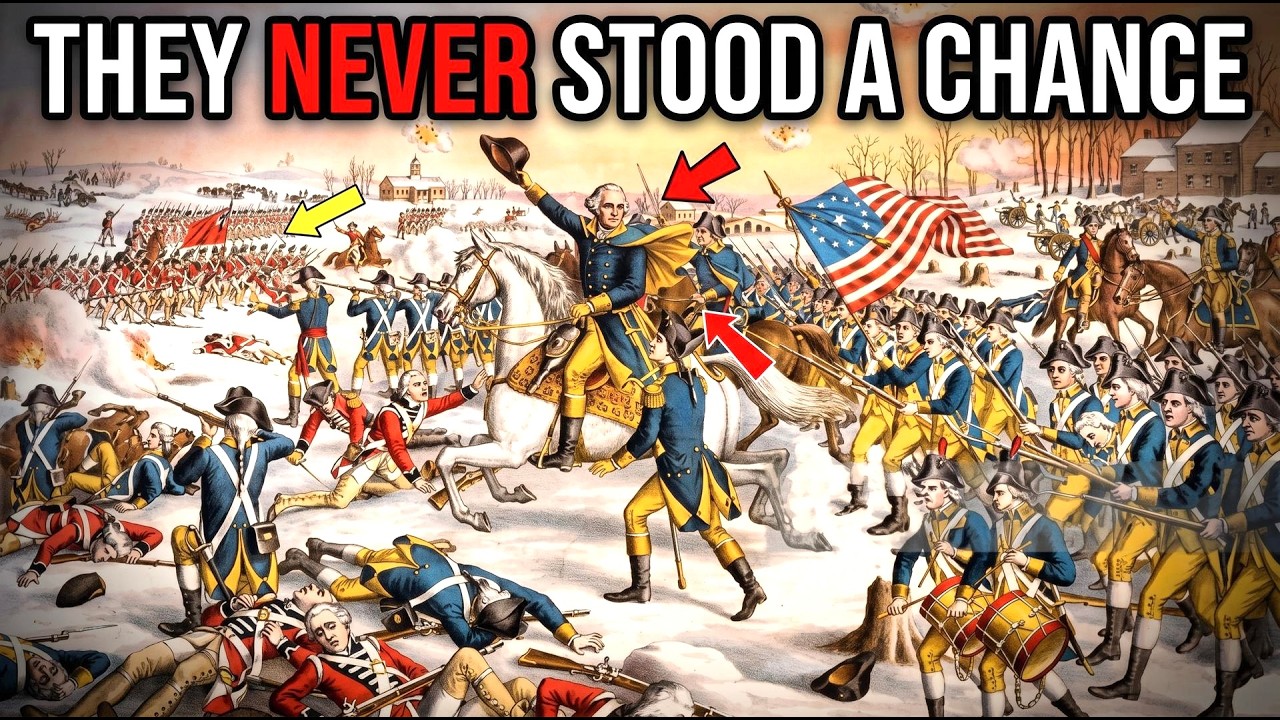
He could already picture the familiar scene: militia scattering like frightened deer, Continentals crumbling under the pressure of his disciplined regulars and legendary horsemen. What Tarleton could not imagine, as his advance guard crested the low hill and the first shots echoed across the frozen field, was that every step his men took into that pasture was expected, planned, and turned into the instrument of their destruction. The trap had already been set, and Britain’s finest cavalry commander did not see it closing until it was too late. To understand how this happened, one must know the two men who met in that dawn.
Banastre Tarleton embodied everything the British southern strategy hoped for in a field commander: bold, aggressive, fearless in the saddle. Born into a Liverpool mercantile family, he rose quickly through merit and daring rather than money alone. In his mid-twenties, he commanded the British Legion, a potent mix of Loyalist infantry and green-coated cavalry that struck like lightning. Tarleton had scored spectacular successes, including capturing Charles Lee early in the war, the victory at Moncks Corner, and the devastating pursuit after Camden.
At Waxhaws, his men fell upon a surrendering Virginia regiment with such ferocity that Tarleton’s Quarter became a rallying cry for Patriots demanding no mercy. He was young, supremely confident, and convinced that American irregulars would always break under intense pressure. Cornwallis trusted him and gave him independent command precisely because Tarleton moved faster and struck harder than anyone else. But that reputation carried a shadow: overconfidence born from defeating unorganized opponents.
Daniel Morgan could hardly have been more different. He was a massive frontiersman from Virginia’s Shenandoah Valley, a former wagon driver, teamster, and fighter. During the French and Indian War, he transported supplies for the ill-fated Braddock campaign. Later, a British lieutenant struck him with the flat of his sword during an argument.
Morgan knocked the officer down with a single punch. As punishment, he received 500 lashes, which nearly killed him, but he survived and never forgot. He liked to joke that the British had miscounted by one. That grudge fueled a long career fighting the Crown.
Morgan led riflemen to Quebec with Benedict Arnold, was captured, exchanged, and then commanded his famous rifle corps at Saratoga, helping tip the balance against Burgoyne. By 1780, sciatica and old wounds forced him home. But Nathanael Greene summoned him south with a brigadier’s rank. Morgan knew his strengths and weaknesses intimately.
He understood backcountry militia the way a farmer knows his mules: brave, quick-witted, deadly with rifles at long range, but unreliable in close combat against bayonets. He also knew Tarleton’s reputation for reckless aggression. That knowledge would prove decisive. The larger situation in the South had reached a critical point by late 1780.
After the fall of Charleston and the disaster at Camden, the American cause hung by a thread. Greene, newly appointed to command the Southern Department, faced a superior British army under Cornwallis that seemed poised to march north into Virginia. Instead of fighting a conventional battle he could not win, Greene divided his small force. He sent Morgan west with roughly 600 Continentals and militia to harass British outposts, threaten supply lines, and rally local Patriots in the backcountry.
It was a risky Fabian strategy designed to bleed British resources. Cornwallis responded by ordering Tarleton to destroy Morgan’s detachment before it could do more damage. The chase was on. Morgan retreated skillfully, gathering more militia along the way: South Carolinians under Andrew Pickens, Georgians, North Carolinians.
By mid-January, he had between 800 and 1,000 men. Tarleton pressed harder, crossed the Pacolet River, and closed the distance. Morgan realized he could not evade the British cavalry forever, especially with the Broad River flooding ahead of him. On the evening of January 16, he chose his ground at Cowpens, a cattle-grazing area known for open, rolling pastures, scattered trees, and a slight rise in the middle.
Natural features including small ravines and a deeper valley could conceal reserves. The position lay between the Broad and Pacolet Rivers, which limited escape but also forced a decisive battle. Some officers worried about having the river at their backs. Morgan saw it as insurance against panic: his men would have to hold or be trapped.
More importantly, the terrain suited his plan perfectly, open enough for rifle fire and cavalry maneuver, with a slope that shielded his main line. That night, Morgan did something few generals of the era did with militia. He walked the camp from fire to fire. It was cold, men huddled under thin blankets.
He joked with them, helped some repair their gear, talked about their sweethearts and families back home. He told them to hold their heads high, that just two fires away they would be free, and when they returned home, old men would bless them and girls would kiss them for their bravery. He reminded them they only needed to hold long enough to fire, especially at officers, then fall back as ordered. He showed the scars on his back to men who needed proof that he had endured worse from the British and survived.
To the Continentals, he spoke of holding firm. Before them all, he projected quiet confidence. Old Morgan was never beaten, he would later shout in the heat of battle. By dawn, the volunteers understood they had an important role, not merely cannon fodder.
Morgan’s deployment was deceptively simple. He placed a front line of about 150 picked riflemen, mostly North Carolinians and Georgians, under officers like McDowell and Cunningham. Their task was to harass the enemy from long range behind trees and cover, target officers, then withdraw. About 90 yards behind, the main militia line of roughly 300 men under Pickens stretched across the field.
They were to wait until the British came very close, deliver two deliberate volleys aimed at the smallclothes, then fall back in as much order as possible and re-form behind the Continentals. On the low hill, partially concealed by the slope, stood Morgan’s strongest force: about 550 Continentals from Maryland and Delaware under John Eager Howard, supported by experienced Virginia State troops. These men could trade volleys and use bayonets. Finally, William Washington’s cavalry, roughly 80 Continentals plus some mounted militia, waited hidden in reserve or on the flanks in a valley.
Morgan deliberately left his flanks somewhat exposed, betting that Tarleton would do what he always did: attack straight ahead. His genius was psychological. Morgan knew Tarleton expected the militia to fire one volley and then run. By incorporating that expected path into the plan, he would lure the British forward, disrupt their formation in the pursuit, drain their momentum against the concealed main line, and then launch a counterattack.
The militia’s retreat would serve as bait, especially for Tarleton’s cavalry, pulling them from formation into a position where Washington’s smaller but fresher and better-timed force could strike them at a disadvantage. The gentle slope would hide the full depth of the American position until too late. Morgan had turned the militia’s reputation for fleeing into the cornerstone of victory. Dawn came gray and cold.
Tarleton’s men, after a grueling night march with little rest or food, formed up and advanced. A few artillery shots rang out, followed by the familiar British bugle call. The American riflemen opened fire with their long Pennsylvania and Kentucky rifles, shots that carried farther and hit harder than smoothbore muskets. British officers and sergeants began to fall.
The skirmishers completed their mission and withdrew as planned. Tarleton pressed on, sensing weakness. When the militia delivered their two volleys at close range, more British soldiers fell. Then the militia turned and moved to the rear.
To Tarleton, it looked like the collapse he had come for. He ordered the infantry to charge and sent his cavalry to complete the rout. This was the decisive moment, the plan unfolding exactly as Morgan had imagined. The British infantry, eager on the open path, lost their tight formation.
Some paused to re-form. Others surged forward in excited clusters. Tarleton’s cavalry, the elite arm he relied on for the knockout blow, charged into the space between the retreating militia and the main American line. They were attacking what they thought was a broken enemy.
But the militia was not panicking. They were following orders, passing through or around Howard’s Continentals to re-form safely behind them. On the American right, a company of Virginia militia began to fall back after a misunderstood signal, creating a temporary gap that looked like flight. Tarleton’s men cheered and pressed harder.
Bayonets leveled, ranks loosened in the thrill of victory. Morgan and Howard seized the moment. The Virginians were rallied, turned, and poured a volley into the scattered British from point-blank range, perhaps 30 or even 15 yards. The effect was devastating.
At nearly the same instant, Howard ordered his Continentals to charge with bayonets. The veteran Maryland and Delaware men surged forward with cold steel, something the British never expected from rebels. Shock rippled through the British line like a wave. Men who had been pursuing moments before now fought for their lives against organized troops.
At the same time, William Washington’s cavalry burst from their hidden position, striking the British right flank and rear like a thunderbolt. Tarleton’s horsemen, scattered and exhausted from their pursuit, were caught at the worst moment. Sabers clashed in a furious melee amid dust, shouts, and the scream of horses. Washington’s men cut through them, turning pursuers into the pursued.
One eyewitness described the scene as a whirlwind that left the enemy cavalry unable even to remount their horses. On the opposite flank, Pickens rallied the militia, encouraged personally by Morgan, who rode among them with his saber drawn, shouting for them to form up and give the British another fire that day. Old Morgan was never beaten, and he swung around to strike the British left. The famous 71st Highland regiment, among Tarleton’s best troops, found itself surrounded from several directions.
Their commander tried to re-form them, but control and leadership had evaporated with the loss of so many officers who had fallen earlier. Chaos engulfed the British force. Units that had advanced with confidence minutes before now collapsed. Many threw down their arms and surrendered.
Tarleton himself rode desperately among the fugitives, trying to stem the tide. He attempted a final charge or a re-formation with what cavalry remained, even coming close enough to Washington to exchange saber blows personally in some accounts. His horse was hit. He escaped by luck, fleeing the field with perhaps 50 to 200 of his men, mostly cavalry, briefly chased by Washington until the American commander called off the pursuit to secure the astonishing victory.
In less than an hour, the battle was over. The British losses were catastrophic: about 110 killed, more than 200 wounded, and over 600 captured, along with two cannon, flags, wagons, weapons, and baggage. Nearly 80 percent of Tarleton’s force was gone. Morgan’s losses were astonishingly light: about a dozen killed and sixty wounded in most contemporary reports, with some later tallies adding other militia casualties for a total under 150.
The humane treatment of prisoners stood in stark contrast to Tarleton’s earlier reputation. Morgan emphasized this in his report to Greene, noting that no prisoner was insulted after surrender. The strategic consequences spread quickly. Cornwallis had lost his most mobile and aggressive detachment at the moment he needed it most.
The victory at Cowpens energized Patriots across the South and beyond. It proved that mixed forces of Continentals and militia, when led by capable commanders, could defeat elite British troops. Morgan’s layered defensive strategy, his feigned retreat, and his masterful cavalry counterattack converted Tarleton’s greatest strength, his aggressive horsemen, into a weakness. The cavalry that had terrorized the Carolinas was lured forward by the ruse of apparent flight, scattered in the chase, and then crushed by a combination of infantry volleys, a bayonet charge, and Washington’s flanking strike.
The double envelopment, achieved through careful preparation rather than overwhelming numbers, echoed classic maneuvers but executed with frontier realism. Tarleton had ridden in expecting glory and retreated leaving most of his force behind. Morgan’s health, never strong after years of hard campaigning, soon forced him from the field. He returned to Virginia, lived to see the new nation, served in Congress as a Federalist, and in 1794 led militia against the Whiskey Rebellion.
He died in 1802, respected on both sides of the Atlantic as a natural soldier. Tarleton survived, returned to England, entered politics, and rose to general, but the troubles followed him. He spent years defending his conduct, blaming his men or circumstances. The defeat remained a stain on his record of aggressive command.
What set Morgan’s victory at Cowpens apart was not overwhelming force or brilliant innovation from nowhere, but his deep understanding of his own troops’ limits and his enemy’s predictable habits. Morgan studied Tarleton’s previous battles, recognized the British tendency toward linear attacks and cavalry pursuit, and built a plan that lured out exactly that behavior. The militia’s retreat path was no accident; it was the trap. The slope hid the depth of his defenses.
The reserve cavalry delivered the killing blow against an exhausted enemy. Morgan did not merely deceive Tarleton’s infantry; he deceived his vaunted cavalry, the very arm that defined his success, drawing them into a prepared kill zone. Tarleton never saw the full American position or the coordinated counterattack coming because his focus remained fixed on the apparent collapse before him. By the time the trap was revealed, his lines had broken, his officers had fallen, and his cavalry was scattered.
The Battle of Cowpens stands as one of the most tactically perfect small engagements of the American Revolution. It bought precious time, weakened Cornwallis’s army, and contributed to the chain of events leading to Yorktown later that year. Most importantly, it showed what firm leadership, precise knowledge of terrain and troops, and a willingness to take calculated risks could achieve against a professional army that seemed superior. Daniel Morgan, the scarred veteran frontiersman, outthought one of Britain’s brightest battlefield stars.
And Banastre Tarleton, for all his courage and audacity, rode away from Cowpens knowing he had been brilliantly deceived by a man who understood the art of war on American ground far better than he did.