In the spring of 1894, the law finally caught up with one of the most feared outlaws of the New Mexico Territory. For years, Jose Chavez y Chavez had moved across the Southwest as a gunman, a regulator, and a loyal companion of Billy the Kid. Now he stood before a jury in Socorro, convicted of murder, and sentenced to hang. The man who had survived the brutal violence of the Lincoln County War, who had fought alongside some of the most notorious figures of the era, faced the gallows.
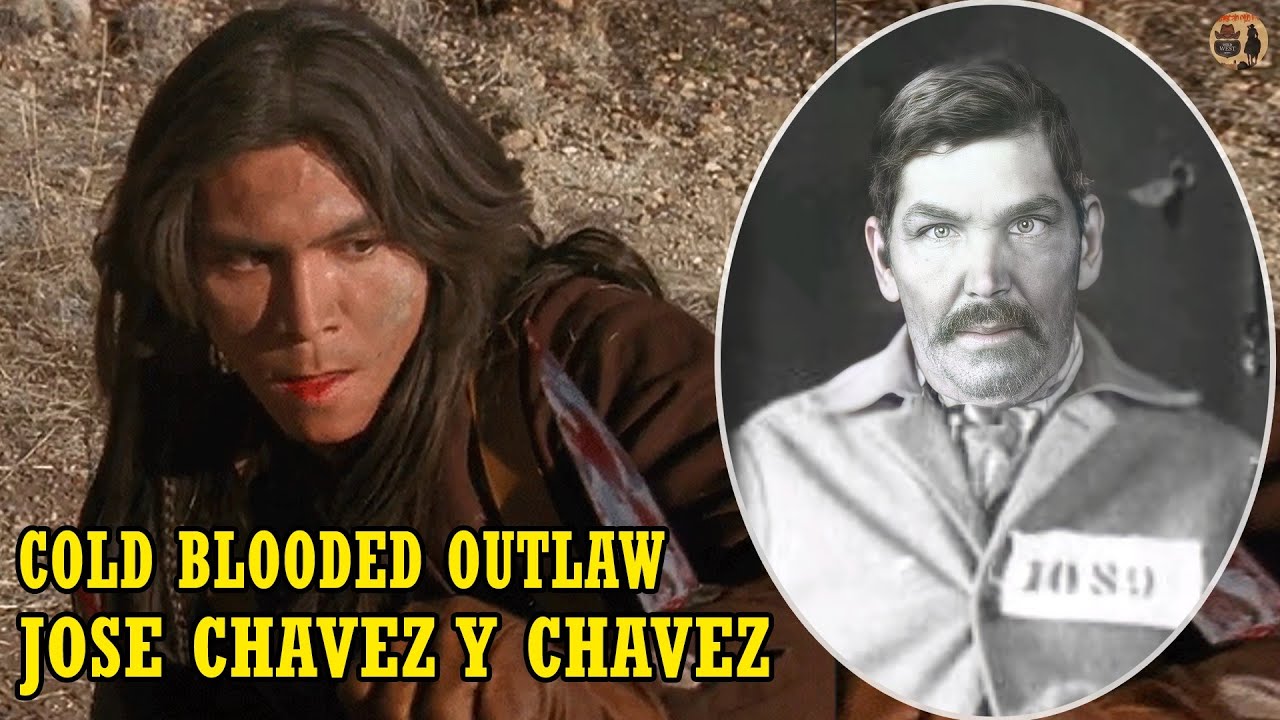
His life, built on bloodshed and loyalty, had reached its reckoning. Chavez y Chavez was born in 1851 in Cibola, New Mexico, the son of a Spanish father and an Apache mother. Little is known about his early years, and the historical record remains thin. What is clear is that he began his adult life as a hired laborer, but the grueling work and meager pay drove him toward a different path.
In his twenties, he turned to petty theft and cattle rustling, small crimes that would eventually lead him into far more dangerous company. His entry into the world of organized crime came when he joined the Regulators, a group of gunmen formed during the Lincoln County War. That conflict, which raged from 1878 to 1879, pitted the Tunstall-McSween faction against the Dolan group in a bitter struggle for economic control of the county. Chavez aligned himself with the Tunstall-McSween side and quickly proved himself useful to the most famous figure in that camp, Billy the Kid.
Alongside Billy, Doc Scurlock, Charlie Bowre, Jim French, John Middleton, Tom O’Folliard, and Fred Waite, Chavez became a central figure in the violence that consumed Lincoln County. The war reached its flashpoint on February 18, 1878, when John Tunstall was murdered. His death triggered a cycle of revenge killings that swept through the region. On April 1 of that same year, Sheriff William Brady of Lincoln, a Dolan supporter, was gunned down.
Chavez later admitted responsibility for Brady’s death. The retaliation continued, culminating on July 19, 1878, when the McSween house was set ablaze. The fire trapped fourteen people inside, including the McSween couple and twelve cowboys, and six people lost their lives. Chavez and the rest of Billy the Kid’s gang managed to escape the burning building, but the violence had only deepened.
By March 1879, New Mexico Governor Lew Wallace launched a campaign to end the lawlessness in his territory. One of his priorities was stopping the war between the Dolan and Tunstall-McSween factions. To that end, he created the Lincoln County Mounted Rifles, a group that Chavez joined as a private. But the force failed its purpose and disbanded after roughly three months.
Chavez stayed loyal to Billy the Kid’s gang through it all. In a peculiar turn, Chavez allegedly testified alongside Billy the Kid in court, attempting to suggest that the U. S. Army had been involved in the burning of the McSween home and the deaths that followed.
The legal maneuvering did little to change the trajectory of his life. Around 1880, according to accounts, Chavez killed a dangerous prisoner while both were held in a New Mexico prison. The killing added to his already formidable reputation. When Billy the Kid was killed in 1881, Chavez found himself unmoored.
He traveled across the American Southwest with no clear destination, drifting through the country until he reached Las Vegas, New Mexico. There, a chance encounter awaited him. Bob Ford, the man who had killed Jesse James, was in the same town. Legend holds that the two men agreed to a shooting competition, but Ford was so struck by Chavez’s marksmanship that he fled rather than face the duel.
Chavez later took on the role of deputy sheriff, but he was said to be unable to abandon his outlaw ways. He built a friendship with Vicente Silva and became affiliated with two of Silva’s organizations. One of these was Las Gorras Blancas, a group that English-speaking settlers saw as a band of robbers but that many Hispanic Americans in New Mexico regarded as freedom fighters. Silva’s other organization, the Society of Bandits, faced accusations from Anglo immigrants in the territory, who claimed it operated like a mafia, forcing people to surrender their assets for illegal profit.
The violence continued to escalate in the early 1890s. On October 22, 1892, Patricio Maes was killed at Vicente Silva’s order, killed by Jose Eugenio Alires and Julian Trujillo. In February 1893, the group was ordered to eliminate Silva’s brother-in-law, Gabriel Sandoval, out of fear that he might uncover the murder and alert the authorities. Sandoval was killed, but his death had a profound effect on Silva’s wife, who grew increasingly anxious about her brother’s disappearance.
In a complicated turn of events, Silva then ordered Chavez, Alires, and Trujillo to kill his wife. The three men carried out the task, but as they dug a grave for her, they became concerned about Silva’s mental state. They reached a decision that would seal his fate. When Silva arrived at the burial site with his wife’s body, the trio shot him without hesitation and placed both bodies in the same grave.
The following year, 1894, an arrest was made in connection with the murder of Maes, implicating Chavez, Alires, and Trujillo in the death of Gabriel Sandoval. In April 1894, Alires and Trujillo appeared in court, were convicted, and received life sentences. Learning of their arrests, Chavez fled quickly. A $500 bounty was placed on his head.
On May 26, 1894, he was arrested in Socorro, New Mexico. The jury found him guilty, and he was sentenced to death by hanging. Chavez underwent a retrial before the territorial Supreme Court, which again sentenced him to death. But Governor Otero, moved by public outcry and growing pressure, reduced the sentence to life in prison.
On November 23, 1897, Jose Chavez y Chavez entered the Territorial Prison as prisoner number 1089. He was to remain there until the age of fifty-seven. But on January 11, 1909, Governor George Curry pardoned him after he had served only eleven years. The act of leniency was granted because of the help and support Chavez had provided prison guards during a violent uprising.
After his release, Chavez returned to Las Vegas and spent the remaining fifteen years of his life in peace, surrounded by loyal friends. In 1924, at the age of seventy-two, he died quietly in his bed, beside his companion Librado Baca. Chavez was laid to rest in a modest cemetery in Malrou, Guadalupe County, New Mexico.
A man who had once ridden with Billy the Kid, who had survived the burning of the McSween house, who had killed Sheriff Brady and faced the gallows, had found his final peace.