In the winter of 1985, an 88-year-old woman died in Madrid, leaving behind a document designed to give her only son and only daughter nothing at all. No reduced provisions, no symbolic bequest, no conditional trust. Her name was Margaret Rockefeller Strong, and she was the last surviving granddaughter of John D. Rockefeller, the richest man America had ever produced.
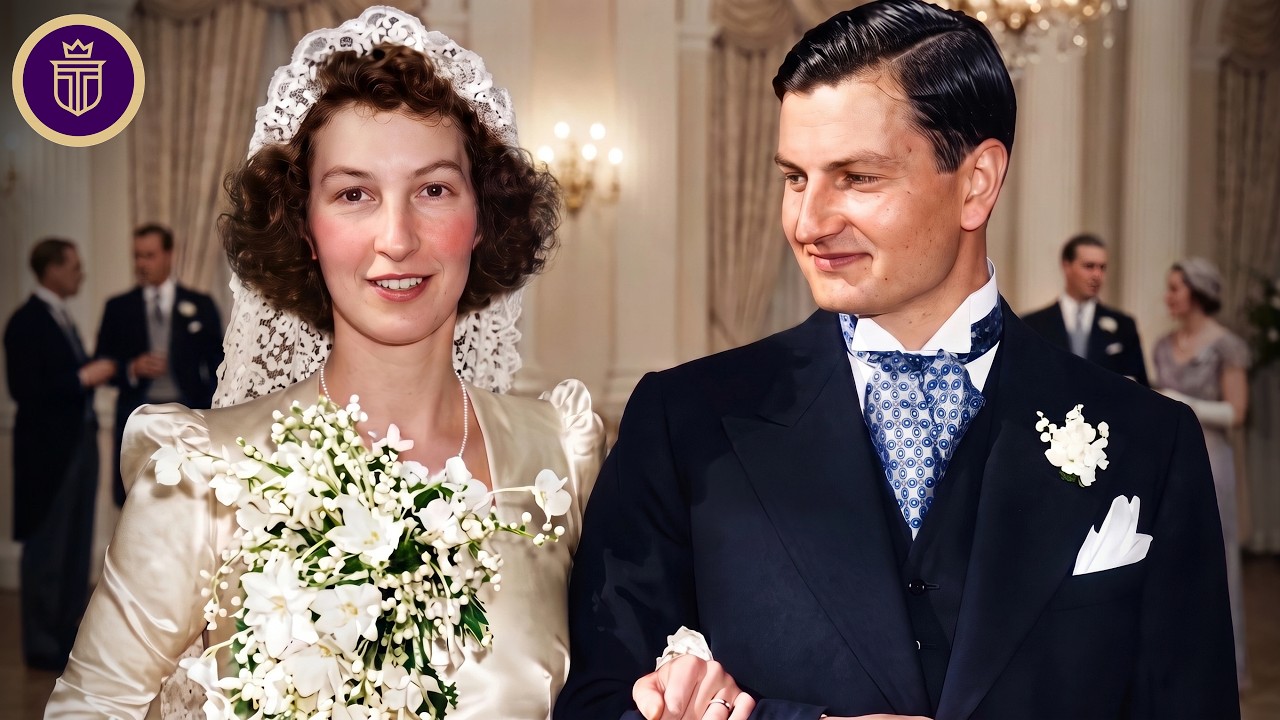
Her grandfather had directed the bulk of his fortune, estimated at $25 million, into a trust for her and for those two children. Fifty-one years after he signed that judgment in 1934, his granddaughter signed a will giving her wealth to a Chilean ballet designer, 38 years her junior, who had been her ballet teacher and was the nephew of her first husband. Her son and daughter did what disinherited children in great fortunes do. They entered the Manhattan Surrogate’s Court and told a judge their elderly, frail, wheelchair-bound mother had been deceived.
Margaret Rockefeller Strong was born in 1897, the only child of Bessie Rockefeller, the eldest daughter of John D. Rockefeller. Bessie had married Charles Augustus Strong, a serious academic and the son of a Baptist minister, in a union that matched conscience rather than commercial interests. When Bessie died in 1906 at age 40, her eight-year-old daughter became the lone heir to a vast American fortune but was removed from the American world that fortune had built.
Charles Strong took his child to Italy, settling in a villa in the hills of Fiesole overlooking Florence. There, the young Margaret grew up as a foreigner, the focus of a grieving philosopher father, surrounded by adult conversations in multiple languages and entirely removed from the tight family networks of the Rockefellers in New York. She received no education in managing American wealth and no lifelong circle of cousins and advisers. She learned Italian, then later chemistry.
She went to Cambridge and studied a subject almost no woman of her generation and class pursued. Chemistry rewarded patience and punished improvisation, and it trained her to concentrate, to wait, and to correct her own ideas based on results. Margaret Rockefeller Strong was, by her late twenties, a highly educated, multilingual woman with her own income, comfortable among intellectuals, and accustomed to arranging her own affairs. The arrangement she made in the summer of 1927 was the one that puzzled everyone who examined her life afterward.
In Paris, she married a Chilean nobleman with a borrowed title and a talent for ballet. Jorge de Cuevas was born in 1885, twelve years her senior, and styled himself the Marquis de Piedra Blanca de Guana. He worked as a secretary at the Chilean embassy in London, which placed him inside the diplomatic society of the British capital. The marriage gave Margaret a title accepted in the European circles she belonged to and a place at the center of the ballet world at the moment ballet was Europe’s most sought-after art.
It also gave her the social legitimacy of a married woman instead of the oddity of an unmarried American heiress bearing a famous name. Sources indicate de Cuevas was apparently gay, a fact that could not be declared publicly in 1927. For many men of that generation, such marriages were the arrangement that made public life possible, often with the knowledge and consent of the woman involved. Margaret was 30 and had lived her entire adult life in European cultural circles; she was not naive about the private lives of the men in them.
She entered the marriage with clear eyes, and it produced two children. Elizabeth de Cuevas was born in 1929, named Bessie after the grandmother she never met. John de Cuevas was born in 1930. The marriage worked as a partnership of interests rather than a conventional household, and it held together for decades.
The children grew up in a world where their father’s life revolved around ballet and their mother’s fortune made that life possible on a scale few patrons could match. Elizabeth became a sculptor. John became an educator. Neither lived as an heir obsessed with money.
Long before her husband died, the couple had separated, a quiet separation that looked like a marriage from the outside and operated as a treaty within. That long separation was the silent pivot of Margaret’s life. Before any of that, however, her grandfather had sat with his lawyers to ensure the money could never be taken from her. John D.
Rockefeller signed his will in 1925, two years before his granddaughter’s wedding. The codicil he signed on October 3, 1934, in Lakewood, directed the bulk of his fortune, estimated at $25 million, into a trust for Margaret and her children, John and Elizabeth. By 1934, Margaret was married to a self-styled marquis whose profession was financing ballet productions, living in Europe beyond the reach of family advisers, with two small children who were the next link in the chain. The trust was the tool a rich man used when he wanted to benefit someone without handing over an unrestricted pile of money.
The capital would be managed by trustees and distributed on terms, protected from the decisions of the beneficiary and the ambitions of everyone around her. The grandfather was protecting the capital from that marriage and giving the children explicit mention to confirm the money passed through descendants, not into the husband’s projects. But a structure can control capital; it cannot control the emotions of an individual or the will that person signs at 80. Everything Margaret owned directly she was free to leave to whomever she chose.
Nearly half a century later, the granddaughter he had named signed a document that undid the part of his intention he cared about most: that the money reach the children. Jorge de Cuevas died in 1961 at age 76, ending a marriage that had lasted 34 years on paper. Margaret was 64, a widow, enormously wealthy, living in Europe rather than among her relatives in New York. Her father had died in 1940.
She had no siblings. Her children were adults with their own lives in America. She was, in a literal sense, the last of her line in her generation. The social structure that had surrounded her entire life was built around her marriage and her husband’s ballet interests.
When he died, that structure did not disappear so much as pass into other hands. The people who had orbited the de Cuevas household for 30 years were still there. The money that funded their world came under the control of one elderly widow. The world of an aging person shrinks to include only those who are physically present.
Relatives far away write letters and make calls, while the person who brings the medicine, arranges the car, manages the staff, and sits in the room every evening becomes the whole world. Among those orbiters was a young man named Raimundo de Larrain, a Chilean like Jorge de Cuevas, and the older man’s nephew. He belonged to the same ballet world, working as a designer and figure in the companies her money helped support. The press and court records would later describe him as Margaret’s former ballet teacher, establishing a working relationship where he taught and she attended.
He was 38 years her junior. In 1977, when Margaret was 79, the arrangement stopped being informal. On April 25, 1977, she married Raimundo de Larrain. He was 41.
For Elizabeth and John de Cuevas, the calculations of that day were clear and unbending. Their mother was approaching 80 and increasingly frail. The man she married was her former ballet teacher, the nephew of their late father, 38 years younger. The fortune in question came from a trust their great-grandfather had created with the explicit purpose of keeping capital within the family.
There was nothing they could do about it in 1977. An adult son cannot prevent his capable mother from marrying, and an elderly wealthy woman abroad has the right to manage her own affairs. The wedding took place, and the family watched. The marriage lasted from 1977 until her death in December 1985, eight and a half years.
During those years, her legal affairs were reviewed. The document she signed left everything to the man she married at 79. It took away the son and the daughter entirely. It was one of the harshest instruments in the history of American inheritance given who the children were.
Elizabeth and John de Cuevas represented the fourth generation of the family, named in their great-grandfather’s 1934 codicil as beneficiaries of the trust. They filed their challenge in Manhattan Surrogate’s Court, arguing that their mother’s husband, a former ballet manager, had exerted undue influence over a weak, elderly, wheelchair-bound woman to leave him her millions. Undue influence is not the same as fraud. It is a claim that someone in a position of trust and proximity substituted their own wishes for those of a person whose resistance had been worn away by age, illness, and dependence.
Proving it requires evidence about the household, who controlled access, and how the documents were drafted and signed. The testimony that emerged during the litigation came from an unexpected direction. Margaret’s former lawyer took the stand and testified that the family had pressured the elderly woman to make a $2 million gift to her son and daughter while she was still alive. If the jury believed that, the entire construction of the children’s case became unstable, because a woman pressured by her family for money has an understandable reason to exclude that family from her will.
If they did not believe it, the testimony indicated the opposite. Every fact in this case had two faces, and both faces only appeared in the years after the person in question was gone. Margaret Rockefeller Strong died in Madrid in early December 1985 of a heart attack at 88. The New York Times described her as a prominent philanthropist and the last surviving granddaughter of John D.
Rockefeller. The villa in Fiesole, the home her father had chosen for her as a motherless child in 1906, went to Georgetown University. With her death in an apartment in Spain, an entire generation of the Rockefeller family closed. Then the will was read, and a private family matter became New York street talk.
The press reached for the phrase blue-blood battle, and the case delivered everything the phrase promised. On one side stood two descendants of America’s first industrial titan, one a sculptor and one an educator. On the other stood a 50-year-old Chilean designer holding a will that granted him the Rockefeller fortune. The case forced the children to prove publicly that their mother was frail, dependent, and susceptible to the man she married, documenting her decline in the court record before journalists.
Every detail of her weakness strengthened their legal position and diminished the woman they described. Neither side could be certain what a New York judge would decide. So the lawyers did what lawyers do when a case becomes dangerous for everyone at the table: they stopped litigating and started dividing. The dispute was settled out of court late on a Wednesday in Manhattan Surrogate’s Court.
Half the estate went to the children who had challenged the will. The other half went to her last husband. The settlement also included provisions covering real estate and other matters, the usual mechanics of an agreement designed to let both parties leave the building. A will that had disinherited a son and a daughter was transformed by negotiation into a document granting them 50 percent of the Rockefeller wealth.
The man accused of deceiving a frail elderly woman kept his share without any finding of wrongdoing and without the will being declared invalid. The most enduring part of her legacy went somewhere else entirely. The Villa le Balze, the house in the Fiesole hills where a widowed philosopher had raised his eight-year-old daughter after her mother’s death in 1906, had been left to Georgetown University. It became the only asset she placed beyond the reach of all parties in the dispute.
The fortune amassed by the most methodical businessman of his century, protected by trusts and a codicil signed at Lakewood in 1934, ended up divided in half by lawyers in a Manhattan courtroom because an old woman in Madrid signed a paper. The house in the hills above Florence still stands, and students walk through it. Half the Rockefeller fortune went to a Chilean dancer who entered the family as someone else’s nephew, and the other half went to the two people for whom it was originally written. She lived 88 years, bore a name known on every continent, and owned more money than her grandfather’s children ever saw.
What she left behind was a divided estate, a family separated by an ocean, and a villa full of university students.