On July 3, 1863, James Francis Crocker was lying wounded on the open ground near the stone wall at Gettysburg, Pennsylvania. A bullet had struck him in the right hip and spun him to the ground as he and his men in Company K of the 9th Virginia pressed toward the angle in the Union line. Around him, the charge he had marched into with thousands of Confederates was collapsing. Men were dead, dying, or limping back across the field under Union fire.
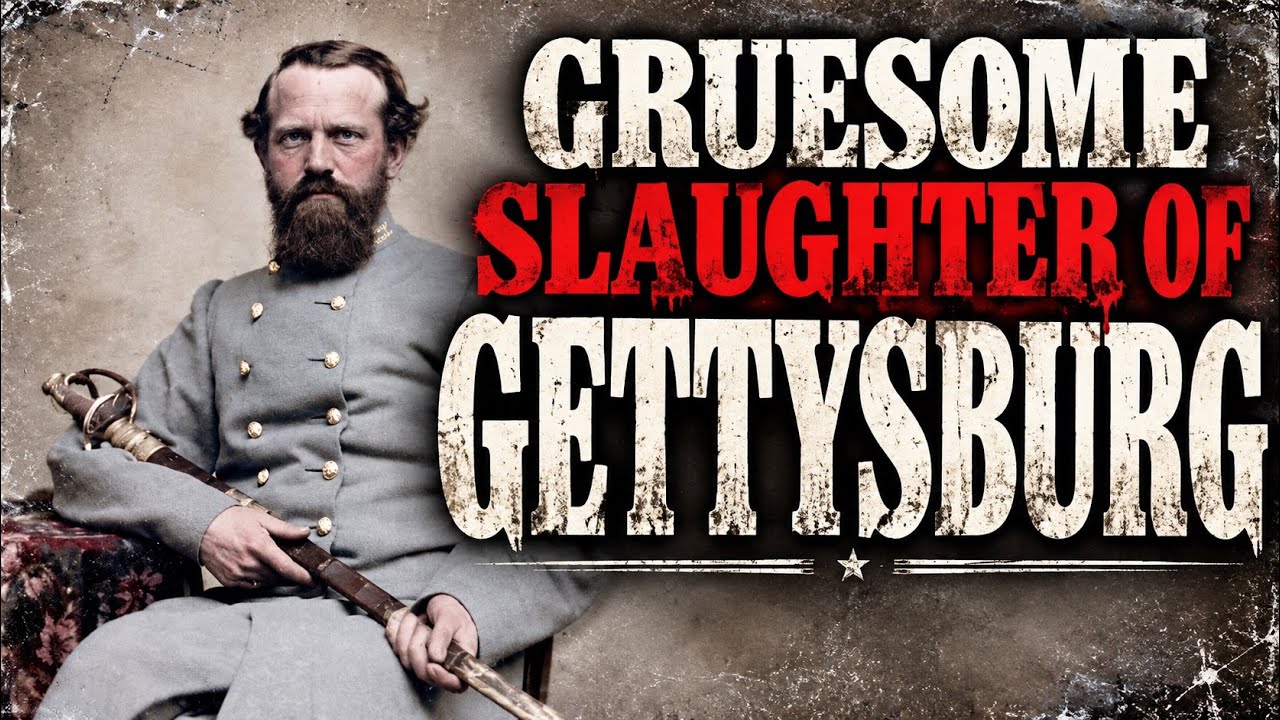
No one could stop to help him. Dragging himself along the ground or crawling as best he could, Crocker was taken by Union soldiers and carried to a field hospital behind the lines, a prisoner of war. What happened next at that hospital was something he could never have expected. A man stood over him, and the two of them recognized each other.
The man was Professor Stowe, a faculty member at Gettysburg College. Thirteen years earlier, Crocker had been a student there and had graduated as valedictorian of the class of 1850. Now, in the middle of the worst battle ever fought on American soil, the wounded Confederate officer looked up into the face of a man who knew him by name. Crocker’s path to that field had begun long before the war.
Born in 1828, he lost his birth father when he was only six months old. His mother remarried, and Crocker grew up on a wealthy plantation in the Isle of Wight area of Virginia. The family’s money and property gave him opportunities most young men of his region never had, including a first-rate college education. He traveled north to attend Gettysburg College, where he earned a reputation as a studious and admired student.
After graduating in 1850, he returned to Virginia and became a lawyer, building a solid life for himself in Portsmouth. That life collapsed with the firing on Fort Sumter. Like many young men across the South, Crocker answered the call and enlisted. He started as a private in Company K of the 9th Virginia, but his intelligence quickly set him apart.
He was made an officer and eventually became an adjutant, the man responsible for the unit’s organization, orders, and paperwork. His rise through the ranks came with a brutal introduction to war nearly a year before Gettysburg. At the Battle of Malvern Hill in 1862, Crocker took part in a charge very much like the one he would later make in Pennsylvania. Shrapnel tore into his shoulder, throat, and face.
He went down and thought he was going to die, but managed to crawl back across the field to safety. Confederate surgeons patched him up, and he recovered in time to fight at Fredericksburg. From there, he marched north with Robert E. Lee’s army into Pennsylvania.
The night of July 2, 1863, found Crocker and his men camped in Spangler’s Woods, just off the field where their attack would be launched the next day. As darkness settled over Gettysburg, the soldiers of the 9th Virginia could not see the Union positions in front of them. They could only see the aftermath of two days of brutal fighting, wounded men being carried to the rear and the dead being buried. They bedded down with the knowledge that many of them would not live through the next day.
Robert E. Lee had already made up his mind about what that day would bring. His original plan called for attacks on both flanks, with Longstreet’s men hitting the Union right near Devil’s Den and the Round Tops, while coordinated pressure came from the left. But the attacks did not go as planned.
Longstreet never launched the flanking movement, and the assault on Culp’s Hill failed. Lee changed course and decided to strike the center of the Union line. He ordered a massive cannonade of about 155 guns to soften the Union defenses, concentrated on a clump of trees that marked the center of the line. Upwards of 12,000 to 13,000 Confederate soldiers were to march across the open fields and break the Union army in two.
Crocker’s unit stepped off from the shelter of Spangler’s Woods when the guns fell silent. The Confederate artillery had been firing over the Union positions, and the Union guns were still replying, but the infantry now had their orders. From the Union side of the field, the sight of the Confederate battle lines forming and stepping off in perfect order was described as one of the most frightening and one of the most glorious scenes the soldiers had ever witnessed. The men of Garnett’s and Kemper’s brigades stretched out ahead of Crocker, with the 9th Virginia directly behind the 28th Virginia as the advance began.
The march toward the Emmitsburg Road was a descent into chaos. Federal cannonballs ripped holes through the Confederate lines. Men were not simply shot and falling; they were torn apart by artillery fire, their bodies scattered across the field. Crocker watched the ranks ahead of him unravel little by little.
The soldiers closed up the gaps as their comrades fell, pressing forward as fast as they could. Fence lines slowed the advance, forcing men to climb over or tear them down while exposed to Union fire. By the time they reached the Emmitsburg Road, the lines were bunched up and taking heavy hits. Crocker later described men dropping around him like pins, with the lines reforming and shrinking as soldiers fell and others stepped in to replace them.
They pushed on toward the wall near the angle. Crocker saw General Armistead place his hat on his sword and call for his Virginians to follow him. Armistead went over the wall, and for a moment it seemed the Confederates might break through. Crocker knew it was not enough.
As he watched, he was hit. The bullet took him down, spinning him around where he stood. He could not see what happened to Armistead, who fell mortally wounded a short distance away behind the Union line. The attack collapsed.
Union soldiers from the 71st Pennsylvania and other regiments received the Confederates with heavy fire and then surged forward, capturing battle flags and prisoners. The 71st Pennsylvania even took the flag of the 9th Virginia, a prize that became a point of pride for the regiment. The survivors of the charge retreated across the field under fire. Crocker was left behind, a wounded prisoner with no way back to his own lines.
He was carried to the Bushman farm, one of the makeshift hospitals where wounded Confederates were taken after the charge. It was there that Professor Stowe found him. The professor’s presence gave Crocker privileges that most prisoners never received. Because of his connections to the town, he was allowed to contact someone in Baltimore who sent him money and goods.
He was permitted to walk about Gettysburg under the terms of his parole, visiting old friends, speaking with colleagues, and even talking with college professors. He knew the streets of the town better than the scouts who had planned the Confederate attack. The town that had welcomed him as a student in 1850 welcomed him back as a wounded enemy officer. He was told to behave, to report back to the hospital camp, and that is what he did.
As he recovered, he wondered what had become of Armistead, searching in vain for news. Armistead had died in a farmhouse behind Union lines, far from where Crocker lay. Eventually, Crocker was sent to Johnson’s Island, a prisoner of war camp on Lake Erie. It was a place of terrible suffering.
Like prisoners in camps across both sides during the war, the men there were starved and mistreated. Crocker made a prediction from his cell that he gave to northern newspapers, declaring that the South would never be vanquished, that northerners would sacrifice their sons, their daughters, their wealth, and their crops in the attempt to conquer the South, and that the South would lose every one of its children before giving up. He watched the rest of the war from behind the prison walls, hearing news of the fighting and enduring the taunts of Union guards. The war ended with Confederate defeat, and his prediction proved wrong.
Crocker survived. He returned to Virginia and picked up the threads of the life he had left behind. He practiced law again. He served on the board of the College of William and Mary.
He became a judge, and he was elected to the Virginia House of Delegates. He lived out a long and successful career in public life, a man whose experiences in the war had carried him from the heights of a college valedictorian to the violence of Pickett’s Charge, to an unexpected reunion on a battlefield where he was a prisoner, and finally to a prison camp where he watched his cause collapse. James Francis Crocker came to Gettysburg twice. The first time, he came as a young man trying to build a future.
The second time, he came in a Confederate uniform, fighting for a cause he would have found impossible to imagine thirteen years earlier. Both times, the town was there to receive him. He is buried today in Portsmouth, Virginia, the town where he built his life after the war, one of the strangest stories to come out of the fields of Gettysburg.