In 1937, a government interviewer sat down with a blind woman in a Dallas convalescent home. She claimed to be more than a hundred years old. Her name was Mary Reynolds, and she had been enslaved from before she could remember on a cotton plantation nearly a thousand miles away, on the banks of the Black River in Louisiana. The interview was part of a federal program racing to record the memories of the last living generation of formerly enslaved Americans before those memories vanished forever.
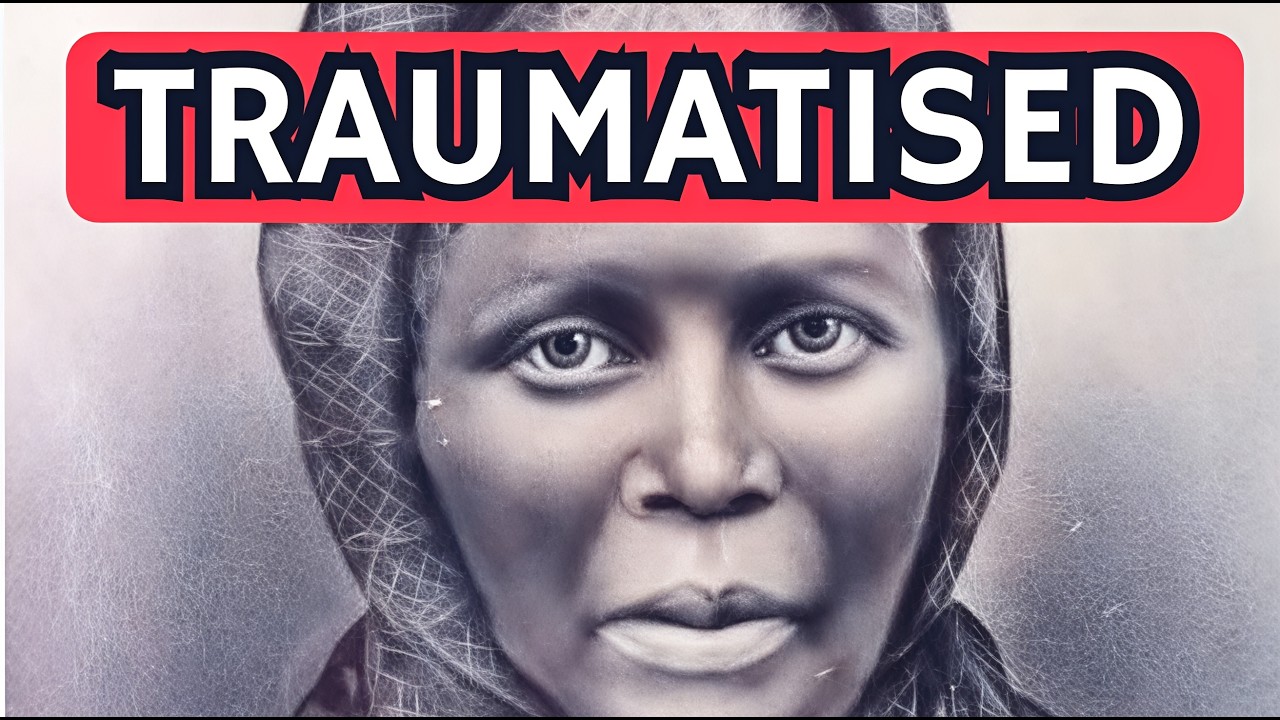
Mary talked for hours. What she described was not the sanitized plantation life southern folklore had spent decades polishing. It was cotton rows stretching farther than a child could see, a driver who took pleasure in the whip, and a master’s household with secrets everyone knew and no one was allowed to say aloud. By the time Mary was born, cotton was not merely a southern product.
It was the most valuable export in the entire United States, worth more than all other American exports combined. Northern textile mills, British factories, and international banks were all downstream of fields exactly like the one Mary would spend her childhood working. That explosive growth had a brutal engine: forced labor on a scale that grew every decade before the Civil War. In 1790, the United States produced a few thousand bales of cotton a year.
By the eve of the Civil War, that number had passed four million. Two forces made it possible: the cotton gin, which sped up processing, and the forced relocation of hundreds of thousands of enslaved people from the upper South into the richer cotton lands of the deep South. Historians sometimes call this internal displacement the Second Middle Passage, a forced migration nearly as large as the original transatlantic slave trade and every bit as devastating to the families it tore apart. Louisiana sat near the center of that expansion.
Its river systems, the Mississippi, the Red, the Ouachita, and smaller tributaries like the Black River, where the Kilpatrick plantation stood, made it easy to move cotton downstream to New Orleans and out into the world. Those rivers made the region enormously profitable and enormously dependent on a growing supply of enslaved laborers. The raw bales shipped from New Orleans fed textile mills in Liverpool and Manchester, and to a lesser extent in New England. The labor extracted from people like Mary Reynolds ultimately fed an international industrial economy stretching across the Atlantic, connecting a cotton row on the Black River to factory floors thousands of miles away.
Mary was born directly into that machine on a plantation owned by a doctor named Andrew Kilpatrick in Louisiana’s Concordia Parish. Her father, Tom Vaughn, had been born a free man in the North, a skilled craftsman who built and tuned pianos in cities like New York and Chicago. He traveled south looking for work and met an enslaved widow named Sally on Kilpatrick’s plantation. Tom offered Kilpatrick every dollar he had to buy Sally and her three children and set them free.
Kilpatrick refused. Mary recalled that he only sold enslaved people once they were too old to work or bear children, never before, because a woman of childbearing age represented not just her own labor but the labor of every child she might have. So Tom made an almost unthinkable choice. He stayed.
He married Sally and worked the fields himself, a free man voluntarily living inside a system built to hold everyone around him in bondage simply to remain with his wife and children. Mary was born not long after, one of six daughters. In a detail she carried for the rest of her life, she was born the same season as Kilpatrick’s own daughter, Sarah. After Sarah’s mother died shortly after childbirth, infant Mary was brought in to nurse alongside her.
The two girls grew up playing together, an intimacy across the color line that Mary never forgot. It was one of the institution’s strangest features: genuine childhood affection existing beside a system that could treat one child as fully human and the other as property, with no contradiction acknowledged by the adults around them. Mary’s early childhood followed a pattern common to enslaved children across the cotton South. Too young for full field labor, she fetched water, minded younger children, and learned the unspoken rules of a world that offered no protection.
Cotton plantations generally organized labor using the gang system: large groups of workers moving through the fields together under constant supervision, at a pace set by an overseer or driver. It was deliberately one of the most physically exhausting labor systems in American history, structured to extract maximum output from every body. Mary described a punishing rhythm, up before sunrise, in the fields at first light, and out only when it was too dark to see the rows. During planting and harvest, hours could stretch to fourteen or more, six days a week, with only Sundays offering any real reprieve.
Discipline was handled by an enslaved man named Solomon, given authority by Kilpatrick to act as driver. According to Mary, he carried out the job with real enthusiasm, quick to use the whip on anyone who fell behind. The driver system was a calculated management tool. Plantation owners maintained brutal productivity quotas while distancing themselves from the daily violence required to enforce them, and just as deliberately sowing distrust within the enslaved community.
Cotton picking was measured against a daily quota, weighed publicly at a scale near the field. Falling short meant automatic punishment, no matter the reason. Some drivers steadily raised the quota over a season, ensuring the bar kept climbing no matter how much output increased. Punishment followed patterns grimly consistent across the South.
Whipping was the standard tool, applied for failing a quota, perceived insolence, or attempted escape. Punishment could also mean withholding food, solitary confinement, or forced separation from family. In the most severe cases, it meant maiming or death, with no legal consequence. Enslaved people had no standing to testify against a white person in most southern courts.
Food was scarce and monotonous: salt pork, cornbread, and whatever peas or beans could be grown. Housing was simple cabins with dirt floors, shared among large numbers of people. Illness and injury were treated within the enslaved community, since calling an actual doctor for an enslaved worker was rarely worth the expense to most owners. Hanging over every day was the threat that any of it could change without warning.
A spouse, a child, a parent sold away to settle a debt, with no legal standing to prevent it and often no chance to say goodbye. The domestic slave trade separated an estimated one million people from their families between the early 1800s and the Civil War. Louisiana’s plantation economy developed a particular reputation as one of the harshest possible destinations, so harsh that the mere threat of being sold there was one of the most effective tools of control a slaveholder had. Mary’s account of the Kilpatrick place included something plantation records almost never documented openly: the master’s sexual exploitation of enslaved women.
Historians describe it as a widespread systemic feature of the institution, made possible by the total legal powerlessness of enslaved women. Mary described one woman, referred to as Aunt Cheney, who was given certain small privileges connected to the fact that Kilpatrick had fathered her children. Mary recalled a moment that captured the arrangement in miniature. Two of those children playing near the family’s dollhouse were told it was only for white children.
They shot back that they weren’t enslaved at all, that the same man was their father too, visited them nearly every day, and brought them clothes from town. The confrontation reached the mistress, who was overheard discussing what to do about those white young ones with the same hair and eyes as her own children. Mixed race children born under these circumstances occupied an especially cruel position. Legally, a child’s status followed the mother, meaning children fathered by a slaveholder on an enslaved woman were by design born into the same bondage.
Set against all this, Mary also described a hidden community enslaved people built for themselves. Quiet gatherings after dark, shared meals stretched further by pooling resources, and a religious life blending Christian practice with older traditions, usually practiced out of sight of the big house. Mary spoke of these bonds as one of the only things that made survival bearable. Resistance rarely looked like open rebellion.
It looked like working just slowly enough to blunt an impossible quota without triggering punishment, protecting a family member from an overseer’s attention, and passing down forbidden knowledge in whispered form. Work songs carried hidden layers of meaning, references to escape routes and coded warnings, disguised as ordinary singing. Storytelling served a similar purpose. Trickster tales, where a small clever character outwits a larger more powerful one, offered entertainment and a kind of coded instruction in the quiet resistance survival required.
By the time Mary was in her early thirties, the world beyond the plantation was tearing itself apart. The Civil War had begun in 1861. Control of the Mississippi River was one of the Union’s central war aims, and it was achieved in July 1863 when Confederate forces surrendered Vicksburg. That handed the Union control of the river and growing military reach into the tributaries that fed into it.
In September 1863, everything on the Black River plantation changed within hours. Mary and the other enslaved people watched Kilpatrick leave aboard a Union gunboat, not as a prisoner, but reportedly attempting to protect his interests. The moment he was gone, federal soldiers marched onto the grounds. For Mary Reynolds and everyone else enslaved there, that arrival meant freedom.
The following day, Mary watched several fellow formerly enslaved neighbors lead Union soldiers to an underground cellar where the Kilpatrick family had hidden valuables and supplies, a small pointed act of justice from people who had watched that wealth built on their own unpaid labor. Not everyone left immediately. Mary and her family stayed for a period, reluctant to set out into a chaotic wartime landscape with nowhere guaranteed to go. Wartime Louisiana was still an active combat zone.
The decision to stay was about basic survival, not loyalty. What came after emancipation was rarely a clean transition. The Freedmen’s Bureau was chronically underfunded and understaffed. Formerly enslaved people faced brutal obstacles: no land, no capital, often no education, and newly written black codes designed to restrict their movement and force them back into exploitative labor.
One arrangement came to define the economic life of millions: sharecropping. A family farmed a plot in exchange for a share of the harvest, after paying back the cost of seed, tools, and living expenses advanced by the same landowner at inflated prices. In practice, this trapped entire families in cycles of debt that could last for generations. By 1864, Mary had relocated with her family to Texas, first in Anderson County and later in Navasota in Grimes County, where she would spend the rest of her long life.
She married, raised a family, and lived through Reconstruction, its collapse, and the rise of Jim Crow. Reconstruction effectively ended by 1877 when federal troops withdrew. Southern legislatures rolled back protections, and Texas built an entire legal and social architecture of segregation, restricted voting, and sharecropping debt, enforced by the constant threat of racial violence. Mary raised her own children inside that world.
By the time a Federal Writers Project interviewer found her in 1937, Mary Reynolds had outlived slavery by more than seventy years and outlived nearly everyone who could have corroborated her account. She was blind, frail, and as she told her interviewer plainly, had never once forgotten what those cotton rows on the Black River had cost her and her family. Her interview became one of the most frequently cited documents in the entire collection, not because her experience was unusual, but because she described it with such unflinching specific detail: the food, the driver, the dollhouse, the gunboat. Today, her testimony sits alongside those of more than two thousand other formerly enslaved Americans in the Library of Congress’s digital archive.
She was born into a system designed to erase her name, her history, and her voice. At over a hundred years old, she made sure all three survived her.