On the morning of August 4th, 1944, a car stopped outside Prinsengracht 263 in Amsterdam. SS-Hauptscharführer Karl Silberbauer, an Austrian officer attached to the German Security Police, climbed out with several Dutch members of the Security Service. They did not search the building. They did not guess.
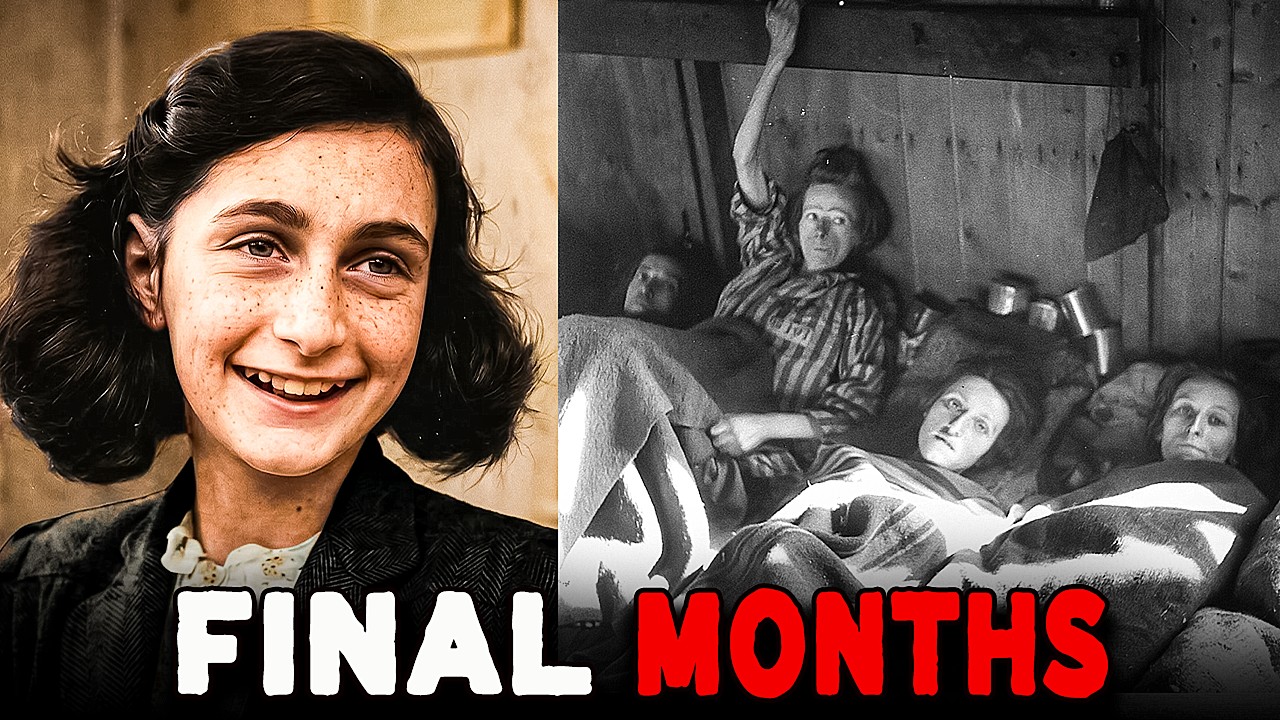
They walked in, confronted one of the helpers at gunpoint, and demanded to be taken to the hidden entrance. Someone had told them exactly where to go. Behind a movable bookcase on the upper floors, eight people had been living in hiding for more than two years. Among them was a fifteen-year-old girl who had spent 761 of those days writing in a diary.
Three days earlier, on August 1st, she had made her final entry, a restless self-examination in which she described herself as a bundle of contradictions. She did not know it would be her last. She had once written that she wanted to go on living even after her death. The bookcase swung open.
Otto Frank was upstairs with Peter van Pels, going over schoolwork, when the door flew open and a man stood in the doorway with a pistol. The others were rounded up at gunpoint. Silberbauer collected their valuables, and in a moment of casual bureaucratic cruelty, he swept Anne’s briefcase, stuffed with her diary papers and notebooks, onto the floor to make room for jewelry and silver. She watched it happen.
The raid took two hours. When it was over, all eight residents of the secret annex were under arrest, along with two of their helpers, Victor Kugler and Johannes Kleiman. Anne Frank would never see the annex again. The question of who betrayed them has haunted historians for eighty years.
In 2022, a cold case investigation put forward Arnold van den Bergh, a prominent Jewish notary in Amsterdam, as the most likely suspect. The theory, based primarily on an anonymous note sent to Otto Frank after the war, holds that van den Bergh may have passed information about Jewish hiding places to the authorities in exchange for protection for his own family. The conclusion is contested. The NIOD Institute for War, Holocaust, and Genocide Studies criticized it as insufficiently supported, and the Anne Frank House has treated it with caution.
The case is circumstantial, and van den Bergh cannot defend himself. What is not in doubt is that someone made a decision or a phone call, and eight people in hiding were handed to the people who wanted to kill them. Their first stop was not Auschwitz. It was Westerbork, a transit camp in the remote northeastern corner of the Netherlands.
Originally built by the Dutch government in 1939 to house Jewish refugees fleeing Germany, it had become under Nazi occupation a processing point for Dutch Jews being shipped east to the extermination camps. Because they had been caught hiding, which classified them as criminals under Nazi law, the eight were assigned to the punishment barracks. Anne, her sister Margot, and their mother Edith were set to dismantling used batteries, filthy and grueling work that corroded their hands. Every Tuesday, a train left Westerbork headed east.
Survivors who were there during those weeks later described Anne as still recognizably herself: animated, curious, talking with other prisoners. Families had not yet been separated. The horror was real, but it was not yet total. Then the transport list was read out, and all eight names from the secret annex were on it.
In a tragic twist of timing, it was the very last transport that would ever leave Westerbork bound for Auschwitz. The Allied forces were advancing rapidly; within weeks, the deportations would stop entirely. If the betrayal had come just a month later, or not at all, the story might have ended differently. There was no passenger train this time.
They were loaded into cattle cars. More than a thousand people were forced into dark, sealed wagons, with no seats, no windows, and a single bucket in the corner for sanitation. The journey took three days. Anne had spent 761 days confined in the annex, but that was a space with beds, books, a radio, and people who loved her.
This was something categorically different: heat, darkness, the crush of bodies, the moaning of the sick, the crying of children, no food, almost no water, and the wheels grinding east. On September 5th, 1944, the doors were unbolted at Auschwitz-Birkenau. Blinding lights, shouting, dogs barking. The selection began immediately.
SS doctors moved along the platform, directing prisoners left or right. Women and children were separated from the men. In the noise and confusion, Otto Frank was pulled away from his wife and daughters. He looked back at them across the platform.
It was the last time he would ever see them. Of the 1,019 people on that transport, 549 were sent directly to the gas chambers that night, including every child under the age of fifteen. Anne Frank had turned fifteen in June, just three months earlier. She survived the selection by a margin of weeks.
Surviving the selection meant entering Auschwitz. The processing of new arrivals stripped away every marker of individual identity. They were ordered to undress. Their heads were shaved.
A number was tattooed on the forearm. Anne was no longer Anne Frank; she was a number in a ledger. Assigned to a labor detail hauling heavy stones, her body, already weakened by the journey, strained under the work. She developed scabies, a skin infestation that caused maddening, relentless itching, with no treatment available.
From the barracks, the chimneys of the crematoria were visible on the horizon, and the smell was constant. Edith Frank, in these weeks, became ferocious in her determination to keep her daughters alive. She saved portions of her own already inadequate rations and found ways to pass bread to Anne and Margot through gaps in the fencing. She was growing skeletal, but her maternal will did not falter.
One of the few direct testimonies of Anne during the Auschwitz period comes from a Dutch woman, Ronnie Goldstein van Cleef, who was in the same barracks. She remembered Anne as still responsive, still present, but already diminishing. The light was going out slowly. In late October 1944, with the Soviet army advancing from the east, the SS began selecting prisoners for evacuation to camps deeper inside the Reich.
Anne and Margot were chosen for transfer. Their mother was not. Edith Frank stood and watched her daughters marched away. She never recovered from it.
On January 6th, 1945, she died in Auschwitz alone, from starvation and exhaustion. She was forty-four years old. She had given her food to her children until there was nothing left of herself to give. Anne and Margot arrived at Bergen-Belsen in late October or early November 1944.
The camp had not been designed as an extermination camp; there were no gas chambers. It had been built as a prisoner of war camp, then converted to hold prisoners deemed potentially useful as exchange hostages. For a time, conditions had been marginally less catastrophic than at Auschwitz. By the time the sisters arrived, that was no longer true.
As the Allied armies advanced, the Nazis force-marched prisoners from camps closer to the front lines toward camps deeper in Germany. Bergen-Belsen, built to hold a few thousand people, was receiving tens of thousands. The food supply broke down. The water supply broke down.
The sanitation system ceased to function. The winter of 1944 to 1945 was one of the coldest in decades. Inside the unheated barracks, prisoners lay on filthy, lice-ridden bunks in whatever clothing they still possessed. Threading through the camp like a death sentence written in invisible ink was typhus, a bacterial infection transmitted by body lice.
In normal circumstances it is serious but treatable. Here, in a population of starving, freezing, exhausted human beings packed together without sanitation or medicine, it was a death sentence for tens of thousands. The symptoms progress with merciless efficiency: high fever, severe headaches, a rash across the chest and abdomen, and then delirium. An estimated 50,000 people died in Bergen-Belsen, most from typhus or starvation, often both.
Two witnesses allow us to see Anne in her final weeks. Hanne Pick-Goslar, one of Anne’s closest childhood friends, was also imprisoned in Bergen-Belsen in a separate section. She heard Anne was in the camp and made her way to the barbed wire fence that divided their sections. What she found was devastating.
Anne came to the fence, but she was not the girl Hanne had known. She was skeletal. Her head was shaved. She was shivering, wrapped in little more than a thin blanket.
She wept. She told Hanne she believed her father was dead. Otto Frank was in fact alive in Auschwitz, but Anne had no way of knowing this. She said she had nothing left.
Hanne later recalled that her spirit seemed already broken. The second witness is Janny Brandes-Brilleslijper, a Dutch resistance member imprisoned in the same barracks as Anne and Margot. She described watching typhus take hold of both sisters. Anne became increasingly delirious.
At one point, in the fever and confusion of her illness, she tore off her own clothes because they were so infested with lice she could no longer bear them. She stood shivering, unable to help herself. The girl who had written about beauty and love and the goodness she still believed existed in people was dying half-naked and delirious in a frozen barracks. Margot died first, most likely in late February 1945.
She was nineteen years old. In her final hours, too weak to hold herself upright, she fell from her bunk to the stone floor below. The fall in her condition was unsurvivable. She died where she fell.
For Anne, Margot’s death was the end of whatever remained. Survivors later said that after Margot died, Anne seemed to simply stop fighting. Within days, the accounts vary on exactly how many, Anne Frank also died. She was fifteen years old.
For decades, her death was recorded as March 1945. More recent research by the Anne Frank House now places it in late February 1945, likely within days of Margot’s. There was no burial. Their bodies, like tens of thousands of others, were thrown into one of the mass pits dug around the camp.
The exact location is unknown. On April 15th, 1945, at most a few weeks after Anne died, possibly less, British troops entered Bergen-Belsen. They found 13,000 unburied corpses and 60,000 survivors in such extreme illness and starvation that thousands more would die in the weeks following liberation. They filmed what they found because they understood that the world would need to see it to believe it.
Anne Frank was not there to be liberated. She had died, probably with liberation less than a month away.