In the summer of 1906, in a Washoe County courtroom in Nevada, a woman named Laura Cooke Corey sat down to testify against the most powerful steel executive in the world. The man in question was not even in the room. He did not need to be. Through his lawyers, he had already made clear exactly what he was willing to pay to end the proceedings quickly: three million dollars, full surrender of custody of his son, and his signature on any papers Nevada’s remarkably lenient divorce laws required.
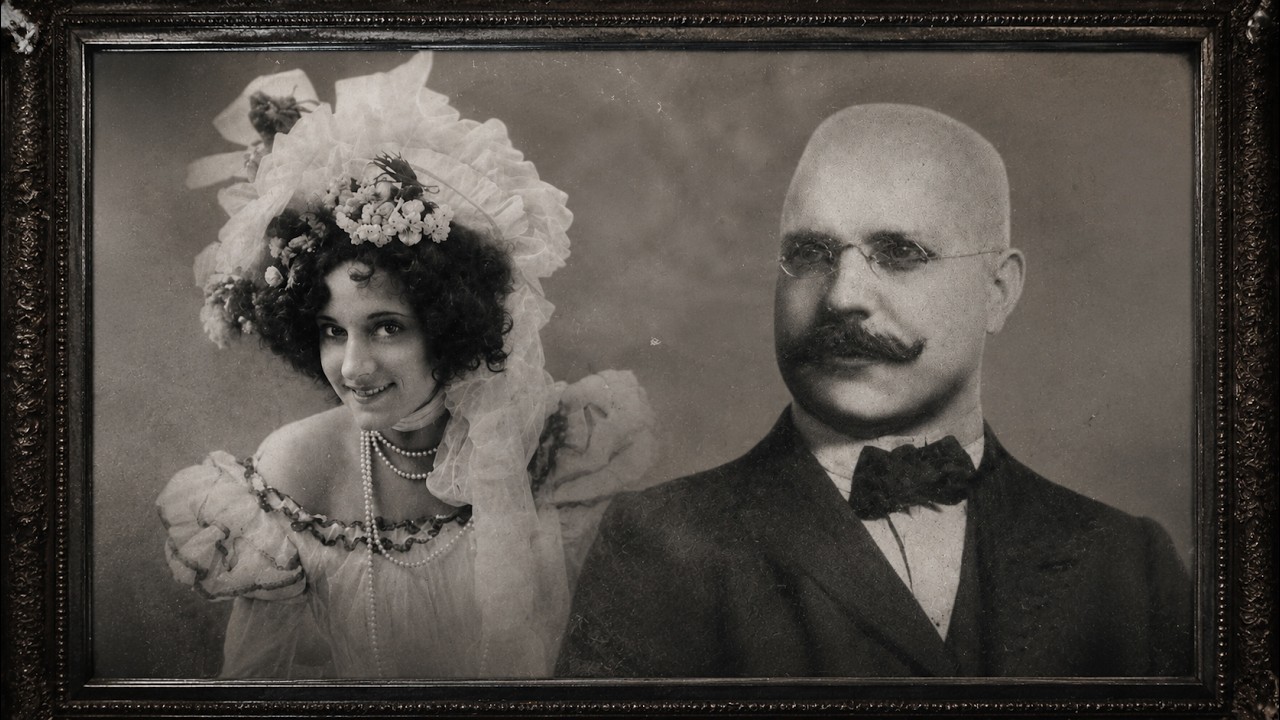
Three million dollars in 1906 was not merely a settlement; it was close to the annual output of a mid-sized steel mill, handed over in a single afternoon by a man who ran the largest company on earth, simply so he could marry an actress. That man was William Ellis Corey, president of United States Steel, the company Andrew Carnegie had built and J. P. Morgan had bought.
It was the largest industrial enterprise ever assembled under one roof, valued at over one billion dollars at a time when a skilled steelworker was grateful to earn eighteen dollars a week. Corey had started his own career standing on the floor of a mill in Braddock, Pennsylvania, close enough to the furnaces to lose hearing in one ear from the noise. By 1906, he was arguably the most powerful executive in American industry, chosen personally by Charles Schwab to lead U. S.
Steel, guided and supported by Andrew Carnegie himself. In the spring of 1907, less than a year after that Reno courtroom finished its work, Corey did something the men who built his career considered more dangerous to the Morgan enterprise than any tariff, strike, or competitor’s furnace: he married a Broadway actress named Mabel Gilman in a hotel room after midnight, making no effort whatsoever to conceal it. J. P.
Morgan did not sue him. Neither did Andrew Carnegie. Instead, they communicated through the same private channels that had produced the three-million-dollar settlement, making clear that a man running U. S.
Steel could not simultaneously carry on a public affair with a showgirl. If Corey would not choose between the two, the board of directors would choose for him. Corey was born on May 4, 1866, in Braddock, Pennsylvania, an industrial town on the Monongahela River that existed for one reason: the Edgar Thomson Steel Works, the main plant of Andrew Carnegie’s steel empire. His father was a merchant, not a steelworker, placing young William slightly above the families whose sons went straight from elementary school into the mill.
But that did not place him high enough to avoid mill work entirely. He joined the Carnegie enterprise young and rose the way ambitious men rose under Carnegie, by outworking everyone around him, mastering the technical details of steel production that college-educated managers often ignored, and attaching himself early to a rising star named Charles Schwab. Schwab recognized something worth cultivating. By 1893, Corey was manager of the Homestead Steel Works, the very plant that a year earlier had been the site of one of the most violent labor confrontations in American history.
During the Homestead Strike of 1892, armed Pinkerton agents and striking steelworkers had fought a bloody battle that left several men dead and effectively broke the steelworkers’ union in Carnegie’s mills for a generation. Corey did not run Homestead during the strike itself, but he inherited its aftermath, managing a workforce that had seen its union crushed and its wages set entirely at the discretion of men like him. By all accounts, he excelled at the job the Carnegie system demanded: strict cost control, continuous production, and the operational discipline that made Homestead one of the most productive steel plants on earth. It also made Corey very little money personally, by the standards he would later know.
In 1883, at age seventeen, Corey married Laura Cooke. The couple had met when Laura worked for the Corey family in domestic service. It was, by the standards of Braddock in the 1880s, a completely ordinary marriage: two young people of modest circumstances marrying young with no significant wealth on either side. They had one son, Allen, born in 1889.
Over the next two decades, as Corey’s career climbed from the mill floor to superintendent to the executive suite, Laura rose with him in the prescribed and largely invisible manner expected of rising industrialists’ wives, managing increasingly large and formal households and adapting to an expanding social calendar. The turning point in Corey’s career and in the entire American steel industry came in 1901, when a J. P. Morgan banking syndicate bought Andrew Carnegie’s steel empire for roughly $480 million and combined it with several competitors to form United States Steel, the first billion-dollar corporation in world history, controlling about two-thirds of American steel production at its founding.
Charles Schwab became the new company’s first president. Corey, Schwab’s protégé, succeeded him as president of Carnegie Steel. Then in 1903, when Schwab’s own behavior, after a public gambling spree in Monte Carlo witnessed by American tourists and gleefully reported by the American press, became a liability to Morgan’s carefully cultivated image of sober corporate management, Schwab was forced out of the presidency of U. S.
Steel. William Corey succeeded him. At thirty-seven, the son of a Braddock merchant who had spent his twenties managing a plant floor still scarred by strike violence now headed the largest industrial company the world had ever seen, effectively reporting to J. P.
Morgan himself. Central to the irony of Corey’s later fall was the fact that the position he inherited existed in Morgan’s design specifically because Charles Schwab’s personal conduct had become a public embarrassment the company could no longer tolerate. Corey watched his mentor lose his job over a scandal of personal indulgence and damaged public reputation. Four years later, he would lose the same job for remarkably similar reasons.
Mabel Gilman was born in San Francisco on December 4, 1874, the daughter of Charles Henry Gilman and Jeanette Curtis Gilman. She attended Mills College in Oakland before pursuing a career the Gilman family had not entirely planned: musical theater. By the mid-1890s, she had crossed the Atlantic and appeared in London, starring in the comic opera Amarill at the Comedy Theatre in 1896. She built a transatlantic theatrical résumé, which in the era of May Yohe and dozens of American actresses working in London meant genuine fame on both continents.
By 1905, she was back in the United States and one of the most prominent stars of musical comedy on Broadway, a familiar face to any newspaper reader who followed the theater. In 1905, she was touring in a show called The Mocking Bird, and that tour brought her to Pittsburgh. Pittsburgh in 1905 was William Corey’s city. The exact circumstances of how Corey and Mabel Gilman first met in Pittsburgh that year were never recorded with the precision gossip columnists would later have preferred, but the result was indisputable.
Corey, thirty-nine and at the height of his institutional power, watched Gilman perform, met her, and fell in love with her quickly and completely. He was a man married for twenty-two years with a teenage son and a wife who had spent two decades building a family and social position entirely centered on his career. None of that appears to have factored into what followed. Corey began courting Gilman with a persistence that a man of his financial standing rarely needed to conceal, and she, a Broadway star with her own career and considerable independence, did not discourage him.
Within months, the marriage to Laura was over in every way but the legal one, and in 1905 Corey abandoned his wife. Polite society in the Gilded Age operated under unwritten but well-understood rules regarding the infidelities of its richest men. Private indiscretion was tolerated, sometimes widely, as long as it remained genuinely discreet. But William Corey did not follow these rules.
He was seen with Gilman. He was photographed near her. Newspapers that had covered Gilman’s Broadway career for years linked her name with his with increasing clarity. By the end of 1905, the story of the head of the largest corporation on earth abandoning his wife of twenty-two years for a stage star was no longer a rumor; it was national news.
For Laura Corey, the public nature of the affair turned a personal humiliation into a matter of grave consequence. She could no longer simply wait and hope the affair ended quietly, because the entire country was watching. In late 1905, she decided to seek a divorce. Because Pennsylvania divorce law made it very difficult for a wife in her position to secure a legal separation and sufficient settlement, she went elsewhere: Reno, Nevada.
Reno in December 1905 had not yet become America’s divorce capital as it would in the following decades, but the Corey case did more than any other single event to build that reputation. Nevada’s residency requirement was remarkably short compared to nearly every other state in the union, and its grounds for divorce notably lenient. Laura Corey filed for divorce on June 11, 1906, charging desertion, and the case went to trial at the end of July. On July 24, members of William Corey’s own family traveled to Reno and testified on Laura’s behalf, a detail that says much about how the Corey family’s loyalties divided.
The divorce hearing was held on the morning of Monday, July 31, 1906, in the Washoe County courthouse. The terms were exactly what Corey’s lawyers had hinted they would be: Laura received full custody of their son Allen and a settlement of three million dollars, roughly one hundred million in modern currency, one of the largest divorce settlements American newspapers had ever reported. William Corey did not wait long. On May 14, 1907, less than a year after his divorce from Laura, he married Mabel Gilman at the Gotham Hotel in New York City, in a ceremony performed by a Presbyterian minister after midnight.
The timing and setting were almost defiantly unconventional by Gilded Age elite wedding standards. No great social church, no long guest list of business connections. The New York Times covered it regardless, under a headline that needed no embellishment. Corey reportedly gave his new wife a cash wedding gift of one million dollars, bought her a mansion in France, and lavished her with jewels.
For Mabel Gilman, the marriage represented an almost unbelievable material ascent. For William Corey, it was a decision, made with his eyes fully open, that the woman he wanted mattered more than the good opinion of the men who had built his career. Those men were watching, and they were not pleased. U.
S. Steel in 1907 was not merely an ordinary company. It was a deliberate concentration of industrial power built by J. P.
Morgan’s banking syndicate specifically to eliminate the price wars and boom-and-bust cycles that had made the steel industry chaotic and sometimes ruinous for investors throughout the 1890s. Morgan’s entire theory of corporate management rested on stability, predictability, and the careful cultivation of public trust. A president whose personal life dominated the yellow press was, from Morgan’s point of view, not merely an embarrassment but a liability at a moment when the company could least afford one. According to accounts widely circulated in Wall Street circles at the time, and treated by later biographers of both Morgan and Carnegie as broadly credible, Corey was approached before his marriage to Gilman and effectively given a choice.
End the relationship quietly and continue running the largest company in the world with the full support of the men who had placed him in the position, or face the consequences. Andrew Carnegie took the matter especially personally. He had spent decades building a public image of moral uprightness and philanthropic virtue, and one of his personally supported protégés abandoning his wife of twenty-two years for a showgirl in a scandal covered by every newspaper in the country was precisely the kind of story Carnegie’s carefully cultivated reputation could not easily withstand. Corey refused any settlement offered.
He married Gilman anyway. The clearest early signal of what had changed came from an unexpected direction. In 1910, Tennessee Coal, Iron and Railroad Company began building a model company town in Alabama and named it Fairfield in honor of Corey. The scandal and negative publicity associated with his divorce and remarriage prompted the company to reconsider, and the town’s name was quietly changed, removed as a tribute to Corey’s career and instead made a tribute to his birthplace of Fairfield, Connecticut.
The same geography, technically, but with Corey’s name deliberately erased. It was a small but unmistakable signal of just how far his standing had fallen among the men who ran American industry. Corey remained president of U. S.
Steel for another four years after his marriage to Gilman, but the goodwill that had once made him Schwab’s chosen successor had visibly evaporated. By 1911, amid mounting scrutiny over U. S. Steel’s business practices, a sprawling federal antitrust investigation, and a board of directors that had never forgiven him the manner of his second marriage, he resigned.
He was forty-five. He had spent twenty-eight years rising from a mill floor in Braddock to the top of American industry, and had spent the last four of them, by the calculation of the men most important to his career, on a marriage he refused to hide. Corey did not retire. In 1915, a group of investors engineered a merger of the Midvale Steel Company with Cambria Steel of Johnstown, Pennsylvania, and two smaller Philadelphia-area companies, creating a new entity called Midvale Steel and Ordnance, and installed William Corey at its head.
The timing could not have been more fortunate. Europe had been at war since the previous summer, and demand for armor plate, artillery shells, and naval equipment was about to produce one of the greatest industrial booms in American history. By 1917, Midvale Steel and Ordnance ranked among the twenty largest companies in the United States by revenue. By 1919, its payroll had swelled to more than seven thousand workers.
Corey had built one of the nation’s most important wartime industrial suppliers from scratch. The company he chose to compete against was not a random choice. Charles Schwab, who had discovered Corey’s talent and championed his rise, had himself been forced out of the presidency of U. S.
Steel in 1903. In 1904, he founded Bethlehem Steel. By the time of the First World War, Bethlehem had become one of the largest and most important suppliers of ships, armor, ammunition, and guns to the American military and its European allies. The two men, once master and apprentice on the same factory floor, now ran competing wartime suppliers chasing many of the same government munitions contracts.
Bethlehem, with its greater capacity and decade-long head start, usually won the larger contracts. But Midvale carved out a sustainable niche, particularly in armor-piercing projectile technology. Ultimately, it was not a competition Corey fully won. It was one that forced him to spend the next decade proving to himself, if no one else, that the men who decided he was more trouble than he was worth in 1911 had been wrong about at least one thing: his ability to build something important entirely on his own.
In November 1923, Mabel Gilman Corey filed for divorce from William Corey in Paris, charging desertion, the same charge Laura Cooke Corey had used against William seventeen years earlier in Reno. That same year, Bethlehem Steel, owned by Charles Schwab, acquired the majority of Midvale Steel and Ordnance. Corey retired from business that same year, the same year his second marriage ended, and the same year his wartime competitor formally absorbed the majority of the company he had built specifically to prove himself against that competitor. Mabel, free of her marriage and financially secure, remained in France.
In 1929, international press reported that Mabel, then in her mid-fifties, had become engaged to the Infante Luis Fernando of Spain. The marriage never took place; the engagement collapsed the following year. William Corey lived largely alone in his Fifth Avenue mansion throughout the last decade of his life. He died there on May 11, 1934, of pneumonia, at sixty-eight.
The obituaries treated his career with a respect the scandal-driven coverage of 1906 and 1907 had rarely granted him. Mabel Gilman Corey outlived her second husband by twenty-six years. In October 1942, with France under German occupation, she was briefly held at the Vittel internment camp in Vichy France, one of many American and Allied women caught by Nazi internment policies. She was released relatively quickly and survived because German authorities concluded that a woman in her late sixties posed no real threat.
She spent her final years in the United States at the Blessed Trinity missionary complex in Brooklyn, New York. She died on November 14, 1960, at eighty-five. Per her wishes, her body was cremated and her ashes scattered in the garden of the religious community where she had spent her last years.
A quiet, almost monastic end for a woman whose life had once been the subject of some of the most sensational newspaper coverage of the entire Gilded Age.