Field Marshal Walther Model had spent the final months of the Second World War commanding a doomed army, and by the spring of 1945 he knew the end was near. The man once hailed by Hitler as the savior of the Eastern Front and the best field marshal in the Wehrmacht had watched his forces collapse, his reputation crumble, and his name placed on the list of wanted war criminals. On April 21, 1945, with the war effectively lost, Model drove into the woods near Duisburg with his adjutant, made the decision to end his own life, and fired a single shot into his head. Model had been a soldier since his youth.
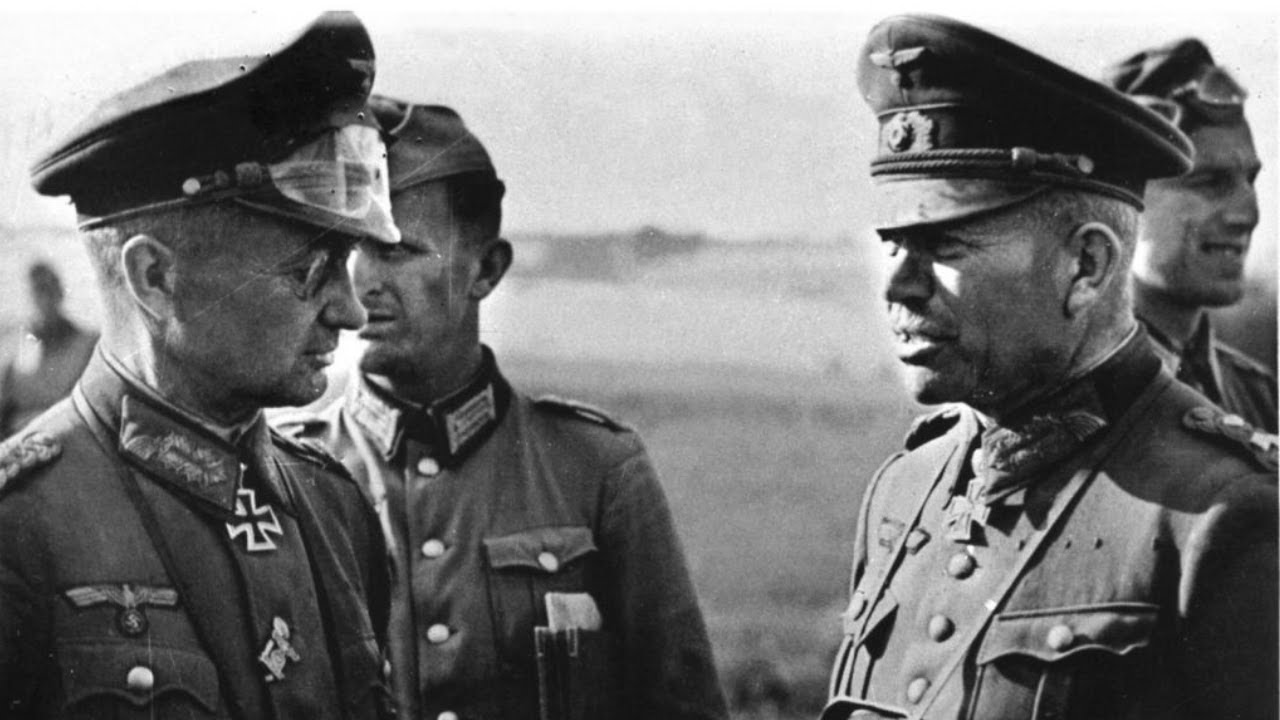
He joined the army as a teenager and served in the 52nd Infantry Regiment during the First World War. He fought on the Western Front, was wounded in May 1915 and again later in the conflict, and his performance earned him a recommendation for General Staff training. By the end of the war he had risen to the rank of captain. Following the German defeat, Model remained in the much-reduced Reichswehr, the army limited by the Treaty of Versailles to 100,000 men.
In the interwar years he built friendships with future generals such as Friedrich Paulus and attended meetings with Wilhelm Keitel, who would become the most senior figure in the German military during the Second World War. In the 1930s, as Hitler expanded the army, Model commanded battalions and became a supporter of Hitler and the Nazi Party. When war broke out in 1939, Model served as chief of staff for the Fourth Corps during the invasion of Poland. The campaign was brief, lasting around eleven days of hard fighting, and his unit was later involved in the occupation of the Lublin region.
During the invasion of France, Model served with the 16th Army and continued to impress senior leadership. He was made a general and gained his first senior command when he was assigned to lead the 3rd Panzer Division, a prestigious step even though he had no previous experience commanding armored units. His forces were deployed to the Eastern Front for Operation Barbarossa. Model was not the most formal commander, and his unorthodox approach made him popular with his soldiers even as it irritated other officers.
His division performed well during the invasion, crossing the Dnieper River with relatively few casualties and then enduring weeks of tough fighting as his forces broke up Soviet units. Later, in conjunction with other commanders, Model helped trap Soviet forces in an encirclement that produced 665,000 prisoners of war. His forces became known for their speed and took part in the advance toward Moscow, though the drive stalled when winter brought chaos: vehicles and weapons froze, and the offensive ground to a halt. Model continued to lead troops across the Soviet Union, and it was there that the darker side of his record took shape.
His men carried out anti-partisan raids that led to the mass slaughter of civilians, and these were not merely SS operations; regular army forces such as his were involved in deliberate extermination policies. During one assault, Model ordered all male civilians deported, wells poisoned, and dozens of villages burned to the ground to prevent Red Army bases from being established. Because of actions like these, he rose to the top of the list of wanted war criminals. In July 1943, Model took part in the northern sector of the Battle of Kursk, the massive armored confrontation on the Eastern Front.
After the failure of the offensive, he was sent to Estonia to halt Soviet advances, but the Germans were already in retreat and the Red Army was overwhelming his defenses. On March 1, 1944, Model became the youngest officer in the Wehrmacht to be promoted to field marshal. Despite some victories over the Soviets, he could not change the fundamental reality that the Eastern Front was lost. Model was then transferred to France and Normandy, where the Allied invasion had pushed the German army back.
His first order of business was to convince Hitler to allow the retreat of the 5th Army and Panzer Group Eberbach. He managed to rescue a number of units to fight another day, even though they had lost most of their tanks, armor, and artillery. When Hitler ordered that Paris be held at all costs, Model replied that he could only do so with 200,000 additional soldiers and several extra Panzer divisions, forces the German army simply did not have. In September 1944, Model faced the Allied airborne landings during Operation Market Garden.
He believed the Allies were targeting him, perhaps even trying to capture him, and he ordered his forces into action, seeing an opportunity to counterattack and push the Allies out of the southern Netherlands. His troops fought well and inflicted a brutal defeat on the Allies. The victory at Arnhem restored Model’s reputation and confidence, which had been damaged in Normandy. He continued to frustrate the Allies in the Battle of the Hürtgen Forest, where thousands of casualties were inflicted on his enemies.
But Hitler then played his final card, ordering the Ardennes Offensive, the counterattack known as the Battle of the Bulge. Model believed the plan was not achievable with the resources at his disposal. The offensive had limited success, but a lack of air cover, fuel shortages, and inexperienced soldiers caused major problems, as did the failure to capture the crucial road junctions around Bastogne and the weather. Hitler nonetheless ordered Model’s forces to hold their positions and fight to the end.
The Americans crossed the Rur River at the bridge at Remagen, and this marked the beginning of the end for Model. On April 1, 1945, his troops were surrounded in the Ruhr Pocket by American forces. Hitler wanted his commanders to dig in and fight a purely defensive battle, forbidding surrender or breakout attempts. He also ordered much of the Ruhr’s industrial centers to be blown up, but Model ignored those instructions.
The Allies called on him to surrender rather than send his soldiers to a pointless slaughter, but Model was torn between his oath to Hitler and his sense of duty as a field marshal. In the end, he dissolved much of his army: the oldest and youngest soldiers were discharged from military service, and the remaining men were left to surrender or attempt breakouts on their own orders. Joseph Goebbels, Hitler’s propaganda minister, declared Army Group B traitors for their conduct. Model knew his reputation in Hitler’s eyes was in tatters and that if he fell into German hands he would likely face execution.
He also knew the Allies regarded him as a wanted war criminal. He dismissed his command and asked those around him whether everything had been done to justify their actions in the light of history. “What can there be left for a commander in defeat? ” he reportedly said.
“In Antiquity they took poison. ” Those around him could see he was a defeated man looking to take his own life. The decision was confirmed when he was told that the Soviets had indicted him in absentia for war crimes relating to the deaths of 575,000 people in concentration camps in Latvia and the deportation of 175,000 people to slave labor programs. Near the city of Duisburg on April 21, 1945, Model drove out with his adjutant to some woods close to Raitheim.
A staff officer urged him once more to surrender. Model refused. “I simply cannot do it,” he said. “The Russians have branded me a war criminal, and the Americans would be sure to turn me over to them for hanging.
”
Late in the afternoon, Model told his adjutant, Colonel Pilling, “My hour has come. ” He led Pilling deep into the forest, drew his pistol, and instructed him, “You will bury me here. ” Field Marshal Walther Model then shot himself in the head. Colonel Pilling buried him at the spot where he died, giving him a soldier’s burial in the field.
A decade later, Pilling helped recover what remained of Model from the field grave. His remains were exhumed and reburied in a German military cemetery in the Hürtgen Forest. Today only a small stone marks the site. Model was a commander known for excellent defensive skills and an outstanding talent for improvisation, with a very good eye for detail.
His relationship with Hitler was complex: Hitler trusted him and called him his best field marshal and the savior of the Eastern Front, yet Model often ignored orders he felt he could not follow. He was a committed Nazi who lectured his soldiers on complete faith in and obedience to Hitler, and his troops were involved in numerous war crimes. In the end, with the war lost and his fate certain, the man who chose to take his own life rather than face an executioner was himself a man responsible for the deaths of hundreds of thousands of others.