Calamity Jane died on August 1, 1903, in a small hotel room in Terry, South Dakota, a minor mining village not far from Deadwood. She had been drinking heavily on the train ride into town, and by the time a doctor was summoned, she was already beyond help. Inflammation of the bowels and pneumonia took her quickly. Her last request was that she be buried next to Wild Bill Hickok, the famed gunfighter who had been killed in a Deadwood saloon nearly three decades earlier.
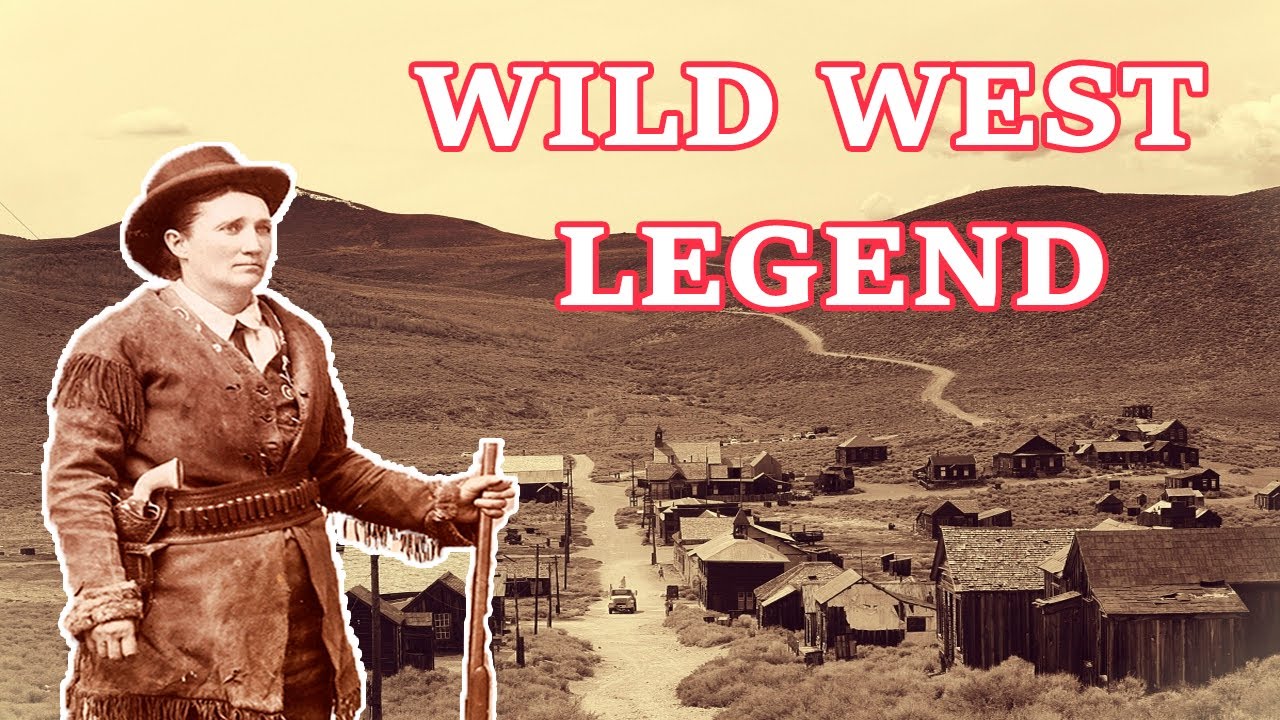
Her wish was granted, and on August 4, 1903, she was laid to rest at Mount Moriah Cemetery, overlooking the town where she had become a legend. The funeral was the largest ever held in Deadwood for a woman, and the coffin was closed by a man who, as a boy, she had nursed back to health during the smallpox epidemic of 1876. Her real name was Martha Jane Canary, born on May 1, 1852, in Princeton, Missouri. She was the eldest of six children, and her childhood offered little stability.
Her father, Robert, drifted into petty crime and gambling, and when the family found itself destitute, her mother, Charlotte, worked as a prostitute and resorted to petty theft to keep the household together. Much of what is known about Jane’s early life comes from an autobiographical booklet she dictated in 1896, apparently written for publicity purposes. As a result, some details may have been exaggerated, and it has always been difficult to separate fact from the tales she told about herself. In 1865, the family moved to Virginia City, Montana, likely in search of work and the hope of striking it rich in the gold fields.
The journey took five months by wagon train, and even as a young girl, Martha Jane loved the outdoors and riding. She frequently went out riding and hunting with the men, and by the time the wagon train reached its destination, she was considered a skilled rider and a good shot. The trip also brought tragedy. Her mother died of pneumonia along the route.
Soon after arriving in Virginia City, her father moved the family to Salt Lake City, Utah, where he found work as a farm laborer and began making an honest living. But within a year, he was dead as well. Martha Jane was only twelve years old and now responsible for her five younger siblings. With no opportunities in Salt Lake City, she gathered the family and moved to Wyoming, eventually settling in Piedmont.
There she worked day and night at a variety of jobs to keep her brothers and sisters fed. She was illiterate, extremely poor, and forced to move wherever work could be found. As a teenager, she occasionally engaged in prostitution, seeing it as a quick way to make money. Despite these hardships, she grew into a strong, tall, and driven young woman.
The world she lived in was a man’s world, and to care for her siblings as best she could, she adopted a male persona. In 1870, she joined General George Armstrong Custer as a scout at Fort Russell, Wyoming. It was there that she began dressing as a man, and from that point her life took a different course. Instead of odd jobs, she became involved in military campaigns and conflicts with Native American tribes.
She claimed to be the most reckless and daring rider in the West and one of its best shots. During a campaign in Goose Creek, Wyoming, in 1872 and 1873, she earned her famous nickname. According to her account, troops under Captain Egan were ordered to put down an Indian uprising. As the soldiers headed back to camp, they were ambushed by a large group of Native Americans.
Captain Egan was shot first and fell from his horse. Calamity Jane, riding ahead, heard the gunfire, turned back, and saw the captain on the ground. She galloped to him, lifted him onto her horse, and got him safely back to the fort. Upon recovering, Egan laughingly told her he had named her Calamity Jane, the heroine of the plains.
Many believed the story to be untrue, but by 1876 the name appeared in newspaper headlines. More likely, she gained the nickname because she often warned men who offended her that they were courting calamity. In 1875, Calamity Jane traveled into the Black Hills of South Dakota and drifted into the lawless town of Deadwood. There she became friends with Dora DuFran, the leading madam of the Black Hills, and was occasionally employed by her.
It was also around this time that she became friends with Wild Bill Hickok and Charlie Utter. Many myths and tales surround this period of her life. She was said to have had affairs with some of the most notorious desperadoes of the era, including Hickok. Stories claimed they drank together, were romantically involved, and even that he fathered one of her children.
Some tales went so far as to claim the two were married. On August 2, 1876, Wild Bill Hickok was sitting at a gambling table in Nuttal & Mann’s Saloon No. 10 in Deadwood when Jack McCall shot him in the back of the head. Hickok’s funeral was held the next day, and the entire population of the town attended the procession.
A jury panel was selected the same day to try McCall. He claimed he had killed Hickok in revenge for the shooting of his brother in Kansas and said he would do it again if given the chance. In less than two hours, the jury returned a verdict of not guilty. McCall headed for Wyoming, but less than a month later, the trial was found to have no legal basis because Deadwood was located in Indian Territory, so the verdict did not stand.
McCall was arrested on August 29, 1876, charged with murder, and taken to Yankton, South Dakota, for a new trial. This time he was found guilty, and in the spring of 1877, he was hanged for the murder of Wild Bill Hickok. In her autobiography, Calamity Jane claimed she captured McCall after the killing, saying she had left her guns at home and had to chase him with a meat cleaver. The story was completely false.
Following the execution, Calamity Jane continued to live in the Deadwood area. There are stories of her compassion and willingness to help those in need. On one occasion, she supposedly saved six passengers in a runaway stagecoach fleeing from a Cheyenne war party. The attackers managed to kill the driver with an arrow, but Calamity Jane distracted the group, took over the reins, and got the passengers safely to Deadwood.
In 1876, when a smallpox epidemic broke out in Deadwood, she helped nurse many of the sick back to health. In 1882, Calamity Jane bought a ranch west of Miles City, Montana, along the Yellowstone River, where she kept an inn. In 1885, she married Clinton Burke, a Texan, and moved to Boulder, Colorado, where she once again tried her hand at running a business. In 1887, she gave birth to a daughter named Jess, who was later adopted by foster parents.
There are numerous accounts of her being seen with a young girl in several small towns throughout the West during the 1880s and 1890s, but there is no evidence that she ever married or gave birth in any official sense. It is likely that Calamity Jane did have two daughters, though the identities of their fathers remain unknown. In the late 1880s, Jane returned to Deadwood with a child she claimed was her daughter. She organized an event to raise money for the girl’s education.
It was well attended, and she managed to collect a large sum. But that night, Jane got drunk and spent much of the money within hours. The next day, she left Deadwood with the child and went back to Boulder. During the following years, the Burke family traveled through many of the northwestern states, and Calamity Jane tried to sell her life story.
Her reputation for handling a horse better than most and shooting like a cowboy earned her a place on Buffalo Bill’s Wild West Show in 1895, where she performed sharp shooting and rode horses. She toured Chicago, St. Louis, Kansas, and other cities, bringing the stage to life with an authentic experience of the Wild West. But she frequently ended up drunk and was eventually fired.
By that time, she was depressed and had been struggling with alcoholism for years. In one incident from the mid-1870s, she rented a horse and buggy for a one-mile joyride to Fort Russell and back, but she got so drunk that she passed out, missed her destination, and woke up about ninety miles away. In 1900, a newspaper editor found her in poor condition and nursed her back to health. In 1901, she was hired by the Pan-American Exposition in Buffalo, New York.
The job and the pay were good, but it all fell apart after an incident in a bar. She got into trouble with the police and angered the town to the point that she was chased out and no longer welcome there. In the spring of 1903, Calamity Jane returned to the Black Hills. Madame Dora DuFran was still running her business, and for the next few months, Jane earned her living by cooking and doing laundry for DuFran’s girls.
In late July, she boarded a train for Terry, South Dakota. She had been drinking heavily and became sick on the ride. The conductor carried her off the train, and a bartender secured a room for her at the Callaway Hotel. A doctor was summoned, and Jane died almost immediately after he arrived.
She was fifty-one years old. She was buried next to Wild Bill Hickok, the man she had long claimed as her love, and her legend only grew after her death.