Thomas John Augustus Griffin came to Australia with a promising future. Born on the 27th of July 1832 in Sligo, a coastal town in northwest Ireland, he entered the world during a severe cholera outbreak linked to the second global pandemic. The town was devastated; records showed 1,230 residents contracted the disease and 643 died, and the population dropped from fifteen thousand to twelve thousand. At seventeen, Griffin joined the Irish constabulary, and shortly afterward he volunteered for the British Army during the Crimean War.
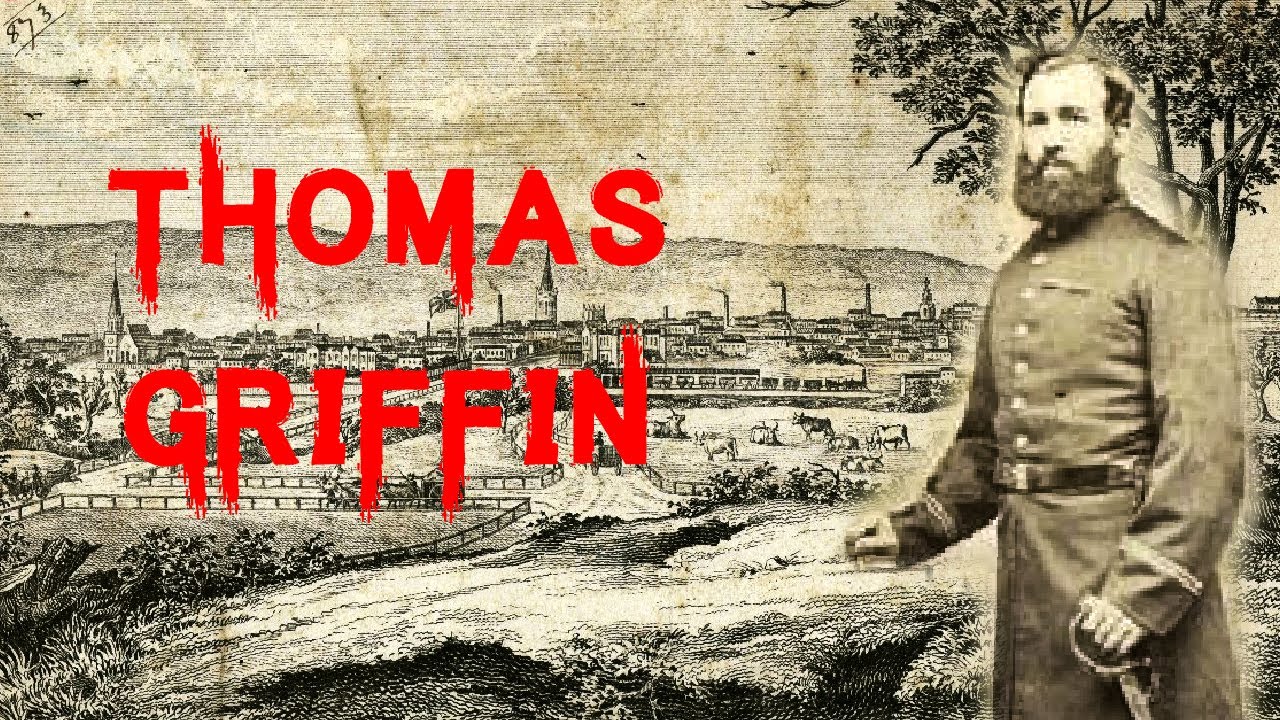
He served as an assistant storekeeper in the commissariat department before obtaining a commission in the Turkish contingent, earning medals for distinguished service. After the war, Griffin accepted an offer available to police volunteers: free passage to Australia. He arrived in Melbourne in late 1856. During the voyage, he met and married a wealthy widow, but the marriage collapsed when Griffin squandered her fortune.
He then sent her a false death notice, making it appear he had died, and abandoned her to continue his life unchecked. His Irish policing experience and Crimean War record secured him a position in the New South Wales police force in 1858. When Queensland separated from New South Wales on the 6th of June 1859, Griffin was sent to Rockhampton as acting sergeant and soon became chief constable. Transferred to Brisbane in 1862, he was appointed acting clerk of petty sessions, and the position became permanent the following year.
He had done well, but Griffin was ambitious. He cultivated a friendship with the sister of a prominent Queensland cabinet minister, yet refused to propose, insisting he needed a higher position before he could provide for a wife. In the late 1850s, gold discoveries across the Darling Downs and other parts of Queensland triggered the colony’s first gold rush. Thousands of prospectors poured into the region around Canoona, some fifty miles from Rockhampton.
The government decided a gold commissioner and police magistrate was needed, and Griffin was offered the position. He accepted quickly, despite having to leave Brisbane. With so many prospectors arriving, police were expected to perform additional duties beyond arrests and warrants. One of their main responsibilities was escorting gold and money.
These journeys were hazardous, and reports of attacks, some resulting in murder, were numerous. To encourage officers, their pay was doubled for such escorts. In November 1867, two Rockhampton constables, Patrick William Cahill, aged 27, and John Francis Power, aged 25, were given the task of delivering four thousand pounds to a new bank in Clermont, a community that had grown from the gold rush. The two men would travel on horseback from Rockhampton.
Thomas Griffin, now 35 and serving as gold commissioner, offered to join the escort for part of the journey. His stated reason was that both officers were young and inexperienced, but his presence was not really necessary. A few days into the journey, the men reached the Bedford Arms hotel near the Mackenzie River crossing, run by Alfred Harding Bedford. Griffin agreed to end his escort there and return to Rockhampton with Bedford that night.
The three men ate and drank at the hotel before returning to their nearby camp. Although Griffin said he would keep watch over the camp, Bedford offered him a room inside the hotel. The next day, Griffin and Bedford began their journey back to Rockhampton, a distance of about 130 miles. When they arrived, news awaited them: the two young policemen had been found dead at their campsite, and the four thousand pounds intended for Clermont was missing.
Griffin speculated that the victims must have fallen asleep and been killed, noting that escort duty was dangerous and many had died before them. Griffin hastily organized a group to return and investigate. Initially, the deaths appeared to be poisonings, as two dead pigs were found nearby. But when Dr.
David Salmon conducted autopsies, he reported that both men had been shot in the head. No poison was found, though he believed both victims had been given some narcotic and were in a stupor when killed. Unable to transport the bodies back to Rockhampton, the group removed the heads and stomachs of Cahill and Power, sealing them in jars for further examination. They hoped to determine whether the shots were fired from a distance or at close range.
Alfred Bedford then came forward with disturbing information. He said he had heard gunshots during the night and woke to find Griffin absent from the hotel. When Griffin returned, Bedford asked about the noise. Griffin replied that he had gone to check on the horses, lost his way, and fired his revolver to attract attention.
This explanation only deepened suspicion. Griffin was arrested. The case divided Rockhampton, and many refused to believe he could have committed such a terrible crime. The newspapers took opposing positions: the Northern Argus defended him, while the Rockhampton Bulletin considered him responsible.
The attorney general wrote to Dr. Salmon in an effort to determine Griffin’s culpability. Forensic science was still developing, and Salmon took an experimental approach. He shot sheep skulls to replicate potential damage from a revolver.
If he could show the holes in the victims’ skulls matched a weapon fired at close range, the link to Griffin would be strong. Salmon obtained old human skulls from a collector, but these lacked skin and flesh, raising doubts about whether bullet damage would be comparable. He enlisted the help of Brisbane’s chief medical officer, Dr. William Hobbs.
Dr. Hobbs oversaw health in state facilities, including jails, asylums, and quarantine stations. He had professional access to the recently deceased who had no family or friends to object to their bodies being used. On the 2nd of January 1868, Hobbs’s attention was caught by the sudden arrival of a hundred South Sea Islanders on boats to Queensland.
The Islanders were suffering from dysentery and were sent to the Dunwich quarantine station on Stradbroke Island. Within two weeks, twenty-four of them died. Their heads were exactly what Dr. Salmon needed for his experiments.
Most were buried near the station, from which Hobbs dug up their bodies and removed their heads for research. Griffin’s trial began on the 16th of March 1868 in Rockhampton. He pleaded not guilty, and huge crowds gathered outside the courthouse. The prosecution revealed that the gold commissioner and police magistrate had carried a good reputation, but it had crumbled after he amassed a gambling debt of 230 pounds to local Chinese miners, who threatened to expose him when he failed to pay.
Griffin had been trusted with their gold, but he failed to keep it safe and gambled it away. Unable to bear the shame of being exposed as a gambler and thief, he stole from the gold escort. During the trial, Dr. Hobbs compared the bullet holes in the skulls of Patrick Cahill and John Power to the skulls of the South Sea Islanders.
He demonstrated that the bullets had been fired at close range from the defendant’s gun. On the 24th of March 1868, the jury found Thomas John Augustus Griffin guilty of murder, and the judge sentenced him to death. On the 1st of June 1868, Griffin was hanged at Rockhampton jail, the first execution in the town. To the end, he maintained his innocence, denying his guilt to everyone he saw.
As he stood on the scaffold, the hangman asked if he had anything to confess. Griffin replied firmly, “No, I have nothing to confess. ” His body was buried in the Church of England section of the Rockhampton Cemetery, beneath the body of an unknown sailor, a measure intended to discourage grave robbers. The hangman, Joshua Hutton, collected souvenirs from the execution, including Griffin’s clothes and the beard that was shaved off before burial.
Months later, when the grave was inspected, it was discovered that the sailor’s body remained intact but Griffin’s head was gone. The government offered a reward of twenty pounds for information about its disappearance, but the head was never found. It was believed that a local Rockhampton doctor, William Calligan, had taken it and kept the skull in his surgery until his death in 1912. One theory suggested the head was taken for research on what might drive someone to commit such horrific crimes.
There were even reports that a skull now sat on a shelf in an upper-class private residence in Rockhampton, but these remained unverified, and the actual location of Griffin’s skull remains a mystery. After the execution, a different account emerged. The prison turnkey, Alfred Grant, claimed to have witnessed Griffin pacing his cell and shouting, “It’s no bloody good, I did it. ” Griffin had apparently attempted a clever bargain, promising Grant a portion of the stolen money if he helped him escape.
He provided a pencil sketch of where he had hidden it. Despite two attempts, Grant and the principal turnkey, John Lee, could not find the money. They informed the sheriff, Tom Scarrett Hall, who organized a search party. During the search, they found a half-burnt tree stump covered by another stump.
Beneath it lay Griffin’s bag, containing the missing four thousand pounds, slightly damaged from rain. Grant also revealed what Griffin had told him about the murders. Griffin claimed he approached the camp, but John Power woke and fired at him, the bullet passing so close it cut through his beard. Griffin returned fire in self-defense, killing Power.
The gunfire woke Patrick Cahill, who allegedly tried to fire his pistol, but it exploded and he accidentally shot himself. With both officers dead, Griffin said he made the best of the situation and took the money. This version of events was met with great skepticism by the press, police, and people of Rockhampton. It was also believed Griffin had written a letter confessing to the crimes, but in 2008 it was discovered the letter had been written by someone else and was dated two days after his execution.
Thomas Griffin went to the gallows protesting his innocence, and despite his conviction, the full truth of that night on the Mackenzie River remains disputed to this day.