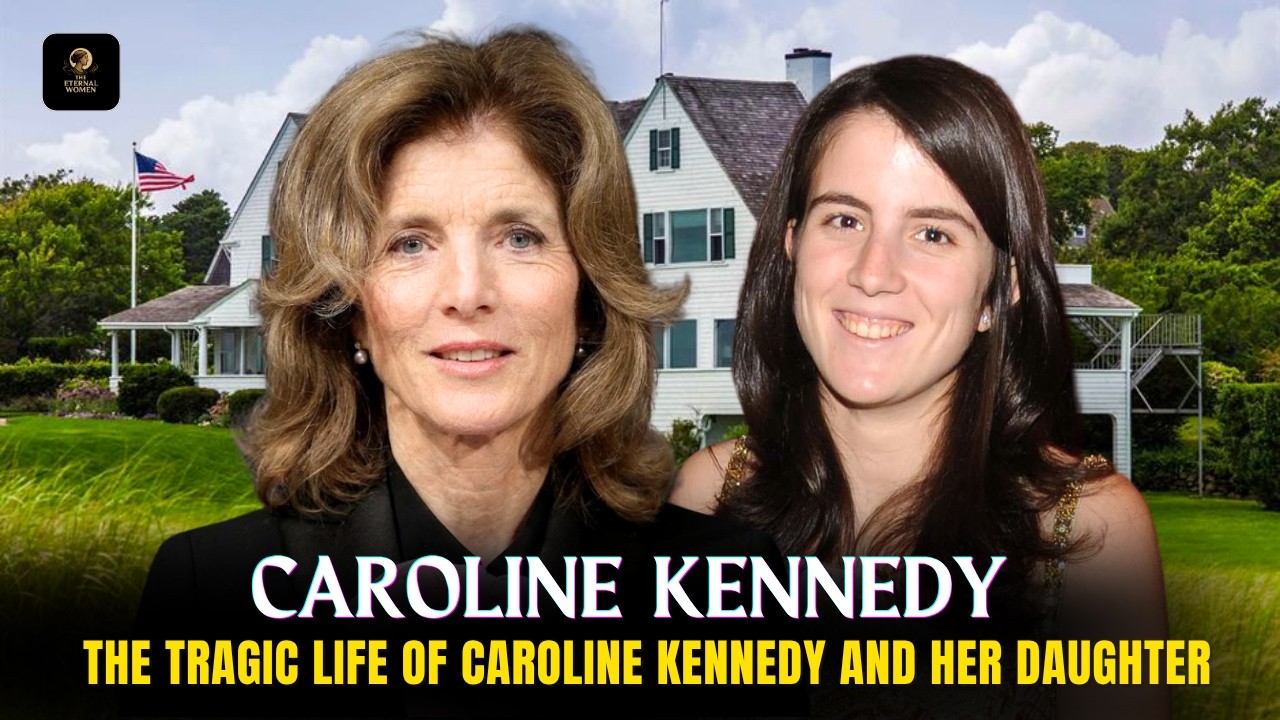
Caroline Kennedy was born on November 27, 1957, in New York City, the first living child of Senator John F. Kennedy and his wife, Jackie. Her parents had already endured a miscarriage and the stillbirth of a daughter, Arabella, in 1956.
Caroline’s arrival brought relief and joy to a family that had learned early that even great privilege does not shield against loss.
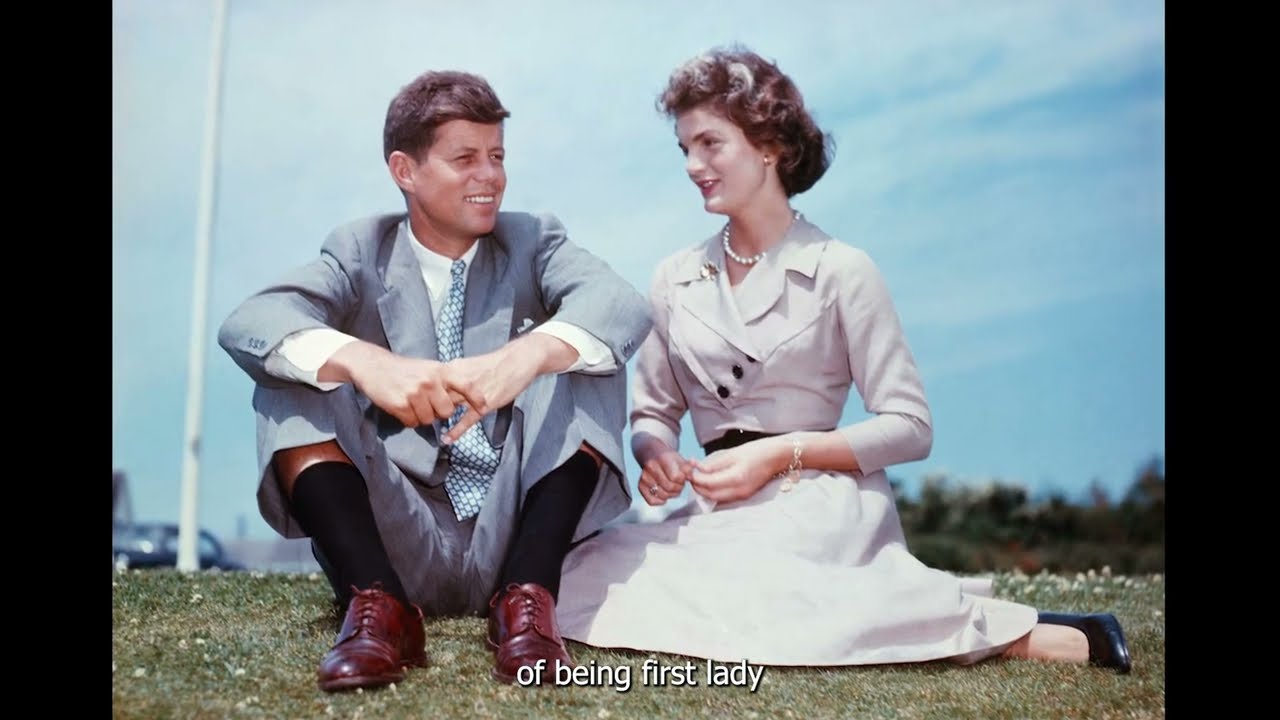
For the first three years of her life, she enjoyed a relatively normal childhood in Georgetown. That changed in November 1960, when her father was elected president. Two weeks later, her brother John Jr.
was born. Two days after that, Caroline turned three. She had become the most photographed child in America before she could understand what that meant.
The family moved into the White House in January 1961. Jackie Kennedy created a kindergarten classroom in the solarium, inviting a small group of children to attend with Caroline in an effort to preserve some normalcy. Secret Service agents followed her everywhere.
Photographs of Caroline riding her pony, Macaroni, across the South Lawn became iconic. She and her younger brother John became known as the first children, a unit navigating a childhood that was shared but never ordinary.
In August 1963, Jackie gave birth to a son, Patrick, five weeks premature. He lived only 39 hours. Caroline was five years old and did not fully understand what had happened, but she understood that her father cried, something she had never seen before.
It was the first time death entered her life. It would not be the last.
On November 21, 1963, President Kennedy flew to Texas for a political trip. Jackie accompanied him. Caroline stayed in Washington.
The next morning, November 22, she was in her classroom in the White House solarium, unaware that her father had been shot in Dallas. He was pronounced dead at 1:00 p. m.
Central Time. He was 46 years old.
That evening, Caroline’s nanny, Maud Shaw, sat beside her and told her that her daddy had gone to heaven. Caroline asked if her father would come down from heaven to visit. Shaw told her no.
The world shifted for the five-year-old in a way it would never shift back.
Jackie Kennedy planned a state funeral modeled on Abraham Lincoln’s. Caroline, dressed in a pale blue coat with white gloves, walked part of the procession holding her mother’s hand. John Jr.
, three days from his third birthday, saluted his father’s casket as it passed. The image became one of the most devastating photographs in American history. The day after the funeral, Caroline wrote a letter to her father and placed it in his coffin.
The family left the White House two weeks later, moving first to Georgetown and then to a penthouse on Fifth Avenue in Manhattan. Caroline was enrolled at the Convent of the Sacred Heart, a Catholic school that protected its students’ privacy. But normal was never fully available to her.
Secret Service agents sat outside her classroom. She grew increasingly shy and private, carrying a weight her classmates could not imagine.
Her uncle Robert Kennedy became a second father to her. He took Caroline and John on outings, kept their father’s memory alive, and showed them that love was still available after loss. In 1968, Bobby ran for president.
On June 4, he won the California primary. That night, he was shot in the kitchen of the Ambassador Hotel in Los Angeles. He died the next day.
Caroline was ten years old. In less than five years, two of the men she loved most had been taken by gunfire.
Four months later, Jackie married Aristotle Onassis. The marriage shocked America, but Jackie was terrified for her children’s safety and sought distance and protection. Caroline was polite but reserved with her stepfather.
Life split between Manhattan and Greece, where she spent time on Onassis’s yacht and his private island.
At 17, Caroline was studying art history in London, staying with Sir Hugh Fraser and his wife. On October 23, 1975, she was running late one morning. An IRA bomb detonated under Sir Hugh’s car.
A neighbor walking his dog was killed instantly. Caroline, still inside the house, survived by roughly 90 seconds.
She returned to New York and attended Radcliffe College, graduating in 1980. She worked at the Metropolitan Museum of Art, where she met Edwin Schlossberg, an artist and designer 13 years her senior. He was interested in her as a person, not a symbol.
She later earned a law degree from Columbia in 1988.

On July 19, 1986, Caroline married Ed Schlossberg at a church on Cape Cod. Her uncle Ted walked her down the aisle. She kept her name.
For the first time in her story, something good had been built that the darkness had not yet touched.
The couple had three children. Rose was born in 1988, Tatiana in 1990, and Jack in 1993. Caroline raised them with a fierce commitment to privacy, determined that they would not grow up as she had, always conscious of the camera and the weight of the name.
She wanted them to know who they were, but she did not want them to be consumed by it.
In the winter of 1994, Jackie Kennedy Onassis was diagnosed with non-Hodgkin’s lymphoma. She died on May 19, 1994, at age 64. Caroline and John stood together at her funeral, now the adults managing their grief publicly.
With Jackie gone, they were the last two people who remembered being a family in the White House.
John Jr. had grown into a public figure in his own right. He founded George magazine and married Carolyn Bessette in 1996.
He had gotten his pilot’s license in 1998. Caroline worried about his flying, having watched enough of her family’s history to know that aircraft were not kind to Kennedys.
On the evening of July 16, 1999, John flew from New Jersey to Martha’s Vineyard with his wife and his sister-in-law, Lauren Bessette. The weather was poor. He was not certified for instrument flight.
Somewhere over the Atlantic, the plane crashed into the ocean. All three were killed instantly. John was 38.
Caroline, then 41, was the sole survivor of her immediate family. Her father murdered when she was five. Her brother Patrick dead after two days.
Her mother gone at 64. And now John, the little boy who had saluted their father’s coffin, gone at 38. She had no one left who shared her specific history.
Grief became the engine of her work. She had helped create the Profile in Courage Award in 1989 and served with the John F. Kennedy Presidential Library.
After John’s death, she wrote books about constitutional law, the Bill of Rights, and her mother’s love of poetry. She found a way to control her own narrative without submitting to interviews.
In 2008, she endorsed Barack Obama for president, comparing him to her father in an op-ed. In 2013, Obama appointed her United States Ambassador to Japan. She served until 2017 and was widely respected.
In 2022, President Biden appointed her Ambassador to Australia.
On November 22, 2024, exactly 61 years after her grandfather’s assassination, Tatiana Schlossberg published an essay in The New Yorker titled “A Battle With My Blood.” In it, she told the world she was dying. She was 34 years old, a journalist and mother of two small children.
She had been diagnosed with acute myeloid leukemia in May 2024, shortly after the birth of her second child.
Tatiana wrote about trying to protect her mother from more pain, and the unbearable irony of now being the source of that pain. The treatments were brutal. Chemotherapy, bone marrow transplants, clinical trials.
She fought through the end of 2024 and into 2025.
On December 30, 2025, Tatiana Schlossberg died. She was 35 years old. Caroline Kennedy, 68 years old, buried her child.
Caroline Kennedy is the last one standing. Her father, her brother Patrick, her mother, her brother John, and now her daughter. She has outlived them all.
She still has her husband, Ed, after nearly 40 years of marriage. She still has her daughter Rose and her son Jack. She has her grandchildren, Tatiana’s children, who will grow up without their mother.
She has never written a memoir. She has never given the interview that would give the world the grief it seems to want from her. She has kept her own counsel, done her work, and attended one funeral after another with the same composure her mother modeled for her on a November day in 1963, when she was five years old and wearing white gloves.
She was five the first time she held her mother’s hand at a funeral. She has been holding someone’s hand at a funeral ever since. Each time she has stood up straight.
Each time she has carried the grief home quietly and continued the business of building a life that the losses could not fully take from her.
The Kennedy curse, if it is real, has taken almost everything from Caroline Kennedy. But it has not taken her. She is still here.
She is still standing.