Patricia Kennedy Lawford was born on May 6, 1924, into one of the most powerful political dynasties in American history. Her father, Joseph Kennedy, and mother, Rose, raised their children under a strict set of rules that divided their futures by gender. The sons were trained for public power, discussing world affairs and election strategy at the dinner table. The daughters were taught charm and social grace, expected to stand silently beside the men and smile for the press.
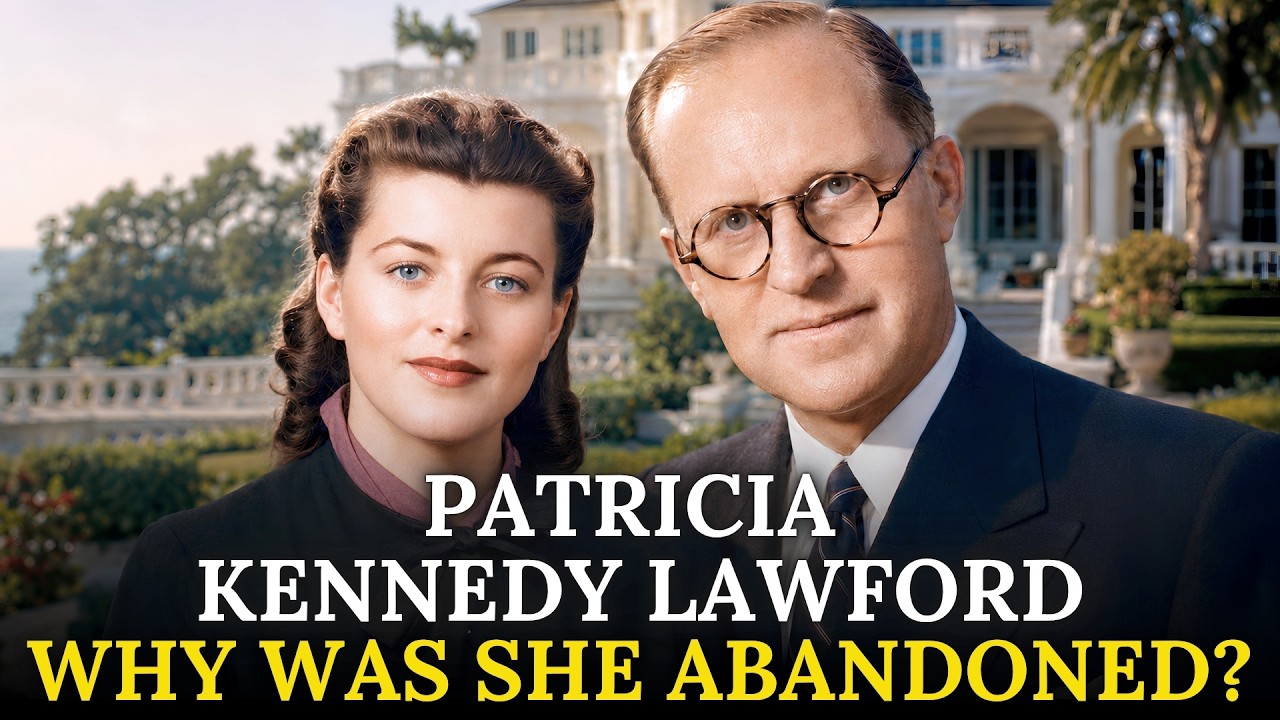
The boys would win elections and shape federal legislation. The girls would soften the family’s image and hide the fierce ambition of their brothers. Patricia understood this hierarchy early. She also had talents that did not fit the passive mold assigned to her.
Her father admitted she possessed the sharpest business mind among his children. Seeking independence, she moved to New York and built a career in television at NBC, working her way up through the production ranks and contributing to some of America’s earliest cooking programs. She showed real ability in the emerging entertainment medium. But the Kennedy system did not tolerate female independence for long.
Her professional success challenged the family’s conservative Catholic order, and her father expected her to eventually abandon her work and return home. The clearest warning of what happened to women who stepped out of line was hidden inside her own house. Her older sister, Rosemary, had developmental disabilities and episodes of difficult behavior. In 1941, their father arranged a lobotomy to control her and protect the family’s public image.
The procedure failed catastrophically, leaving Rosemary permanently damaged. The family quietly removed her from public view, erasing her from the family story. For Patricia, her sister’s sudden disappearance was a stark lesson in how cruel the consequences could be when a Kennedy woman no longer fit the family’s image. When her brother John ran for Congress in 1946 and then for the U.
S. Senate in 1952, her father summoned the daughters back to Massachusetts to support the campaigns. Patricia suspended her television career and became a quiet political asset. She traveled across the state, shook thousands of hands, and memorized the names of local leaders.
The men crafted the platform behind closed doors; the women sold the family brand to the public. Patricia organized events alongside her mother and sisters, hosting a series of formal receptions that the local press called the “Kennedy Teas. ” These were not merely social gatherings. The women ran field operations, managed logistics, coordinated voter outreach, and created a personal connection with working-class voters.
Their work proved decisive. In 1952, the seasoned politician Henry Cabot Lodge Jr. expected an easy victory but suffered an unexpected defeat. Many later accounts attributed that loss to the Kennedy women’s tea parties.
Yet history books rarely tell the story that way. Modern historians credit the male candidate for his speeches and charisma while overlooking the daily physical and emotional labor of the dutiful daughters. Patricia realized she would never find true fulfillment inside this rigid political system. Her family would always prioritize the advancement of the sons.
She needed another path. In 1949, her brother John introduced her to a British film actor named Peter Lawford. He represented a completely different world. He lived in California, worked in entertainment, and measured success by box office numbers and social invitations rather than election results.
Patricia saw him as a personal escape route. They married in April 1954 at St. Thomas More Church in New York, transforming a private religious ceremony into a national media spectacle. Three thousand spectators gathered outside, police struggled to control the crowds, and the press celebrated the alliance between Washington and Hollywood.
The couple moved to a large beachfront estate in Santa Monica, and Patricia believed she had finally escaped the shadow of her family. Reality emerged slowly. The actor carried heavy psychological burdens behind his polished appearance. The weight of the Kennedy name damaged his confidence, and he turned to alcohol as his professional anxiety grew.
Patricia used her political training to manage the domestic crisis, hiding the fractures from the public and hosting elegant dinners while her husband quietly fell apart. She exchanged one restrictive role for another. The estate’s guests included Frank Sinatra, Dean Martin, and Marilyn Monroe, a circle the press called the Rat Pack. This world operated under its own strict male authority.
The famous men set the rules, and the women were expected to provide quiet decorative support. Patricia had swapped Massachusetts power brokers for California studio executives. Both worlds demanded that women stay in the background. In 1960, her brother John launched his presidential campaign.
The family recognized the value of her Hollywood son-in-law and transformed the Santa Monica estate into a political headquarters, which the press called the “Western White House. ” Peter was tasked with securing endorsements from the entertainment industry. The home filled with ambitious politicians and wealthy studio executives. Patricia’s private refuge disappeared as her brothers took over her living space for national strategy.
She managed the daily logistics of a presidential campaign from her own living room. The exchange between Washington and Hollywood took place inside her home. The pressure began to damage her private life, and the attention drew dangerous forces. Later reports suggested that conversations in this world may have been monitored, and the atmosphere itself became hazardous.
Patricia could no longer trust the privacy of her own home. Some later accounts describe genuine warmth between Patricia and Marilyn Monroe, the most famous actress in the world. Both women understood the burden of constant public performance. Patricia provided access to her beach estate, a place where the actress could escape demanding studio executives.
Some accounts claim Patricia tried to warn Monroe, reminding her that Robert Kennedy was a married man with seven children. She saw clearly the cruelty of the men around her but could not stop the machine. Monroe was found unconscious at her Los Angeles home in August 1962 after a barbiturate overdose, officially ruled a suicide. Patricia traveled to attend the funeral, but Joe DiMaggio, who organized the service with a strict guest list, reportedly refused her entry.
He blamed the Kennedy circle for the actress’s death and did not distinguish between the sister and the actions of the brothers. Patricia was publicly rejected and denied the chance to mourn her friend. She had four children during her California years: Christopher, Sydney, Victoria, and Robin. She worked actively to create a different atmosphere for them, protecting them from the aggressive expectations of her relatives.
She organized ordinary birthday parties and school events, finding quiet consolation in motherhood. But the stability she tried to maintain was an illusion. Peter’s drinking worsened, he engaged in numerous affairs, and the public image of the perfect partnership concealed private chaos. Patricia managed his destructive behavior daily and maintained the required social facade.
Divorce was not an acceptable option for a Catholic political family. She was pressured to stay and manage the slow collapse of her household. She turned to alcohol herself, a coping mechanism common among women in her position. The elegant social events provided an endless supply of fine liquor, and her consumption shifted from social obligation to private necessity.
The fragile arrangement finally broke in the spring of 1962. President Kennedy planned an official visit to the West Coast that included a stay at Frank Sinatra’s Palm Springs estate. Concerns about Sinatra’s alleged connections to organized crime prompted Robert Kennedy to pressure for the visit’s cancellation. Peter was left to deliver the rejection.
Sinatra viewed the abrupt cancellation as a personal betrayal, expelled Peter from his inner circle, and damaged his social standing in Hollywood overnight. Peter lost a vital source of professional access and became a political liability. His substance abuse worsened, and Patricia watched his career decline while managing the resulting domestic chaos. Then came a larger historical event.
On November 22, 1963, her oldest brother was assassinated in Dallas. The national tragedy shattered the illusion of protection around the political dynasty. Patricia realized she was spending her limited years maintaining a facade. The famous marriage no longer existed in any meaningful form.
After her brother’s death, the marriage moved toward legal separation and officially ended in the mid-1960s. The divorce created a silent crisis inside the conservative political family. Rose Kennedy regarded the legal separation as a moral failure and a deficiency of faith, and some accounts describe a permanent distance between mother and daughter. Patricia had exchanged her family’s approval for her own independence.
She packed her children and left the West Coast, settling in a private apartment in New York City. She focused her daily efforts on charitable work, engaging in programs related to literary arts, addiction treatment, and disability advocacy. She helped vulnerable populations find their voices through artistic expression, a quiet purpose far from the cameras. Modern biographies often reduce her identity to two public roles: sister of an assassinated president and former wife of a famous actor.
Her personal contributions to the family’s success are largely erased. Her children inherited the heavy burden of the Kennedy name but also the destructive coping mechanisms of their parents. Her eldest son, Christopher, later published a candid memoir titled Symptoms of Withdrawal, detailing his long struggle with addiction and documenting the dysfunction behind the political brand. Her youngest daughter, Robin, built a quieter life away from the political spotlight.
None of her children became prominent figures in federal politics. They rejected the relentless ambition that defined their famous uncles, choosing personal stability over inherited power and breaking the cycle of public sacrifice and private pain. Patricia’s later years brought a harsh medical reality. She suffered from tongue cancer, though her death was recorded as pneumonia.
The disease affected the very thing her family had always demanded she control: her voice. The invasive treatments reduced her spoken words to whispers. The cruel irony reflected her lifelong position. She had witnessed major historical events from the front rows, knew the intimate details of a presidential administration, but never had the freedom to share her unique perspective.
She died on September 17, 2006, at the age of eighty-two. While the most famous Kennedy men were buried in Arlington National Cemetery, Patricia chose a modest plot in a Southhampton cemetery. The location stood apart from the grandest Kennedy memorials, a final touch of personal distance from the dynastic narrative. She possessed the intelligence of her famous brothers, organized political campaigns, and worked successfully in early television.
Her difficult position was shaped by a conservative era. She lived between names so large that history forgot to listen to her. The ambitious men claimed the front pages for themselves.
The quiet sister finally secured a place of her own.