On July 1, 1996, in a small apartment in Santa Monica, Margaux Hemingway was found dead. She was forty-one years old, one day short of the thirty-fifth anniversary of the morning her grandfather put a shotgun to his head. She had been the first fashion model in history to sign a million-dollar contract at a time when a million dollars still made headlines. Her face had appeared on the cover of Time, Vogue, and magazines in dozens of countries where people could not pronounce her surname but knew it anyway.
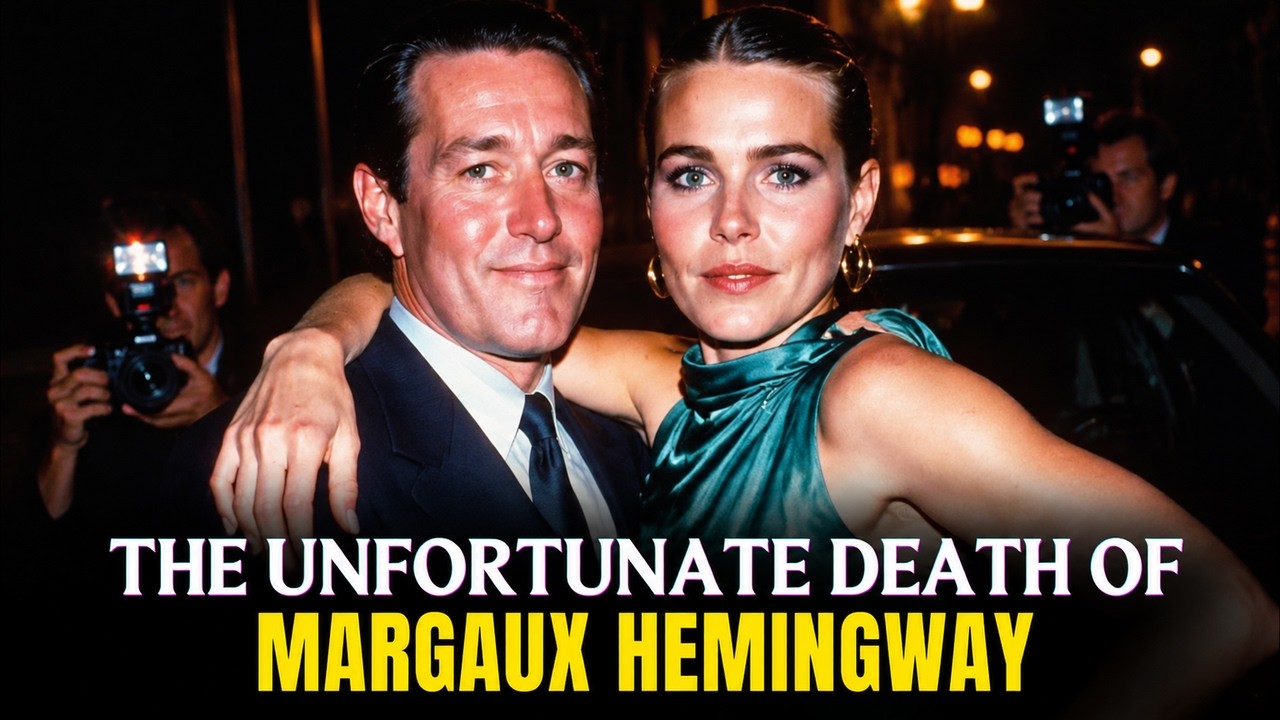
She had beauty, money, legend, and a name that meant more in America than almost any other. Yet she ended her life the same way the patriarch of her family had, on nearly the same day of the summer. Margaux Hemingway, granddaughter of Ernest Hemingway, spent her entire life wrestling with the weight of her family’s legacy and the elusive feeling of truly belonging to it. Her name came from a bottle.
Her parents liked to tell the story before she was even born that on the night she was conceived, they opened a bottle of Château Margaux, one of the great red wines of Bordeaux. When the girl was born in February 1954, they named her after it. She arrived in the world carrying a small legend, a girl named for something rare, expensive, and French. She grew up believing the story and repeating it because it made her feel chosen for something.
But the wine was only surface magic. The real inheritance was a surname that opened every door and demanded something in return. Hemingway blood. By the time Margaux was born, Ernest Hemingway was not just a writer.
He was America itself, or at least the version America liked to imagine. The man who drove ambulances in World War I, hunted lions in Africa, fished the Gulf Stream, and won the Nobel Prize in the same year she was born. His language reshaped how a century wrote. Students read him.
Presidents quoted him. To share his blood meant inheriting a kind of national expectation, a sense that you were required to be exceptional simply because of the name attached to yours. For a little girl, that was a mountain she never chose to climb. And the man behind that great name had left the family a wound no one dared speak of aloud.
The family settled near Ketchum, Idaho, in the high mountains, where the air was cold and clean and the trout were fast and elusive. It was the kind of place her grandfather loved, full of sagebrush, melting snow, and long silent mornings. To an outsider, the picture seemed perfect. There were horses and shotguns, cabins hidden among the pines, and a family name that opened doors worldwide.
Neighbors saw famous fishing trips and assumed everything left over from them must be equally golden. But a child does not live inside a postcard. She lives in the rooms behind it. Behind the fences of the ranch and the famous fishing trips, the house was run with rules and a heavy silence.
The little girl could not understand it all. Her father was Jack Hemingway, Ernest’s eldest son, a man who spent his whole life inside a shadow he never asked for. He had been a soldier, a fly fisherman, and a gentle kind of dreamer, but wherever he went, people saw the father before they saw the son. Jack and his wife, Byra, whom everyone called Puck, had three daughters.
Muffet was the eldest, thoughtful and quiet. Then came Margaux in the middle, and years later, Mariel, the youngest of the three. Three daughters under one roof, each carrying a name that seemed heavier than they were. In that house, Margaux never fit the mold, and she felt it before she could even name it.
In the awkward teenage years, problems appeared early. Letters swam across the page when she tried to read, and words she knew perfectly aloud turned into stubborn knots on paper. It was dyslexia, though few teachers in the fifties had a name for it, so they simply called her slow. There was something else, something more frightening.
She suffered from epilepsy, and seizures could come without warning, turning an ordinary afternoon into fear and disruption. Beside her sisters, she felt huge and clumsy, a girl always tripping over her own limbs. But nature was quietly building the thing that would change everything. Around thirteen, the growth came quickly.
By mid-adolescence she stood six feet tall, taller than nearly every boy in her class and most adults she knew. What felt like a burden in the hallways of Ketchum began doing something strange on the street. People turned to look, not to mock as she had braced herself for, but to linger, as you look at something you cannot quite explain. Broad shoulders, a long neck, wide green eyes in a face that seemed designed for a camera no one had pointed at her yet.
The height that made her miserable in Idaho was about to become more valuable than she could have imagined. She just had to leave the ranch. When the chance came to visit New York, she took it. A teenager from a town of a few thousand dropped into a city of eight million.
For the first time, her height did not make her look different. It made her look like she belonged. Then one evening she walked into a room to meet someone unspecified and walked out having met the man who would reshape her life. The man watching her that night was Errol Wetson, a New York publicist known for fast food and a sharp eye for faces.
He was not looking for a model. He was simply a guest like everyone else. But something in the way she moved through the room, her height and confidence, her loud laugh against the crowd, made him stop. He approached and began talking, not about her clothes or her family, though the Hemingway name made its usual impression.
He talked about her face, her jaw, her brows, and the gap between her teeth she had spent years trying to hide. He told her it was the most photogenic thing he had seen in years. For a girl described her whole life as too tall and too much, it was strange and intoxicating to hear from a stranger at a party. He asked her to take some pictures.
She agreed. That decision took a fast course. Within months, he wanted to marry her. And he was not the only one making plans for her face.
Errol was in his thirties, established and confident, knowing exactly what he was looking at. Margaux was nineteen, fresh from the ranch, still learning how to order food in a restaurant. The gap in age and experience did not slow things down. It made him more useful to her and made her more dependent on him.
They married quickly, and from the start it was hard to tell where the husband ended and the manager began. He booked the shoots. He handled the calls. He decided who could reach her and who could not.
She was mostly grateful. He believed in her before anyone else put money on the table. But there is a silent price to marrying the man who also signs your work contracts. Photographers saw it immediately.
It was the mid-seventies, when fashion still preferred small, delicate, soft faces with quiet features. Margaux was the opposite of all that. She was nearly six feet, broad-shouldered, with thick brows and a wide bold mouth. She did not shrink before the camera.
She attacked it. Editors used words like animalistic, electric, or something they had never photographed before. Where other models held still to look beautiful, she challenged the lens to keep up. It was a face photographed like changing weather, never looking the same twice.
Agencies began to realize they were not looking at just another pretty girl whose style would fade in a season. They were looking at the beginning of something entirely new. One perfume company decided that face deserved a number no one in the fashion world had dared speak before. The company was Fabergé and the perfume was called Babe.
It was a new scent aimed at a new kind of woman, bold, athletic, not quite tamed. They did not want a delicate porcelain doll to sell it. They wanted a face that suggested strength and the ability to fight back. Margaux embodied that idea perfectly.
When she entered the room, the executives stopped arguing. She was the woman who embodied the concept of Babe. So they built the entire campaign around her. Negotiations moved fast, and the numbers climbed higher than anyone in the room had expected.
When the ink dried, she had not just gotten a job. She had broken a ceiling no model had ever reached. One million dollars. That was the number in 1975.
It was an amount reserved for movie stars and oil money, not for a woman in her twenties standing in front of a camera. No model in history had ever signed such a contract. A new car cost a few thousand dollars. A comfortable house could be had for under forty thousand.
And here was a young woman being given seven figures to be the face of a perfume. The deal made her more than a model. It made her a symbol of a moment when the value of beauty and American money were redefining what a woman was worth. Then came the cover.
In June 1975, Time magazine put Margaux Hemingway on its cover, calling her one of the new faces of American beauty. Time was for presidents and makers of history, not newcomers to the fashion world. A few years earlier she had been a gawky, over-tall girl in Idaho feeling like she belonged nowhere. Now her face was on newsstands from New York to Los Angeles, studied by millions who had never heard her voice.
Everything in her life seemed to happen at once. The contracts, the campaigns, the magazine covers. She was twenty years old, famous and rich, riding a wave that showed no signs of slowing. The whole country was learning her name while she was quietly learning she had no idea how to survive it.
There was no real term for what Margaux had become. The word supermodel did not enter the mainstream for years, but by the mid-seventies she was already living its essence. Her face was not just selling perfume. It was setting the value a face could achieve on a billboard.
She worked as a model at a level that had no precedent. The same broad smile stared from magazine racks, store windows, and television commercials across the country at once. People who had never bought a fashion magazine in their lives knew who she was. And she was twenty, doing it without a guidebook.
No one had walked this exact path before her. So no one told her what it does to a person to be stared at that hard and that constantly. She was building the template in real time and paying for it in ways she could not yet name. Fame that size needs a place to burn, and at night it burned at one address in particular.
That address was Studio 54, the Manhattan nightclub that opened in 1977 and became the center of gravity for everyone famous enough to get through the door. Margaux got through the door every time. She moved through it like she belonged there, because in that room she did. The nights ran long, and the champagne never seemed to run out.
For a young woman celebrated everywhere, drinking looked less like a problem and more like a costume to put on. Something shiny the beautiful people did after dark. Everyone around her was doing it, and everyone around her was smiling. She was the talk of the room, the girl the crowd wanted to be near.
It looked like a reward. It looked like payment for all that work. The champagne seemed like part of the job. But somewhere in those late nights, a habit was taking root that would last long after the fame faded.
While Margaux was shining in New York, her younger sister, Mariel, seven years younger, was still at home watching it all from a distance. Margaux adored her. She wanted to share the world she had found, to reach back and pull her little sister into the light with her. So she did what a proud older sister does.
She opened doors, made introductions, and let Mariel stand close to the glow of fame. The love between them was real, tangled with the usual push and pull of two sisters raised under the same famous name. By the mid-seventies, Margaux had conquered the still image, and the face that lived on magazine covers wanted to move, speak, and breathe on screen. She saw acting as the natural next door to walk through, the place where a model becomes something lasting.
So when a film appeared that could put both Hemingway sisters in the same frame, it seemed written by fate. Margaux would take the lead role, her name above the title, and she pulled Mariel along beside her, a real sister playing her sister on screen. She imagined they would arrive together, proof that the family talent ran deeper than one lucky face. The film was called Lipstick, released in 1976.
It told the story of a model who is raped and then watches her attacker walk free. In the end, the harm reaches her younger sister too. Margaux played the lead. Mariel, thirteen years old, played the younger sister caught in the aftermath.
The production leaned heavily on the Hemingway name and Margaux’s fame, promoting the idea that America’s most beautiful woman was ready to carry a serious, difficult film. She believed in it completely. She bet her new career on it. The reviews were about to tell her whether the bet had paid off.
They were merciless. Critics called her stiff and emotionless, a stunning face that could not make words come alive. A model asked to act was betrayed by her talent. The fame that gave her the role made every mistake thunderous, because everyone was watching to see if the beauty could pass the test.
The film itself was also savaged, accused of dressing ugly subjects in fashion-magazine gloss. For a young woman who had bet everything on being taken seriously, each review felt like a door quietly closing. The rise that had seemed unstoppable a year earlier suddenly faced a limited ceiling. The deepest wound that season did not come from a hostile pen.
Critics were cruel to Margaux, but the line that hurt her most was praise directed at the wrong sister. When Lipstick premiered in 1976, the reviews did not just wound Margaux. They turned the spotlight entirely away from her. Critics who attacked her stiff performance turned to praise the untrained fourteen-year-old beside her.
Mariel, chosen as a secondary part, collected the acclaim that should have gone to the star. The New York Times and Newsweek found room to praise the younger sister’s spontaneity in front of the camera, which Margaux could not achieve. Margaux had opened every door for Mariel. She brought her to the set, secured the role, and shared the scenes, and the scenes chose Mariel.
For a young woman whose entire fortune was built on being the center of attention, being ignored in her own film carried a particular cruelty. The face worth a million dollars had suddenly become the second most interesting person in the room. The work did not dry up overnight, but it changed in nature. Scripts became smaller, roles thinner, and pay a fraction of what Fabergé had given her.
Hollywood had evaluated her performance, and the verdict was that Margaux looked better in pictures than she acted. Magazines noticed too. The face that had sold perfume for millions began appearing in the press for the wrong reasons, linked to canceled bookings and a reputation for being difficult on set. The freshness that had followed her through her modeling career began to fade from the words written about her.
She was still beautiful, still known, still that girl from the magazine cover a few years earlier, but the momentum was gone, and momentum had been her engine. The one having alcohol had always been part of the public scene. Studio 54, industry parties, the long nights that came with being young, famous, and wanted everywhere. For a while it looked like nothing more than the tax of the life she had been given.
Then the drinks stopped being social. Colleagues began noticing she showed up unsteady, and the champagne was no longer confined to evening hours. What calmed her nerves in a crowded room began to slur her speech on set, and the photographers who once raced to shoot her began avoiding her. Alcoholism is rarely announced.
It slips in quietly, with every missed call, apology, and canceled contract, until the pattern is undeniable. By her mid-twenties, the thing that numbed the pain of being sidelined was also taking her work. The camera loved her, and that was part of the trap. Every job came with measurements, and every measurement required looking in the mirror.
In an industry that treated the body as a product specification, Margaux learned to punish her body for failing to match the sample sizes. She began binge eating, then forcing it back out. Bulimia is silent by nature, easy to hide behind a smile and a suitcase, and for a while she hid it well. But the vomiting drained her energy, puffed her face on important mornings, and left her chasing a body her own frame refused to hold.
The girl magazines called the most beautiful woman alive spent her private hours fighting her reflection. She was exhausted, ashamed, and increasingly alone. She crossed the ocean and married a man who promised her a different life. His name was Bernard Faucher, a French restaurateur who moved through Paris with a fluency she lacked.
They married in 1979, and for Margaux it looked like an escape hatch opening. Paris promised the one thing New York never gave her. Privacy. No photographers lurking outside Studio 54.
No comparisons to her younger sister. No editors whispering about her weight between sips of champagne. For a while she let herself believe it worked. Modeling does not wait for anyone, and it certainly did not wait across the Atlantic.
From Paris she tried to keep her career alive by phone and mail, flying back for shoots and chasing bookings that once came to her. But the ocean is a long distance to manage a business built on being seen every day. The Fabergé deal that had made her a household name was over. Editors who once competed for her schedule now needed reminding she was available.
Every trip home felt less like returning and more like auditioning. She was still young, barely past twenty-five, but the industry measures time differently, and it was already passing her by. The modeling money did not flow like a monthly salary. It arrived in large, concentrated payments.
Campaign fees and exclusive contracts. Margaux’s income was built almost entirely on those peaks. When the peaks stopped coming, there was nothing steady underneath to catch her. The cosmetics deal that once made headlines was not renewed.
Magazine covers dwindled, then nearly stopped. Bookings scheduled months ahead simply were not renewed, and agents who once chased her found gentler ways to say they had nothing for her. For someone who had never known a lean year in her adult life, the accounts turned frightening quickly. She spent as if the checks would always arrive, because for a while they had.
The woman who signed the first million-dollar contract was about to learn how fast wealth evaporates. Her lifestyle did not shrink to match her dwindling income, so the apartments, travel, and expensive habits of a top-model contract continued. The bills kept arriving on schedule long after the paydays stopped. Savings that seemed bottomless in her early twenties ran out with a speed that must have felt unreal.
But it was not the money that hurt most. It was the categorization. At an age when most people are beginning their lives, barely past twenty-five, she was written about as a cautionary tale, a shooting star already burned out. Had her time passed?
It is a cruel word to hear about yourself while still young enough to believe it cannot be true. The eighties were supposed to be her flourishing decade. The years when a woman in her late twenties settles into serious work. Instead they became a slow drift.
The big campaigns stopped calling, and smaller ones paid less and demanded less. Margaux found herself booking a job here, a picture there, chasing the steady work that once came without her moving a finger. Her marriage to Bernard Faucher dissolved quietly, and by the mid-eighties she was single again, lost on two fronts at once. She kept a foot in Hollywood, taking roles almost no one saw, and watched younger faces take the covers that had been hers.
The Hemingway name still opened a door, but the room behind it was growing smaller. In May 1990, Margaux appeared in Playboy at age thirty-five, nude in pages that spread across newsstands everywhere. It was not a mistake or a leak. She agreed deliberately, framing it as taking back control of an image others had shaped for years.
There was logic behind it. The fashion world had stopped calling, but a magazine with millions of readers had not. If the industry would not put her before the public, she would find another way to appear on her own terms. It was a bold move, a woman refusing to be silently retired.
It was also a desperate one, the kind made when the safer doors close one by one. The shoot got people talking again, but attention and a career were two very different things. During the early nineties, she accepted whatever work came her way. Small film roles, television appearances, appearances in places where the Hemingway name still meant something.
She spoke openly about reinventing herself, about overcoming the odds, about the next step always being around the corner. She turned toward wellness and spirituality, talking about yoga, healthy living, and finding her balance again. There was a plan behind it, a story she told herself and anyone who would listen. The fall was temporary, and the road back was already beginning.
Friends remembered her vitality in those years, the way she radiated as she described a project or a fresh start. She desperately wanted to be on her way back up. She kept telling everyone she was fine. But people close to her began noticing things that did not fit the story.
The bright, restless woman would go silent for hours, then recover her energy too quickly, talking about grand plans that never materialized. There were mornings she seemed distracted, moments she lost her train of thought, days when exhaustion weighed on her like a burden she could not lift. Some friends blamed the drinking. Others saw something hard to name.
A body and mind that seemed to be fighting each other. Mood swings grew sharper. Absences, confusion, and sudden collapses of energy kept returning piece by piece. The symptoms were accumulating toward a diagnosis she had unknowingly carried for years, along with the medication that accompanied it.
By the late eighties, the vague symptoms finally had a name. Doctors told her she had epilepsy, and the seizures explained the fainting, the confusion, and the moments her body seemed to shut down without warning. It was a condition she had likely lived with for years, undiscovered, misinterpreted as stress or exhaustion or late nights. To control it, she was placed on powerful anti-convulsant drugs, the kind you take daily, on schedule, without missing a dose.
And there was the other weight she carried, the depression that ran through the Hemingway line like a thread no one could cut. She spoke openly about it, about the family history of mood disorders and the fear of where it might lead. So she was treating two illnesses at once, one in her body and one in her mind, each requiring careful management. The drug meant to prevent her seizures would later become the center of every question about how she died.
In 1988 she entered the Betty Ford Center in California, the same clinic that had helped many public figures regain their footing. She was in her early thirties, still young enough to start over, and she wanted to. Friends said she took it seriously, embracing group sessions and the hard conversations recovery demands. For a while it worked.
She talked about cutting back on drinking, improving her nutrition, walking, and staying steady. Then a bad stretch would come, a lost job or a lonely night, and old habits crept back. That pattern wore her down over the years. Recovery, then relapse.
A fresh start, then a quiet retreat. She healed more than once, and each time the world hoped it would last, and each time something pulled her back. The film work offered in those years did not resemble the magazine covers and campaigns of her twenties. There were low-budget thrillers, small roles in films released directly to home video, parts shot quickly in a week or two for modest pay.
She kept showing up, learning her lines, always trying. Titles like Inner Sanctum and Deadly Rivals came and went without much notice. It was steady work in the sense that it was work, but it was a long way from the girl who had once commanded the front rows of Paris. In her final years, Margaux turned toward things that had nothing to do with cameras.
She explored yoga and meditation, spent time outdoors, and grew interested in diet and natural healing. The same energy she once poured into her career was redirected inward. She talked about spirituality with a kind of gentle conviction, about slowing down and listening to herself for the first time in decades. Those who saw her then described her as calmer, less frantic, more at peace.
There was a sense of a woman quietly rebuilding herself, brick by brick, from the inside out. She stopped chasing the person she used to be and began trying to become someone new. By 1996, Margaux was talking about a documentary on spiritual healing, a project close to everything she was pursuing. She traveled, read, and sat with teachers who spoke of body and mind as one, and she wanted to bring that to the screen.
Friends who saw her that spring described her as lighter, more present, genuinely excited about what was coming. Her forty-second birthday approached on February 16, and she spoke of it as an achievement, not a burden. There was talk of acting work, of writing, of finally telling her story in her own words instead of letting the tabloids tell it for her. Her loved ones wanted to believe the worst was behind her.
And for a while, she gave them every reason to. The apartment was a modest studio in Santa Monica, unit 411, a long way from the penthouse apartments and Paris runways of her twenties. It was small and simple, the kind of place you would never imagine belonged to a woman whose face once graced magazine covers around the world. The wealth had evaporated.
The celebrity friends had dwindled. Only the quiet remained. She isolated herself in that apartment through the summer of 1996. Neighbors watched her come and go, but her days had narrowed to something small and internal, a contained life measured by simple errands, phone calls, and long hours alone.
In those final days, she reached out to the people who mattered, but the signals did not align. To some she seemed cheerful, talking about the documentary and her plans, the same optimism friends had heard all spring. To others she seemed distant, tired, harder to reach behind her words. She spoke with family.
She spoke with friends. Some ended the call reassured. Others ended it with a subtle, nagging unease they could not quite describe. A feeling that something in her tone did not match what she was saying.
No one connected the pieces in that moment because there was no clear alarm bell ringing. Then the calls stopped, and for days of hot summer, no one heard from her at all. At first, friends who tried to reach her comforted themselves with the usual excuses. She was busy.
She had unplugged. She had gone somewhere to clear her head as she often did. But a day passed, then another, and messages went unanswered, piling up in a silence that began to feel heavier than it should. Those who knew her well realized this was not like her.
Margaux stayed in touch. She called back. She answered. The longer the silence lasted, the more worry grew in the people who loved her.
By late June, concern had sharpened into something more urgent. A friend who could not shake the feeling began making calls, trying to find someone with a key, someone close, someone who could simply knock on the door and hear her voice from the other side. When someone finally went to check on her, the door to the small apartment opened onto the answer everyone had feared. It was July 1, 1996.
Inside the small studio apartment in Santa Monica, Margaux Hemingway was found dead. She was forty-one years old, alone in a rented room far from the yachts, magazine covers, and camera lights that had once followed her everywhere. There was no commotion, no sign of a struggle. She was simply there, in a quiet apartment on a hot summer afternoon, as if she had lain down and the world continued without her.
The Los Angeles County coroner’s office took the case. An autopsy revealed a fatal amount of phenobarbital in her system, a sedative prescribed for years to control the epilepsy she had lived with since childhood. The very drug meant to steady her had become the thing that ended her life. For weeks there was hesitation about what to call it.
Accidental overdose was possible. So was something deliberate. Investigators weighed the dosage, the circumstances, and the stillness of that apartment before they settled on a label. In the end, the coroner ruled her death a suicide.
They concluded Margaux had taken the pills intentionally. The cause was devastating enough, but the history is what turned her death from tragedy into something that felt like fate. Just one day before, Ernest Hemingway had ended his life on July 2, 1961, with a shotgun in the front hallway of his home in Ketchum, Idaho. Margaux died on July 1, 1996.
She missed the thirty-fifth anniversary of her grandfather’s suicide by one day. She had never met the man. He was gone five years before she was born. Yet the two ended up bound by the same month, the same violent departure, and nearly the same date on the calendar.
To anyone looking for meaning, the timing looked less like coincidence and more like something reaching across the years to claim her. With her death, Margaux became the fifth known member of the Hemingway family to die by suicide. Five suicides in one bloodline is not a coincidence anyone could ignore. The family had a name for what they lived under.
The curse. It began, by most accounts, with Ernest’s own father, Clarence Hemingway, a doctor who shot himself in 1928 while struggling with illness and debt. Ernest was twenty-nine when he received the news, and he never forgave the act even as he inherited the darkness behind it. Then came Ernest himself in 1961.
His younger sister Ursula, ill and depressed, took a fatal overdose in 1966. In 1982, his brother Leicester shot himself after facing the risk of losing both legs to diabetes. Now Margaux, another generation later, in that Santa Monica apartment. Four generations had met the same end over nearly seventy years.
When you actually count the losses across the generations, the number seems almost unbelievable. Five in one family. According to calculations later offered by Margaux’s sister, at least seven Hemingway family members died by suicide across the generations. Mariel, Margaux’s younger sister, the Oscar-nominated actress from Manhattan at eighteen, grew up in the same house, watched the same parents, carried the same blood, and knew the numbers better than anyone because two names on that list were her grandfather and her sister.
She did not try to hide from the reality. In later interviews and her memoir, she spoke frankly about the depression that ran through the family, about the fear of being next, about mornings spent checking her own mind the way one checks a door lock. She spoke of diet, exercise, sunlight, therapy, everything that might keep her on the safe side of the line. In 2013, she released a documentary titled Running from Madness, directed by two-time Oscar winner Barbara Kopple.
The film followed Mariel as she assembled the family history of mental illness and suicide, digging through old home movies and confronting the pattern directly. Seven suicides across four generations, presented not as gossip but as something to understand. When Margaux died, her estate was modest, nothing like what that record contract once promised. She was buried in Ketchum, Idaho, in the Ketchum Cemetery, just steps from the grandfather she never met.
Ernest Hemingway was buried there in 1961, a year before Margaux was born. The girl who grew up in that valley and could not wait to leave it, who chased New York and Paris and every bright light she could find, returned at last to the mountains. It was a quiet return, far from runways and camera flashes, to a small plot in a small town where the family roots first went down. The circle that began in Idaho closed in Idaho.
In death, she made headlines again, but most of them told a story that missed who she actually was. Her obituaries reached for easy templates. Fallen model, faded star, another beautiful woman who could not handle fame. It was simple.
It fit the space available. And it missed everything that mattered. What the coverage ignored was the illness that had followed her all her life, the epilepsy she hid, and the depression that ran through her family like a geological fault. It ignored the warmth those who knew her always described, her bright laugh, her loyalty, her way of standing beside friends who were struggling.
The press turned a complicated woman into a tidy warning, a headline you could read and then forget. Yet in her interviews, Margaux rarely seemed like a victim. She spoke of fame as something that arrived too fast at nineteen, before she knew who she was at her core. She said the fashion world had built a version of her from magazine covers, and she spent years trying to figure out which parts were actually hers.
She spoke openly about her alcoholism and about the family she came from, the grandfather she never met but could not escape. She described herself as a survivor more than once. When she talked about her mistakes, there was no self-pity, only a kind of transparent honesty about how hard some days were. She wanted to be seen as a whole person, not a cautionary tale with the Hemingway name attached.
What ran through five generations of that family was not a spell. It was an illness. Depression, bipolar disorder, alcohol dependence. Conditions that cluster in families through genes and environment alike.
They are treatable now. The same struggles that ended in silence back then are managed daily with proper care, medication, and people willing to talk about them out loud. Margaux lived before that kind of help was normal, and she carried a weight she should never have carried alone. She loved the mountains of Idaho.
Not the Paris runways or New York parties, but the quiet high country around Ketchum, the same ground her grandfather chose, open sky and cold clear air where nothing demanded anything of her. She came alive there, away from the cameras, where the famous name meant nothing against the mountain. And there they buried her, in the Ketchum Cemetery, a few steps from Ernest himself. A life that began under lights too bright ended in the one place she always felt was home, under the open sky she loved more than anything.
She was a granddaughter chasing a shadow, a model who never quite believed the picture, and a woman fighting an illness the world did not yet know how to name.