In 1966, Norman E. Brinker opened the doors of Steak and Ale in Dallas, Texas, and quietly changed the landscape of American casual dining. The restaurant offered a warm, dimly lit English tavern atmosphere, complete with wooden ceiling beams, candlelit tables, and the aroma of herb-crusted ribs drifting through the room. At its peak in the 1980s, the chain grew to around 280 bustling locations, winning over customers with its Kensington Club steak and an innovative open salad bar.
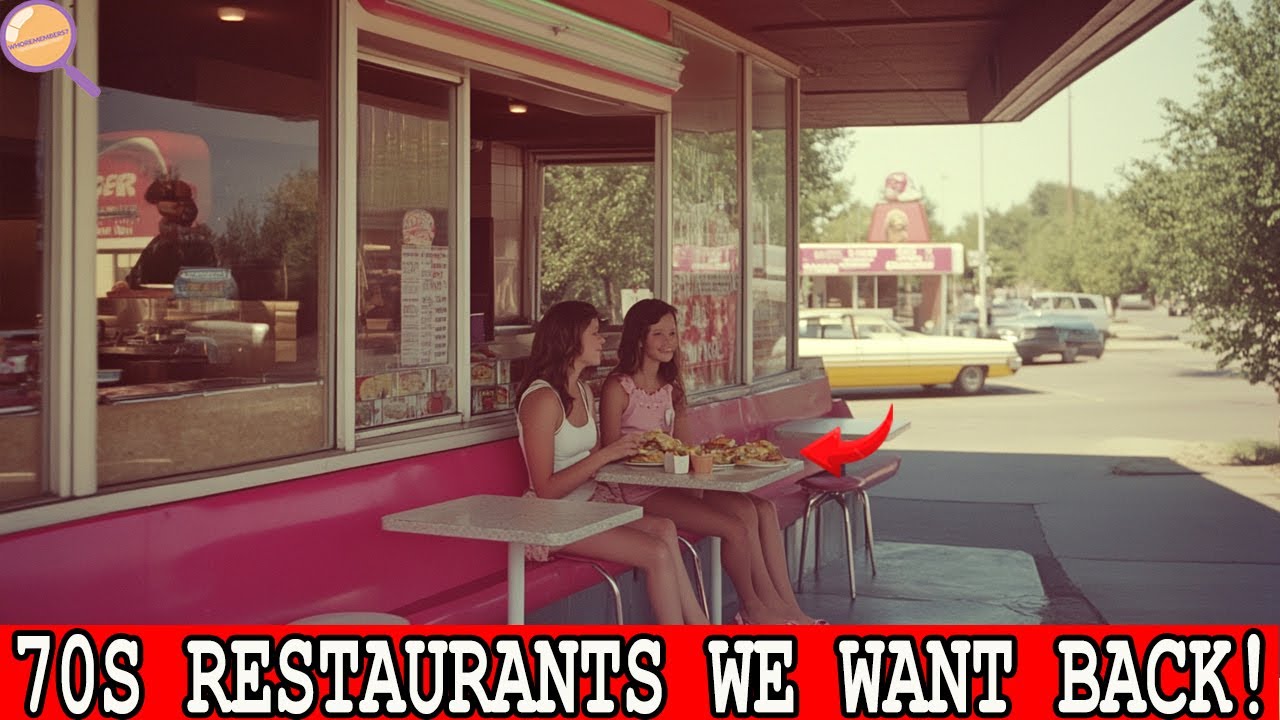
But tastes shifted in the 1990s. Competition intensified, and neither bold marketing campaigns nor economic menu adjustments could reverse the decline. In 2008, Steak and Ale served its final meal and disappeared. Yet nostalgia proved powerful, and in 2024 the brand made an emotional return, opening new restaurants across Texas and the Midwest, blending beloved classics with fresh innovations to revive the spirit of an era many still deeply miss.
Long before Steak and Ale, Beefsteak Charlie’s had already defined the golden age of hearty dining. Born in Manhattan in 1910 under the vision of Charles W. Chesall, the restaurant embodied an era when eating out meant endless steaks, overflowing glasses, and memories made around a warm table. Its tavern-like atmosphere welcomed generations eager for generous cuts of steak, massive seafood platters, and a legendary unlimited salad bar.
Few people today remember that Larry Ellman breathed new life into Beefsteak Charlie’s in 1976, expanding it into a beloved East Coast favorite with more than 60 thriving locations. What few patrons realized at the time was that the restaurant’s signature offer of limitless beer, wine, and sangria was both its greatest draw and the cause of its tragic downfall. By the mid-1980s, changing dining habits and fierce competition eroded its success, leaving it financially unstable. Attempts by Bombay Palace restaurants to rescue the beloved brand in 1987 failed.
Gradually, the cheerful doors of Beefsteak Charlie’s closed one by one, until the last location quietly faded away in 2009, leaving behind only nostalgic echoes of carefree, joyful dinners. In 1954, Frank and Donald Thomas created a revolutionary concept in Indianapolis, Indiana. Burger Chef captured hearts and appetites almost overnight, becoming the talk of the town with its mouthwatering innovations. Customers could order the Triple, the nation’s first combo meal featuring a burger, fries, and a drink, all for just 45 cents.
Favorites like the Big Chef and the irresistible Super Chef drew long lines of devoted customers. By 1973, Burger Chef stood proudly as one of America’s largest fast-food empires, with more than 1,000 bustling locations from coast to coast. However, even legends cannot last forever. The 1980s brought turbulent changes as Burger Chef fell into the hands of General Foods and later Imasco, the owner of the Hardee’s chain.
One by one, cherished Burger Chef restaurants were converted into Hardee’s outlets, succumbing to fierce competition from giants like McDonald’s and Burger King. Sadly, in 1996, the last Burger Chef flipped its final patty, quietly closing a beloved chapter in American burger history and leaving behind precious memories of simpler, tastier times. Sambo’s began in 1957 in sunny Santa Barbara, founded by partners Sam Battistone Sr. and Newell Bohnett.
Combining their names and inadvertently referencing a children’s story that would later spark intense controversy, the founders created a cozy spot specializing in crispy pancakes, delicious burgers, and classic comfort food. Families flocked to the restaurants, drawn by affordable meals and colorful murals depicting scenes from the story Little Black Sambo. As the chain expanded rapidly to a staggering 1,117 locations by 1979, troubles were brewing beneath the surface. The murals and the name, which once seemed harmless, soon provoked protests and legal challenges over racial insensitivity.
Combined with financial missteps, these issues pushed the chain toward bankruptcy. By 1981, most Sambo’s restaurants had closed or changed ownership, marking the end of an iconic, though controversial, chapter in American restaurant history. The last restaurant in Santa Barbara managed to survive until 2020, when renewed public protests following the killing of George Floyd finally forced a name change, quietly closing the final page of Sambo’s colorful and complicated legacy. White Tower once promised American families cleanliness and simple deliciousness.
Dreamed up by Johnny Sachs and Thomas E. Sachs in Milwaukee in 1926, the hamburger chain quickly gained a place in America’s heart with its gleaming white castle-like buildings and polished stainless steel tables. During its glory days in the 1950s, White Tower boasted more than 230 locations nationwide. But trouble appeared early.
In 1929, White Castle noticed the resemblance and swiftly took legal action, forcing White Tower to redesign its castles and pay royalties. Over the decades, despite attempts to adapt, the beloved chain suffered from fierce competition and changing tastes, quietly disappearing from neighborhoods one by one. Unfortunately, the last White Tower location in Toledo, Ohio, met its end in April 2022 after a devastating fire, closing a nostalgic chapter of burger sandwiches, innocence, and simple joy. Howard Johnson’s, with its distinctive bright orange roofs, began humbly in 1925 as a small soda and ice cream shop in Quincy, Massachusetts.
It soon blossomed into an iconic roadside oasis, a familiar beacon for weary travelers along America’s highways. Affectionately known as HoJos, the chain offered a menu full of popular dishes, from crispy fried clams to classic hot dogs. But the real magic lay in its famous 28 flavors of ice cream, so creamy and delicious that some customers genuinely believed Howard Johnson himself had invented ice cream. Although he never claimed that, he certainly perfected it.
By the 1960s and 1970s, Howard Johnson’s proudly operated more than 1,000 busy locations nationwide. Sadly, as the years passed and competition from fast-food giants like McDonald’s and Burger King intensified, Americans turned toward faster, cheaper meals. The bright lights gradually dimmed, the orange roofs faded, and the chain shrank slowly, branch by branch, until 2022, when the last Howard Johnson’s in Lake George, New York, closed its doors forever, marking a quiet end to a beautiful era. Bob’s Big Boy first captured hearts in Glendale, California, in 1936, when Bob Wian opened his tiny burger stand known as Bob’s Pantry.
Just six months later, he created something charming: the legendary Big Boy burger, a two-decker masterpiece of savory meat that quickly became the soul of his growing empire. With gleaming chrome tables, checkered floors, and comfortable booths, Bob’s Big Boy restaurants transported diners back to simpler times, becoming a beloved destination for families seeking hearty, comforting meals. At its peak in 1989, Bob’s proudly welcomed hungry guests at more than 240 locations nationwide. But success was not meant to last.
After selling the brand to Marriott in 1967, a succession of new owners and weak strategic decisions gradually eroded the restaurant’s charm. Financial challenges and fierce competition from rising fast-food giants accelerated the decline. Most Big Boy locations closed permanently, leaving only a handful of nostalgic outlets, mostly scattered across Southern California. Today, the famous Burbank location stands proudly as a recognized historical landmark, a treasured reminder of birthday parties, family breakfasts, and spontaneous laughter that echoed across generations.
In 1958, Dale and Helen Johnson opened their first family steakhouse in Culver City, California, quickly winning hearts with affordable, delicious steaks. By the mid-1960s, the aroma of grilled steaks and seafood attracted hungry families to more than 100 locations, making Sizzler a household name throughout California. But here is something many did not know. Amid the heated competition of the 1980s, facing powerful rivals like Outback Steakhouse and Red Lobster, Sizzler introduced an innocent-looking salad bar.
That modest buffet soon transformed into a lavish feast overflowing with fresh fruit, pasta salads, and countless side dishes, gradually overshadowing the steaks that had made them famous. Ironically, their attempt at innovation backfired, harming quality and tarnishing their reputation. By 1996, financial difficulties forced Sizzler into bankruptcy, leading to the closure of more than 130 restaurants. Although its glory days are gone, Sizzler’s story remains in many memories as a cautionary tale filled with nostalgia about ambition and adaptability, and how sometimes even the freshest fruit cannot replace the magic of a perfectly grilled steak.
In 1954, Sherwood Chicke Johnson and his friend Ed Plummer opened the first Chicke’s Pizza Parlor in Sacramento, California. Stepping into Chicke’s meant entering a joyful world filled with live Dixieland jazz, rolling laughter, and the mouthwatering aromas of freshly baked pizza and crispy fried chicken. It soon became more than just a restaurant. It was a gathering place where families celebrated birthdays and teenagers spent their time sharing pitchers of ice-cold beer.
By the 1970s, Chicke’s vibrant energy and irresistible menu fueled its expansion to nearly 350 bustling locations across America. But times inevitably change. As pizza lovers discovered the convenience of delivery and consumer tastes shifted toward eating at home, Chicke’s festive atmosphere gradually lost its luster. Revival attempts came in 1984 when two franchisees took over management, but even their efforts could not change the course.
Under the control of Enop Pacific Holdings, the decline accelerated, leading to the quiet closure of most beloved Chicke’s restaurants. Today, those unforgettable evenings filled with music, friendship, and pizza remain a cherished memory for those fortunate enough to have experienced Chicke’s in its vibrant prime. In 1961, in Springfield, Ohio, three friends built the Red Barn, a charming fast-food restaurant shaped like a large red barn. Families flocked to it, eager to enjoy favorites like the legendary Big Barney burger, which appeared notably before McDonald’s Big Mac.
Red Barn quickly became an iconic gathering spot across America, Canada, and Australia, with as many as 400 bustling locations. They pioneered new trends, introducing the famous Barnbuster burger and one of the first self-service salad bars. Trouble began when City Investing acquired Red Barn in 1978. Unfortunately, their real estate interests overshadowed the burger business, leading to reduced support and declining popularity.
Eventually, the franchises disappeared one by one until the last Red Barn quietly closed its doors in 1988. Today, nostalgic customers still smile warmly when remembering those simple days when dining in a bright red barn felt special. Farrell’s Ice Cream Parlour was never just an ordinary restaurant. Founded in 1963 by Bob Farrell and Ken McCarthy in Portland, Oregon, Farrell’s quickly captured America’s heart with its extravagant ice cream creations and festive atmosphere.
Every visit felt like entering a lively nineteenth-century carnival, complete with antique decor, cheerful piano tunes, and smiling staff dressed in vibrant period costumes. The main attraction, known as the Zoo, was a giant ice cream sundae paraded through the restaurant amid excited cheers, delighting children and adults alike. By 1975, Farrell’s popularity had soared to more than 120 locations nationwide. But after Marriott took control of the company in 1972, the magic gradually faded, unable to withstand changing tastes and fierce competition.
Although a nostalgic revival sparked brief interest in the 2000s, the final chapter ended quietly in Brea, California, in 2019, closing a beloved American tradition filled with unforgettable celebrations, laughter, and desserts served with unmatched enthusiasm. In 1957, Gino’s Hamburgers opened in Dundalk, Maryland, founded by Baltimore Colts legends Gino Marchetti and Alan Ameche, along with their friends Joe Campanella and Louis Fisher. People immediately fell in love with their distinctive creations, such as the massive Gino Giant burger loaded with toppings and premium sirloin sandwiches. Adding to their appeal, Gino’s formed a clever partnership with Kentucky Fried Chicken, offering Colonel Sanders’ famous crispy chicken alongside their own mouthwatering burgers.
Before long, families and football fans filled the seats of more than 300 Gino’s locations spread across the mid-Atlantic region. But as the 1970s gave way to the 1980s, the beloved burger chain began feeling pressure from larger competitors. Growth slowed, profits declined, and eventually Marriott stepped in, converting most Gino’s restaurants into Roy Rogers outlets by 1982. For many loyal customers, it felt like losing an old friend.
Although the restaurants disappeared, memories of biting into that legendary burger and laughing with friends under bright neon lights remained warm for years. In 1956, brothers Stuart and Clifford Perlman founded Lum’s in Miami Beach, originally a small hot dog stand. Lum’s quickly captured the hearts and appetites of Americans with its beer-steamed hot dogs, a delicious touch no one had thought of before. By the early 1970s, Lum’s was everywhere, with more than 400 vibrant locations from coast to coast, even reaching Puerto Rico and Europe.
The brothers were so successful that they purchased the famous Caesars Palace hotel in Las Vegas in 1969. Shortly after, in 1971, they sold Lum’s to businessman John Y. Brown, who attempted changes by introducing the Ole Burger, a legendary recipe from Miami’s famous Olie Glockenhouse. Unfortunately, the magic did not last.
After the Swiss company Wienerwald took ownership in 1978, financial problems loomed. By 1982, Lum’s declared bankruptcy, beginning its slow demise. The last restaurant quietly closed in Bellevue, Nebraska, in 2017, ending a beloved chapter of casual dining. Henry’s Hamburgers once sold cheeseburgers for just 15 cents.
Founded in Chicago in 1954 by the same people who launched Bresler’s Ice Cream, Henry’s quickly attracted hungry Americans nationwide. With its famous Brown Bag Meal, customers received a delicious double cheeseburger, golden crispy fries, and an ice-cold soft drink, all carefully packed in a brown paper bag. By the early 1960s, Henry’s was a familiar sight with more than 200 bustling locations from coast to coast, tempting customers with catchy slogans. Families and teenagers flocked there, drawn by affordable meals and irresistible creamy milkshakes.
Yet just as Henry’s seemed unbeatable, competition in the fast-food arena intensified. Giants like McDonald’s flexed their power, and Henry’s simply could not keep pace. Ownership changes and corporate mergers within Bresler’s added confusion, causing branches to close faster than new ones opened. Today, only a single Henry’s location remains in Benton Harbor, Michigan, surviving on nostalgia and adapting its menu to local tastes.
Named after the beloved country comedian Minnie Pearl, whose real name was Sarah Ophelia Colley Cannon, this unique chicken chain appeared in 1966. Launched by two ambitious Nashville lawyers, it hoped to ride America’s growing fried chicken craze, boldly competing against Colonel Sanders himself. From its cheerful logo featuring Minnie’s iconic straw hat to genuine Southern hospitality, people quickly lined up to try its food. Within just a few years, more than 100 locations appeared nationwide.
Unfortunately, quality was not Minnie Pearl’s strength. Sometimes the chicken arrived crispy and delicious, while other times it seemed they had forgotten the fryer entirely. Behind the scenes, things grew messier amid accusations of inflated revenues and suspicious stock manipulation. By 1973, with dwindling customer confidence and growing financial scandals, the Minnie Pearl chicken chain collapsed, quietly closing most of its locations.
Despite its problems, visitors still remember Minnie’s chicken fondly as a strange and charming experience. Bill Knapp’s was founded in 1948 by Clinton B. Knapp in Battle Creek, Michigan, and quickly won hearts with home-style food that rivaled Sunday dinner at grandmother’s house. Families came from miles away for golden fried chicken, delicious meat croquettes, rich bean soup, and mouthwatering chocolate cake slices.
But what truly set Bill Knapp’s apart was its famous discount. Diners enjoyed discounts matching their age on their birthdays and anniversaries, delighting grandparents everywhere. At its peak, Bill Knapp’s warmly welcomed guests at more than 60 locations across Michigan, Ohio, Florida, Illinois, and Indiana. Unfortunately, as loyal customers aged, younger generations turned to trendier places, leaving Bill Knapp’s struggling in the 1990s.
An unsuccessful modernization attempt in 1998, combined with a listeria outbreak, further tarnished its beloved reputation. By 2002, financial burdens became overwhelming, forcing Bill Knapp’s into bankruptcy and quietly closing all remaining locations. In 1975, Walgreens made an unexpected leap into the restaurant world, launching Wag’s, a cozy family restaurant offering favorite dishes like delicious burgers and hearty breakfasts around the clock. Similar to popular spots like Denny’s and Big Boy, Wag’s quickly captured the hearts of night owls, hungry families, and those seeking affordable late-night meals.
With neon signs glowing cheerfully all night, Wag’s became a beloved destination in Chicago and Florida, providing warm booths, endless coffee, and friendly smiles even at two in the morning. Despite the initial buzz, Walgreens decided to exit, selling all 91 thriving locations to Marriott in 1988. Unfortunately, Marriott struggled to find the right recipe, leading to confusion, mismanagement, and dwindling enthusiasm from loyal customers. Gradually, the familiar glow faded, replaced by new Shoney’s restaurants or empty buildings.
By 1991, the doors closed quietly forever, marking a swift and unexpected end. Founded by William Singer in 1938 in sunny Miami, Royal Castle became the South’s quick answer to the North’s White Castle, captivating hearts with small square burgers generously topped with chopped onions and tangy pickles. Alongside those tasty little burgers, Royal Castle delighted customers with fresh orange juice and hearty breakfasts that brought patrons back every morning. By the booming 1960s, Royal Castle’s neon signs lit up streets in Florida, Georgia, Ohio, and Louisiana, proudly operating more than 175 busy locations.
However, good times did not last forever. When fast-food giants like McDonald’s and Burger King stormed the market in the 1970s, Royal Castle struggled to keep up. In 1969, Performance Systems took ownership, facing financial problems and declining standards shortly after. Quality slipped, loyal customers drifted away, and by 1975, the once-thriving chain quietly closed its doors, leaving behind only fond memories of midnight burger runs.
Founded in 1926 by Wilson Mizner, Herbert K. Somborn, and legendary film producer Jack Warner, the Brown Derby quickly became the most fashionable dining destination in Los Angeles. Standing boldly on Wilshire Boulevard, this odd hat-shaped restaurant was the ultimate symbol of luxury, attracting silver screen icons like Clark Gable and Judy Garland, who dined beneath caricatures of themselves. Beyond its quirky design, the Derby offered unforgettable dishes, including the now-famous Cobb salad, prepared tableside by co-founder Robert H.
Cobb himself. However, as American tastes shifted toward casual dining in the 1970s, maintaining the restaurant’s upscale, polished image became difficult. High costs and dwindling patrons meant hard times, and gradually, the Derby’s charming glow faded. By 1980, the original Wilshire location closed, and the remaining branches soon followed.
In 1956, Russ Wendel opened a small drive-in restaurant in sunny Pasadena, California, called Pup ’N’ Taco. Its unique menu of crispy tacos, tasty burgers, savory pastrami sandwiches, and perfectly grilled hot dogs quickly became an instant local success. Families drove up in their cars, laughing while enjoying refreshing drinks and sipping RC Cola under neon lights that decorated the night sky. At its peak, Pup ’N’ Taco proudly operated more than 100 locations throughout Southern California, with some beloved spots in Albuquerque, New Mexico.
But success attracted powerful competitors, and by the 1980s, high real estate prices and fierce competition from giants like McDonald’s and Taco Bell caused problems. Seizing the opportunity, Taco Bell quickly stepped in and purchased 99 prime Pup ’N’ Taco locations in 1984, gradually erasing the brand from the fast-food map. The last remaining location in Albuquerque quietly closed in 2013. These restaurants may be gone, but their flavors and memories remain alive.
They represent a time when dining out meant something special, when families gathered around warm tables, and when a simple burger or a scoop of ice cream could create lasting joy. Their stories serve as reminders of how quickly tastes change and how even the most beloved institutions can fade, yet the nostalgia they left behind continues to warm the hearts of those who remember them.