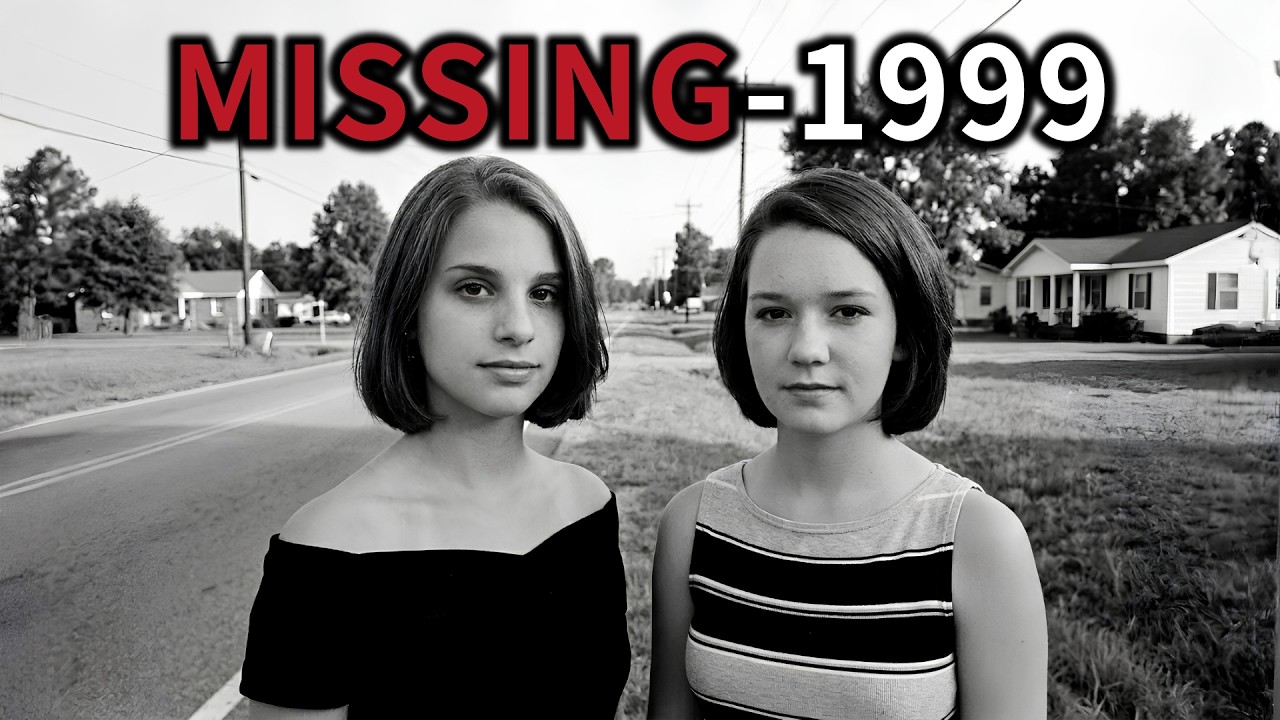
On the night of July 31, 1999, two 17-year-old girls left Dothan, Alabama, for what should have been a birthday celebration. J. B.
Beasley and her best friend Tracy Hawlett never arrived at the party. By the next afternoon, both were found dead in the trunk of Beasley’s black Mazda, each killed by a single gunshot wound to the head.
For nearly two decades, the case went cold. Investigators had the killer’s DNA from the beginning, but it matched no one in any criminal database. The man who left it had no criminal record and no reason to be in the system.
It would take a revolutionary new forensic technique, one that had never been used to solve a murder in Alabama, to finally put a name to the evidence.
That name shocked the community in a way no one could have predicted.
—
In the summer of 1999, Dothan was a typical Southern town of about 60,000 people, located near the Florida and Georgia borders in the Wiregrass region of southeastern Alabama. It was a place where neighbors knew each other by name and teenagers spent summer nights driving along the straight, quiet roads of Houston County without a second thought.
J. B. Beasley was about to turn 17.
Born on July 31, 1982, she was an excellent student, a member of the Junior Honor Society, and a cheerleader. Her mother, Cheryl Bergoon, described her daughter as a beautiful gift. Tracy Hawlett was J.
B.’ s closest friend since middle school. The two were nearly inseparable.
Around 10:05 p. m. , the girls left Dothan in J.
B.’ s black Mazda 929, heading toward Headland for an outdoor party about 10 miles north. They never arrived.
At some intersection, they made a wrong turn and ended up in Ozark, more than 20 miles northwest of Dothan, completely in the opposite direction.
After 11:30 p. m. , the Mazda pulled into the Big Little convenience store and Chevron gas station at 763 East Broad Street in Ozark.
The store had closed at 11:00 p. m. , but a woman named Marilyn Merritt and her daughter had stopped by to buy sodas.
The two girls got out and asked for directions back to Highway 231. Merritt gave them clear instructions. She later recalled that the girls seemed neat, clean, and perfectly normal, just two kids worried about being late getting home.
At the payphone on the corner of the store’s front, Tracy called her mother, Carol Roberts. Tracy said they had gotten lost but now had directions and were on their way home. Her last words before hanging up were, “Mom, I love you.
Be home soon.”
Merritt watched the black Mazda pull out of the parking lot, turn right toward the main road as instructed, and disappear into the darkness. It was the last time anyone saw J. B.
Beasley and Tracy Hawlett alive.
The store’s security camera captured a blurry image that night: a small white pickup truck parked at the gas pump at the exact time Tracy was on the phone. No transaction was recorded at that pump. No one knew who the truck belonged to.
No one ever identified the driver.
—
On the morning of August 1, 1999, Carol Roberts and J. B.’ s family reported the girls missing after they had not come home all night.
That same morning, a black Mazda 929 was found parked on Herring Avenue in Ozark, less than a mile from the payphone Tracy had used.
The car was undamaged, with no signs of a collision. The gas tank was nearly empty. The driver’s side window was rolled down a few inches.
The doors were unlocked. J. B.’
s driver’s license was on the dashboard, and both girls’ wallets were still inside with cash, jewelry, and credit cards untouched. The only thing missing was J. B.’
s keychain, a small chain with white and black blocks spelling out “hard to get.”
The car had been there since 8:00 a. m. Six hours passed without anyone opening the trunk.
It wasn’t until nearly 2:00 p. m. , while waiting for the tow truck, that a Dothan investigator discovered the trunk could be opened from a lever inside without the key.
He popped the trunk. J. B.
Beasley and Tracy Hawlett were inside, each with a single 9-mm gunshot wound to the head.
The girls were still fully clothed, with no obvious signs of a struggle, but their bodies told a different story. Tracy had been shot in the temple, had scratches on her arm, briars stuck to her pants, and her brand new New Balance shoes were caked in mud. Both girls’ pant legs were wet up to the knees.
They had walked through wet ground or damp grass somewhere else before they were killed.
From the position of the bodies, it was clear Tracy had been placed in the trunk first, J. B. after her.
A 9-mm shell casing was resting on Tracy’s leg.
Robbery was ruled out immediately. Cash, jewelry, and credit cards were all untouched. The girls had not been killed on Herring Avenue.
This was simply where the killer had dumped them.
The initial autopsy concluded there were no signs of rape and no alcohol or drugs in their systems. But more than two months later, the Alabama State Crime Lab announced a discovery that changed the entire direction of the investigation. Semen was found on J.
B. Beasley’s bra, panties, and skin. Additionally, an unidentified palm print was collected from the inside of the trunk lid.
District Attorney David Emery stated outright that this was a sexual crime, or at least stemmed from a sexual act. Finding the owner of that semen sample would mean finding the killer. That theory was correct, but finding him would take another 20 years.
—
The community was in shock. A reward was raised. Police faced enormous pressure from all sides.
Then, exactly one month after the bodies were discovered, a man walked into the police station on his own. On September 1, 1999, Johnny William Barentine, 28, a part-time mechanic who lived less than a mile from Herring Avenue, came forward and said he knew something about the case.
The interrogation lasted four hours and was fully recorded. During that time, Barentine told six different versions of events. In the first, he saw a black truck speeding away from the Herring Avenue area.
In another, he gave a ride to a stranger with tattoos all over his arms who passed by the Big Little Store that night. In the final and most detailed version, Barentine claimed the tattooed man got into J. B.
and Tracy’s car in the parking lot, told Barentine to follow them, drove to Herring Avenue, pulled the girls out of the car, and shot them. Barentine said he then drove the man away from the scene.
Police arrested Barentine immediately. The community breathed a sigh of relief, believing the case was solved.
But problems appeared from the start. In all six versions of his story, Barentine never once mentioned any sexual activity, even though the semen on J. B.
was physical proof that it had occurred. The neighbor Barentine identified as the tattooed man had a solid alibi for the entire night, and DNA results did not match Barentine or the neighbor.
Barentine later appeared before a grand jury and admitted he had made up the entire story to claim the reward. He hadn’t seen anything that night. He knew nothing.
The grand jury declined to indict him, and Barentine was released.
The case didn’t just return to square one. It was worse than before, because police had spent months investigating a man who had fabricated a story for money.
—
Investigators pursued other leads over the years. A man from Michigan who had been at a party near Herring Avenue on the night of July 31 could not account for three to four hours that night and left town a few days after the bodies were found. Investigators flew to Michigan three times to question him.
The DNA did not match.
A man from Mississippi who had been staying in Ozark and disappeared right after the crime was brought in for questioning and DNA testing. It did not match.
The small white truck on the Big Little Store security camera was never identified, and its driver was never found.
Every lead led to a dead end. The semen DNA was the only piece of evidence that still held value in the entire case file, but it matched no one in the Alabama criminal database.
The 2000s arrived, then the 2010s. Dothan kept living, kept changing. Children born after 1999 grew up knowing nothing about J.
B. Beasley and Tracy Hawlett except the names they heard from adults.
But for Carol Roberts and Cheryl Bergoon, time did not pass. It only accumulated, year after year, like layers of sediment pressing down on a wound that would never heal. Every year on July 31, they relived that night.
The payphone. The last words. The car turning right into the darkness and never coming back.
The case became one of the most famous cold cases in Alabama history, mentioned in anniversary articles every five years and in true crime forums on the internet. But remembering did not mean solving it.
—

In April 2018, nearly 20 years after the night J. B. and Tracy disappeared, the entire country focused on a stunning arrest in California.
Joseph James DeAngelo, known as the Golden State Killer, who had killed at least 13 people and sexually assaulted more than 50 victims during the 1970s and 1980s, was arrested after more than 40 years on the run.
The breakthrough came from an entirely new investigative technique: genetic genealogy. Instead of searching for a suspect’s DNA directly in criminal databases, investigators ran the crime scene DNA through public genealogy databases like GEDmatch, where millions of ordinary people had voluntarily uploaded their DNA to research their ancestry. From partial matches, they built family trees, working backward from distant relatives to closer ones, narrowing it down to a single individual.
Ozark Police Chief Mosley Walker followed the Golden State Killer case closely. He was thinking about a specific case file in his own office: a semen DNA sample that had sat quietly in the lab for nearly 20 years without a match. Two 17-year-old girls who still had no justice.
Two mothers he knew were still waiting.
Walker contacted Parabon NanoLabs, the private DNA testing company that had played a key role in identifying DeAngelo, and requested that they run the 1999 crime scene DNA sample through GEDmatch.
The results returned a list of Alabama families with DNA similar to the crime scene sample. When Walker read through that list, he stopped at one name, a name he recognized from his school days.
That name was Coley McCraney, 45 years old, born and raised in the Dothan-Ozark area. He was a long-haul truck driver, a pastor at a local church, a husband and father of two. He had no criminal record, no police history, and no indication in the past 20 years that would lead anyone to associate his name with the case.
In the community, Coley McCraney was a familiar face, a respected man. If you asked anyone in Dothan about him, they would have nothing bad to say. That was exactly why his DNA had never been in the criminal database.
Walker did not approach McCraney as a suspect. Instead, he invited him to the station as a local resident helping the police, a friendly conversation between people who had known each other since high school. Walker told McCraney directly, “You are not a suspect, but I need your DNA so we can identify the person we’re really looking for.”
McCraney’s wife, Janette, sat beside her husband during the meeting and encouraged him to agree. She had no reason to suspect anything. McCraney agreed to provide the sample, unaware that the family tree Parabon NanoLabs had built from the DNA had already pointed directly to him before he even walked into the station.
The test results came back clear. Coley McCraney’s DNA matched exactly with the semen sample collected from J. B.
Beasley on August 1, 1999.
When investigators confronted McCraney with the results, he denied everything. He claimed he did not know J. B.
Beasley or Tracy Hawlett, had no connection to the two girls, and was not in Ozark on the night of July 31, 1999.
On March 15, 2019, nearly 20 years after the night J. B. and Tracy pulled out of the parking lot at the Big Little Store and disappeared into the darkness, Coley McCraney was arrested on multiple counts of capital murder and rape.
Prosecutors announced they would seek the death penalty.
—
The shock in Dothan and Ozark was profound. Not because the case had been solved after 20 years, and not because DNA technology had accomplished what two decades of traditional investigation could not. The shock came from the name.
Coley McCraney was a pastor, a father, a truck driver. Someone people might have nodded to on the road, sat near in church, or exchanged casual conversation with about the weather or football. No one, not even the police during 20 years of investigation, had ever thought of him.
It was the slow, painful realization that the killer had been living normally right in the middle of this community for two decades, going to work, attending church, raising children, while Carol Roberts and Cheryl Bergoon sat at home waiting for answers.
Carol Roberts heard the news of the arrest and couldn’t speak for several minutes. Cheryl Bergoon cried. Both women had waited 20 years for this moment, and now that it had arrived, there was no relief, only the old pain resurfacing alongside a new hope that the upcoming trial would finally give them the answers they had waited so long for.
—
The trial was supposed to begin in 2020, but the COVID-19 pandemic delayed everything. It wasn’t until April 2023, 24 years after the night J. B.
and Tracy were killed, that the trial officially opened in Dale County with Judge William Fillmore presiding.
Coley McCraney, now 49 years old, sat at the defense table facing four counts of capital murder and one count of rape. The trial lasted eight days with dozens of witnesses and intense opposing arguments.
In the courtroom, Carol Roberts and Cheryl Bergoon sat in the row reserved for the victims’ families.
McCraney chose to take the stand himself, a major risk in any criminal trial. On the stand, he was completely different from his absolute denial in 2019. Now, he told an entirely different story.
He said he had met J. B. at a shopping mall in Dothan a few months before the night of the crime.
J. B. introduced herself as Jennifer.
They exchanged phone numbers, stayed in contact, and planned to meet in Ozark on the night of July 31. According to McCraney, his truck broke down due to a bad alternator at a gas station that night. He saw J.
B. and Tracy at the payphone by chance, approached them, and the two girls offered to drive him to where his truck was parked. In the cab of his truck, he and J.
B. had consensual sex. Afterward, the two girls drove him home around 12:45 a.

m. , and he knew nothing more about what happened to them.
As for why he had completely denied knowing the girls when he was arrested in 2019, he said he was afraid his wife would find out about the affair.
The prosecution systematically dismantled every point of his testimony. There was no evidence, no texts, no calls, no witnesses to confirm that J. B.
Beasley and Coley McCraney had ever known each other before the night of July 31.
Marilyn Merritt, the woman who had met the two girls at the Big Little Store that night, took the stand and stated clearly that J. B. and Tracy were simply lost and trying to find their way home.
There was no sign of any planned meeting or date. Tracy’s phone call to her mother at 11:35 p. m.
further confirmed this. They were on their way home, not heading to a rendezvous.
The prosecution reconstructed the sequence of events based on physical and forensic evidence. After J. B.
and Tracy left the parking lot, McCraney approached their car, held them at gunpoint, forced the two girls to follow him to another location with bushes and damp ground, which explained the mud on their shoes and wet pant legs, raped J. B. , then shot both girls with a 9-mm handgun, placed their bodies in the trunk, drove the car to Herring Avenue, and left it there.
The most important witness of the entire trial was Janette McCraney, the defendant’s wife, the woman who had sat beside her husband in 2019 and encouraged him to give his DNA to the police because she had no reason to suspect anything.
On the witness stand, Janette McCraney testified that her husband had gone out on the night of July 31, 1999, and had not come home for a period of time that he could never satisfactorily explain. Her testimony, from the wife who had unknowingly helped police obtain her husband’s DNA, who had trusted him for 20 years, and who was now testifying against him, was one of the most heartbreaking and dramatic moments of the entire case.
—
On April 25, 2023, after eight days of trial, the jury retired to deliberate.
On April 26, 2023, the jury returned with their verdict. Coley McCraney was guilty on all four counts: the murder of J. B.
Beasley during the commission of rape, the murder of Tracy Hawlett during the same criminal event, the murder of both victims during the same course of conduct, and the use of J. B.’ s Mazda 929 as part of the criminal act.
The following day, the jury met again to decide on the sentence. They returned with their decision: life in prison without the possibility of parole.
It was not the death penalty the prosecution had originally sought, but it was life without parole. Coley McCraney, 49 years old, would never walk out of prison gates for the rest of his life.
In the courtroom, when the verdict was read, Carol Roberts was speechless for several minutes. She later said, “I’m stunned. We waited 24 years and finally someone is being held accountable.”
Cheryl Bergoon, J.B.’s mother, leaned forward and broke down in uncontrollable tears.
Alabama Attorney General Steve Marshall, who personally prosecuted the case, stood before the press after the verdict and said, “We lost two precious girls, girls who never had the chance to grow up and experience life.”
He openly acknowledged that the sentence did not bring complete closure. No verdict could do that. But it answered the question that the two families had carried like a nameless burden for 24 years.
—
Coley McCraney is currently serving his sentence at William E. Donaldson Correctional Facility in Bessemer, Alabama. In a phone interview from prison with ABC News, he continued to proclaim his innocence, saying people could call him a cheater or an adulterer, but he did not kill anyone.
The case of J. B. and Tracy was one of the first in the United States to prove that genetic genealogy could solve cold cases under conditions where every traditional investigative method had failed.
No criminal record, no reliable witnesses, and no physical evidence except a single DNA sample stored in a lab for 20 years.
After the McCraney case, hundreds of cold cases across America were reopened using similar technology. Families who had long given up hope suddenly received the phone call they no longer dared to wait for.
The case of J. B. Beasley and Tracy Hawlett left behind practical lessons that every American, especially parents and young people, can apply in their daily lives.
Always share a specific itinerary before going out, not just “I’m going to a party,” but the exact location, the name of the host, contact phone numbers, and expected time home. If plans change, call immediately to update, just as Tracy did when she called her mother from Ozark.
In the age of smartphones, there is no reason to get lost without anyone knowing. Turn on real-time location sharing with at least one trusted family member when going far away or to unfamiliar places, especially at night.
If you or your child gets lost and has to stop the car in a deserted place at night, stay in the car, lock the doors, and make a call. Do not get out to ask strangers for directions if it can be avoided.
Trust your instincts. If something feels off, even if you can’t explain why, drive away, call 911, or go to a crowded place.
And finally, this case reminds us that dangerous people never look like dangerous people. They can be your neighbor, someone familiar in the community, someone you’ve seen hundreds of times without any suspicion. Vigilance is not paranoia.
It is something that can save your life.