The story of the Lovelock Cave “red-haired giants” is one of the most persistent myths in the American West. For over a century, popular accounts have described a race of eight-foot-tall, red-haired cannibals who terrorized the Great Basin until they were trapped in a cave and burned alive by the Paiute people. The story is dramatic, horrifying, and almost entirely false.
The real history is far more tragic. It involves a desperate war between two Indigenous peoples over shrinking resources, a brutal siege, and a cultural memory that was later twisted by settlers and newspapermen into a monster story.
To understand what really happened, we have to start with the only written account that matters. In 1883, Sarah Winnemucca Hopkins published Life Among the Paiutes: Their Wrongs and Claims. It was the first extended book written in English by a Native American woman.
Winnemucca was the daughter of a Northern Paiute chief, and she grew up hearing the elders tell stories of a time before the settlers came.
One of those stories concerned a people the Paiute called the Si-Te-Cah, or “tule-eaters.” They were named for the tule reeds that grew thick in the marshes around the Humboldt Sink, a shallow lakebed in what is now Nevada. According to the elders, the Si-Te-Cah were not a separate race or a tribe of monsters.
They were a neighboring people, a rival band, and they had a habit the Paiute could not forgive: they killed captives and ate them.
In the harsh environment of the Great Basin, survival depended on access to wetlands. The lakes shrank and vanished in dry years, and the reed beds were life itself. When two peoples wanted the same marsh, conflict was inevitable.
The Paiute oral tradition describes years of raids and counter-raids. The Si-Te-Cah struck Paiute camps, took captives, and the captives did not come home. Whether the cannibalism was literal or a charge one hungry people levels at another, the Paiute believed it.
Fear fed on fear until it became something larger than the truth.
The elders told Winnemucca that the Paiute bands eventually formed a coalition. This was unusual. In Great Basin culture, each family group was its own political unit.
To unite against a common enemy required a shared understanding of a shared threat. They had reached that point. They had buried too many of their own.
The final act took place at a cave. Winnemucca’s account is remarkably brief. She writes that the Paiute, together with other tribes, fought the Si-Te-Cah for a long time and at last drove them into a cave and killed them all.
Nine words. A whole people ended in nine words.
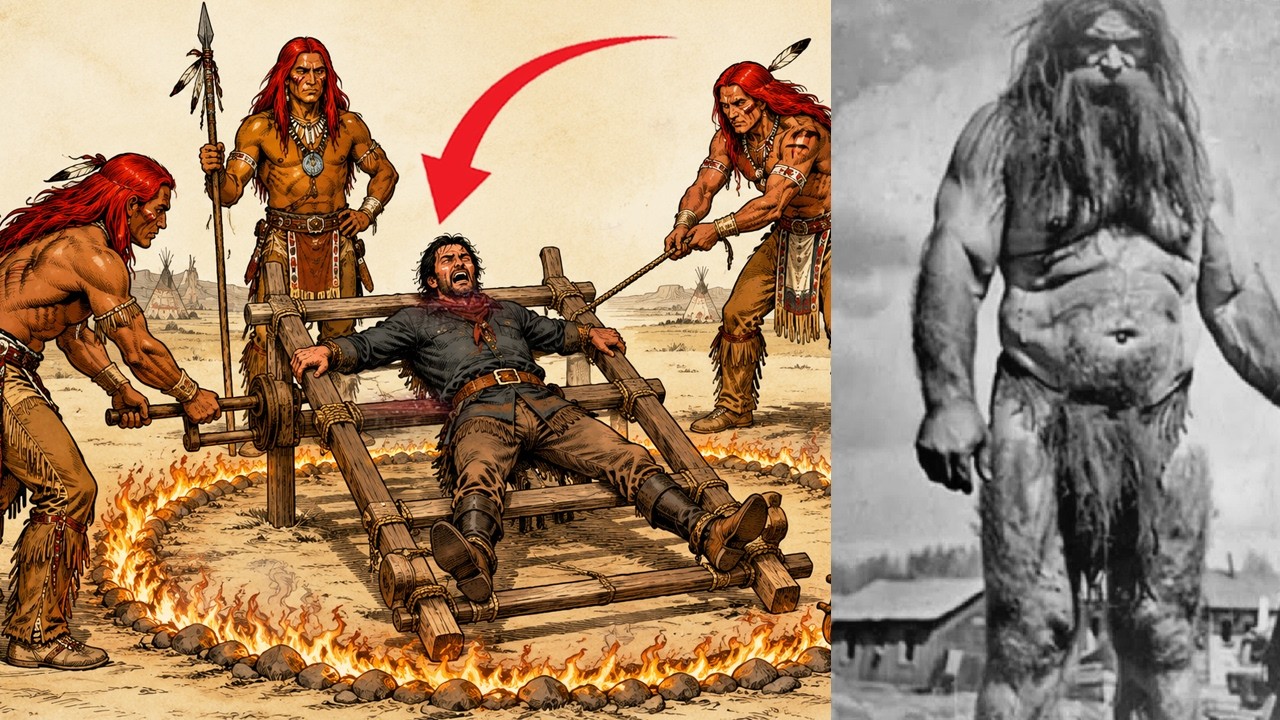
The Paiute did not storm the cave. They knew the cost of a frontal assault up a steep talus slope into a defended mouth would be too high. Instead, they chose an older, crueler option.
They gathered brush, sage, and dry reeds, carried it up the slope, piled it at the entrance, and set it on fire.
The cave was a pocket in the cliff. It had no back exit. As the fire roared, smoke rolled along the ceiling and then came down to breathe with.
The warriors inside charged the mouth. Those who made it through the flames met a rain of obsidian arrows from the Paiute line below. None broke through.
The survivors retreated deeper into the cave, where the ceiling sloped downward and the smoke gathered fastest. The people who ran deepest died first.
Children were among them. Old people, nursing mothers, boys not yet old enough to draw a bow. The Si-Te-Cah in that cave were not an army.
They were a population. And they died in the dark.
The Paiute did not go in that night. They waited for morning. When the sun rose, the fire was a bed of ash.
The bodies were left inside. The living took what they needed and went home. The war was over.
It had ended not with a treaty, but with a silence.
That silence held for centuries. Bats moved in. Guano piled up in deep layers, covering the reed sandals, the fiber cordage, and the last of the Si-Te-Cah.
The lake dried. The sink turned to salt and dust. The story thinned into a winter warning, a memory worn smooth by time.
Then, in 1911, two men named David Pew and James Hart walked into the cave with shovels. They were not looking for history. They were looking for bat guano to sell as fertilizer to California farmers.

Three feet down, they hit something else: reed sandals, fiber nets, basketry, and human bones.
Pew and Hart were miners in a hurry. They threw the objects onto piles outside the cave and kept shoveling. They also talked.
They told stories at the general store in Lovelock. And in the retelling, the bones grew. A normal femur became a giant’s thigh bone.
A tall man became a monster.
Word reached the University of California, Berkeley. In 1912, archaeologist Llewellyn Loud arrived and began the careful work the miners had not done. He measured, recorded, and mapped the layers.
He was joined in the 1920s by Mark Harrington. Their 1929 monograph, Lovelock Cave, became the foundation of everything scientific we know about the site.
The archaeology was clear. The cave contained thousands of extraordinary artifacts, including some of the finest prehistoric duck decoys ever found in the Americas, woven from tule reeds and painted with earth pigments. It also contained approximately eight documented human burials.
Every measurable skeleton was a normal-sized human being. The tallest was roughly six feet. Not eight.
Not ten. Six.
The red hair was the other pillar of the myth. Some of the mummified remains preserved hair that looked reddish in the display case. But hair does not stay the color it was in life.
In an alkaline, dry, chemically active cave environment, black hair oxidizes and pigments shift. Analyses have shown the reddish tone to be a product of post-mortem change, not a marker of a genetically red-haired population. In life, the people in that cave had hair as dark as their enemies.
Decades later, physical anthropologist Sheila Brooks of the University of Nevada, Las Vegas examined the “giant” bones that had accumulated in museum drawers and been cited in giant-hunter literature. She measured them and identified them by species. Some were not human at all.
They were cattle. Cow femurs and scapulae, mistaken by miners in dim light and by later enthusiasts in warm imagination for the remains of a vanished race.
Every time a website or a book claims that eight-foot red-haired giants once walked the Nevada desert, some percentage of the bones they point to were cows.
The transformation of the story happened in print. Local newspapers, hungry for frontier strange stories, took the miners’ talk and ran with it. Bones became giant bones.
Heights became eight to ten feet. The Paiute story, filtered through settlers who had never heard it directly, acquired the details that made it commercial: red hair, cannibalism as a way of life, a distinct race wiped out by the Indians.
By the mid-twentieth century, this version had eaten the original. Books were published, radio programs aired, and the giant version became so loud that the Nevada State Museum eventually posted a sign at its display saying, in effect, that red-headed giants are a myth. Not a suppressed truth.
A myth.
There is one more fact that reframes everything. When Sarah Winnemucca Hopkins wrote her 1883 book, she never once identified the cave in her story as Lovelock Cave. She described a cave.
She did not name it. The retrospective identification of the cave in her story with the specific rock shelter above the Humboldt Sink was made later by non-Paiute readers looking for a place on a map to hang the story on.
It is possible, genuinely possible, that the massacre her elders remembered happened somewhere else entirely. Lovelock Cave, with its normal-sized graves and beautiful duck decoys, may be a Great Basin foraging site that only became the site of the legend because a few miners with shovels stumbled into it at exactly the wrong moment in the history of American storytelling.
The Si-Te-Cah were real. The war was real. The extermination in some form was real.
But the giants, the cannibal race, the eight-foot red-haired monsters of frontier lore, that is a story born in a newspaper office, not in a Paiute grandmother’s mouth.
The horror of Lovelock Cave is not that the victims were giants. The horror is that they were not. They were families, and they died in the dark, suffocated by smoke in a pocket of rock, sealed in by a wall of burning brush while their enemies waited outside with bows drawn.
The myth lets us look away from that. By turning the victims into monsters, we do not have to grieve. We do not have to sit with the weight of what hungry human beings will do to other hungry human beings in a hard country, in a fight over reeds and water and the right to survive one more winter.
The monsters are not real. The tragedy is.