On the night of January 5, 2015, a 67-year-old woman collapsed in a restaurant in West Hollywood. Her fiancé dropped to the floor and began performing CPR as they waited for paramedics. She was rushed to Cedars-Sinai Medical Center, where she was pronounced dead at 10:20 that evening. Her name was Francesca Hilton, the only daughter of Conrad Hilton, the man who built the largest hotel empire in the world.
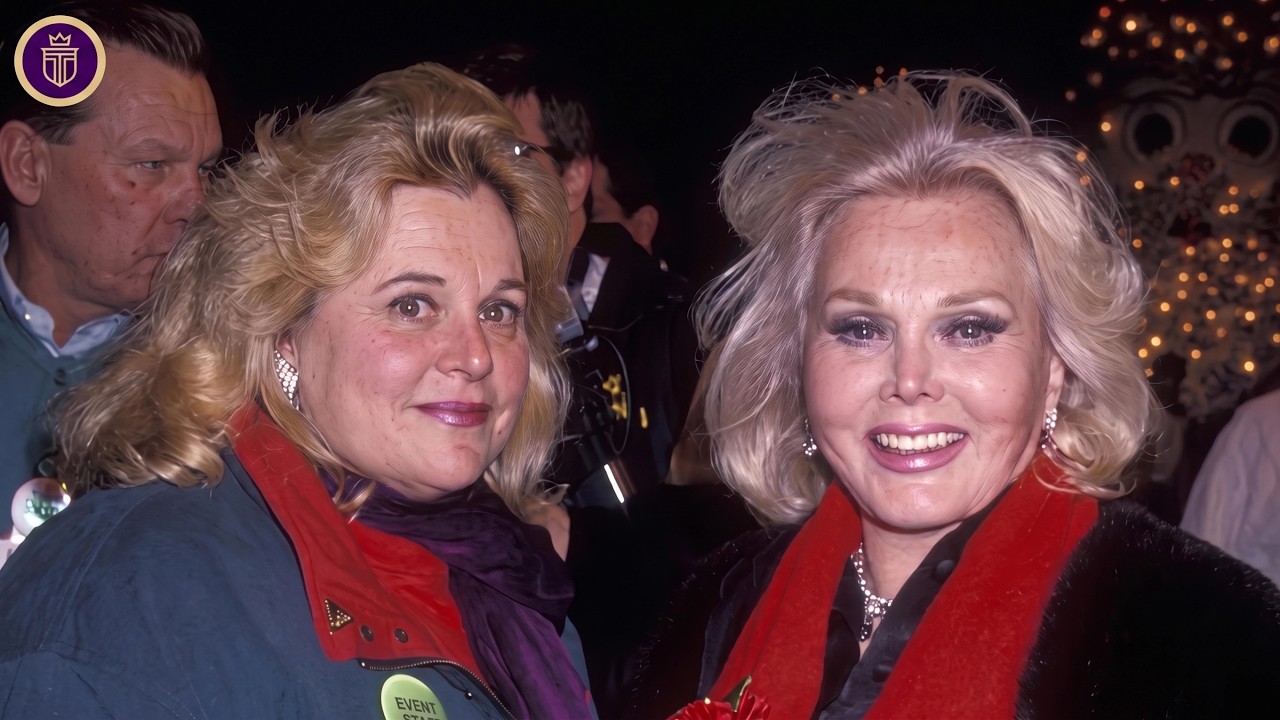
Her father had died one of the richest men in America. Her own net worth on the night she died was roughly $10,000. For several days afterward, her body sat unclaimed in the Los Angeles County morgue while America’s wealthiest hotel family attended to other matters, and her friends waited for someone to act. A dynasty built on a promise to provide a clean room for every traveler initially failed to find one for her.
Conrad Nicholson Hilton was born on Christmas Day 1887 in San Antonio, a small frontier town in what was then the New Mexico Territory. His father, August Hilton, was a Norwegian immigrant who had come west to prospect for gold before settling into a trading post on the Rio Grande. His mother came from German stock. Conrad was one of eight children.
August converted part of the family store into a small adobe inn for train passengers passing through twice daily, and he put his teenage son in charge under a simple arrangement: the boy could keep whatever he earned. Cleaning rooms, keeping books, and managing guests taught Conrad a lesson that never left him. His path into the hotel business began with a bank he never bought. In 1919, after returning from the army and burying his father, he traveled to Cisco, Texas, to purchase a bank at an agreed price of $75,000.
A last-minute telegram raised the price to $80,000, and Hilton, a man of strict principles, walked away in disgust. Across the street, he stopped into the Mobley Hotel to calm down, and what he found redirected his life entirely. The lobby was packed with oil field workers, and the owner was renting every room three times a day in eight-hour shifts to accommodate the flood of men chasing the local boom. Hilton watched the constant turnover and later wrote that this business was far superior to banking.
The owner complained of being tired of running an inn while his guests left rich, so Hilton bought the Mobley for $40,000, raising part of the money from his mother. He never thought about banking again. What followed was a methodical march through the hotels of Texas. Then came a tower in Dallas in 1925, the first building ever to bear his name.
The Great Depression nearly erased everything, reducing his holdings by 1933 to a single property kept afloat on borrowed money and hastily written terms. He survived by following a note he wrote to himself: do not sit and wait for opportunities to come to you. He fought his way back through the late 1930s, trading stock for milk and laundry contracts, negotiating relentlessly with the creditors who had seized his properties. His recovery made him one of the industrialists who shaped the American century.
He founded Hilton Hotels Corporation in 1946 as the first hotel company listed on the New York Stock Exchange. Then he took the brand abroad. In September 1949, he bought the Waldorf-Astoria in New York, an address he had wanted so badly that he kept its picture folded in his wallet for years before he could afford it. He called the Waldorf the greatest of all hotels.
By the time he owned it, it was the customary destination for presidents, heads of state, and the American elite. A few years later, he bought the entire Statler chain in what was then considered the largest real estate transaction ever carried out by a single man. Behind it all lay an exacting Catholicism that shaped his understanding of money. He prayed before major decisions and wrote in his memoirs that he believed his wealth was a gift from God, to be spent in the service of others.
He poured that conviction into the charitable foundation he established in 1944. He had already decided, exactly seven years before his death, how much of that fortune his daughter would receive. The marriage that produced Francesca was unequal from the first day, and everyone involved seemed to know it except the man who arranged it. In April 1942, Conrad Hilton was 54 and near the peak of his wealth when he married Zsa Zsa Gabor, a Hungarian actress some 25 years his junior.
Born Sári Gabor in Budapest in 1917, she was the daughter of a jeweler and an unrelentingly ambitious mother named Jolie, who had trained her three daughters to pursue rich men as a profession. Zsa Zsa had polished herself at a Swiss finishing school, won a runner-up spot in the Miss Hungary competition, and married a Turkish diplomat before ever setting foot in America. She arrived with charm and prestige, already expert in the only profession her mother had taught her. Conrad was a strict Catholic.
For him, the hotel trade was a second religion. Zsa Zsa later wrote that he had only two passions in his life, his faith and his hotels. She had married into a void, and she did not stay silent in it. Within two years, by several accounts, she began an affair with Conrad’s own eldest son, Nicky, then eighteen and living under the same roof.
If those claims were true, they added a particular insult to a marriage already collapsing under Conrad’s severity. Conrad never managed to pronounce her name correctly, and for years afterward he referred to his second wife as Georgia because he could not say Zsa Zsa. They divorced in September 1946. Francesca was born on March 10, 1947, after the divorce decree was issued but before California law had finalized the proceedings.
That gap in timing became Conrad’s justification for everything he did afterward. He claimed publicly that Zsa Zsa had been unfaithful during the marriage and denied that the child was his daughter. He never softened his position, never acknowledged Francesca as he acknowledged his three sons, and treated the timing of her birth as permanent license to keep her outside the family. His name appeared on Francesca’s birth certificate as her father, the one official document that matched biological fact.
Everywhere else, he behaved as if the certificate were a clerical error. In his home, in his heart, and ultimately in his will, he treated her as a stranger who had wandered into the family by mistake. The darkest version of her origins came from her mother’s own pen. In her 1991 memoir, Zsa Zsa claimed Francesca had been conceived when Conrad raped her, a claim never tested in any court and never convincingly refuted anywhere else.
When a journalist asked Francesca about that claim in 2008, she answered the only way she had learned to answer anything. She said she did not know because she had not been there, but she was quite certain her parents had slept together at least once, since she existed. She added that she had asked her mother about it and that her mother did not seem to remember. It was the answer of a woman who had spent her life converting unbearable facts into jokes.
A habit formed in childhood, in a world where jokes were the only thing she had ever been allowed to keep. Francesca grew up surrounded by dazzling glamour and almost no ground beneath her feet. Her mother’s world was a whirlwind of premieres, trips to Europe, and wealthy men, and Francesca was carried through all of it from infancy. A 1958 issue of Life magazine documented her eleventh birthday party at Zsa Zsa’s Bel Air home, where eighteen children arrived in evening gowns and formal suits and drank ginger ale served as cocktails.
The people who knew that household were less impressed than the magazine. Film critic Kevin Thomas, a friend of Francesca for more than 25 years, described her role without embellishment. He said she was a front child, an accessory, the luxury child required to complete a picture that already contained the luxury home and the luxury car. Actress Jane Meadows, who knew the family, put it another way: without her sense of humor, Francesca would have ended up like Britney Spears.
The comedy was what kept her from collapsing. The dangers of that world reached her early and directly. When Francesca was seven, a burglar broke into the house, tied up Zsa Zsa and the housekeeper, threatened to kill the child, and left with jewelry valued at three-quarters of a million dollars. Hedy Lamarr was said to have explained the facts of life to Francesca when she was three.
Frank Sinatra once pounded on Zsa Zsa’s locked bedroom door and refused to leave; Zsa Zsa’s only concern was that the noise would wake her daughter. For Francesca, these were not strange margins of childhood but the ordinary texture of her daily life. Her father remained a cold, distant figure who appeared only for casual lunches at the Penthouse restaurant of the Beverly Hilton. Even those rare meetings carried a strange cruelty disguised as care.
He was friendly across the table but absent in everything that mattered. In her teens, Francesca took a summer job answering reservation phones at the Beverly Hilton, where callers refused to believe Conrad Hilton had a daughter at all. They told her, in their simple way, the truth about her place in the family before she was old enough to argue. The only constant in her life was riding, where she and her mother hung the blue ribbons they had won.
And that constancy was about to become the rarest currency in that house. If Conrad’s world was cold and closed, Zsa Zsa’s was warm but structurally incapable of supporting anyone. Jolie Gabor had raised her daughters on a single principle, summarized by critic Kevin Thomas as instruction to pursue great and rich men and manipulate them. Zsa Zsa followed it more openly and more successfully than anyone in her family, turning successive marriages into a kind of performance that made her one of America’s first modern celebrities.
But a life organized around extracting security from a series of men does not produce the instinct or the mechanisms for providing it to a child. She married nine times. Each new marriage brought a new father, a new house, a new disruption into Francesca’s life. The men who courted Zsa Zsa recognized that the child was a route to the mother.
Francesca later remembered that her mother’s suitors took her everywhere and tried to buy her gifts so she would speak well of them and endorse them for marriage. She was effectively a small ambassador showered with attention by suitors trying to reach the grand prize, useful only as long as the courtship lasted. None of them built anything to support her. She learned early that affection in her world was transactional, offered as a means to something else, withdrawn the moment the deal closed.
The simplest cruelty of her inheritance was this: she bore their name and their face, but owned almost nothing in it. Conrad wrote his last will in 1972, seven years before his death, fully aware of every one of his children and the circumstances of each. At his death, he held a controlling stake in Hilton Hotels of nearly 28 percent of the company, and the vast majority of his wealth was tied to those shares. A federal law passed in 1969 prevented private foundations from owning more than one-fifth of any company, so Conrad wrote his will with careful legal attention to work around that obstacle.
He directed nearly his entire estate to the Conrad N. Hilton Foundation, the charity he had created in 1944, expressing his Catholic conviction that his wealth was a gift from God. In that estate, an empire valued at $200 million, he included a single line for his only daughter. He left her a lump sum of $100,000.
No percentage, not a single share of the stock that formed his fortune, no trust that might grow with the company over time. It was a fixed, final number, roughly one two-thousandth of everything he left behind. The will also contained a no-contest clause, the standard weapon of a careful father, stripping any heir who challenged the document of whatever had been granted to them. Despite that, Francesca contested the will.
She lost the case and kept only the $100,000 because the court declined, for reasons never widely explained, to enforce the penalty against her. Her explanation for why she sued was simple. She told a journalist that $100,000 from such a vast fortune was the reason she brought her case, that one cannot live in the past, and that the decision had been her father’s alone. But it was not really about the money.
It was a formal legal confirmation from Conrad, after his death, that he had never considered her his daughter in any sense that mattered. The foundation that inherited nearly everything he owned had grown by 2023 to more than $7 billion in assets and had distributed over $3. 5 billion in grants. Among the causes it funded was permanent housing for the chronically homeless in Los Angeles County.
Conrad was buried in a Catholic cemetery in Dallas, in the same city where he had opened the first hotel bearing his name half a century earlier. The will that gave his empire to charity carried his daughter’s name as a footnote at the bottom of the page. The paradox that defines Francesca’s story is not between her and her father but between her court challenge and her half-brothers’. Barron Hilton, Conrad’s second son, had been running Hilton Hotels as chief executive since 1966.
He contested his father’s will from inside the system. Francesca filed as a disowned daughter with no institutional standing; Barron filed as the actual head of the company whose shares were the grand prize. His argument centered on a clause in the will giving him an option to buy the shares the foundation was legally barred from holding, at their value on the day of his father’s death. If that option could be expanded to cover the entire stake rather than just the excess, he would regain control of the company at a price frozen at the moment of Conrad’s death, no matter how much the stock had risen since.
The case moved through three levels of California courts for more than two years, with different judges interpreting the same clause in contradictory ways. Barron took the stand himself as the first witness on the opening day of trial. A Los Angeles judge ruled for the foundation in 1986, a result worth hundreds of millions to charity. Even an attempted mediation by the Archbishop of Los Angeles failed to bring the sides together.
The war ended in November 1988 with a settlement classified among the most significant private property settlements in American business history. Barron walked away with shares worth about $212 million plus most of the income of a large charitable trust, while the foundation received its substantial share of stock. The trust was structured to pay most of its income to Barron for life, with the remainder passing to the charity after his death. The settlement gave him effective control of the company.
He expanded into casinos, developed the brand worldwide, and ultimately presided over the sale of Hilton Hotels to the Blackstone Group in 2007 for about $26 billion. He died in 2019 at the age of 91, the same age his father had reached, celebrated as one of the great philanthropists of his generation. That same year, he pledged nearly his entire fortune, a sum reportedly in the billions, to his father’s foundation and was named America’s most generous man of the year. The son who fought his father’s will ferociously became, in the end, the largest donor to the charity that will created.
The irony attached to everyone in this family except the daughter, for whom the cruelties of fate were simply losses. Francesca spent most of four decades trying to build a life in Los Angeles that was her own. The Los Angeles Times captured the strangeness of her position in one phrase in 2008, calling her the unknown Hilton, the anti-Paris, a woman the city had heard of but never truly known. Her film career began with real promise in 1971, when director Henry Jaglom cast her in his experimental drama A Safe Place.
The cast included Orson Welles, Tuesday Weld, and a young Jack Nicholson who accepted the role without pay as a personal favor to the director. Appearing in a film with Nicholson before Chinatown and One Flew Over the Cuckoo’s Nest placed her, if only briefly, inside a real moment of cinema history. The roles that followed were smaller and stranger. She played an unnamed shopkeeper in Cleopatra Jones in 1973, appeared as a guest on the detective series Cannon that same year, and appeared opposite Stacy Keach in a film released under two different titles the following year.
Then work went quiet for more than a decade. During the late 1970s and 1980s, she stepped away from the screen and worked as a photographer and public relations executive. In one of the bitter ironies of her life, she spent time working on the staff of the Conrad N. Hilton Foundation itself, drawing a salary from the same entity that had inherited the fortune her father refused to leave her.
Stephen Hilton, who later ran that foundation, said she spent much of her life trying to find her way. She reappeared on screen in the 1990s in a series of small roles. She played an unnamed woman in a television film about Elizabeth Taylor, the actress her half-brother Nicky had married in an extravagant studio-produced ceremony before divorcing eight violent months later. She accepted a role in a low-budget film called The Petrodactyl Woman from Beverly Hills, a title that drew laughs before the film even began.
She appeared as herself in documentaries that periodically revisited the Gabor and Hilton families. Her career was a portrait of persistence rather than arrival, a record of a woman working at the margins of an industry that knew her family name and almost nothing else about her, refusing contract after contract to stop trying. Her greatest creative achievement was not on screen but on a stage on the Sunset Strip. The Comedy Store opened in 1972, and Mitzi Shore turned it into the world’s first stand-up comedy club, a launching pad for stars like Robin Williams, David Letterman, Jay Leno, Richard Pryor, and Jim Carrey.
She created a mark of belonging called the paid professional, an honor she granted by writing the comedian’s name on the exterior wall of the building for all to see. Francesca Hilton became a paid professional, and her name went up on that wall beside the most famous comedians in the country. For a woman who carried a surname that adorned luxury hotels she was never allowed to inherit, there was powerful meaning in earning a different kind of fame on a different kind of building. This fame was drawn by recognition of her hard work rather than inherited at birth.
By the time the Los Angeles Times put her on its front page in 2008, she had shaped her act to be both very funny and very cruel. She began by introducing herself as the original Hilton heiress, older, wiser, and smarter than the famous one, adding significantly wider as well. She joked that her niece Paris once called her for a ride because she was too drunk to drive, and that she had to refuse for exactly the same reason. She joked that she and her mother had become close friends now that they were, in her words, the same age.
She said she had faced a choice between doing comedy and returning to therapy, and she chose comedy because it was cheaper and came with a drink. Jaglom, the director who gave her first film role, admired what her act represented, calling her a fighter who survived with her identity intact, which he considered a real achievement for anyone raised in that family. Her lawyer, watching her perform, noted that the act leaned heavily on her mother’s shadow and that what Francesca was really hiding underneath was an identity of her own. Both things were true at once.
The act was her most honest voice, yet it was still a voice shaped by the fame of her parents. A flight that never quite escaped the thing it fled. But even the shadow was a kind of property. The name written on the wall of the Comedy Store was one she earned by her own effort, not by lineage.
The only title bearing the Hilton name that truly belonged to her. The battle that would consume the last decade of her life began the day a man walked into her mother’s house and started signing checks. The man who would spend a decade at war with Francesca entered the family in 1986 as Zsa Zsa’s ninth and final husband. Born Hans Georg Robert Lichtenberg in Bavaria in 1943, he became Frédéric Prinz von Anhalt not by birth or marriage but through a commercial transaction.
He paid an elderly German princess to adopt him as an adult. Later he ran the same arrangement in reverse, adopting at least three adults into the Anhalt house for money. An industry in fake nobility that attracted significant legal attention in Germany. His title was a product he had bought for himself first and then sold to others.
Eva, Zsa Zsa’s sister, and her mother Jolie refused to attend the wedding, having immediately recognized what the family was dealing with. The marriage became the longest of Zsa Zsa’s life, lasting thirty years until her death. Von Anhalt proved to have a lasting talent for keeping his name in the tabloids. He once claimed a relationship with Anna Nicole Smith at the time of her son’s death, a story widely dismissed as fabrication.
In 2007, he announced a plan to make the 94-year-old, severely incapacitated Zsa Zsa a mother again through an egg donor and surrogate. It went nowhere. The declared war between him and Francesca began in June 2005, when he and Zsa Zsa filed a civil lawsuit accusing Francesca of a scheme to steal more than two million dollars from her mother. The charge was that she had forged her mother’s signature to obtain a loan secured by Zsa Zsa’s $14 million Bel Air mansion without permission.
Von Anhalt presented the matter to the press as a simple case of a daughter stealing from her mother. Francesca told a different story entirely, insisting she had her mother’s authorization and that she had borrowed against the house to save it from foreclosure caused by von Anhalt’s own mismanagement. The case dragged through the courts for two years before collapsing under a single fact. Zsa Zsa refused to appear in court and refused to sign any papers relating to the lawsuit.
Without her participation, the judge dismissed the case and closed it. Francesca, finally cleared, said only that she wanted to move forward with her life and that two years had been taken from her by charges she called malicious and untrue. The episode revealed a limit that would matter later. However much von Anhalt tried to turn Zsa Zsa into a weapon against her daughter, there was a line the mother would not cross.
When faced with the choice of suing her daughter in open court or letting the case die, Zsa Zsa let it die. By 2012, Zsa Zsa Gabor was 95 and had spent a decade in catastrophic physical decline. A car accident in 2002 had left her partially paralyzed and confined to a wheelchair. Since then she had suffered multiple strokes, lost the ability to speak, and had part of a leg amputated after a failed hip surgery.
She lay on a medical bed inside the Bel Air mansion, entirely dependent on round-the-clock care managed and controlled by von Anhalt. In March 2012, Francesca went to court to request placement of her mother under independent conservatorship, away from von Anhalt’s control. Her allegations were specific, documented, and serious. She claimed von Anhalt had kept Zsa Zsa increasingly isolated from family and friends, kept her under sedatives in ways that extinguished whatever remained of her spark, allowed the Bel Air mansion to fall into mortgage default, and borrowed about $700,000 against the property without permission.
Von Anhalt denied all of it. He told the court that Zsa Zsa’s care cost $30,000 a month against a household income of only $6,000, blamed the family’s financial problems on Francesca’s old refinancing dispute, and claimed that his stepdaughter’s visits caused harm because she was, in his words, not happy enough. The petition reached Judge Reva Goetz, who was simultaneously presiding over the most famous conservatorship case in the country, that of Britney Spears. The parallel was not lost on anyone following closely.
Two women stripped of legal control over their lives, fought over in the same courtroom by people who surrounded them and claimed to know what was best. After weeks of bitter mediation, the parties reached a settlement in July 2012. Von Anhalt was confirmed as temporary conservator, a result he announced to the press with unmistakable satisfaction, declaring clearly that he was the conservator and he was the boss, that he signed the checks, and that was that. But Francesca’s lawyers extracted real concessions, requiring monthly financial and medical reports to her attorney, a $250,000 bond, another $100,000 in a frozen account, and one supervised visiting hour per week with her mother.
It was an incomplete victory, leaving the man she did not trust in control, but it was the most the courts could grant against a husband the law was designed to protect. Her contempt for that husband never cooled. In 2014, she told an interviewer that her mother had wanted to be a princess, so she married an evil queen, then challenged von Anhalt to sue her again. In what turned out to be her final winter, she was still calling her lawyer to demand action against von Anhalt to prevent him from blocking her visits.
She was still fighting in court for that one hour a week the settlement had promised her. In the last year of her life, the direct daughter of a fortune estimated at $200 million had a net worth of about $10,000 and no reliable place to sleep. Until late 2014, she was moving between a week-to-week rented apartment in West Hollywood and the front seat of her own car, without a fixed address she could call home. The daughter of a hotel owner who had once owned the Waldorf-Astoria and properties on three continents no longer had a safe, reliable place to sleep at night.
The accommodations she could afford were sometimes frightening enough that she told an interviewer, in her unbroken deadpan, that she lived with murderers. It came out not as a complaint but as a factual report, spoken with the coldness of a woman who had lived her entire life through the lens of a joke because no other mode remained for confronting her reality. Her business manager, Edward Lozzi, refused to soften the blame. He asked aloud why a family this wealthy had let their daughter end up this way, criticizing von Anhalt for offering excuses about what the courts allowed and did not allow, and pointing to the Hilton relatives who had inherited hundreds of millions from the same source that had left her that paltry sum.
The Conrad N. Hilton Foundation at that moment was running an active initiative to build permanent housing for the chronically homeless in Los Angeles County, backed by an endowment of more than $4 billion. The founder’s own daughter in that same county could not secure a stable apartment. Her health deteriorated in parallel with her finances, worn down by years of legal warfare and the constant pressure of having no safety net.
She struggled to obtain proper medical care in her final days. Yet she kept going. She was performing at the Comedy Store, discussing with her business manager a memoir she wanted to call Hotels, Mink, and Me, and fighting in court for her right to sit for one hour a week with her mother. She was discussing that book in the final minutes of her life, and the manuscript, if it ever existed in full, did not survive her.
Then on the evening of January 5, 2015, in the middle of all those pursuits, she suffered a severe stroke in a restaurant in West Hollywood. Her fiancé, Michael Nardelli, performed CPR while paramedics raced to reach them. She was rushed to Cedars-Sinai Medical Center, where she was pronounced dead that night at the age of 67. An autopsy was ordered, delaying the official announcement of the exact cause of death.
Her publicist did not hesitate to name what he believed had caused it, telling the press that everyone who truly knew Francesca knew it was the stress of one man, Frédéric von Anhalt. Von Anhalt expressed shock, claiming he had thought she was a healthy woman, expressing astonishment at the news of her death. Then, within hours, he called the county coroner to try to claim her body. He based his request on being Zsa Zsa’s conservator, but the coroner’s office told him he had no legal standing whatsoever regarding Francesca.
When Francesca died, her only surviving next of kin was her 97-year-old mother. Zsa Zsa was suffering from advanced dementia, lying in a bed controlled by the same man Francesca had spent the last decade of her life fighting in courtrooms. Von Anhalt decided immediately that Zsa Zsa would not be told. At this single point, among all the decisions he made across the years, he chose something defensible: protecting a 97-year-old woman with advanced dementia from news of her only daughter’s death before her own.
Zsa Zsa Gabor died in December 2016 at the age of 99, never knowing that Francesca had gone before her. With no immediate family member available, and von Anhalt’s claim to the body rejected, Francesca’s remains stayed in the Los Angeles County morgue for several days until the question of who would take possession was resolved. The silence from the Hilton family during those first days was notable and covered by more than one media outlet. The friends who truly knew her, her publicist, her lawyer, her fiancé, were left waiting while the great family machine moved slowly or not at all.
Eventually, Stephen Hilton, Francesca’s nephew and the executive director of her father’s foundation, contacted the coroner over the weekend to confirm he would take possession of her body and arrange for burial. The executive director of the very foundation built on Conrad’s fortune was the one who finally stepped in to ensure Conrad’s daughter did not remain unburied indefinitely. Barron Hilton, the half-brother who had pulled $212 million from their father’s estate, formally took possession of her remains once the autopsy was complete. Von Anhalt, after failing in his claim to the body, announced his intention to attend the funeral as a member of the family.
Francesca’s publicist made clear his presence would not be welcome. Her funeral was held in a Catholic church in West Hollywood, honoring the faith of the father who had disowned her. She was cremated after the service. Her ashes were placed in Westwood Village Memorial Park, near the grave of her aunt Eva Gabor, the one thing about her death that matched a wish she had actually expressed.
She had told her business manager she wanted to rest near Eva, the Gabor sister she had known since childhood. It was a final proximity to the glamour she had orbited all her life without ever being fully admitted to it. She was close to the family, as she had always been, but not quite of it, even now. The days her body lay unclaimed were the purest possible summary of the life that preceded them.
A woman born into wealth built on the business of shelter, into a family whose profession was providing a room for everyone who needed one, found at her death not a single member of that family to come for her immediately. She was the daughter Conrad Hilton chose to doubt, the child Zsa Zsa Gabor loved but never protected, the relative the dynasty seemed to hope the public would simply forget. For a few days in the county morgue, the world nearly granted their wish.
She lies now in Westwood Village Memorial Park, a few steps from Eva Gabor, finally close to the glamour, and still, even in death, only at its edge.