In the autumn of 1889, a land surveyor named Orin Maddox rode into the high country of Codle County with a leather case of survey tools across his back. He was 31 years old, a practical man hired by a timber company to measure a stretch of old-growth forest that its maps had marked as unsurveyed. The note in the margin read simply, "No men available."
Maddox took a room at a boarding house in the small settlement of Tardan Ford, run by a widow named Verly Senate. When he told her over supper where the company meant to send him, she set down her fork and looked at him a long moment. The stretch was called Sile Hollow, under a rise called Yarrow Ridge.
"They tell you anything about it up there?" she asked.
"They told me there's good timber," Maddox said. "Old growth, never been cut."
"That's true enough," Verly said. "Never has been cut."
The next morning, the old man behind the counter at the general store gave him the same warning. "You'll want to be out of there before dark," he said. "Every single day.
When the sun touches the top of Yarrow Ridge, you put your tools down and you start walking out."
"Why is that?" Maddox asked.
"On account of the cold comes early up there," the man said, which was not an answer.
The first day in Sile Hollow, Maddox believed nothing at all. It was a perfectly fine piece of country, full of enormous oaks and walnut and hickory, the light coming down through the high leaves in long gold bars. He worked through the morning, set his stakes, ran his chain, and filled three good pages of his field book with neat columns of figures.
It was somewhere around the middle of the afternoon that he noticed the quiet. It was not silence. It was the quiet of a room that has gone still all at once because everyone in it has stopped talking to look at you.
There were no birds. No squirrels working in the canopy. No deer sign in the soft black ground.
No game at all, in a hollow that should have been thick with it.
Then he found the first tree. At about the height of a man's chest, somebody had cut three notches into the bark, old cuts grown over and weathered gray. When he looked up, there was another tree 30 paces on, with more marks, and another past that with more still.
He started counting them as he walked, almost without deciding to. By the time the sun came down to touch the top of Yarrow Ridge, he had counted past 200.
He remembered what the old man at the store had told him, and he walked out. Once, near the mouth of the hollow, he stopped dead, certain that something a little ways behind him had stopped walking at the exact same instant. He turned around.
There was nothing there.
That night, Verly Senate was waiting up for him. She poured him coffee and sat down across the kitchen table.
"You went up Sile Hollow," she said. "And you counted the trees."
He had not told a living soul about the notches. "What's on the trees, Mrs. Senate?"
he asked.
"You ever hear the name Absalom Teague?" she said.
Teague came into Codle County in the early 1840s, she told him, with a string of mules and a wagon loaded down with iron. He took up land at the head of Sile Hollow, the worst ground in the county, and he trapped. He was the finest there ever was at it.
He could read a hollow the way a hard old preacher reads scripture. He could set a line of traps that would take everything that moved through that country and leave not one creature behind alive to carry the warning to the next.
For a while, the folks at the ford were pleased to have him. He brought down pelts by the wagon load and traded fair. But trappers move on.
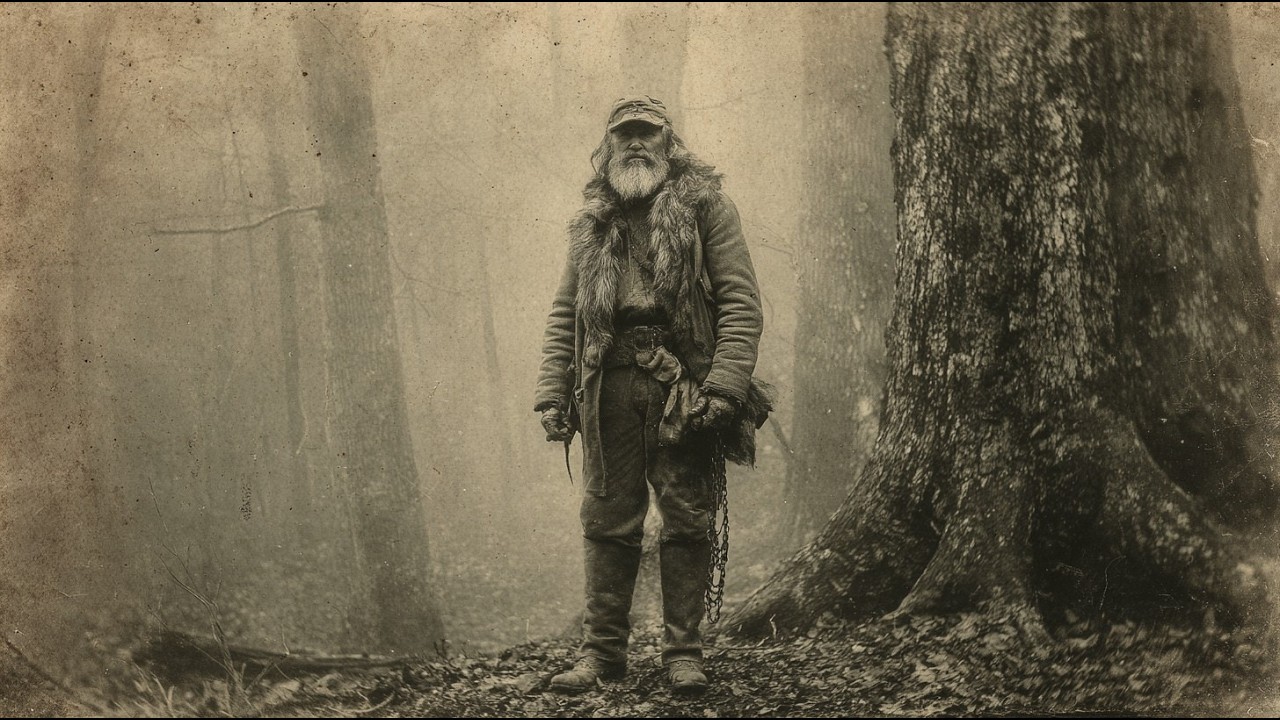
That is the whole nature of the trade. You take the game out of a place, and the place goes empty, and you follow the game onto wherever it went. A trapper who stays is a thing against nature.
Teague never moved on. The game in Sile Hollow went thinner every year, and still he stayed. He still came down with the wagon regular as ever, but not pelts anymore.
He traded coins. A pocket watch once, a fine one. A good rifle.
A man's wedding band, set on the store counter without one word of explanation.
In those same years, travelers had taken to vanishing on the high roads up that way. Drifters, peddlers with their packs, men passing through on their way to somewhere else. The kind of men whose absence makes no sound because there is nobody downstream waiting on them to arrive.
And the high roads, Verly said, every last one of them ran past the mouth of Sile Hollow.
"The notches," Maddox said.
"That's right," Verly said. "He kept a tally."
In the autumn of 1849, the men of the ford finally had their fill. Too many travelers gone off those high roads. Too many coins and watches and wedding bands coming down out of that hollow on Teague's wagon.
So a group of them took up their guns and went up Sile Hollow to bring the man down to answer for it.
Eleven men went up. Seven came back.
Of those seven, not one would ever say plainly what they had found waiting in that cabin. Not to their wives, not to their preachers, not on their own deathbed. They carried whatever it was down out of that hollow and kept it locked behind their teeth until the day they each died.
The county recorder at the time, a hard, careful man named Lemuel Carroll, was among the seven who came back down. Carroll had seen the worst the frontier had to show a person and had written every bit of it down in his neat, steady hand without ever once flinching from the page. But he came down out of Sile Hollow, and he did not go home.
He went straight to the courthouse, took down the ledger where Absalom Teague's land claim was set down in the record, and opened his pen knife.
He cut the name clean out of the page. Then he went through every other paper in that courthouse that carried the name Absalom Teague, every deed, every trade record, every tax mark and receipt, and he gathered them all up and carried them out back behind the building. He burned them down to gray ash and stirred the ash into the mud with his boot.
When folks asked him why a recorder of all men would destroy the record on purpose, he gave them only one answer. He said a thing like that should not have a name to be called by, because a name is a handle, and there are some things in this world you do not ever want anybody to have a handle to take hold of and call back.
Maddox sat there a long while with that.
"The four men who didn't come back down," he said finally.
"They went into the cabin," Verly said, "and the other seven standing out in the clearing heard the bar come down behind them across the door from the outside."
She did not say who threw the bar. And Maddox, for the first time in his whole careful life, did not ask.
He should have stopped. Any sensible man hearing what he just heard would have packed his case in the morning and ridden straight down to the railhead and written the company that the stretch was unsurveyable on account of terrain. But Maddox had careful eyes, and careful eyes have a flaw down in them.
They want to see more than they want to be safe.
So he went back. He told himself it was the job. And for three more days, nothing happened to prove him wrong.
He worked his way deeper into the hollow. The notched trees went on. He stopped counting them somewhere past 400.
The quiet got deeper the further in he pushed.
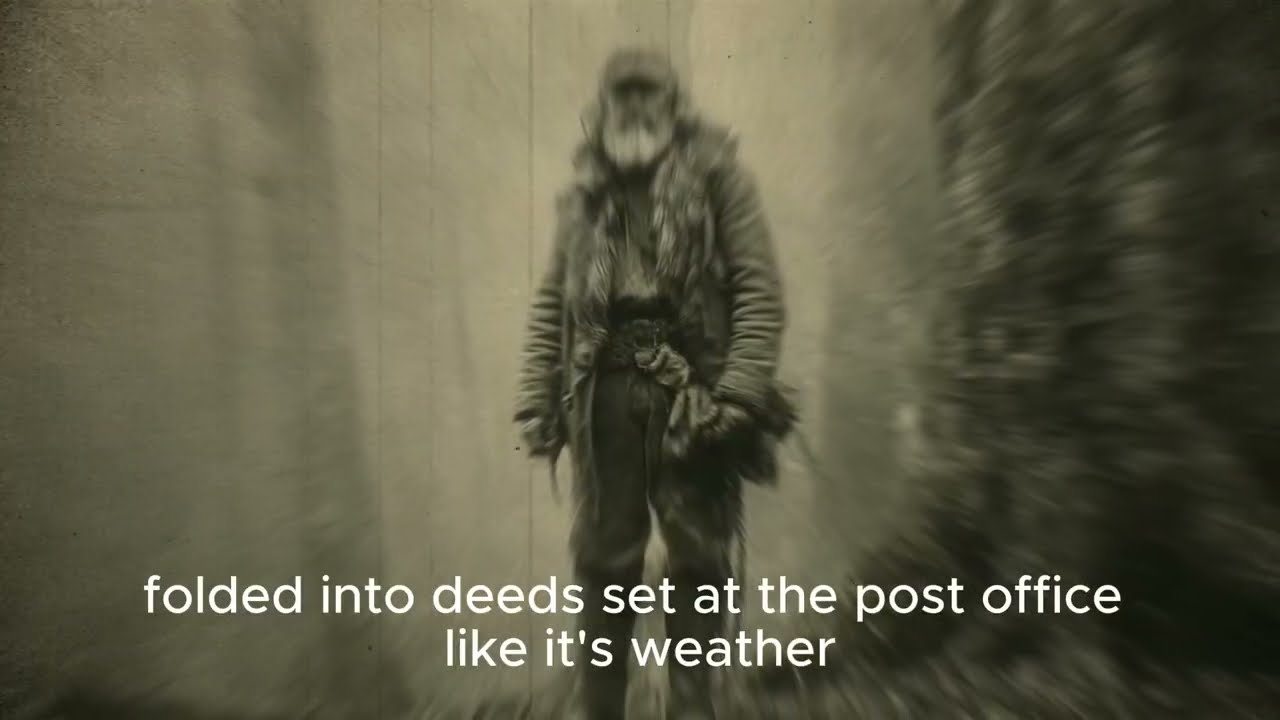
On the fourth day, in the late morning, he found the line. He had been half expecting traps, old ones, rusted down to flakes and crumbs. That is not what he found.
What he found was a single strand of wire, running taut between two trees at about the height of a man's knee. It was not rusted. It was bright.
It had been strung, or strung again, recent enough that the weather had not so much as touched it.
He followed it, tree to tree, stake to stake, deeper into Sile Hollow. At intervals it dropped down to the ground and disappeared under the leaves. When Maddox brushed the leaves aside with the toe of his boot, he found the iron waiting underneath.
Trap jaws, oiled, set. The spring strong, the pans clean, the bait freshened, in a hollow where a man had been dead and gone for 50 years.
A trap line has got to be run. You walk it every day, end to end, and you take whatever has been caught and you reset whatever has come up empty. It is not a thing a man builds once and then is done with.
It is a thing a man tends every single day for as long as he means it to keep on catching. And somebody was tending this one.
He followed the line to its end, except a trap line doesn't have an end. After a long while it began to curve, gentle at first, and then he understood that it was curving back, that the whole line ran in one enormous loop miles around, and that he had been standing inside of it the entire time. The line didn't lead anywhere.
It enclosed.
Right at the center of it, down in the deepest fold of Sile Hollow, was the cabin. It was small, sunk down into the earth over the long years, built of squared logs gone the dark gray-black color of old iron. There was a single door, and the door was latched from the outside.
A heavy iron bar and a bracket bolted to the logs to hold it, and the bar was thrown.
You bar a door from the outside for exactly one reason. You bar a door from the outside to keep something in.
He stood at the edge of that clearing and did not go one step closer. Even from there, he could smell it. Not rot.
It was tallow and wet iron, and underneath those, very faint, old smoke, the smell of a fire that had burned a long, long time ago and had never gone all the way cold.
And from inside the barred cabin, soft and regular and patient, came a sound. It was the sound of a small tin bell, the kind a trapper hangs out on his line so that when something is caught and struggling, the wire jerks and pulls, and the bell rings, and he knows it is time to come and collect.
There was no wind in that clearing. Not a leaf was moving. There was nothing at all to make a bell ring.
And the bell was ringing slow, the way something rings a bell when it has been caught at the far end of a very long line and has been pulling gently, patiently, for a very long time.
Maddox turned around and walked. He did not run. He walked fast and steady, back along the curve of the bright wire, and the whole way the bell kept ringing behind him in the still air.
Twice on that long walk out, he thought he heard the rhythm of it shift, as if whatever was ringing it had finally noticed that it was no longer alone in the hollow, as if it had stopped its patient waiting and started very slowly to come.
He got out of the loop. The sun was barely gone past noon, but he walked out of Sile Hollow anyway, and he did not once look behind him.
He came down into Tardan Ford in the early afternoon, gray in the face as ash. Verly Senate took one look at him from the kitchen doorway and said, "You found the cabin."
"There's somebody up there, Mrs. Senate," he said. "There's a line, fresh strung and oiled and baited and kept every foot of it.
There's a cabin sunk in the ground with the door barred shut from the outside. And there was a bell ringing inside of it with no wind anywhere to ring it. Teague's dead.
You told me yourself the man's been dead 50 years. So who, in the name of God, is running that line?"
Verly sat down slow across from him. She was quiet a long moment. Then she told him the rest of it.
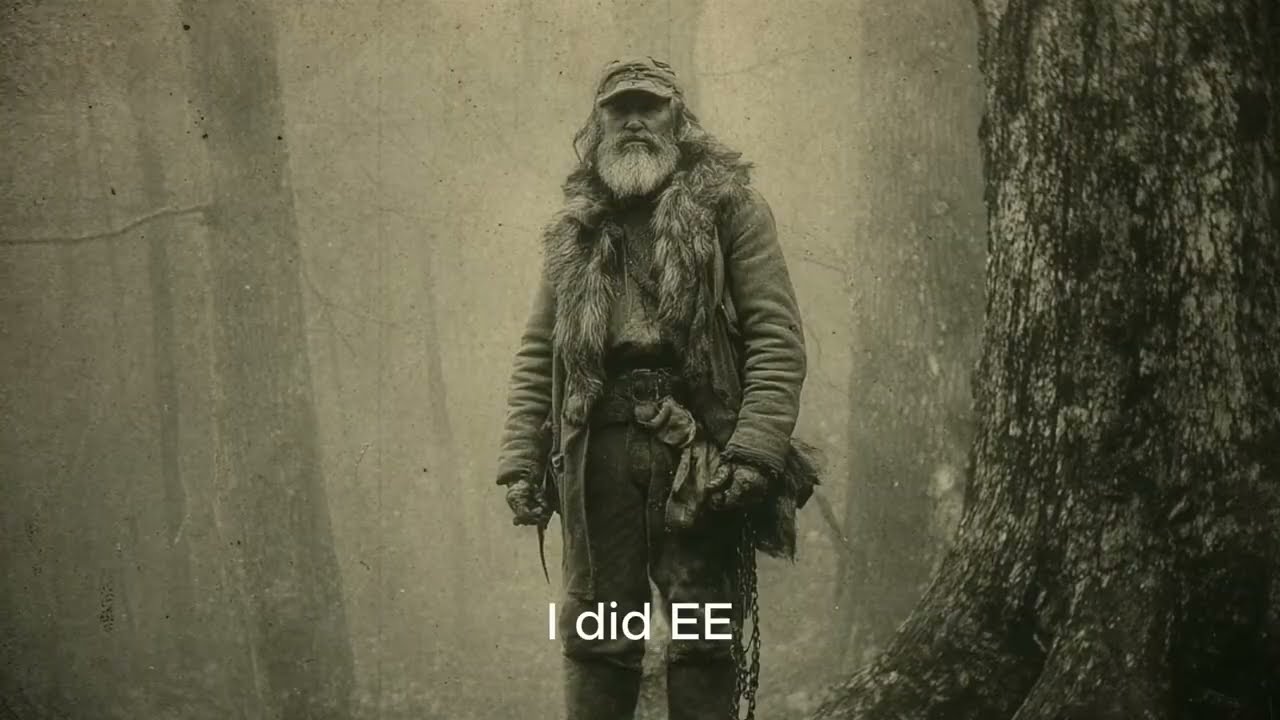
In the morning, Maddox packed his case. He rode the two days down to the company office at the railhead, took up the chart, and in the margin beside that long blank stretch under Yarrow Ridge, he wrote one word: unsurveyable. And beside it, smaller: terrain.
He never told the company the truth of it, not one word. There was no line on any survey form ever printed for the truth.
He went back to his trade, other counties, other timber, other charts. He married late, a good and patient woman. He did good honest work.
He was by every outward measure a man who had walked into a strange piece of country once and walked back out of it and gone on sensibly with the rest of his life.
Except he could never again abide the sound of a bell. Any bell. Church bells on a Sunday morning, a dinner bell rung from a porch, the little bright bell that hangs over the door of a shop.
Any one of them, and he would go still and gray, and his careful eyes would drift slow and sideways toward the nearest window.
And he kept to the very end of his life a habit that puzzled every single person who ever knew him. He could not stand to be caught out after dark in wooded country, not anywhere, not for any reason. When the sun came down to touch the tops of the trees, he would put down whatever he was holding and start for shelter fast and steady.
He never once went back to Codle County. But late in his life, an old man by then, he told this whole story, start to finish, to a young surveyor who had come to learn the trade at his side. And that young man wrote it down, which is the only reason any of it survived at all.
At the very end of the telling, the old man said one more thing. He said the timber company never did cut Sile Hollow. The stretch stayed marked unsurveyable on every chart that came after his, passed from one company to the next as land changed hands.
So far as he had ever heard, those great oaks were standing up there still, in a green and beautiful hollow with no birds in it and no game, and a loop of bright wire miles across, kept and oiled and set.
And he said that a few years back, a letter had reached him from a man down at the ford, the storekeeper's grandson, who had heard that Orin Maddox had once gone up Sile Hollow and come back down alive to tell it, which made him about the only living person who ever had.
The grandson had a question. He wrote that the hollow was quiet as it had ever been. But lately, on the still cold nights, the people of Tardan Ford had begun to hear something they had not heard in any living memory.
A bell up in Sile Hollow, slow, even, patient.
The grandson wanted to know whether Maddox had ever managed to count the notches on the trees all the way to the end of them. Because the grandson had walked up to the mouth of the hollow himself, just the one time, just as far as the very first notched oak, no farther. And there, low down on the trunk of that first old tree, below all the gray healed-over scars of the old, old tally, he had seen something he could not make any sense of.
New notches. Bright, pale, cut fresh into the living wood, the sap still beaded and wet along the edges of them. A new tally started over from the beginning, and it had already climbed, fresh cut, up the trunk of that first tree, past the height of a man's chest.
Orin Maddox never answered that letter. He died that winter, an old man in his own bed, in a house he had chosen on purpose to build far from any deep woods, with every lamp in every room lit and turned up high against the dark.
His wife said that on the last night, near 3:00 in the morning, he sat up in the dark all at once and went very, very still, the way he always had when a bell rang somewhere off in the night. But there was no bell. She was awake.
She would have heard it. The house was silent. The town was silent.
She asked him soft, "What was the matter?"
He didn't answer her. He only looked toward the window with his careful old eyes drifting slow and sideways toward the dark glass. After a long while, he said one thing, very quietly, almost gently, like a man checking the bottom line of a long sum he had carried in his head for 50 years and finding at the last that it came out just the way he had always been afraid it would.
He said, "I never did count to the end of them."
Then he lay back down, and in the morning he was gone.
Somewhere up in the high country of a county that took a name back on purpose with a knife and a fire, there is a green hollow full of enormous trees and not one living thing in it that walks or flies or sings. There is a loop of bright wire miles around, kept and oiled and set and freshly baited. There is a cabin sunk down into the earth with a door barred shut from the outside and a small tin bell that rings slow and even and patient with no wind anywhere to ring it.
And there is a tally cut into the trees. An old one gone gray, 400 and more marching off into the dark. And a new one started fresh low on the trunk of that first old oak, climbing season by season.
The way a tally climbs when somebody is keeping it. The way a trap line stays bright and oiled when somebody is tending it. When somebody, even now, is still walking the line.