Princess Margaret was raised to endure. From the age of six, when her uncle’s abdication pushed her shy, stammering father onto the throne and made her sister the heir, Margaret learned that her feelings were a private matter and her duty a public one. She was the spare, close enough to the crown to be watched and judged, but with no purpose of her own.
She learned to smile when she was miserable and to hand the world a bright surface while keeping the rest hidden.
That training shaped everything that followed. In 1955, at 25, she gave up the man she truly loved, Group Captain Peter Townsend, a decorated war hero and divorced man the Church and the establishment would not allow her to marry. She issued a public statement saying she was mindful of the church’s teaching that Christian marriage is indissoluble and conscious of her duty to the Commonwealth.
She chose duty over her own heart, and the country watched her do it.
The marriage she made a few years later was sold to the nation as her reward. The man was Anthony Armstrong-Jones, a clever, magnetic society photographer from a bohemian London world the palace had never entered. He was everything Townsend was not: younger, untitled, an artist with no regiment and no ancient name.
He looked at her as a woman rather than a constitutional problem, and for a princess who had been managed her whole life, that attention was intoxicating.
They married on May 6, 1960, in Westminster Abbey, in the first royal wedding ever televised. An audience of roughly 20 million in Britain and as many as 300 million worldwide watched the ceremony. The country, still climbing out of postwar grayness, embraced the fairy tale of the princess who had sacrificed her heart to duty and was now publicly rewarded with love.
In October 1961, the queen made Armstrong-Jones the Earl of Snowdon. A son, David, was born that November, and a daughter, Lady Sarah, followed in May 1964.
For a few years, the Snowdens were the most glamorous couple in Britain. They lived in a grand apartment, 1A Kensington Palace, renovated at public expense, and filled it with artists, film stars, and fashion designers. Snowdon’s own career flourished.
He was a gifted photographer with a genuine eye, and in 1965 he helped design a striking new aviary at London Zoo that still bears his name. He was not overshadowed by his wife. He was cruel from a position of strength.
The cruelty was private. According to Margaret’s friend and lady-in-waiting, Lady Anne Glen-Cowan, and biographer Anne de Courcy, Snowdon developed a habit of writing cruel notes to his wife and hiding them where she would find them alone. He tucked them between the pages of books she was reading, folded them among her handkerchiefs, left them on her desk.
The notes were cold and carefully composed, not the heat-of-the-moment words of an unhappy husband but the deliberate craft of a man who imagined in advance the moment she would find them and what they would do to her.
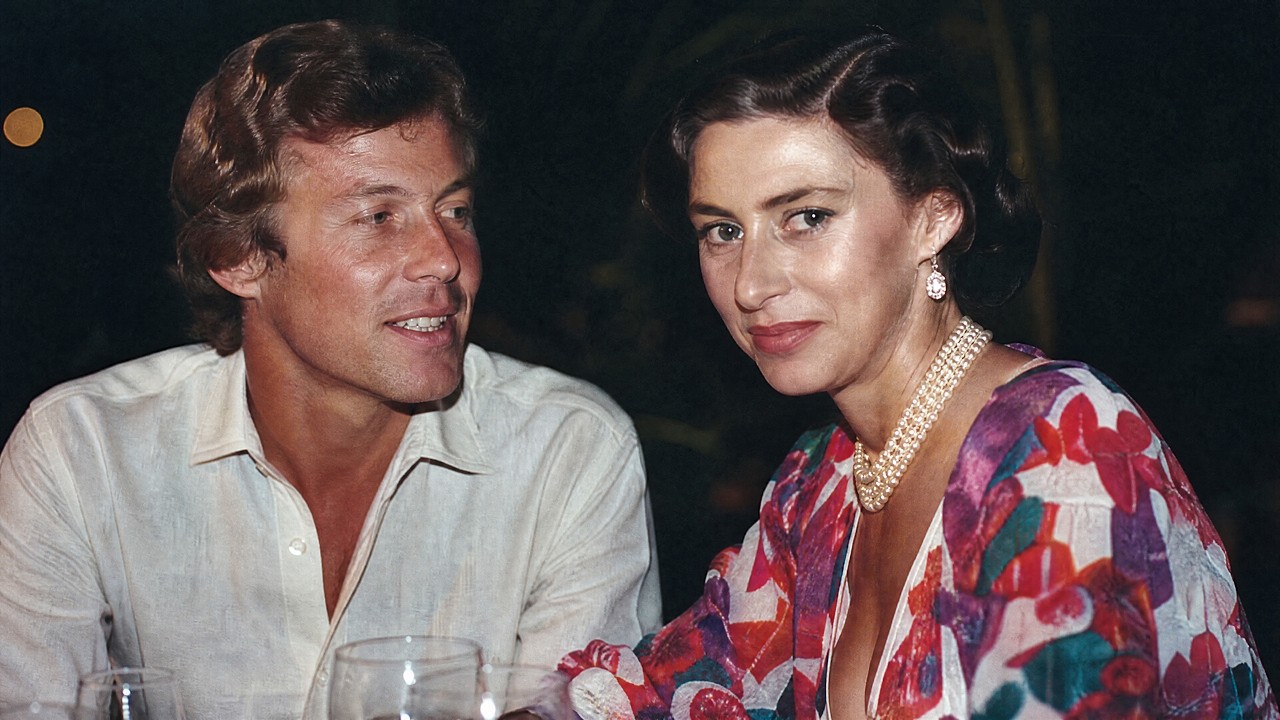
The effect was devastating. By the account of her friend, Margaret eventually stopped opening her own chest of drawers. She could not bear the small daily dread of reaching into her own things and finding another blade left for her.
She asked her maid to open the drawers instead, so that if a note was waiting among the handkerchiefs, someone else’s hand would meet it first. The most photographed woman in Britain had become afraid of her own furniture.
The marriage was not a simple story of one villain and one victim. Margaret had a famous temper and could be imperious and sharp. Both partners took lovers.
Both could wound. But the nature of the cruelty differed. His was cold and designed, the note in the drawer, the humiliation set like a snare to spring when she was alone.
Hers was hotter and more open. The honest account holds both of them in view, but it is clear which method was more corrosive.
By the mid-1970s, the strain was visible to those closest to her. She drank heavily, smoked heavily, and suffered from depression in an age that had few kind words for the condition. Around this time she suffered a breakdown and took an overdose of sleeping pills.
The episode is well attested by those near her, though the lurid tabloid version of repeated attempts is not supported. She was an exhausted, unhappy woman who had been asked to carry too much for too long.
The public mood was turning against her as well. Britain in the 1970s was in economic trouble, and a glamorous, publicly funded princess with no defined job became a target. The MP Willie Hamilton, a fierce opponent of the monarchy, made her a favorite example of royal waste.
The resentment that belonged to the whole institution was loaded quietly onto her alone.
In September 1973, at a house party in Scotland, Margaret met Roddy Llewellyn. He was 25, she was 43. He was the youngest son of Sir Harry Llewellyn, an Olympic gold medalist, and a landscape gardener by trade.
He was gentle, unassuming, and kind. He did not compete with her the way her husband did. He did not measure himself against her rank.
To a woman who had spent years being wounded in her own home, a young man who simply seemed glad to be near her felt like the first clean air in years.

The affair found its refuge on Mustique, a private Caribbean island owned by her close friend Colin Tennant. Tennant had given Margaret a plot of land as a wedding present in 1960, and there she built a house called Les Jolies Eaux, completed around 1972. It was the one home she ever truly owned outright.
On the island, the rules that governed her life did not reach. Roddy designed and planted her gardens there, and for two years, from 1974 into 1976, the affair lived in a strange, protected state. Her circle knew and said nothing out of love.
The secret could not hold forever. In early 1976, a News of the World photographer named Ross Waby was tipped off and flew to Mustique. He photographed Margaret and Roddy on the beach in swimwear, sitting together at ease.
There was nothing explicit in the images, only proof that the queen’s sister, still married to the Earl of Snowdon, was on a private island with a much younger man. On Sunday, February 22, 1976, the paper ran the photographs across its front page.
The effect was instant and enormous. Roddy was cast as a beach boy, a plaything. Margaret was cast as a wanton, wasteful princess.
The press, the Parliament, and the public fell on her with a ferocity they never once turned on her husband. His affairs had barely dented his reputation. A single photograph nearly finished hers.
But the exposure also freed her. For years, her life had been ruled by things hidden, the notes in the drawers, the cruelty concealed in private. The photograph showed everything in the open in plain daylight.
Once the truth was visible, the performance could not continue. On March 19, 1976, the palace announced that the marriage had irretrievably broken down. Margaret let it end.
After 16 years of absorbing and enduring, she declined to endure any longer.
The divorce came through in the summer of 1978. The decree nisi was granted on May 24, and the decree absolute on July 11. Princess Margaret became the first senior member of the royal family in the direct line to divorce since the 16th century.
Snowdon moved on quickly, marrying again within months. Margaret did not remarry. The relationship with Roddy continued for a few years and then faded gently without bitterness.
The divorce broke a spell. For decades, the monarchy had held that its senior members simply did not divorce. Margaret shattered that faith.
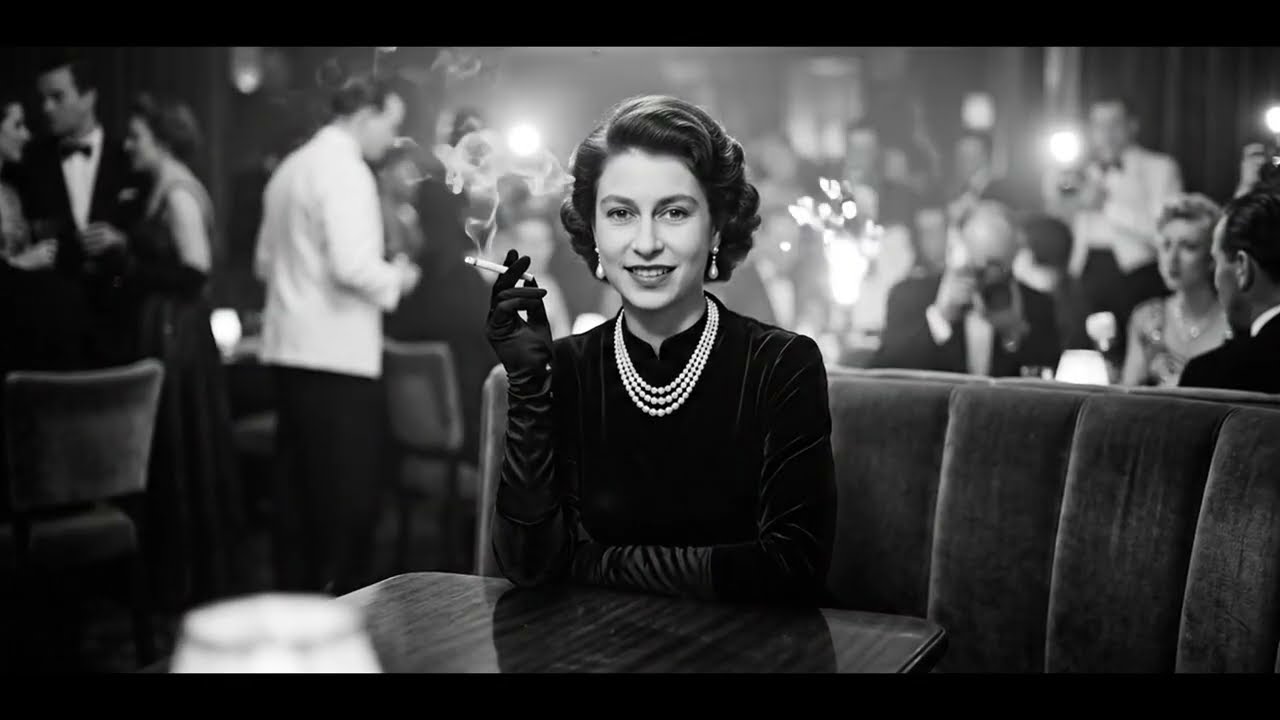
In the 1990s, the dam she cracked gave way completely: the Princess Royal divorced, the Duke of York divorced, the Prince of Wales divorced. Every royal divorce that followed walked through the door she had been punished for opening. She had been sacrificed to a rule in 1955, and then she was the one who broke it.
Roddy Llewellyn, the man the tabloids mocked, did not end in ruin. He married Tatiana Soskin in 1981 and had three daughters. He built a real career as a garden designer and broadcaster.
In 2009, he succeeded to the family baronetcy and became Sir Roddy Llewellyn. He never sold her story. He behaved with more dignity than most of the establishment figures who had looked down on him.
Margaret’s own decline was harder. She had part of a lung removed in January 1985. In February 1998, she suffered a stroke while at Mustique.
In 1999, she scalded her feet badly in a bathroom on the island, damaging her mobility. Further strokes followed. She gave up the Mustique house, the only home she had ever truly owned.
The woman who had commanded every room she entered was reduced to a frail figure in a wheelchair.
She died on February 9, 2002, at King Edward VII’s Hospital in London, after a final severe stroke. She was 71. She was cremated, an unusual choice for a senior royal, because she wished her ashes to rest beside her father, King George VI, in the memorial chapel at Windsor.
The space there was too small for a coffin, large enough only for an urn. The daughter returned to the side of the man whose sudden accession had made her the spare in the first place.
Lord Snowdon lived on until January 13, 2017, dying at 86 with his reputation intact. The obituaries remembered him as a brilliant photographer and a charming man. The fuller truth of the marriage surfaced only after both of them were gone, when Lady Glen-Conner published her memoir in 2019 and set down the story of the hidden notes.
Margaret never told the story herself. She could have, in an interview or a memoir, and been believed and pitied. She never did.
She carried the truth of that marriage to her grave and let others tell it afterward. The woman the country called reckless turned out to be, in the one thing that mattered most, almost unbearably discreet.
Her life ran between two images. The first is the drawer she stopped opening, the maid’s hand reaching in first so that a blade of her husband’s handwriting would not be found by Margaret’s own fingers. The second is the photograph on the beach, the woman in the sun with nothing hidden at all, choosing her own happiness in the open for the whole world to see and judge.
The hidden note was her cage. The public photograph was her key.
The real scandal of her life was never the young gardener or the front page. It was how long a proud and formidable woman was expected to be humiliated in private before anyone would allow her to be free in public. She was humiliated for years in secret by a man the world adored.
And then, on an island and on a front page, she struck back in the only way that was ever truly open to her. She stopped hiding. She chose herself, and she let the whole watching world see her do it.