George S. Patton Jr. remains one of the most recognizable American commanders of the Second World War, a name that still evokes speed, daring, and unapologetic toughness. His Third Army covered more ground, captured more territory, and inflicted heavier losses on the enemy in less time than almost any other comparable force on the Western Front.
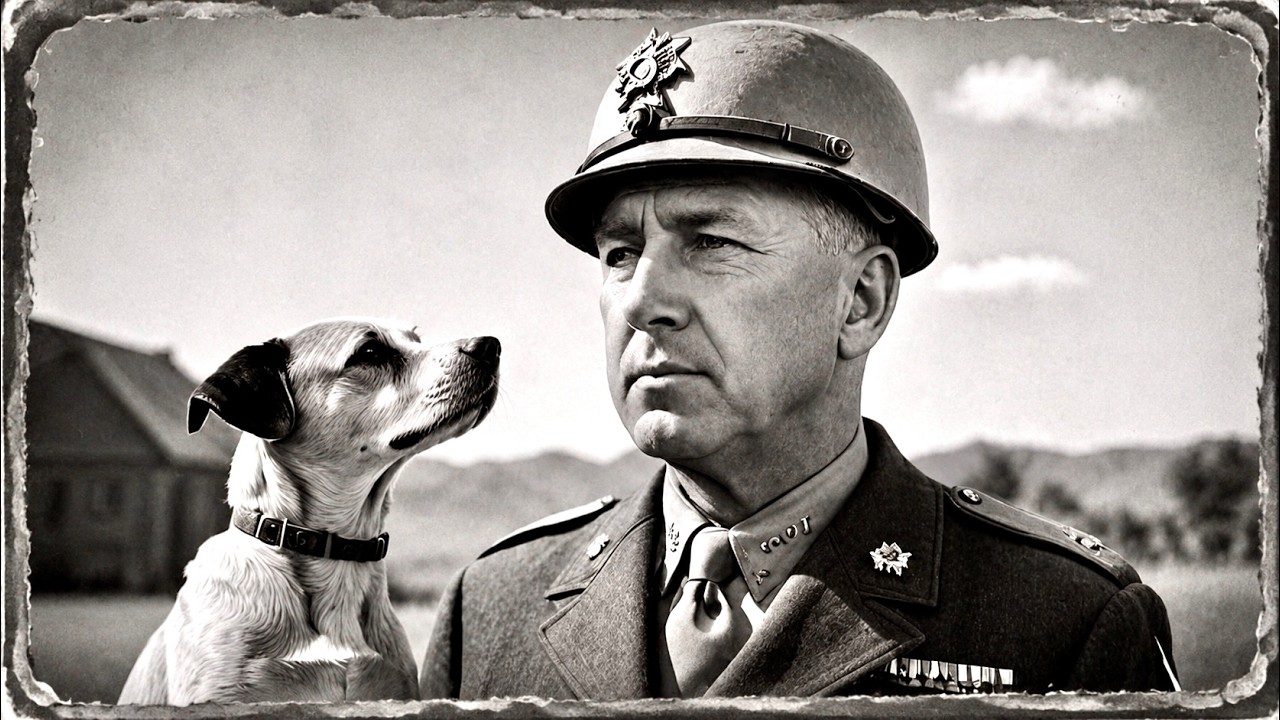
The image of the hard-charging warrior is not invented out of thin air. It is, however, radically incomplete. Behind the theatrical exterior lived a man of striking and often uncomfortable contradictions: a dyslexic who became one of the most serious students of military history in the American officer corps, a poet who wrote repeatedly about death and destiny, a devout Christian who firmly believed he had already lived and died as a warrior across multiple earlier ages, and a leader who could drive men to the edge of physical and mental exhaustion and then break down in tears among the wounded. The popular memory has flattened him into two useful cartoons.
One paints him as the brilliant, aggressive genius whose only real flaw was that cautious politicians and staff officers could not keep up with his pace. The other presents him as an unstable hothead, a glory seeker whose temper and ego nearly cost him everything. Neither accounts for the full historical record or the full human being who left that record. To understand him is not to choose a side between hero and villain, but to hold both sets of facts at once.
That fuller picture begins in his early life. Born on 11 November 1885 into a wealthy California family with deep military roots on both sides, Patton grew up surrounded by stories of Confederate ancestors and martial glory. His grandfather and great uncle had fought and died for the Confederacy. John Singleton Mosby, the famous Confederate guerrilla, was a frequent visitor to the family home and told the boy stories that left a permanent mark.
From earliest childhood, Patton was read to extensively and repeatedly—Homer, the Bible, accounts of Alexander the Great, Napoleon, the medieval knights, and the American Civil War. Formal schooling started late because reading and writing came with extreme, almost crippling difficulty. What later generations would recognize without hesitation as dyslexia led the young Patton to decide with painful certainty that he was simply stupid. That private judgment never completely left him.
It became a driving force behind an almost obsessive need to prove himself through physical courage, relentless study, and the deliberate construction of a commanding public self. He spent a year at the Virginia Military Institute before transferring to West Point, where academic struggles forced him to repeat his first year. He competed in the modern pentathlon at the 1912 Stockholm Olympics, finishing fifth overall. In 1916, he rode with a punitive expedition into Mexico after Pancho Villa, gaining early combat experience and designing a new cavalry saber that bore his name.
During the First World War, he was among the first American officers to work seriously with tanks. Near Cheppy in September 1918, he was wounded while leading an attack. In the moments that followed, he later described a vivid sense of his ancestors watching him from a cloud above the German lines. He arose, called for volunteers, and advanced into fire, telling himself it was time for another Patton to die.
Between the wars, he studied with unusual intensity, writing detailed articles arguing for the importance of armored mobility and combined arms. He also wrote poetry, dozens of poems circling obsessively around war, mortality, glory, and destiny. The most revealing is *Through a Glass, Darkly*, composed in the early 1920s, in which he catalogs earlier existences with calm certainty: a prehistoric hunter, a soldier in the Persian wars, a fighter at the siege of Tyre under Alexander the Great, a Roman facing the Parthians, a Viking on the way to Valhalla, an Englishman at Agincourt, a cavalryman riding with Napoleon. Close friends and family confirmed this was not a literary device.
Patton believed it. He spoke of remembering places he had never visited in this life and of knowing the smell of ancient battlefields. The belief gave him a fatalistic courage that served him well under fire, and fed a powerful sense of personal destiny. His leadership style grew directly from these inner sources.
He believed a commander must be seen and unmistakable. The immaculate uniform, the high-riding boots, the ivory-handled pistols, the carefully cultivated scowl—all were deliberate tools of presence and psychological effect. He wanted his presence felt at the front so soldiers would know the general shared their risks. He demanded speed, aggression, and continuous pressure on the enemy.
At the same time, he visited hospitals repeatedly, sometimes overcome by emotion among the wounded, telling them openly that he wished he had been a better general so fewer of them would be lying there. Subordinates frequently found him terrifying in the moment, yet followed him with fierce loyalty afterward because they believed he knew how to win and how to keep them alive longer than a more cautious commander. The controversies that still define him arrived with force in Sicily in August 1943. Visiting two separate evacuation hospitals within days of each other, Patton encountered soldiers suffering from battle fatigue, a condition we now understand more clearly as post-traumatic stress.
He slapped them, cursed them as cowards in front of medical staff, and in one case waved a pistol and threatened to shoot the man himself. The second incident reached the press. Eisenhower, already under pressure, ordered a public apology that Patton delivered unit by unit across the Seventh Army. His career came within a breath of ending permanently.
He was sidelined during the planning for the Normandy invasion and used instead as the high-profile decoy commanding the First United States Army Group, a deception meant to convince the Germans that the main landing would come at the Pas de Calais. Other missteps accumulated. Political remarks that showed little feel for democratic governance, diary entries reflecting the prejudices of his class and time, and a tendency after the German surrender to speak of occupation policy and the Soviet Union in ways that alarmed Washington. These were real failures of judgment that limited his usefulness the moment the pure fighting stopped.
The period that most clearly reveals the full paradox of the man came in December 1944 during the Battle of the Bulge. The German army launched its last major offensive in the west through the Ardennes forest in mid-December. American lines cracked under the surprise and weight of the attack. Bastogne was surrounded.
Fog, snow, and bitter cold grounded Allied air power for critical days. In some headquarters, the atmosphere approached genuine panic. On 19 December, Eisenhower gathered his senior commanders. Patton arrived already prepared.
He had been watching the quiet sector opposite his Third Army with growing suspicion and had privately wargamed the possibility of a major German attack. When asked how soon he could attack northward, he answered that he could do so with three divisions in 48 hours. An entire army does not casually pivot 90 degrees in the middle of winter, disengage from one active front, march through snow and ice on limited roads, and launch a coordinated counteroffensive. Patton’s staff had already prepared multiple contingency plans.
Within days, the Fourth Armored Division was moving at a speed that astonished even those who knew him well. On 26 December, elements of the Fourth Armored Division broke the siege of Bastogne and linked up with the defenders. The maneuver remains one of the most impressive operational achievements of the war in Europe. The same stretch of weeks also showed the other pattern without disguise.
He continued to deliver crude and sometimes inflammatory remarks. He chafed openly at what he regarded as excessive caution from higher headquarters. His diary kept recording both sharp strategic insight into the German situation and personal grievances about recognition and the shortcomings of other commanders. The brilliance and the flaws moved together without separation.
When the easy cartoons are set aside, what remains is a complex individual who cannot be neatly categorized. He was never simply the bloodthirsty warmonger of popular memory, nor was he a pure strategic visionary free of serious flaws. His methods were often controversial, sometimes indefensible, and rooted in a worldview that struggled to adapt once the fighting stopped. At the same time, his impact on the military history of the Second World War is difficult to overstate.
The speed, aggression, and operational daring he brought to the Third Army shortened the fighting in Western Europe, forced the German army into repeated crises, and almost certainly saved lives. Holding both truths at once is harder than choosing a side and declaring the matter settled. It is also the only way to see the man clearly and honestly.