George Armstrong Custer rode into the valley of the Little Bighorn on June 25, 1876, and died a hero’s death against impossible odds. That was the official story, repeated in newspapers, enshrined in paintings, and defended for decades by his widow, Libbie, who spent 57 years making sure the public kept believing it. Almost none of it was true. The disaster at the Little Bighorn was not a mystery.
It was a sequence of decisions made by a man whose judgment was compromised by ambition, who disregarded his commanding officer’s explicit orders, who rejected credible intelligence, and who died as a direct result—taking 209 other men with him. The heroic last stand was a myth, carefully constructed to protect the army and the federal government from accountability. Custer had no business commanding the 7th Cavalry in 1876. He had spent most of the previous year in disgrace.
He testified before Congress about corruption in the Grant administration, implicating the president’s brother in kickback schemes tied to army trading posts. Grant was furious and stripped Custer of his command entirely. General Alfred Terry had to plead Custer’s case personally before Grant relented, allowing him to rejoin the expedition—but not to lead it. Terry commanded the operation; Custer commanded only the regiment.
That distinction would matter enormously. The campaign’s stated objective was to force the non-treaty Lakota and Northern Cheyenne onto reservations. The federal government had issued an ultimatum requiring them to comply by January 31, a deadline set in midwinter and knowingly impossible for thousands of people with children, elders, and livestock to meet. The real purpose was legal cover for military action against people living on territory guaranteed to them by the Fort Laramie Treaty of 1868.
The Black Hills gold rush had made that treaty politically inconvenient to honor. The army knew the village on the Little Bighorn was enormous. Crow and Arikara scouts, who had been in the field far longer than Custer’s officers, reported a concentration of Lakota and Cheyenne unlike anything they had encountered. Lieutenant Charles Varnum climbed the Crow’s Nest on the morning of June 25 and saw a vast dark smear of lodges and horses stretching further than he could resolve with the naked eye.
The interpreter Mitch Boyer told Custer directly that the village was the largest he had ever seen. One Crow scout, Half Yellow Face, reportedly said through translation that the warriors in that valley were too many, that the regiment was not enough, and that Custer would not come back. Custer discounted all of it. Part of the explanation was overconfidence, common among officers of his era.
But the more uncomfortable explanation was ambition. 1876 was a presidential election year. Custer had political aspirations, discussed seriously by the Democratic Party. A dramatic victory—arriving in Washington with Sitting Bull in custody—could have launched a candidacy.
He needed a win, fast and unambiguously his. He also feared the village would scatter before he could bring it to battle. Terry’s plan called for coordinated encirclement: Colonel John Gibbon approaching from the west, Terry from the north, Custer sweeping around the south and east to block escape. The attack was planned for June 26.
Custer attacked on June 25, and he did not attack with a consolidated regiment. He split the 7th Cavalry into three columns before any of them had eyes on the enemy at strength. He sent Captain Frederick Benteen with three companies on a reconnaissance that took him out of the fight during its most critical phase. He ordered Major Marcus Reno to assault the southern end of the village with three more companies, driving the Lakota northward into Custer’s own five companies waiting to receive them.
Every requirement of that plan failed. The village on the Little Bighorn was the largest gathering of Plains Indian peoples recorded in the nineteenth century. It stretched roughly three miles along the river, representing multiple Lakota bands, Northern Cheyenne, and Arapaho. The total population likely exceeded 10,000 people.
The fighting force numbered between 2,000 and 2,500 warriors. Custer’s regiment, divided three ways, totaled roughly 600 men. His own column was approximately 210 soldiers. Reno’s attack collapsed within minutes.
Warriors streamed out to meet him, his thin line buckled, and he ordered a mounted withdrawal back across the river and up the bluffs on the eastern bank. The retreat became a rout; men were shot from their horses in the water, others drowned. Reno’s survivors were missing roughly 40 men, and their commander was visibly shaken. Benteen arrived with his three companies carrying orders from Custer, scrawled on a notepad delivered by a trumpeter named John Martin, the last man to leave Custer’s column alive.
Between them, Reno and Benteen now had six companies on the bluffs. Custer’s column was somewhere to the north, invisible behind the ridge. The gunfire in that direction, which had been heavy, gradually faded and then stopped entirely. Reno and Benteen stayed on the bluffs.
That decision became the central controversy of the battle’s aftermath. Their critics, led eventually by Libbie Custer’s campaign against their reputations, argued they abandoned Custer. But the arithmetic is unforgiving. By the time Benteen arrived at Reno’s position, Custer’s column was likely already gone.
The battle on the ridge to the north lasted somewhere between 20 and 45 minutes. It was over before anyone on the bluffs could have reached it under any circumstances. Native accounts, gathered in the decades afterward by historians willing to seek out the people who had actually fought the battle, described not a heroic last stand but a progressive unraveling. Warriors crossed the Little Bighorn north of Custer’s position, cutting off any retreat.
Others pressed from the direction of the village. Custer’s men were driven up onto the high ground of what is now called Last Stand Hill, where they shot horses to use as barricades and were overrun. Gall, the Hunkpapa war leader, described a battle in which the soldiers never formed a coherent line. Crazy Horse described something similar.
The accounts are internally consistent across multiple sources and across decades. The physical record confirmed the testimony. In 1983, a prairie fire swept through the battlefield, exposing the ground to systematic archaeological survey for the first time. Thousands of cartridge cases, stamped with firing pin impressions unique to individual weapons, allowed researchers to map the movement of specific guns across the field.
The pattern was one of retreat, separation, and collapse. Soldiers were not holding ground; they were being driven from one piece of it to the next until there was no ground left. The paintings told a different story. Custer stood upright in buckskin, saber raised, defiant at the center of a circle of doomed but fighting men.
The image was almost entirely fabricated. Custer did not carry a saber; the regiment had been ordered to leave them behind. The artists were not present at the battle. They were illustrating a story that had been written in advance of any facts.
The army needed that story. The Black Hills were full of gold, the Sioux were still fighting, and the Grant administration’s Indian policy needed political cover. Framing the Little Bighorn as a heroic sacrifice generated public outrage that made continued military operations sustainable. It deflected attention from treaty violations, the illegal gold rush, and the deliberately impossible ultimatum.
It gave a politically damaged president a national tragedy to grieve rather than a self-inflicted fiasco to answer for. Marcus Reno was put through a court of inquiry, narrow by design. It examined Reno’s conduct but not Custer’s decision to attack a day early, his division of the regiment, his disregard of the scouts, or his deviation from Terry’s orders. Reno was cleared, but the deeper questions never got a formal hearing.
Libbie Custer was one of the most effective image managers in American history. She wrote three memoirs, each crafted to cement the portrait of her husband as a man of daring and honor. She challenged publications that questioned his judgment. She worked to damage the reputations of Reno and Benteen.
She had the field largely to herself because the men who could have contradicted her were dead, discredited, or unwilling to engage a widow in sustained public combat. The Sioux War continued through 1877. Crazy Horse surrendered in May and was killed while in army custody in September. Sitting Bull led several thousand followers into Canada until starvation forced their return in 1881.
The military operations that destroyed the last free Lakota resistance were sustained in part by the public demand for retribution that the carefully managed narrative had produced. The cover-up wasn’t just about protecting a dead general. It was working infrastructure for a policy. It took more than a century for the site to receive an honest public accounting.
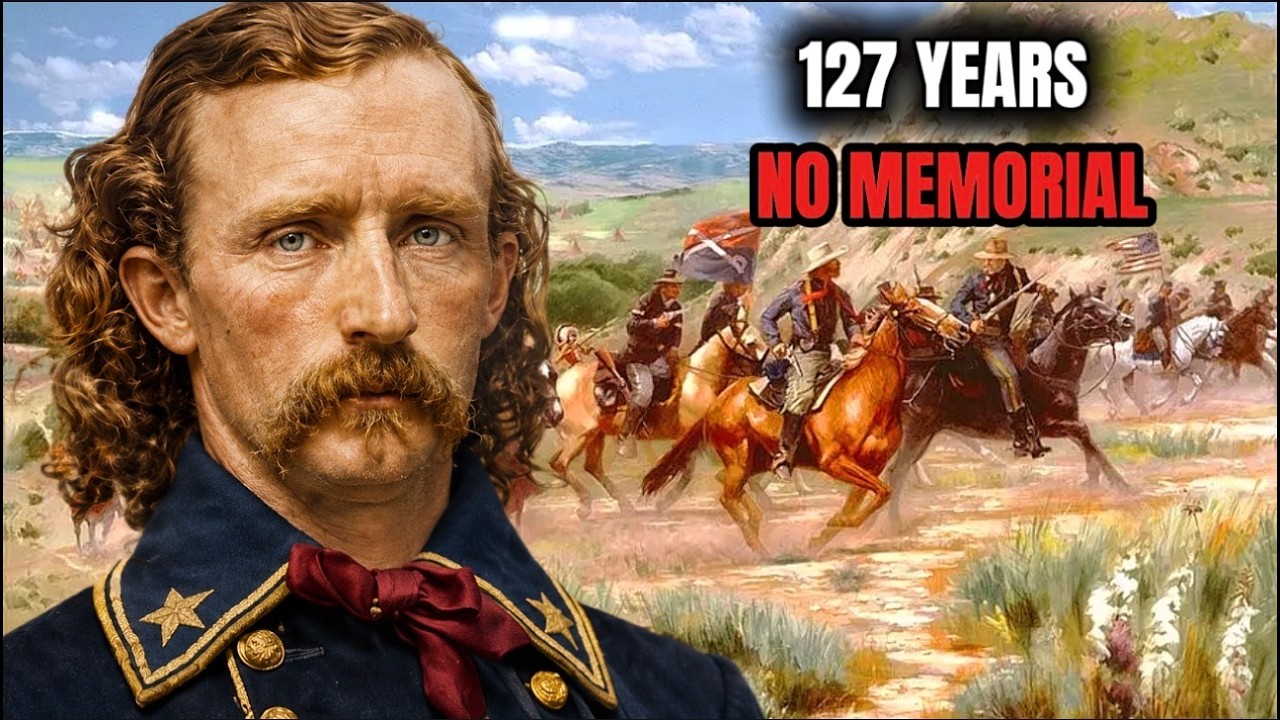
The battlefield was designated Custer Battlefield National Monument in 1946, centering the narrative on the man whose decisions caused the disaster. Congress renamed it Little Bighorn Battlefield National Monument in 1991. The memorial to the Native Americans who fought there was not dedicated until 2003. For 127 years, the only official commemoration on that ground honored exclusively the men who lost it.
The answer to what happened at the Little Bighorn was available from the beginning. The scouts knew it. The officers who survived knew it. The Lakota and Cheyenne people who fought the battle knew it in granular tactical detail.
The answer lived in Terry’s written orders, in Boyer’s testimony before he died, in the spacing of cartridge cases across a Montana hillside. What was missing was not information. What was missing was an institution willing to do anything with it. The truth outlasted the people who needed it buried.
Once the archaeology ran, once the native testimony got serious scholarly attention, once the documentary record got the critical reading it deserved, the mythology fell apart. And underneath it was exactly what the scouts had been saying all along.