Tombstone, Arizona, was never meant to be quiet. Born from a prospector’s stubbornness and a soldier’s joke, the town rose on a vein of silver so rich that it drew outlaws, lawmen, gamblers, and dreamers into one of the most volatile corners of the American West. And at the center of it all stood Wyatt Earp, a man who arrived with plans for a stagecoach line and left a year later with a blood feud that would define his name forever. The town’s origin began not with a gunshot but with a hunch.
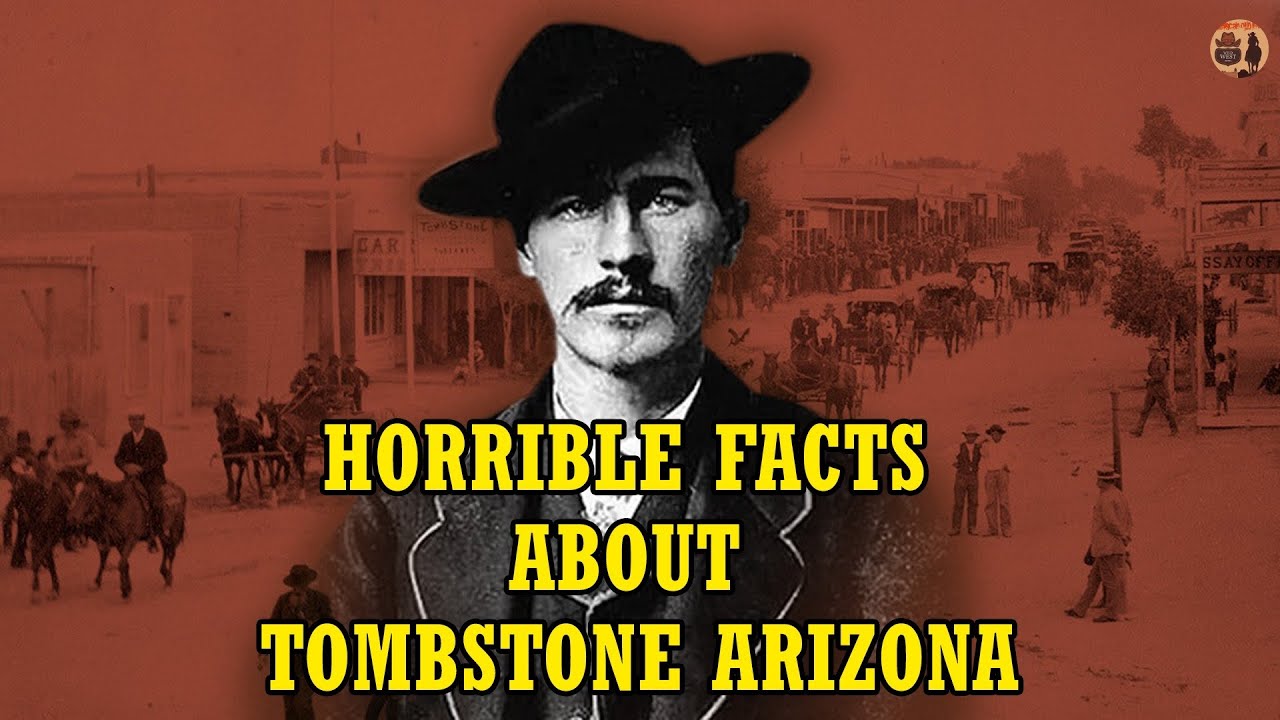
In 1877, Ed Schieffelin was prospecting near Camp Huachuca when a soldier warned him that the Apaches controlled the hills. “All you’ll find in those hills is your tombstone,” the soldier said. Schieffelin went anyway. In February 1878, after two nights of scrambling through the mountains, he climbed a ledge above his camp and pried out pieces of pure silver.
He estimated the vein at fifty feet long and twelve inches wide, and remembering the soldier’s words, he named his discovery Tombstone. Schieffelin filed his claim in Tucson, then sought help from his brother Al, who wanted no part of the risky venture. Frustrated, Ed took temporary work at the McCracken Mine, but he kept the ore samples close. When he showed them to Richard Gird, a local assayer, Gird saw the abundance immediately and offered to finance development in exchange for a one-third interest.
Al changed his mind once the profits looked real, and the three became equal partners. On the way back to the mountains, Ed located two more silver-rich sites, registering claims he called Lucky Cuss and Tough Nut. Soon, both became thriving mines. News of the strike spread quickly, and silver seekers flooded the region.
The mining camps of Grand Central, Charleston, and Contention grew up around the discovery, all clustered under the name Tombstone. The post office opened on December 2, 1878, and has operated continuously ever since. By March 1879, an official town was laid out, with plots along Allen Street selling for five dollars each. Within months, Tombstone had forty cabins and a hundred residents.
Then the Earp brothers began arriving in the autumn of 1879, and the town’s character changed forever. Ed Schieffelin, meanwhile, had little interest in ownership. After a four-month expedition, he returned to find his brother Al had sold a two-thirds share of their Tough Nut profits for one million dollars. Gird later sold a third of his interest for the same amount.
Careful management of the mine eventually produced about sixty million dollars in silver, worth roughly two billion dollars today. With that wealth, Ed Schieffelin left Tombstone to chase new prospects elsewhere. Wyatt Earp came to Tombstone in December 1879 intending to establish a stage line, but two were already running. Instead, he partnered with the owner of the Oriental Saloon, securing a gambling operation that guaranteed him a quarter of the profits.
He also took work as a carriage driver for Wells Fargo. His brothers were already embedded in the town: James ran a pub on Allen Street, Virgil served as deputy sheriff, and Morgan worked alongside his brothers in law enforcement. Doc Holliday and his companion Kate Elder arrived in 1880. Kate quickly set up a large tent offering cheap whiskey and female company, a popular draw in a town that was still rough around the edges.
The tension came from a group of outlaws known as the Cowboys, led by Old Man Clanton and his sons Ike, Finn, and Billy. The gang included the McLaury brothers, Frank and Tom, along with Curly Bill Brocius and Johnny Ringo. The Cowboys were deeply involved in cattle rustling, but the local sheriff had no jurisdiction over county matters, so Virgil Earp could do little to stop them. The Earp brothers and Doc Holliday clashed with the faction continuously.
By June 1880, Tombstone’s population reached about three thousand, drawing workers, dance hall girls, outlaws, saloon keepers, and gamblers. The town earned a reputation as one of the most lawless settlements in the Southwest. On June 22, 1881, a devastating fire swept through the eastern half of Tombstone’s business district. Water was scarce, and the blaze consumed dozens of homes.
Residents blamed Field Marshal Ben Sippy for failing to control looting during the chaos. Virgil Earp was appointed in his place, which only deepened the Cowboys’ hostility toward the Earp faction. The long-simmering feud reached its breaking point on October 26, 1881. In just thirty seconds, the gunfight at the O.
K. Corral became legend. Virgil, Wyatt, and Morgan Earp, joined by Doc Holliday, faced five members of the Clanton gang. Billy Clanton and both McLaury brothers were killed.
Virgil was shot in the leg, and Morgan took a wound to the shoulder. In the confusion, Sheriff Johnny Behan attempted to arrest the Earps, and they were later tried for murder, but the court determined the shootings were justified. Still, Virgil’s role cost him his position as field marshal. The bloodshed did not end at that trial.
On March 18, 1882, a group of Cowboys ambushed and killed Morgan Earp in retaliation for the O. K. Corral. The Earp family left Tombstone with Morgan’s body, heading for California.
Wyatt, Warren Earp, and Doc Holliday stopped in Tucson, where they began a year-long pursuit to track down and eliminate the remaining members of the Clanton gang. Neither the Earps nor Holliday ever returned to Tombstone. The town itself endured. On May 25, 1882, another fire consumed much of the western business district, including the O.
K. Corral itself. The residents rebuilt. Construction began on the Cochise County Courthouse, and the Bird Cage Theater opened as a combination of saloon, gambling hall, and brothel.
The New York Times later described it as the wildest and most brutal place between Bastille and the Barbary Coast, a venue tied to sixteen deaths during its eight years of operation. The silver boom ended in 1886, not through gunfire but through water. Miners broke into an underground source that flooded the shafts. Pumps were installed, but when a fire destroyed the equipment at the Grand Central Mine, the water won.
The mines flooded permanently. Miners drifted to the copper fields in Bisbee and other new towns. Neighboring settlements like Charleston and Millville collapsed, and Tombstone lost the economic engine that had kept it alive. In 1929, county voters chose to move the government seat to Bisbee, twenty-five miles away.
Tombstone seemed destined to become another ghost town, a museum piece of the Old West. Instead, its residents turned to preservation. They restored the historic buildings, reopened Allen Street, and rebuilt the reputation of the town that refused to die. Boot Hill became a major attraction, and the gunfight at the O.
K. Corral is reenacted for visitors. The original courthouse and gallows, built in 1882, now stand as a state historic park. Today, Tombstone sits about sixty miles southeast of Tucson, a living monument to the resilience of its founders and survivors.
Its most unexpected legacy is botanical: the world’s largest rose bush, planted in 1885, still thrives in the town’s sunny climate. The Lady Banksia rose, native to Scotland, spreads across the desert soil of a town that was itself planted in the most unlikely of places—a silver vein discovered by a man who was told he would only find his tombstone.