In the heart of Arkansas, where the Arkansas River bends toward the Poteau, a grim stone fortress once served as the stark symbol of federal authority on the American frontier. The Fort Smith Federal Jail, operational from 1872 to 1896, earned the ominous nickname “Hell on the Border” and became the seat of Judge Isaac C. Parker, a man history remembers as the “Hanging Judge. ”
The site had begun as a military fort in 1817, and the town of Fort Smith grew around it.
By the time the federal jail was built within the walls of the second fort, Parker’s jurisdiction covered 74,000 square miles of western Arkansas and Indian Territory, present-day Oklahoma. It was a land teeming with outlaws and those fleeing the reach of the law. Upon his arrival in May 1875, Parker made his intentions clear, declaring he had come to dispense justice until the hour of his death. On his first day in court, he charged eight men with murder.
The prison itself was a forbidding structure of native stone and iron, with walls three feet thick. The basement level, known as Hell on the Border, was the most dreaded part of the facility: a dark, poorly ventilated underground chamber that routinely flooded, forcing prisoners to stand in ankle-deep water for days. One inmate described it as a dungeon that would shame the Spanish Inquisition. During his 21-year tenure, Judge Parker tried 13,490 cases.
He sentenced 160 people to death, though only 79 of those sentences were actually carried out. The gallows, constructed in 1886, could accommodate up to six simultaneous executions and stood in full view of the jail windows—a constant reminder for inmates of their possible fate. The largest mass execution took place in September 1875, when six men were hanged simultaneously for murder and buried in a nearby grove marked by a single wooden marker. The jail housed a diverse population reflecting the frontier’s complex social fabric.
Among its 3,467 inmates were representatives from 23 Native American tribes and 13 European nationalities. Its most notorious prisoner was Cherokee Bill, born Crawford Goldsby. A mixed-race man who began his criminal career at eighteen, his gang terrorized Indian Territory in the mid-1890s, committing robberies and at least seven murders. Arrested in 1895, he attempted a dramatic jailbreak, shooting and killing a guard with a revolver smuggled into his cell inside a hollowed-out Bible.
He met his end on the gallows in March 1896, reportedly stating that it was as good a day to die as any. Belle Starr, the so-called Bandit Queen, also spent time within these walls. Charged with horse theft in 1886, she was held in a special cell away from the male population. She passed her time reading Shakespeare and writing poetry.
Upon her release, she reportedly told Deputy Marshal Bass Reeves that the place had not reformed her, merely taught her to be more careful. She was murdered in 1889, a crime that remains unsolved. Daily operations fell to the U. S.
Marshals and their deputies, including the legendary Bass Reeves. Born into slavery in 1838, Reeves served for 32 years, bringing in over 3,000 criminals to face justice at Fort Smith. His knowledge of Indian Territory and fluency in several Native American languages made him one of the most effective lawmen of his time. A fellow deputy described him as a man who could track a butterfly through a tornado.
He was known for his innovative disguises, once capturing a mother and two sons wanted for murder by posing as a traveling preacher. Life inside the jail was harsh. Prisoners received a diet of cornbread, beans, and salt pork, with a daily food allowance of fifteen cents per man. Disease was rampant, particularly during the summer when temperatures inside the cells could exceed 100 degrees.
Records show that over 100 inmates died from disease, primarily tuberculosis and typhoid fever, between 1873 and 1896. The prison physician wrote that the conditions bred more death than the gallows, and his medical logs detail treatments that included mercury compounds, a practice that likely caused more harm than good. The execution protocol developed by hangman George Maledon became a model for other jurisdictions. Known as the “Prince of Hangmen,” Maledon executed 60 of the 79 men who died on the gallows.
He took a mathematical approach, calculating the precise drop needed for instant death based on a condemned man’s height and weight. While he claimed he never lost a man to a slow death, prison records indicate at least three botched executions under his watch. Some stories ended differently. Blue Duck, an outlaw of Cherokee and Mexican descent, received a life sentence instead of hanging due to his youth.
Judge Parker made the rare exception after receiving a petition signed by 273 Cherokee citizens. He died of tuberculosis in an Illinois prison, his last letter lamenting that he died far from his people under a white man’s stone walls. The final prisoner was transferred to a new federal prison in Kansas in September 1896, marking the end of an era in frontier justice. The building stood abandoned until 1914, when it was converted into a museum.
During renovation work in 1968, workers discovered a cache of documents hidden in a wall cavity—letters, crude maps, and a prisoner’s diary—offering new insights into daily life behind the walls of Hell on the Border. A similar story unfolded in the Sonoran Desert, where the Yuma Territorial Prison opened its gates in 1876. Perched on a bluff overlooking the Colorado River, the initial construction budget was $225,000. The first seven inmates, led by a convicted murderer, were tasked with building their own cells, carving their future confinement from the desert rock while living in caves along the riverbank.
Temperatures inside their temporary dwellings often reached 140 degrees. Despite its forbidding reputation, Yuma was surprisingly progressive for its era. The facility boasted electricity, running water, and one of the first public libraries in Arizona. The prison band performed weekly concerts that drew visitors from as far as San Diego.
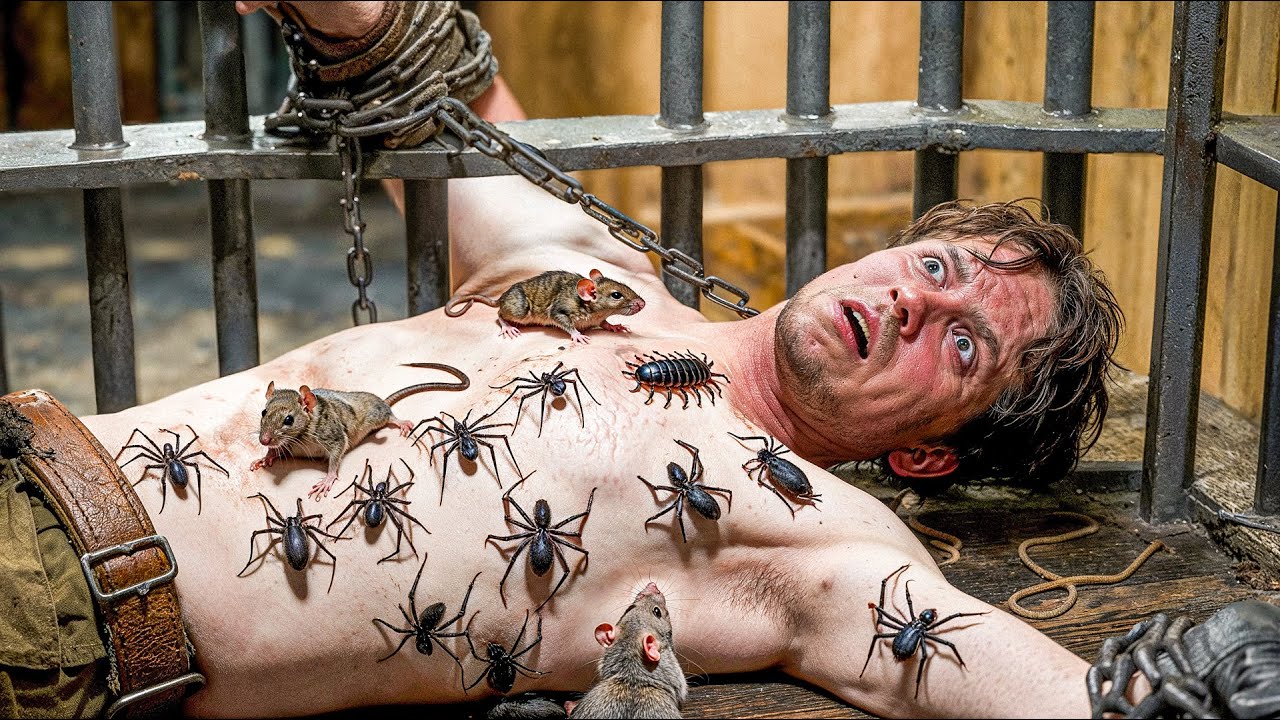
Yet the cells told a different story. Measuring nine by twelve feet, each housed up to six prisoners in stacked iron bunks. The infamous “dark cell,” a windowless isolation chamber, was used to punish troublesome inmates, who were left chained in complete darkness for days, with only scorpions and black widows for company. Between 1876 and 1909, there were 29 successful escapes, though most fugitives were recaptured.
One inmate spent months filing through his cell bars using strands of human hair soaked in acid, only to be recaptured three months later in Mexico. The prison’s nickname belied an unexpected truth: it was considered one of the more humanely operated penal institutions of its time, with an insistence on cleanliness and adequate food that was revolutionary in an era when most prisons were little more than dungeons. The facility’s closure in 1909 was due not to reform but to overcrowding. By 1907, it housed 127 inmates in a space designed for 104.
The buildings later served various purposes, including a high school whose football team earned the peculiar distinction of being nicknamed “the Criminals. ” Today, the Yuma Territorial Prison stands as a state historic park, its weathered walls telling tales of frontier justice and human endurance. Further north, in the shadow of the Flint Creek Range, stood Montana’s first territorial prison. Operational from 1871 to 1979, it housed some of the West’s most dangerous criminals.
The prison’s most notorious resident was Harvey “Kid Curry” Logan, a member of Butch Cassidy’s Wild Bunch, who orchestrated a daring escape during a baseball game against local townspeople. He simply walked away during the seventh inning stretch and was never recaptured. The prison’s most infamous warden, Frank Conley, transformed the institution through a convict labor program that built many of Deer Lodge’s landmark structures. But the darkest chapter came during the riot of April 1959, when a 36-hour standoff ended with National Guard troops storming the facility and the death of a deputy warden.
The prison finally closed in 1979, when the last 386 inmates were transferred to a new facility. Today it stands as a museum, drawing thousands of visitors who walk through its imposing cellblocks and peer into the dark isolation cells where prisoners once lost their minds.