In the mid-1960s, the very concept of a sports drink did not exist. That changed in 1965 when four doctors at the University of Florida developed a beverage designed to rehydrate athletes, replace the sodium and minerals lost through sweat, and provide energy during competition. The drink was named for the university’s athletic teams, the Florida Gators, and it was credited with giving them an edge over opponents who drank only water. When the Gators won the Orange Bowl in 1967, interest in the product surged.
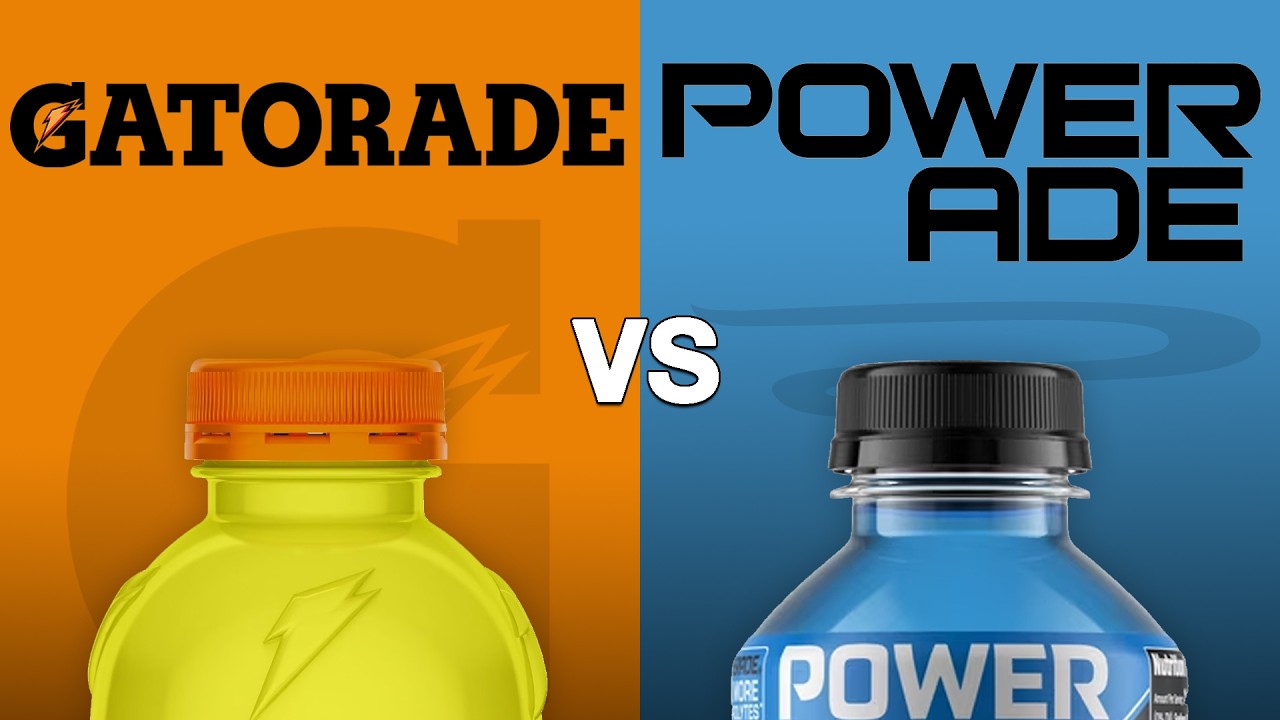
The rights were acquired by Stokely-Van Camp, a consumer foods company known primarily for its pork and beans, which had the distribution network to bring the drink to store shelves. It also became the official sports drink of the NFL just as that league was becoming the most popular in the country. The 1970s brought slow and steady growth for Gatorade, still widely regarded as a drink for serious athletes. Coca-Cola briefly tested a sports drink called Olympade early in the decade, but it was low-effort and short-lived, a missed opportunity that would prove costly.
At the time, nobody predicted how large the category would become, and Gatorade continued to operate without a serious challenger. The 1980s marked the beginning of the modern era for the brand. In 1983, Stokely-Van Camp was acquired by Quaker Oats for $220 million. A Quaker spokesperson openly called Gatorade the most attractive part of the business, and the acquisition was driven almost entirely by the potential of the drink.
Marketing was expanded to reach a broader audience, beyond just athletes, and new flavors were introduced, beginning with Fruit Punch. By 1984, Gatorade had become the official sports drink of the NBA, a partnership that would become the league’s longest-standing. The Gatorade shower, in which players douse their head coach with the drink after a big win, originated with the New York Giants and quickly became a Super Bowl tradition, embedding the brand in the most-watched event of the year. International expansion began with Canada and soon spread to Asia, Europe, and South America.
By the end of the decade, sales had grown fivefold compared to the year before Quaker Oats took over. The 1990s proved to be the most eventful decade in sports drink history. With Gatorade having demonstrated that a lucrative market existed, dozens of competitors rushed in. Many smaller brands attempted to carve out a share, but the most serious challenges came from the two beverage giants, Pepsi and Coca-Cola.
Pepsi first launched Mountain Dew Sport, a carbonated sports drink aimed at soda drinkers, with marketing that directly disparaged Gatorade’s taste. A Pepsi spokesperson bluntly stated that most people who drank soft drinks did not drink Gatorade, and that many of those who did disliked the flavor. The campaign was aggressive, but the product was quickly discontinued. Pepsi replaced it with All Sport, promoted by athletes such as Shaquille O’Neal and Ken Griffey Jr.
All Sport was also carbonated at first, an unusual choice for a drink intended to be consumed during physical activity, but a $30 million relaunch in 1996 largely removed the carbonation. Coca-Cola, meanwhile, had quietly launched Powerade in 1988, but only in test markets as a fountain drink in fast-food restaurants and convenience stores, with no plans to sell it in bottles or cans. That changed in 1992, when Powerade entered full retail distribution as a more effective alternative to Gatorade, claiming to contain 33% more carbohydrates. While Gatorade had already secured relationships with most major American sports leagues, Powerade focused on international sponsorships, including FIFA and the Olympics.
Despite the intensifying competition, Gatorade remained firmly on top, helped throughout the decade by its association with arguably the most popular athlete in the world, Michael Jordan. Campaigns like Be Like Mike and later Is It In You kept the brand dominant. By 2000, Gatorade controlled 86% of the sports drink market, while Powerade had just 11% and All Sport trailed at 3%. The 2000s changed the structure of the rivalry.
In 2001, Quaker Oats, the owner of Gatorade, was acquired by Pepsi, the owner of All Sport, for over $13 billion. The deal, which included several food brands, was motivated primarily by Gatorade. Pepsi had been trailing Coca-Cola in the sports drink category, and this acquisition made them the undisputed leader. Regulatory concerns forced Pepsi to sell All Sport, which faded into obscurity under new owners and is today available only as a powder.
From that point forward, the contest became a direct competition between two similarly named drinks owned by the two largest beverage companies in the world. Much of the rivalry in the following years centered on matching product innovations. Gatorade introduced Propel, an enhanced fitness water, in 2002. Powerade responded with a similar product, later replaced by Powerade Zero in 2007.
It took Gatorade until 2018 to release Gatorade Zero. Powerade then introduced Zero Sugar Powerade Ultra and Powerade Power Water in 2020, followed by Gatorade’s first unflavored water in 2024 and a line of lower-sugar drinks in 2026. The pattern was consistent: each new Gatorade variation was answered by a comparable Powerade product, and vice versa. The rivalry also played out in celebrity endorsements.
In 2003, Gatorade aired a Super Bowl commercial featuring Michael Jordan playing a game of one-on-one against his younger self. That same year, shortly before his NBA debut, LeBron James signed with Coca-Cola to promote Powerade and Sprite. In 2021, however, James switched to Pepsi products, specifically Mountain Dew, though he never promoted Gatorade. The 2010s saw Powerade officially become a billion-dollar brand, a reflection of how large the category had grown.
It also brought a new competitor into the market. BodyArmor was founded in 2011 as a premium sports drink, marketed as more natural than its rivals, with ingredients like coconut water and less sodium. NBA star Kobe Bryant, an early investor and board member, became closely associated with the brand. By the end of the decade, BodyArmor and Powerade were nearly even in their fight for the number two position behind Gatorade.
That competition was resolved in the 2020s when Coca-Cola acquired BodyArmor for over $5 billion, its largest acquisition ever. The company had purchased 15% of the brand a few years earlier before taking full control. This left Coca-Cola owning two brands that together captured about a quarter of the market, while Gatorade still held well over half. In 2023, Powerade rebranded its labels and reformulated the drink to contain twice as many electrolytes as Gatorade, along with added vitamin C and B12.
Whether that made it genuinely healthier or more effective was uncertain, but the change was received positively. Gatorade created the category and built an insurmountable lead before its competitors fully grasped what was happening. Powerade eventually provided a degree of competition that pushed both brands forward. BodyArmor added further pressure, and Coca-Cola’s acquisition made the market even more contested.
Despite decades of effort and billions of dollars invested in challenging the leader, Gatorade remains dominant, holding steady at the top of a market it invented nearly sixty years earlier.