The greatest heist in Las Vegas history was not committed by men in masks leaping over casino counters. It was committed by a grandfather sitting in his backyard garden in River Forest, Illinois, more than 1,500 miles away. While tourists pulled slot machine levers under the neon glow of the Strip, Tony Accardo was draining millions from the Stardust Casino without ever setting foot inside the building. He never touched a poker chip.
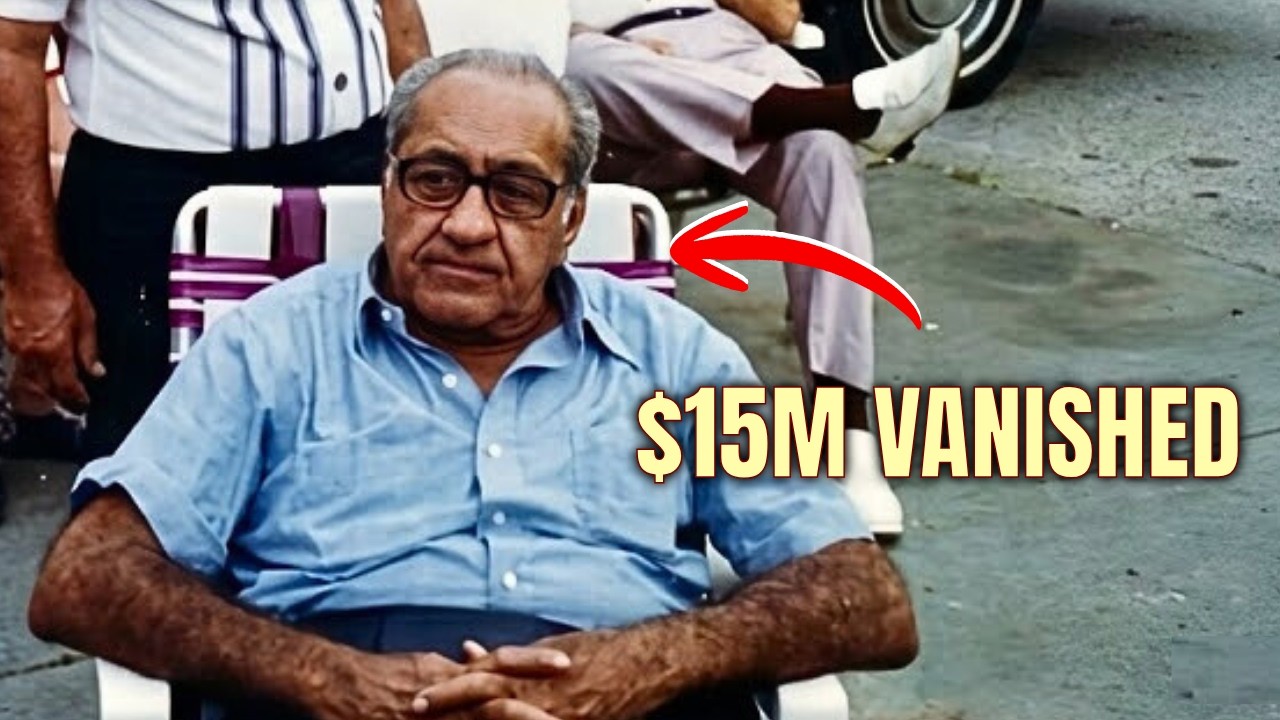
He never shuffled a single deck. And he never got caught. Accardo was the boss of the Chicago Outfit. In the 1970s, the Stardust was the crown jewel of the Strip, a money-printing machine.
But Accardo had a problem: he could not buy a casino. His face was too famous, and his reputation made any legitimate purchase impossible. So he found another way. He looked at Las Vegas not as a gambler but as a banker.
Through his influence over the Teamsters Union, he forced their pension fund to loan nearly $100 million to a clean-cut attorney and war veteran named Allan Glick, who became the official owner of the Stardust. Glick took the deal, but he soon learned that the interest rate was not calculated in percentages. It was calculated in obedience. Years later, Glick testified under oath about a meeting with one of Accardo’s men.
He walked in expecting a business discussion and was told instead that if he interfered with the casino’s operations, his children would not live to see high school. That was the moment Glick realized he was not the owner of the Stardust. He was simply the man holding the pen. Accardo’s name appeared on no deed, no license, and no loan application.
Legally, he was not there. And that was the first rule of the ghost owner: you do not need to sign the checks if you own the hand that holds the pen. The money came out through what was called the skim. In the 1970s, casinos ran on physical cash—heavy, dirty, and difficult to track.
There were no digital counters. Every slot machine and every table generated buckets of coins and stacks of bills. At the end of each shift, the money was taken to the count room, supposedly the most secure place on the property. Accardo placed his own men inside that room.
Before the official count was recorded in the ledger for the IRS, they simply took a portion of the cash off the top and filled duffel bags. The money left through the back door and went to a courier. It was driven or flown first to Kansas City to a middleman who washed the trail, then moved on to Chicago. By the time it reached Accardo, it was untraceable.
Estimates suggest the operation pulled between $4 million and $100,000 a month in the 1970s—millions in today’s value, tax-free. Accardo sat in his living room watching television while a pipeline siphoned the economy of Las Vegas directly into his pocket. He controlled the manager, the security guards, and the count room staff entirely by telephone. But a perfect system has a flaw, and the flaw is always the human element.
Accardo valued silence above all else. The men he put in charge of Las Vegas loved noise. Frank “Lefty” Rosenthal was the genius running the casino floor, making the Stardust the most profitable place in town. But he had an ego the size of the Strip.
He began hosting his own television show from inside the casino. The man running a secret criminal enterprise put himself on air every week while Accardo watched from Chicago. A ghost owner does not want his manager signing autographs. Then there was Tony Spilatro, sent to Vegas as the muscle.
His job was to protect the skim, but he grew greedy. He ran side hustles—burglaries, loan sharking, fencing stolen jewelry—and brought street violence to a corporate operation. The heat rose. The FBI knew something was happening at the Stardust.
They planted wiretaps, followed people, and examined the books. Accardo faced a crisis: his machine was breaking down because his employees were out of control. The FBI launched Operation Pendorf and Operation Straw Man, connecting the dots, finding hidden ledgers, and issuing indictments. This is where most mob stories end, with the boss dragged out in handcuffs.
That did not happen to Tony Accardo. Almost everyone involved in the Stardust skim went down. The bosses of Kansas City went to prison. The bosses of Milwaukee went to prison.
Joey Aiuppa, the operating boss of Chicago, went to prison. But Accardo survived. The FBI knew he was the ultimate beneficiary of those millions, but they could not find a single fingerprint. They could not find his voice on a wiretap.
They could not find a check with his signature. He had insulated himself with so many layers of management that the prosecution could not touch him. He sacrificed his underbosses and let them take the fall. When a company goes under for fraud, the chairman of the board often walks away while the managers go to prison.
The loose ends were handled too. Tony Spilatro, the man who brought too much heat, was called to a meeting in a basement. He thought he was getting a promotion. Instead, he ended up buried in a cornfield in Indiana, stripped of his dignity.
Accardo had liquidated the liabilities. The Stardust eventually changed hands and was demolished years later. The era of mob-run Vegas ended, and corporations took over. But in a way, Accardo was the first corporate owner.
He just did not answer to shareholders. What is the legacy of the Stardust Skim? Look past the violence and the headlines, and you see a master class in risk management. Accardo stole roughly $15 million from under the nose of the American government and did it for years without interruption.
While the federal government spent millions hunting him, bugging his phones, and tailing his car, he siphoned wealth from the very economy they were sworn to protect. His soldiers died in shallow graves. His underbosses rotted in federal prisons. Tony Accardo sat in his garden in River Forest, watching his grandchildren play in the sprinklers.
He did not hate Spilatro. He simply balanced the books. He sacrificed the pawns to save the king. Accardo died in 1992.
He did not die in a prison cell or in a hail of gunfire. He died in his own bed, surrounded by family, at the age of 86, of heart failure. He left behind an estate worth millions, wealth that had been washed clean from the dirty counting rooms of the Stardust and transformed into legitimate assets, real estate, and trust funds. His great-grandchildren likely do not know that their inheritance was carried out of a casino back door in a leather duffel bag.
They say the house always wins. The odds are rigged against the player. But for 30 years, Tony Accardo was not playing the game. He owned the odds.
He owned the dealer. He owned the machine. He proved that if you are smart enough, disciplined enough, and stay far enough away from the scene of the crime, you can rob the bank without ever putting on a mask. The methods have evolved—the counting rooms have been replaced by blockchain, the duffel bags by cold storage hard drives—but the psychology remains the same.
Men like Tony Accardo do not disappear. They stay in the shadows. They let others take the risk. They let others make the noise.
And they never touch the chips.