Caroline Lee Bouvier was born on March 3, 1933, in New York City, the second daughter of John Vernou Bouvier III and Janet Norton Lee Bouvier. Her sister Jacqueline arrived four years earlier. The Bouviers were wealthy, socially ambitious, and organized around the cultivation of appearance and connection.
Black Jack Bouvier, the father, was a charming Wall Street stockbroker with a taste for women that extended well beyond his wife. He was adored by both daughters but was unreliable and financially reckless.
Janet, their mother, was ambitious and socially strategic. Her primary instruction to her daughters was consistent and direct: money and power were the keys to everything, and they were to be acquired through marriage. The household dynamics were clear.
Jackie was her father's favorite. Lee was her mother's. The girls grew up knowing this, and the knowledge shaped how they related to each other and to the world.
Their parents divorced in 1940. Their mother remarried in 1942 to Hugh Dudley Auchincloss Jr. , a Standard Oil heir of considerable fortune.
The marriage brought the Bouvier girls into the Newport, Rhode Island social world of genuine old money. Both attended Miss Porter's School in Farmington, Connecticut. Both were beautiful and intelligent.
Both understood that beauty and intelligence were tools meant to secure the right marriage.
But there was a difference in how the world received them. Jackie had a quality of presence and mystery that drew people in ways that Lee's more approachable warmth did not quite replicate. Lee was more genuinely fun at a party.
But in the competition they were both running, fun was not the primary currency.
Lee Bouvier was considered the leading debutante of the 1950 season. A full-page photograph of her in her debut gown appeared in Life magazine. She was 17 years old and operating at the highest level of the world her mother had prepared her for.
Jackie, four years older, was already working as a photographer for the Washington Times Herald when she met Senator John Fitzgerald Kennedy at a dinner party in 1951. They married in September 1953 in one of the most celebrated society weddings in American history.
Lee had married first, in April 1953, to Michael Temple Canfield, the son of the president of Harper & Brothers Publishing House. It was a respectable marriage, but not the spectacular prize her mother's education had been preparing her for. The marriage did not last.
By 1958, they had agreed to divorce.
While the divorce was being arranged, Lee met the man who would become her second husband. Prince Stanisław Albrecht Radziwiłł, known as Stash, was a Polish nobleman of genuine aristocratic lineage who had fled Poland and settled in England. Lee was Princess Lee Radziwill from 1959 onward.
They married on March 19, 1959. Their son Anthony was born five months later. Their daughter Anna Christina, known as Tina, arrived in 1960.
The newborn Tina's godfather was John F. Kennedy, by then the newly elected president of the United States.
In 1961, Lee's sister became first lady. Lee threw a party in London and told her guests that competing with what Jackie had just become was impossible. She was 27 years old, married to a prince, living in a splendid house near Buckingham Palace, the mother of two children whose godfather was the president.
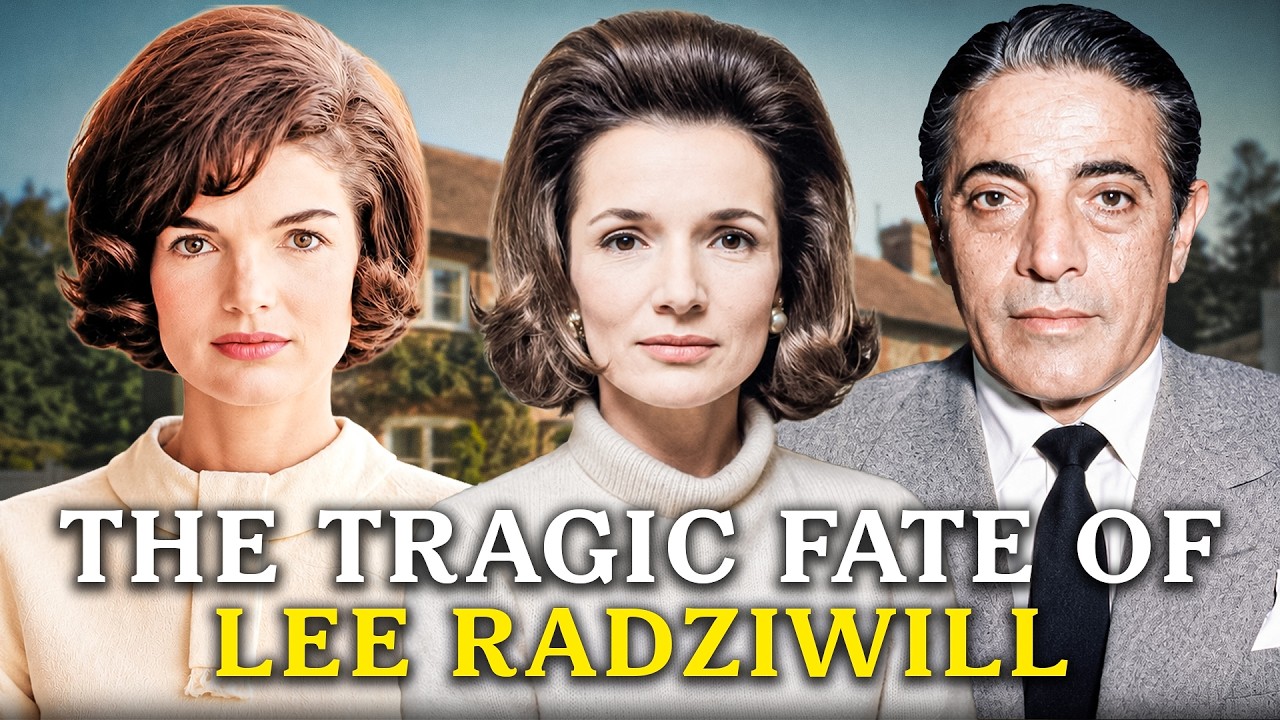
By any ordinary measure, her life was extraordinary. By the measure her mother had taught her, it was not enough.
It was in this restlessness that she found her way to Aristotle Onassis.
Onassis was born in 1906 in Smyrna, in what is now Turkey. He had fled during the Turkish destruction of the city in 1922 and made his way with almost nothing to Argentina, where he began trading tobacco. Through ruthless commercial intelligence, he built one of the largest shipping empires in the world.
He owned tankers, airlines, and a private island in Greece. By 1962, he was also in a long and unstable relationship with Maria Callas, the Greek soprano.
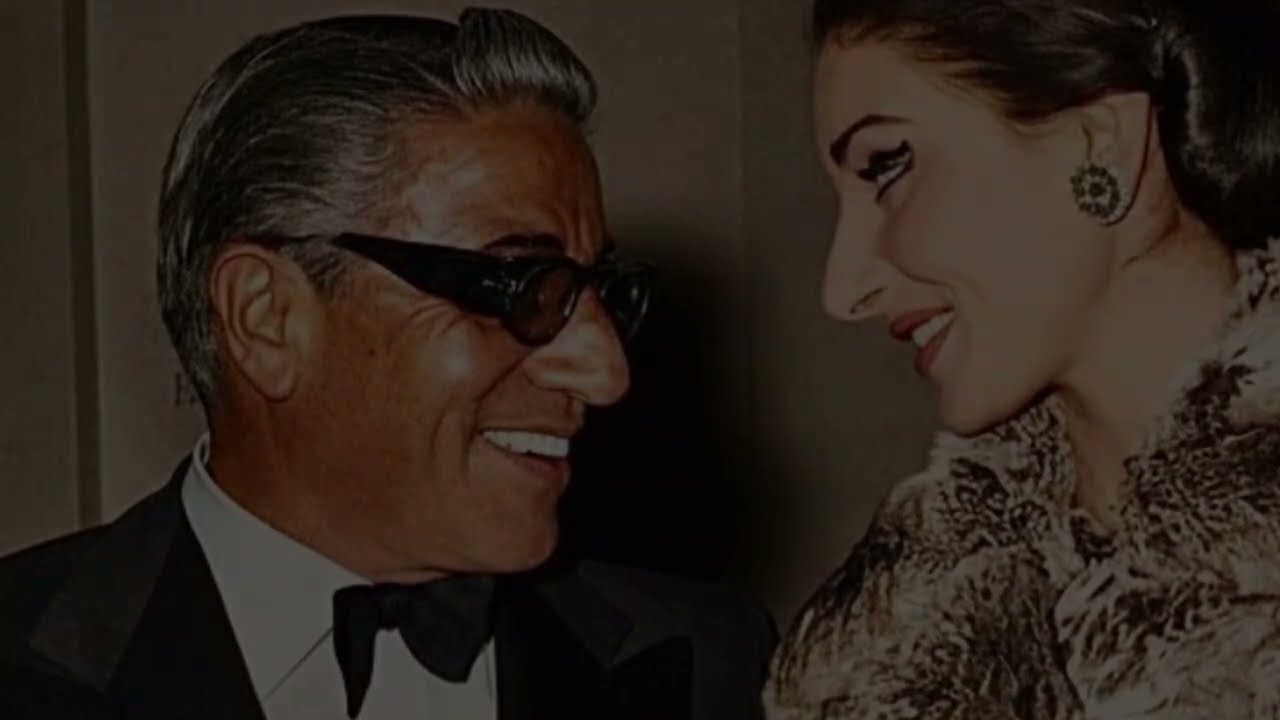
Onassis was not conventionally handsome. He was short and stocky, with heavy-lidded eyes and a quality of physical presence that photographs don't entirely capture. He was intensely, magnetically alive.
He was charming in the specific mode of very powerful men. He was also entirely open about his view that women were a category of acquisition alongside yachts and paintings. He had been married once to Tina Livanos, the daughter of a rival Greek shipping magnate, and they had two children before their divorce in 1960.
In 1962, Onassis was 60 years old. Lee Radziwill was 30. He was 27 years her senior, exactly the same age gap that existed between her and Stanisław Radziwill.
Lee was bored and married to a prince who was no longer significantly wealthy. Onassis was specifically everything that Stas was not.
Their affair began in 1962. Lee was still married to Stas. Onassis was still involved with Maria Callas.
The arrangement was not discreet. They were photographed together, attended public events together, and appeared on his yacht together. He told friends he was drawn to Lee because she struck him as a sad, lonely creature aggrieved that her sister was getting all the attention.
Lee wanted what her mother had told her she should want: the great marriage, the great fortune, the great life. She believed what was developing between them was leading somewhere specific. She was wrong.
Jackie Kennedy was in the midst of the most devastating period of her life in the summer of 1963. Her third pregnancy had ended in tragedy in August. Her son Patrick was born prematurely on August 7, 1963, and died two days later.
Jackie was at Boston Children's Hospital when he died. She was 33 years old and had now lost three children.
Lee flew from London immediately and was at her sister's side. Lee suggested that Jackie come to Greece, to get away from Washington and the White House and recover somewhere warm and beautiful. Lee had access to just the right escape: the Christina, Onassis's legendary 325-foot yacht, one of the most spectacular private vessels in the world.
The invitation was framed as a gift from a loving sister to a grieving one. Whether Lee fully thought through the implications of bringing her glamorous, famous, recently bereaved sister into close proximity with the most magnetic man she had ever met is something only Lee could have known.
The cruise took place in October 1963 and lasted 11 days. The photographs from those days are extraordinary. The first lady of the United States on the deck of a billionaire's yacht in the Aegean, visibly alive again after the summer's grief.
Onassis was paying attention to her, completely and specifically. Lee was on the same yacht and watched this happen. Six weeks after the cruise ended, President Kennedy was assassinated in Dallas.

What followed between Onassis and Jackie was not immediate. She was the most famous widow in the world. The Kennedy family had an investment in her image as the keeper of the fallen president's legacy.
A new relationship with a man as controversial as Onassis would complicate that enormously. So things developed slowly. They were in contact and seen together on various occasions over the following years.
What was privately established was that Onassis had told Lee his intentions. He reportedly paid her a significant financial settlement, with figures ranging from 100,000 to several hundred thousand dollars mentioned in various accounts. The settlement had the quality of a formal ending of a formal arrangement.
Lee had believed the involvement was leading to something permanent. Onassis was indicating that it was not.
For Lee, this was not simply a romantic disappointment. It was the specific loss of the thing her entire upbringing had been designed to acquire. Onassis was the man who had noticed her, made her feel that she was specifically the person he wanted.
And then he had turned his attention to her sister.
The announcement came on October 17, 1968. Aristotle Onassis had proposed to Jacqueline Kennedy. She had accepted.
The wedding would take place on his private island of Skorpios three days later. Onassis called Lee to tell her. He asked her to come.
She came. She stood beside her sister at the altar as the man she had loved and hoped to marry placed a ring on Jackie's finger. She reportedly wept when she heard the news.
The marriage of Jackie Kennedy and Aristotle Onassis was one of the most shocking events of the decade. For Lee, the private reaction was considerably more personal. Jackie had married the man Lee had found and loved.
And the marriage transformed Jackie from a grieving widow into the wife of one of the richest men in the world. By the specific metric that Janet Bouvier Auchincloss had established for her daughters, Jackie had achieved a perfect score. Lee had not.
Lee threw herself into other things. Her friendship with Truman Capote was one of the defining creative relationships of her life. Capote had met her in 1962 and designated her one of his swans.
He wrote a one-woman play called Laura for her, and she appeared in it in a 1967 television production. The reviews were largely unkind. She had a long affair with Peter Beard, the photographer and artist.
Her mother threw her out of their shared car in the middle of Piccadilly Circus when Lee announced she had found the man she truly loved, because Beard was not rich.
She divorced Stanislas Radziwill in 1974. She discovered that Beard was involved with another woman. The late 1970s were a period of genuine difficulty for her.
Jackie Kennedy Onassis was diagnosed with non-Hodgkin's lymphoma in 1994. She was 64 years old. When Lee learned that her sister was ill, she did what she had always done in Jackie's moments of genuine crisis.
She came. She stayed. She was there when Jackie died on May 19, 1994, in her Fifth Avenue apartment.
Then Jackie's will was read. The will was 38 pages. It included specific bequests to family members, friends, and employees.
$500,000 trust funds went to Lee's children, Anthony and Tina. Substantial cash bequests went to people who had worked for Jackie and people who had been her friends. Lee received nothing.
The will contained a single sentence addressing the omission. Jackie wrote that she had made no provision for her sister, for whom she had great affection, because she had already done so during her lifetime. The phrase great affection stands out.
Not love. Not my beloved sister. The specific language of someone describing something that is real but bounded.
Something that has been complicated by things the document does not name.
Lee Radziwill stood outside the circle of people her sister had chosen to specifically honor in her final legal document. She learned this publicly in the reading of a will the entire world was watching. She wept at her sister's death.
She was genuinely bereaved. The competition and the closeness had been running simultaneously since childhood.
Lee Radziwill lived for 25 years after her sister's death. Her third marriage to film director Herbert Ross lasted from 1988 until their divorce shortly before his death in 2001. She became a brand ambassador for Giorgio Armani in her later years, a role that suited her perfectly.
She published a memoir called Happy Times in 2001. She introduced the documentary filmmakers Albert and David Maysles to her aunt Edith Beale and cousin Edith Bouvier Beale, whose eccentric life in a decaying East Hampton mansion became the documentary Grey Gardens in 1975.
She died on February 15, 2019, at her home in New York. She was 85 years old. The obituaries all mentioned Jackie.
Every single one. In every country, she was described first as Jacqueline Kennedy Onassis' younger sister, and then as everything else she was.
The story of Lee Radziwill and Aristotle Onassis and Jackie Kennedy is, on its surface, the story of two sisters and a man who chose one of them. But it is also the story of what it means to spend your life measured against someone else. Lee was consistently first and consistently overtaken.
She became a princess before Jackie became a first lady. She was the leading debutante of her era before Jackie married the senator. She found Onassis before Jackie met him.
The pattern accumulated into something that shaped the whole architecture of her self-understanding.
The wedding photograph of Lee Radziwill serving as matron of honor at her sister's wedding to the man she had introduced to that sister is one of the more quietly devastating images in the entire Kennedy story. Lee is there. She is composed.
She is performing the role of supportive sister with the specific dignity of someone who has decided that what she feels internally is not anyone else's business.
There is a version of Lee Radziwill's life that the world never quite got to see. The version in which she was not the other one, not the less famous one, not the one who lost Onassis to her sister. The people who knew her said that version was the true one.