In February 1979, a Catholic priest and an Episcopal priest shared the altar at a church in Gladwyne, Pennsylvania, to marry Joseph P. Kennedy II, son of Robert Kennedy, to Sheila Rauch, a Protestant daughter of a Philadelphia banker. The photograph looked like a fairy tale. Fourteen years later, Joe Kennedy asked a church court to rule that the wedding had never happened in the eyes of God, and Sheila Rauch Kennedy opened the letter informing her of his petition and vomited.
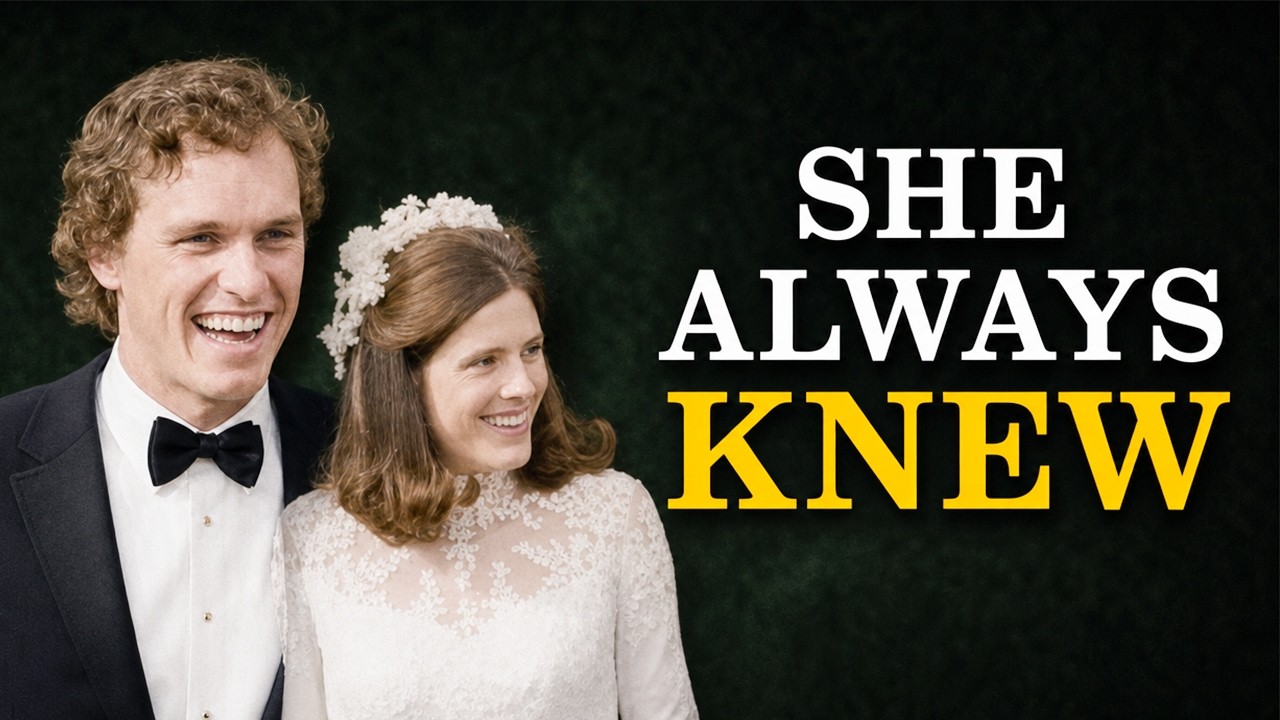
She was not the kind of woman who did such things in public. She was a forty-four-year-old city planner, the daughter of one of Philadelphia’s most respected bankers, and she had spent two years since her divorce doing exactly what the Kennedy family expected of a departing wife. She stayed in Massachusetts so their twin sons could see their father. She asked for nothing.
She said nothing. The petition was not a divorce; she already had one. It was a request for an ecclesiastical declaration of nullity, a finding that the marriage had never existed. That the ceremony, the twelve years together, the sons born October 4, 1980, all rested on a sacrament that was never valid.
When she called him, according to her account, he was baffled she was making it difficult. He told her he did not believe any of it himself, that it was, in his words, just Catholic gobbledygook, Sheila, and she simply had to say what the church wanted said. The grounds he invoked were lack of due discretion of judgment, a canonical finding that one spouse lacked the maturity or capacity to consent. The couple had known each other for nine years before the wedding.
Sheila Brewster Rauch was born in 1949 into old Philadelphia money. Her father ran the Philadelphia Saving Fund Society. Her parents stayed married for sixty years. She described them as people with a WASP orientation: you do not wear your feelings on your sleeve, and you do not take public what is private.
Asked about her own reserve, she smiled and said, they call us the frozen people. She went to Harvard for a master’s degree and became a city planner specializing in housing and community development, a real profession with clients and deadlines. When her parents learned she was writing a book about the annulment, their first reaction was to ask what had gone wrong with her city planning work that she needed to write a book at all. She met Joe Kennedy in 1970.
She was twenty-one. He was eighteen, two years past the night his father was shot in Los Angeles. She did not meet a congressman; she met a teenager handed the job of being the oldest son in a family that had just lost its second national martyr. The courtship ran nine years and was not serene.
In August 1973, on Nantucket, Joe drove a Jeep that flipped, leaving a young woman passenger, Pamela Kelly, paralyzed. He was charged and fined. She dated him six more years after that. What that establishes is the world she chose to enter with her eyes open, a family where catastrophe was routine and the press arrived before the ambulance.
She was drawn to what the Kennedy men had reached for before: the blue-blooded Protestant woman with the banker father and perfect posture, the ballast. He was physically imposing, funny, and genuinely committed to helping poor people heat their houses. In 1979, he founded Citizens Energy Corporation to sell discounted heating oil to low-income families. It worked and ran for decades.
The wedding set the terms. A Catholic church, a Catholic ceremony, with both priests celebrating, which everyone read as ecumenical generosity. Read differently, it was a transfer of jurisdiction. The Episcopalian bride accepted the authority of the Roman Catholic Church over the validity of her marriage.
The twins were baptized Catholic with godparents from both churches, at the Kennedy family’s request. She honored every religious condition they asked for. The unraveling had a date. In 1986, Joe ran for the 8th Congressional District of Massachusetts, Tip O’Neill’s old seat, and in January 1987 he went to Washington.
The household changed. He would come home and find two cream sodas in the refrigerator instead of three, or the wrong tea, English breakfast when he wanted Irish. She described it plainly. He spent his weeks being deferred to by people who wanted things from him.
She was raising two boys, running a freelance planning practice, and driving to a second house they had not sold to feed animals still living there. Her word for what he was getting everywhere else was fawning, and she told him: I was never prepared to fawn. I could never make the adjustment. By the end of the marriage, she wrote in her 1997 book Shattered Faith, she had become afraid of him.
When an interviewer asked directly whether he hit her, she paused and answered no. Not directly violent to her. He has a temper, she said, and he’s the first to admit it. She declined the more sensational version of her own story.
She filed for divorce with one sentence: living a charade had become too hurtful for everyone. The divorce came through in 1991, no fault, no war. There was no prenuptial agreement. She asked for no alimony.
She moved out, borrowed money from her parents, bought a ramshackle house in Cambridge, fixed it up herself, and stayed in Massachusetts so their father could see the boys. She kept quiet, which she listed as a service rendered to a man with political ambitions. In 1993, Joe married Beth Kelly, who had worked on his congressional staff as a secretary and scheduler. Sheila’s response was measured: she was a little surprised, she said, but he could have done worse, that Beth took good care of him and took good care of the boys.
Then he gave an interview. He said he was waiting for the annulment to come through so he could marry Beth in the church. The civil ceremony had already happened. He was waiting for the ruling to be married correctly.
The calculation, she reported he made explicit, was that in Boston she was a nobody. The nobody wrote to Time magazine, arguing that if the marriage were deemed never to have existed, her twelve-year-old sons had been neither conceived in nor born to a sanctified union. She argued the status of two boys baptized Catholic at their father’s family’s request. The tribunal did not treat her testimony as central evidence.
Nobody at the Archdiocese of Boston told her she had the right to appeal to Rome; she found that out from outsiders. Then the letters started arriving, hundreds from women all over the country, many annulled on the same grounds after decades of marriage. By the mid-nineties, the American Catholic Church was granting annulments by the tens of thousands a year, a volume with no equivalent anywhere else in the world. In October 1996, the tribunal of the Archdiocese of Boston ruled against her.
The church granted Joe what he asked for by finding something he had never claimed: that the person lacking due discretion was Joe, not Sheila. A congressman who had run a nonprofit for seventeen years and won six elections was declared not competent to consent to his own marriage. The same season, the Boston Globe ran allegations about his brother Michael and a teenage babysitter, and Michael’s wife filed for divorce. In early 1997, Pantheon published Shattered Faith.
One interviewer hunting for dirt called the book gallingly discreet. It contained no catalog of infidelities, no gothic account of the compound. It was a woman methodically explaining a bureaucratic process, quoting her ex-husband accurately enough that he never seriously challenged the quotes, and printing the letters of other women it had happened to. Joe called a press conference to get ahead of it and apologized for any mistakes he made during the marriage, explaining the annulment as the only way he could take communion with his children and wife.
His approval numbers collapsed. On August 28, 1997, he announced he would not run for governor, saying a campaign would be about personal and family questions instead of health care and jobs. That December, Michael died in a skiing accident in Aspen, and in 1998, Joe announced he was leaving politics to run Citizens Energy. She refused to take the win.
Asked whether it was fair that her book was destroying his prospects, she said no, that we should draw a distinction between personal behavior and politics. She appealed to the Roman Rota, the Vatican’s high court. The archdiocese wanted $850 to send the appeal to Rome, three times what it had cost her ex-husband to obtain the annulment. She objected on principle and on cash.
The holidays were coming and she did not have the money. In 2005, the Roman Rota reversed the Boston Tribunal. The marriage of Joseph P. Kennedy II and Sheila Brewster Rauch was valid.
The decision was reached in 2005, word circulated in 2006, and the Archdiocese of Boston did not officially inform her until May 2007. She learned her marriage had been restored two years after the ruling, through somebody else, the same posture in which she had learned everything else. She said she was very grateful the marriage had been validated, and that there was a real marriage, a marriage that failed, and that as grown-ups we need to take responsibility for that. The boys grew up.
Joseph P. Kennedy III went to Stanford, the Peace Corps, and Harvard Law. In November 2012, he won a seat in Congress, with his mother standing at the edge of the frame in the victory rally photograph. In January 2018, he delivered the Democratic response to the State of the Union and afterward was photographed embracing her.
The surviving account of the marriage is hers because she wrote it first, wrote it carefully, and declined to exaggerate. He never published his version. The tribunal files are sealed. What remains is a book by a city planner from Philadelphia.
The woman raised never to take public what is private took one private thing public exactly once, and it became the permanent record. They call them the frozen people. She spent forty years being underestimated by a family that mistook her restraint for compliance, and when they finally pushed, she did not raise her voice once.
She just went and got it in writing.