On June 25, 1876, in the early afternoon, along the banks of the Little Bighorn River in what is now southern Montana, the largest gathering of Plains tribes ever documented stretched across two miles of grassland. The Lakota, Cheyenne, and Arapaho had come together, perhaps six to ten thousand people in all, united against the U. S. Army.
The river the Lakota called the Greasy Grass was alive with ordinary activity: children played in the water, women tended campfires, and young men watched over the vast horse herds. Many warriors were only just rising, still weary from a night of dancing and celebration. They knew the Blue Coats were somewhere nearby. But most believed a major clash was still days away, and the war chiefs were confident there was time to prepare.
One man was not so sure. He had barely slept, troubled by a nagging certainty that the cavalry would strike at dawn. Morning had come and gone without an attack, yet the unease would not leave him. This man was born of two tribes, an Oglala Lakota father and a Miniconjou mother.
As a youth he had been called Curly. At fourteen, he had undertaken a vision quest in the Black Hills, fasting for three days and nights until a spirit appeared. The spirit told him his life must be devoted to the welfare of his people, that he would become a great warrior, and that no bullet or arrow could kill him. But it also warned that he would one day die a martyr’s death at the hands of the Blue Coats.
In the years since, that young warrior had become a formidable fighter and a respected leader. A bullet scar across his face remained from a confrontation years earlier, when the jealous husband of a woman he loved had shot him. Personal indiscretions had cost him the official title of chief, but it mattered little. He was a war chief in every way that counted, a figure whose name inspired his allies and terrified his enemies.
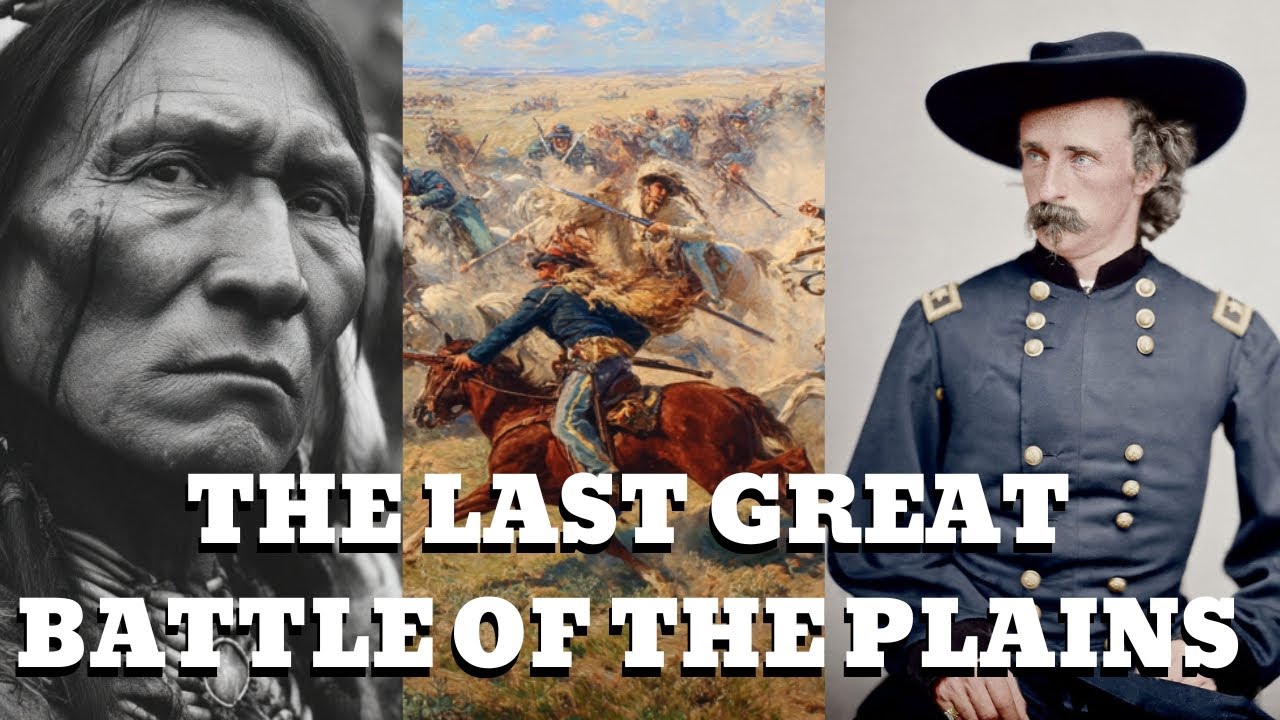
To his people he was Tashunka Witko. History knows him as Crazy Horse. His prediction of a dawn attack had been slightly off. But his instinct that this day would bring a great battle proved devastatingly accurate.
Before it ended, he and his fellow warriors would fight the largest battle in the history of Plains warfare and nearly annihilate the hated Blue Coats. The fighting began almost by accident. Villagers spotted a dust cloud downstream, where the Seventh Cavalry had already collided with a Lakota camp. In that skirmish, two cavalry horses, startled by gunfire and bugle calls, bolted from the battlefield with their riders unable to regain control.
The horses carried the soldiers straight toward Crazy Horse’s encampment. Surprised Lakota warriors met them, their shock turning quickly to fury. The two soldiers were pulled from their mounts and killed with clubs and knives as they begged for mercy. Word reached Crazy Horse that the cavalry was attacking.
He seemed unsurprised, perhaps even slightly indignant. He called for his war ponies to be brought to his lodge and carefully applied his war paint, covering his upper body in yellow pigment and drawing a single lightning bolt down the left side of his face. In contrast to the elaborate war bonnets favored by many warriors, he wore a single feather in his hair. Younger warriors, the ones who had danced into the early hours and ignored his warnings, began to clamor for an immediate attack.
They feared the fighting would end before they could claim honors or trophies. Crazy Horse remained calm, ignoring their impatience. Only when his war ponies arrived did he finally emerge, mount one, and ride out of the village with a large group of warriors following. They headed first toward a ridgeline where Major Marcus Reno was trying to establish a defensive position with his men, including Crow scouts, in a patch of timber.
With Crazy Horse’s arrival, the assault on Reno’s unit became overwhelming. Reno’s favorite Crow scout was killed just feet away, leaving the major covered in the scout’s blood. Lakota warriors swirled around the cavalrymen, firing arrows and bullets from every direction. Despair took hold, and some troops tried to flee.
Crazy Horse rode among the desperate soldiers, methodically striking them down with his war club. Some panicked soldiers could only walk, pumping their arms frantically. Others stopped, turned, and pleaded for mercy or begged to be taken prisoner. All were killed swiftly with war clubs, bullets, or arrows.
Reno and some of his men survived, but only because a more immediate target appeared. Lieutenant Colonel George Armstrong Custer, facing an onslaught from a native force far larger than he had expected, grew desperate. He made a frantic dash toward the heart of the main village, hoping to sweep through, capture women and children as hostages, and force a negotiated retreat. It was a brutal tactic, but not uncommon on the plains at the time.
Custer and his men never reached the village. They became trapped on a small hill, fighting a desperate rearguard action. Crazy Horse was on his way. When he arrived, he surveyed the battlefield and conferred with his fellow warriors, all while calmly firing his rifle and killing as many soldiers as he could from atop a small hill.
Then he and his men struck the right flank of Custer’s forces, splitting the already diminished unit into two smaller groups. As the fighting raged, Crazy Horse rode between the two groups, blowing a piercing eagle bone whistle and shouting orders. Despite this near-suicidal behavior, he remained unharmed, just as his vision had foretold. The chaos of battle had shaken even the Seventh Cavalry’s war horses.
Those not killed by enemy fire were released as surviving soldiers threw themselves face down in the grass, trying to make themselves smaller targets. The lull lasted only briefly. Loud war whistles pierced the air, signaling a massive general charge by the Lakota and their allies to finish off Custer and his remaining men, including his two brothers and his teenage nephew. Thousands of warriors swarmed the hill.
Custer and his men fired an initial volley that briefly stalled the attack, but within seconds, the charge resumed. The warriors overwhelmed the cavalrymen, cutting down as many as they could even as some soldiers tried to flee southward. All were killed within minutes. By the end of the day, every one of the 210 men under Custer’s immediate command lay dead on that hill near the banks of the Little Bighorn River.
The Battle of the Little Bighorn became one of the most iconic moments in American history. For the northern Plains tribes, it was a moment of triumph and a turning point toward catastrophe. The U. S.
Army would return seeking vengeance for the defeat. The next day, Crazy Horse was appointed commander-in-chief of the combined forces of the Lakota, Cheyenne, and Arapaho. His legend was sealed, but his prophecy was only partially fulfilled.
A little over a year later, on September 5, 1877, Crazy Horse met his martyr’s fate, stabbed in the back by a soldier’s bayonet under disputed circumstances at Fort Robinson, Nebraska.