In the heart of Houston’s suburbs, the Wright family appeared to embody the American dream: a loving couple, two young children, and a cozy home. But on January 13th, 2003, that household became the scene of a crime so brutal it would grip the nation. Susan Lucille Wright, a 26-year-old mother, claimed that her marriage to Jeffrey Andrew Wright had been marked by years of abuse. The gruesome nature of his death and Susan’s subsequent claims of self-defense sparked a media frenzy, raising difficult questions about domestic violence and the lengths one might go to escape it.
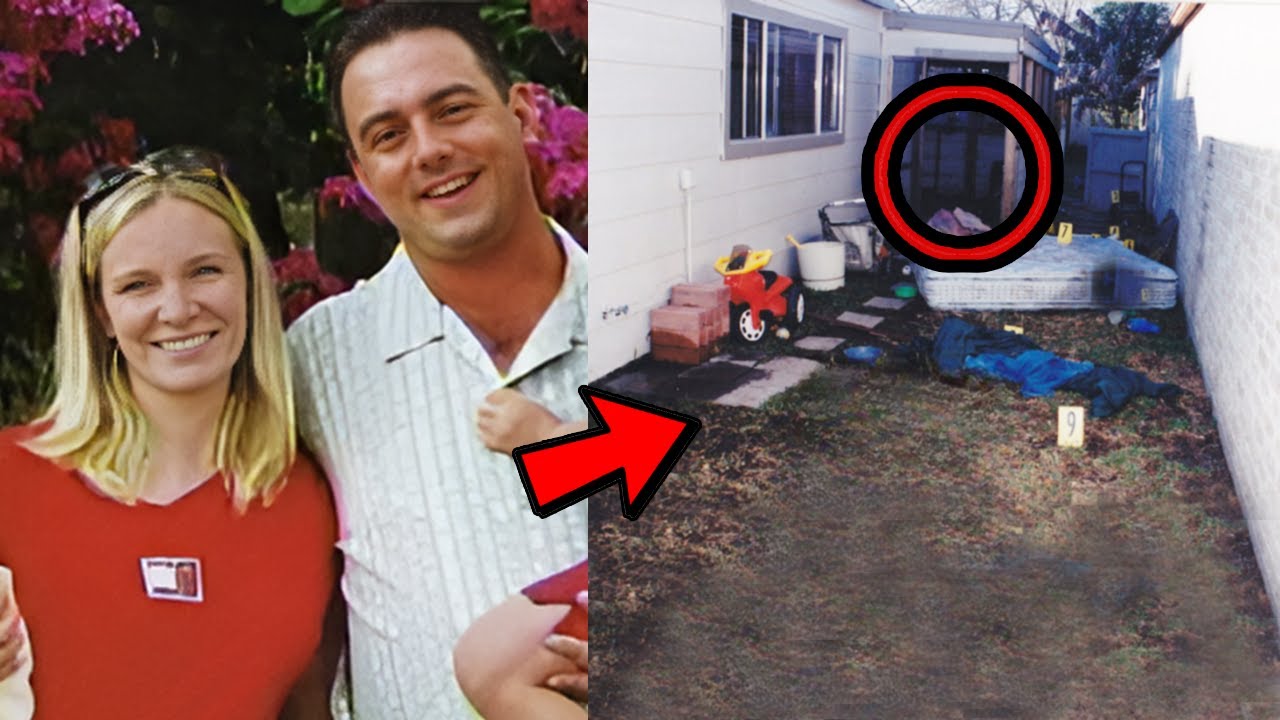
Born on April 24th, 1976, in Houston, Texas, Susan had a colorful past that included a short stint as a topless dancer at age 17. By 1997, she was waitressing in Galveston, where she crossed paths with Jeffrey Wright. The two married in 1998, just weeks before welcoming their first child, Bradley. Their daughter, Kaylee, followed in 2002.
For a while, life seemed steady. Behind the scenes, however, tensions were building. By January 2003, the Wright family would face a darkness no one saw coming. On January 15th, 2003, Susan walked into a Houston police station with urgency etched on her face.
She told officers she needed help, claiming she had endured a violent outburst two nights earlier when Jeffrey lashed out, first at their son, then at her. Her hands bore fresh cuts and bruises, which she said came from Jeffrey’s keys as he grabbed her, twisted her arms, and slammed her into a wall. When police asked where Jeffrey was, Susan said she hadn’t seen him since that Monday night, when he stormed out of the house shouting that he was tired of her and the kids. A warrant for Jeffrey Wright’s arrest was quickly issued.
There was just one problem: Jeffrey had vanished. Days later, Susan made a shocking turn. She called her attorney and her parents, asking them to come to her house urgently. With her voice trembling, she confessed she knew exactly where Jeffrey was.
He was in the backyard. Breaking down, she told her mother, “I killed him on Monday night. I used a knife. It happened in the bedroom while the kids were asleep.
He’s in the hole he dug. ” She added, “Mama, it wasn’t me. I snapped. ”
Accompanied by her attorney, Susan went to the police and admitted that Jeffrey was dead, claiming she had acted in self-defense after enduring years of abuse.
Officers searched her yard and found Jeffrey’s body buried beneath the cold Texas soil. Susan Wright was promptly charged with first-degree murder. The prosecution painted a very different picture of Susan: not a battered wife, but a cunning, cold-blooded killer driven by greed. In their view, she didn’t act out of fear but out of calculation, plotting her husband’s murder to cash in on a $200,000 life insurance policy.
According to prosecutors, on the night of January 13th, after Jeffrey returned from his boxing class, Susan seduced him and tied him to their bed using neckties and a bathrobe sash, all under the guise of intimacy. Candle wax was later found on his thigh and genitals, a detail that added to the theory of manipulation and control. Once Jeffrey was restrained, prosecutors argued, Susan retrieved not one but two knives and began a frenzied attack. Jeffrey suffered nearly 200 stab wounds in what prosecutors described as a savage and methodical slaughter.
To make their point chillingly clear, they brought the actual bed frame into court. Before a stunned jury, the prosecutor reenacted the murder, demonstrating how Susan, in their view, repeatedly plunged the knife into her helpless husband. She showed how the knife was likely held, noting that many wounds appeared more like slices than stabs, with the blade gliding parallel to Jeffrey’s body. When it came to the deep gashes on his legs, the prosecutor pointed out that the angles suggested Susan had moved to the side of the bed, a detail that dismantled any claim of self-defense.
The horror didn’t end there. The jury heard how Susan allegedly tied Jeffrey’s lifeless body to a dolly and dragged it into the backyard. In a grim twist, she buried him in a hole he had dug himself just days earlier, a spot meant for a garden fountain that became a shallow grave. The courtroom fell silent as the medical examiner took the stand.
He described Jeffrey’s body, partially buried beside the patio, bound at the wrists and ankle with neckties and a bathrobe sash. The toll was staggering: 193 stab wounds, nearly all delivered to the front of his body, matching the prosecution’s claim that he was tied down, face up, when the assault began. There were 41 wounds to his face, 23 to his neck, 46 to his chest, 22 to his abdomen, and seven to his pubic area. His limbs weren’t spared either: 19 wounds to his legs and 23 to his arms and hands.
Perhaps most harrowing was the examiner’s conclusion: aside from a single wound to the brain, none of the stabs alone was fatal. Jeffrey had been slowly and savagely tortured to death. The jury was shown the gruesome scene left behind in the home. A mattress soaked in blood was discovered in the backyard.
Inside the bedroom, blood splattered the walls, ceiling, and furniture. Portions of the carpet and padding had been cut out, hinting at desperate attempts to cover up the crime. Police found bottles of bleach and items intentionally stained with it, including a pair of size six jeans and a towel. A blood-covered knife was found within the house, but its tip was missing; it had snapped off when driven into Jeffrey’s skull.
Jeffrey’s mother testified, recounting a conversation with her son on the night he died while he drove home from boxing. She later spoke to Susan, who told her that Jeffrey had arrived home intoxicated and struck their young son. Susan claimed she told him to leave, and he did. In the days following, Susan sought medical attention for the cuts on her hands, first telling the doctor they were caused by Jeffrey’s keys, then claiming they were from his fingernails.
Her story shifted depending on whom she was talking to. She told people Jeffrey had come home to destroy their property, pouring bleach on her clothes and leaving a note. The prosecution pointed out that these shifting accounts were inconsistent and suspicious. The defense painted Susan as a deeply unhappy stay-at-home mother who had endured years of abuse.
Friends and family testified they had seen Susan with a black eye, a bruised forehead, and dark marks on her body. Her sister told the court she had seen the bruises many times. Susan was allegedly given just $75 each week for groceries and household needs, and was expected to keep the house spotless. Any slip-ups, her sister said, were met with beatings.
The defense also brought in experts. Psychiatrist Dr. Brown, who evaluated Susan, described her as deeply depressed, emotionally detached, and constantly on edge. He diagnosed her with post-traumatic stress disorder and labeled her a classic case of a battered woman.
Experts testified that the moment an abused woman decides to leave is often the most dangerous time of her life, and that even a sleeping abuser can represent imminent danger. The defense also revealed Jeffrey’s criminal record, including charges for drug possession and assault. His ex-girlfriend testified that he had once physically attacked her. When Susan took the stand, her voice trembled as she recounted the night of January 13th.
According to her, Jeffrey came home agitated, with glassy red eyes, and insisted their four-year-old son start boxing immediately. When the boy refused, Susan claimed Jeffrey struck him in the face. After showering and entering the bedroom wrapped in a towel, Susan said she confronted him, telling him she couldn’t live like this anymore and begging him to seek help. That, she testified, sent him into a violent fury.
He threw her to the floor, kicked her, and violated her. She said she opened her eyes to hear him growl, “Die, bitch! ” as he held a knife. In a desperate scramble, she fought back.
The knife cut her knee, and in the chaos, her leg struck his groin. She grabbed the blade, injured him in the neck, and when he fought to reclaim it, she drove it into his chest. Susan told the court she couldn’t stop. Fear consumed her; if she hesitated, she believed he would kill her.
She recounted a chilling interruption: a knock at the bedroom door. It was her young son. She stopped, tied one of Jeffrey’s arms to the bed, and tucked her child back into bed. Then she returned, still gripped by fear, and resumed stabbing him.
When she tried to drag his body, his head and shoulder slammed into the nightstand, toppling a candle onto his lifeless form. She tied his ankle and arm to a dolly, wheeled his body through the house, and out to the shallow grave in the backyard. After five tense hours of deliberation, the jury reached a verdict: guilty of first-degree murder. Susan Wright was sentenced to 25 years in prison.
But her story didn’t end there. She filed an appeal, arguing that her defense had failed her. The higher court agreed, ruling that her original attorney had been ineffective during the sentencing phase. In a new sentencing hearing, her term was reduced from 25 years to 20.
Denied parole twice, Susan’s third chance came in July 2020, and this time it was granted. On December 30th, 2020, after spending 16 years behind bars for the stabbing death of her husband, Susan stepped out of prison, a 44-year-old woman entering a world that had moved on without her. Her release reignited heated debates about domestic abuse, self-defense, and the murky gray areas within the justice system.
No longer in the glare of cameras or courtrooms, Susan now lives quietly, her name still echoing as a haunting case study in how perception and the human psyche can collide with the law.