For 187 years, the story of the Alamo has been told as a tale of heroic sacrifice. But the only adult male who walked out of the fort alive told a different story. His name was Joe Travis, an enslaved servant owned by Colonel William Barrett Travis.
He called the Alamo a slaughterhouse.
Joe did not just witness the fall of the mission. He lived through the final assault, the hand-to-hand butchery, and the burning of the dead. His account, long buried and often ignored, offers a raw and unflinching look at what really happened on March 6, 1836.
This is his testimony.
### The Silence Before the Storm
In the days leading up to the final attack, the defenders of the Alamo were exhausted. They had been worn down by relentless vigilance and hard labor. On the night before the assault, every man in the fort worked deep into the night.
When they finally stopped, they collapsed into a deep sleep, just hours before the enemy struck.
Even the sentinels were exhausted. The three guards posted beyond the walls likely shared the same fatal fatigue. No warning shout rose from the darkness.
The Mexican soldiers found their mark in silence. Their steel moved swiftly and without mercy.
Joe lay in his master’s quarters when the clamor began. Colonel Travis bolted upright, grabbing his musket and sword. He barked at Joe to follow.
Joe obeyed, snatching his own weapon and trailing the desperate sprint of his master.
### The Fall of Travis
Travis climbed onto the ramparts, his voice raw as he roared to his men. He told them the devils were at their throats and that they would meet them with fire and brimstone. A flash erupted from his barrel.
Joe’s own shot echoed it.
But the smoke had barely cleared when Travis staggered. He had been struck low. He slumped against the inner slope of the wall, struggling to rise as his lifeblood stained the earth where he sat.
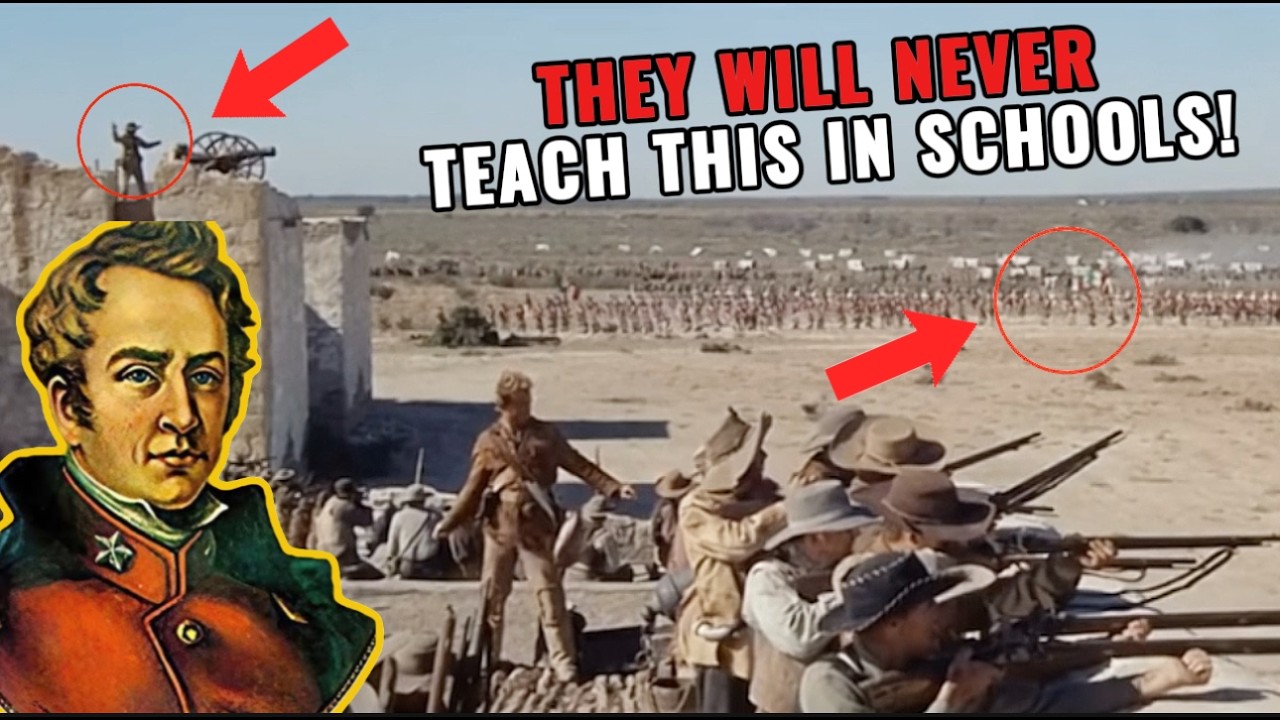
The defenders managed to repel the first two ladder assaults. Desperate hands pushed the scaling ladders away. Joe, however, scarcely witnessed this.
When his master fell, he ducked into a storage room. From there, he loosed shot after shot through a loophole, even as the tide breached the walls.
On the third assault, the invaders scaled the walls unchallenged. They flooded the yard like a relentless tide. What followed was pure butchery.
### Butchery in the Courtyard
Men grappled hand to hand. Musket clubs cracked skulls. Blades gutted bellies.
Pistols were pressed to ribs and fired point blank. No quarter was given or sought. It was grim, guttural work of survival until the last breath was spent.
Colonel Travis, wounded and slumped on the bloodied earth, still clutched his sword. A Mexican general named Morris strode past him. The officer swung his blade downward in a killing stroke.
Travis parried the blow with a desperate strength and thrust his own steel deep into the general’s gut.
Both men collapsed there, locked in death’s embrace. It was Travis’s final act of defiance.
The few Americans still standing fell back to whatever shelter the crumbling walls afforded. They fought on until only a frail man named Warner remained. He dropped his weapon and cried out for mercy.
The soldiers initially spared him. But when Santa Anna himself arrived, he coldly ordered the man shot. Joe heard the volley from his hiding place.
### The Deaths of Bowie and Crockett
Jim Bowie was too sick to fight on the walls. According to reports, he fired his pistol through the door of his sick room until his last breath. When the enemy found him, his body lay hacked nearly beyond recognition.
Davy Crockett and a handful of his companions were discovered in a heap. They were surrounded by two dozen Mexican dead. It was a grim testament to their resolve.
The women and the Black people in the fort, including Joe, were mostly spared. Only one woman perished. A stray ball caught her as she dashed between the cannons.

### Joe’s Narrow Escape
After the killing ceased, Mexican officers moved through the carnage. They shouted for any Black men to show themselves. Joe stepped forward, trembling.
He called out that he was there.
Two soldiers lunged at him. One fired his musket, and the ball bit into Joe’s side. The other jabbed with his bayonet, the tip scraping his ribs.
Joe thought he was dead. But a captain named Baragon intervened, barking orders to stay their hands.
When the smoke cleared, the Mexicans spared most of the Black people. They also spared a handful of their own women, including the wife of a surgeon and her sister, a Miss Navarro. Both were sent back to their father, Don Angel Navarro, in Bexar under guard.
Mrs. Dickinson, the widow of the lieutenant, and her baby were also spared. Joe later heard they were escorted across the lines into Texas under a tattered flag of truce.
### Santa Anna’s Speech
Once the killing stopped, Santa Anna ordered his men into a hollow square. He strode to the center and harangued them with fiery gestures. His voice was sharp as a saber.
The soldiers roared back, their cheers thick enough to choke the morning air.
Joe studied the general carefully. Santa Anna struck him as a lean, long-limbed fellow. He was dressed simpler than any officer Joe had seen.
Just a plain wool coat. No medals or finery to mark his rank.
Joe later told the Mexicans that Santa Anna looked like one of those Methodist preachers.
### Questioned by the General
The Mexicans dragged Joe to Bexar afterward and held him for days. They marched him out to gawk at their army’s grand review. Rows of infantry and cavalry stretched across the plain, their banners flapping like vulture wings.

A sneering captain claimed they numbered 8,000. But any man who had trod that ground knew better. The field they had mustered on was all gullies and scrub oak.
It was barely fit to hold half that count.
Santa Anna himself questioned Joe in a dim room that reeked of gunpowder and sweat. His eyes bored into Joe as he demanded answers about Texas. How many men had the Texans mustered?
Were more Yankee soldiers riding to join the fight?
Joe stammered that he knew nothing. Santa Anna smirked and drew himself tall.
“No matter,” he said. “I’ve armies enough to plant my flag in your Washington city.”
His tone turned icy, as though the very idea amused him.
### The Burning of the Dead
Later, Joe watched through a slit in the wall as Mexican soldiers piled the dead into a ghastly heap. Travis, Crockett, the others. They doused the bodies with oil and set them ablaze.
The smoke coiled black against the sky. It carried a stench that clung to Joe’s clothes for days. Some of the men laughed as they tossed splintered timbers to feed the flames.
Others crossed themselves and turned away.
### The Questions That Remain
Joe Travis’s testimony survived. But the questions it raises burn hotter than Santa Anna’s pyres.
Why did Santa Anna spare Joe, only to nearly kill him moments later? Why was Travis’s final act of defiance erased from official reports? And why did the Mexican army inflate their numbers, unless they feared the world knowing how close the Alamo came to holding?
The legend of the Alamo is often told as a clean story of courage and sacrifice. Joe Travis’s account reminds us that the reality was far messier. It was blood, smoke, and betrayal.
It was a slaughterhouse.
The dead do not lie. And neither did Joe Travis.