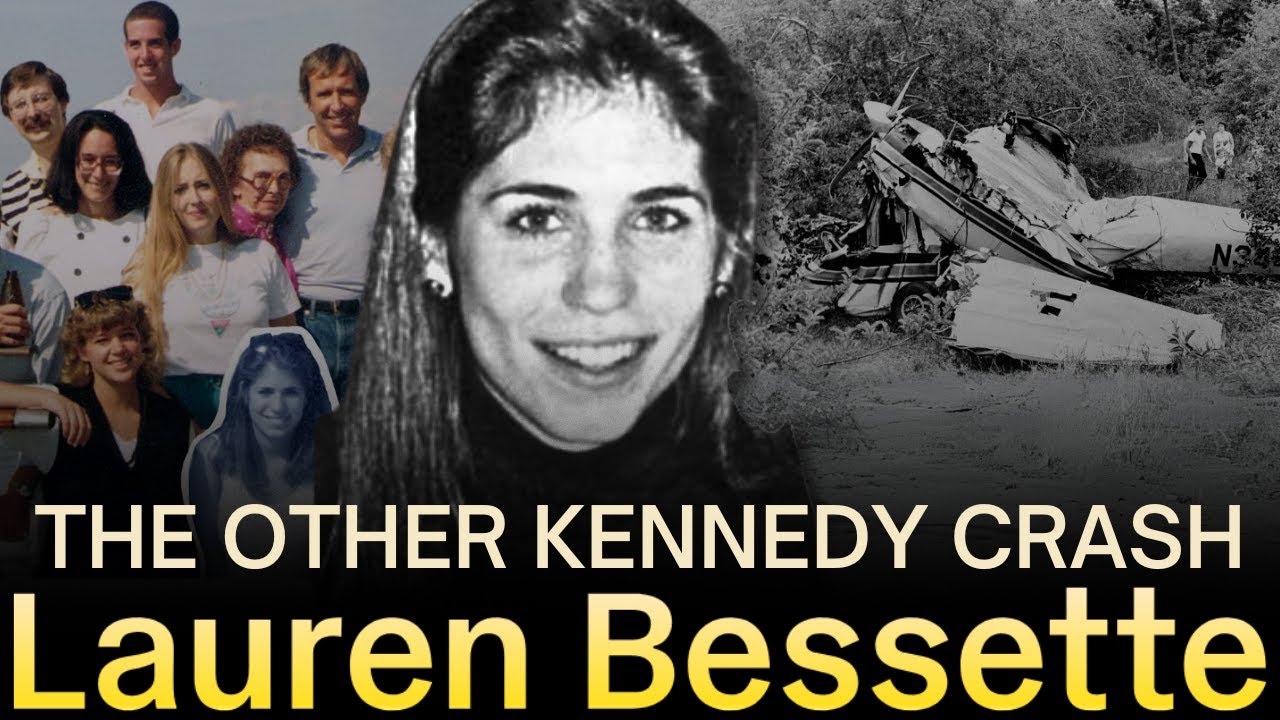
The story of the plane crash that killed John F. Kennedy Jr. , his wife Carolyn Bessette, and her sister Lauren Bessette on July 16, 1999, is often told as a tragedy of two.
A handsome prince and his beautiful wife, lost in a moment of poor judgment and bad weather. But there was a third person aboard that small Piper Saratoga. A woman whose own life, achievements, and devotion have been largely overshadowed by the star power of the couple she died with.
Her name was Lauren Bessette. And her story, while quieter, is no less remarkable.
Lauren Bessette was born into a world of comfort and complexity. She and her sister Carolyn grew up in the affluent suburbs of Greenwich, Connecticut, in a family of considerable means. Their father, William Bessette, was a corporate architect, and their mother, Anne Freeman, was a teacher and school administrator.
But the family was fractured when Lauren was still young. Her parents divorced, an event that forged a fierce and lasting bond between the sisters. Their mother later remarried Richard Freeman, a prominent orthopedic surgeon, and the family settled into a new life.
But Lauren, Carolyn, and their other sister, Lisa, remained a tight-knit unit.
Carolyn was the magnetic, free-spirited creative force. Lauren was different. From a young age, she was the anchor, the pragmatist, the quiet observer with a mind that was always analyzing.
At Greenwich High School, she was known not for socializing but for her sharp intellect and focused demeanor. She was a member of the National Honor Society and a standout in mathematics. Friends remembered her as sweet and kind, but intensely private.
She found comfort in a small circle of friends and, most of all, in her family.
As Carolyn ventured into the glittering world of fashion, Lauren set her sights on a different kind of empire: Wall Street. It was a decision that would define her professional life and, in a strange twist of fate, place her at the center of her sister's tumultuous world.
Lauren's journey to the heights of international finance began at the University of Pennsylvania's Wharton School of Business. She majored in economics, a field that perfectly suited her analytical mind. She graduated with honors, armed with a degree that was a golden ticket to the exclusive world of investment banking.
Her first major role was at Morgan Stanley, one of the most respected firms on Wall Street.
In the mid-1990s, investment banking was still very much a man's world. It was a culture of grueling hours, immense pressure, and cutthroat competition. To succeed, a woman had to be tougher, smarter, and more resilient than her male counterparts.
Lauren was all of those things and more. She quickly distinguished herself as a rising star, a brilliant analyst with an uncanny ability to dissect complex financial data and identify lucrative investment opportunities. Colleagues remembered her as a force of nature, often the first one in the office and the last one to leave.
But it wasn't just her intelligence that made her stand out. It was her composure. In a world of oversized egos and high-stakes gambling, Lauren was a picture of calm, collected professionalism.
She didn't need to shout to be heard. Her arguments were so well-reasoned, her analysis so meticulous, that they commanded respect on their own merit.
One of the most significant chapters of her career was her time in Hong Kong. In the late 1990s, Morgan Stanley sent her to their Hong Kong office to work as an analyst specializing in Asian markets. It was a massive vote of confidence in her abilities.
The Asian financial markets were booming, and Hong Kong was the epicenter of it all. Lauren became an expert in the region's complex economic landscape, advising on multi-million dollar deals and helping to navigate the volatile currents of international finance. Living in Hong Kong also gave her a degree of anonymity that she craved.
Back in the United States, her sister Carolyn had begun dating John F. Kennedy Jr. , and the Bessette family was suddenly thrust into the relentless glare of the media spotlight.
In Hong Kong, Lauren was just another brilliant expat building a career. She could walk the crowded streets without a camera lens following her every move. It was a period of intense professional growth, but also one of personal freedom.
Despite the distance, she remained deeply connected to her sister. They spoke on the phone constantly, their conversations a mix of career advice, family gossip, and sisterly support. Lauren was Carolyn's rock, the one person she could turn to for unfiltered, practical advice.
When the media frenzy around Carolyn and John reached its peak, it was Lauren who urged her sister to stay grounded, to remember who she was outside of the whirlwind of fame.
One little-known story perfectly illustrates Lauren's character. A junior analyst who worked under her recalled being incredibly intimidated by her at first. Lauren was known for her exacting standards and her no-nonsense approach.
But one day, after the junior analyst made a significant mistake on a report, he expected to be reprimanded or worse, fired. Instead, Lauren called him into her office, calmly explained where he had gone wrong, and then spent the next two hours patiently walking him through the correct process. She turned a moment of failure into a valuable learning experience.
That was Lauren. She was demanding, yes, but she was also a generous and dedicated mentor who wanted to see others succeed.
By 1999, Lauren Bessette was at the top of her game. She'd been promoted to vice president at Morgan Stanley, a remarkable achievement for someone so young. She was earning a high six-figure salary, had a beautiful apartment in a luxury building on the Upper East Side of Manhattan, and was widely regarded as one of the brightest minds in her field.
She had built a life for herself that was entirely her own. A testament to her intelligence, her discipline, and her unwavering ambition. She had proven that she could not only survive in the cutthroat world of finance, but that she could conquer it.
And she had done it all on her own terms, with grace, integrity, and a quiet confidence that was all her own.
To the world, Carolyn Bessette Kennedy was an icon of style and grace, a modern-day princess who had captured the heart of America's prince. But to Lauren, she was just Carly. She was the older sister she had shared a bedroom with, the one she had whispered secrets to late at night.
Their bond was the central relationship of Lauren's life, a constant source of strength and support for both of them. When Carolyn began her relationship with John F. Kennedy Jr.
, their world was turned upside down. Suddenly, the Bessette sisters, who had always valued their privacy, were thrust into the brightest, most unforgiving spotlight imaginable. Carolyn, deeply private at her core, struggled immensely with the relentless media attention.
The paparazzi followed her everywhere. Every outfit she wore, every expression on her face, every argument she had with John in public was dissected and analyzed by a voracious press
In the midst of this chaotic storm, Lauren became Carolyn's anchor. She was the one who kept her grounded, the one who reminded her of her life before the Kennedys. While the world saw Carolyn as a fashion plate and a socialite, Lauren saw the smart, funny, and sometimes vulnerable woman she had always known.
She was fiercely protective of her sister, often acting as a buffer between Carolyn and the overwhelming pressures of her new life. Friends of the sisters recalled that Lauren was one of the few people who wasn't intimidated by the Kennedy mystique. She treated John not as a celebrity or a member of a political dynasty, but simply as her sister's husband.
She would speak to him with a frankness and honesty that he rarely encountered from others. John, in turn, deeply respected Lauren. He admired her intelligence, her independence, and her unwavering loyalty to Carolyn.
He often sought her advice on financial matters and valued her clear-headed, pragmatic perspective on the world
There is a poignant anecdote that captures the essence of their relationship. Shortly after Carolyn and John were married, they were staying at the Kennedy compound in Hyannisport. Carolyn was feeling overwhelmed by the weight of the family's history and the expectations that came with being a Kennedy.
She called Lauren in a panic, feeling like she didn't belong. Lauren, who was in the middle of a demanding workday in Hong Kong, dropped everything to talk to her sister. She didn't offer platitudes or easy reassurances.
Instead, she listened patiently and then said, "Carly, just be yourself. That's who he fell in love with. You don't have to be anyone else."
It was simple, direct, and exactly what Carolyn needed to hear.
Lauren was a constant calming presence in Carolyn and John's life. Their apartment in Tribeca became a sanctuary for her, a place where she could escape the pressures of her own high-powered job and just be with family. She would often spend weekends with them, the three of them falling into an easy, comfortable rhythm.
They would go for long walks with their dog Friday, cook dinner together, or just lounge around the apartment talking for hours. For John, who had lost so many of his own family members, Lauren became like a sister. She was family, pure and simple.

But Lauren's role as a confidant also meant that she was privy to the struggles in Carolyn and John's marriage. The pressure of living in the public eye took a toll on their relationship. They were two strong-willed, independent people trying to forge a life together under impossible circumstances.
Lauren often found herself in the role of mediator, listening to both sides and trying to help them find common ground. It was a difficult position to be in, but she did it out of love for her sister and a genuine affection for John
One of the most telling and ultimately heartbreaking details about Lauren's devotion to her sister is that she had reportedly been hesitant to take the flight with John to Martha's Vineyard on that fateful July evening. She had a demanding job and a busy life in New York, but Carolyn had asked her to come. She wanted her sister with her for the weekend and for Rory Kennedy's wedding.
And for Lauren, a request from Carolyn was not something she could easily refuse. Her loyalty to her sister, the defining feature of her life, would also be the thing that placed her on that tragic flight. It's a devastating irony that this act of love and sisterly devotion would be her last.
Her life, so full of her own triumphs and ambitions, became inextricably linked in its final moments to her role as a sister. She was, and always would be, Carolyn's anchor, even in the final terrifying storm
The story of the night of July 16th, 1999 is a story of maybes and what-ifs, clouded by hazy conditions, both literally and figuratively. The official report from the National Transportation Safety Board is clinical and precise. It cites the cause of the crash as the pilot's failure to maintain control of the airplane during a descent overwater at night, which was a result of spatial disorientation.
The pilot was John F. Kennedy Jr. But behind that technical language lies a universe of debate, controversy, and heartbreak
The decision to fly that night was in itself a point of contention. John was a relatively inexperienced pilot with only about 310 hours of flying time and only 55 of those at night. The plane, a Piper Saratoga, was a high-performance aircraft that required a skilled hand.
More critically, he was not yet certified for instrument flight, which is the ability to fly solely by reference to the plane's instruments, without visual cues from the outside world. This would prove to be a fatal deficiency. The weather conditions along the coast of Massachusetts that evening were deteriorating.
A thick haze had settled over the water, obscuring the horizon and creating a disorienting visual environment. Several experienced pilots who were flying in the area that night later reported that the conditions were challenging even for them. One flight instructor who was in the air at the same time later said he had turned back because of the poor visibility.
There were also questions raised about a leg injury John had sustained a few weeks earlier. He had broken his ankle in a paragliding accident and was still wearing a cast, though it had been modified to allow him to operate the rudder pedals of the plane. While the NTSB concluded that his injury was not a factor in the crash, it added another layer of concern to the narrative
The controversy deepened in the aftermath of the crash. There were whispers and accusations, many of them directed at the Kennedy family. Some critics argued that John's celebrity status had allowed him to bend the rules, to take risks that an ordinary pilot would have been cautioned against.
There were also questions about whether he had been pressured, either by his own sense of invincibility or by family obligations, to make the flight despite the less-than-ideal conditions. For the Bessette family, the pain of their loss was compounded by a sense of anger and injustice. In a lawsuit filed against the Kennedy estate, they alleged that John had been negligent, that he had taken an unnecessary risk that had cost Lauren and Carolyn their lives.
The lawsuit was a deeply painful and public airing of the family's grief. It was not about money. It was about accountability.
It was a desperate attempt to find some meaning, some sense of justice, in a senseless tragedy. The case was eventually settled out of court for an undisclosed sum, but the emotional wounds remained
One of the most poignant and rarely discussed aspects of this controversy is Lauren's own role in the events of that evening. Lauren was a meticulous planner, a risk analyst by profession. It's hard to imagine that she would have been entirely comfortable with the situation.
Some reports suggest that she was the one who was supposed to be dropped off first at Martha's Vineyard Airport while John and Carolyn continued on to Hyannisport for the wedding. She had a life, a job, and responsibilities in New York. This trip was, for her, a detour, a favor to her sister.
There is a haunting detail that emerged in the investigation. The plane was flying in a darkening, hazy sky over a featureless expanse of water. In such conditions, a pilot can experience spatial disorientation, a state in which the brain can no longer distinguish up from down, left from right.
The instruments on the plane's dashboard tell the pilot the truth, but his senses scream a different reality. The NTSB report suggests that in the final moments of the flight, the plane entered a graveyard spiral, a tight descending turn from which it is incredibly difficult to recover, especially for an inexperienced pilot. One can only imagine the terror in that small cabin as the plane spiraled towards the dark water below
In the world of finance, Lauren's death left a palpable void. At Morgan Stanley, she was not just another vice president. She was seen as a future leader of the firm, a woman with the potential to break through the highest glass ceilings.
Her colleagues spoke of her with a mixture of awe and affection. They remembered her not just for her intelligence, but for her integrity. In a world often characterized by greed and cutthroat ambition, Lauren operated with a strong moral compass.

She was a testament to the idea that one could be both successful and decent
The cultural impact of Lauren's story is more subtle than that of John and Carolyn, but it is no less significant. Her life is a powerful, if tragic, reminder of the often invisible contributions of women in high-powered fields. She was a trailblazer, a woman who excelled in a male-dominated industry through sheer talent and hard work.
Her story challenges the one-dimensional narratives we so often see of successful women. She was not a stereotype. She was complex.
A brilliant analyst who was also a deeply loving sister. A private person who found herself at the center of a public drama. A woman with her own ambitions who was, in the end, defined by her loyalty to her family
But perhaps the most enduring significance of Lauren's story is what it teaches us about the nature of tragedy itself. So often when a famous person dies, the people around them are reduced to supporting roles in their story. They become footnotes, their own lives and accomplishments eclipsed by the glare of celebrity.
Lauren Bessette was no one's footnote. She was the protagonist of her own remarkable life, a life rich with achievement, love, and promise. Her story forces us to look beyond the headlines and to see the human cost of tragedy in its entirety.
It reminds us that behind every public drama, there are private griefs, individual lives cut short, and futures that will never be realized. The world lost more than just a Kennedy on that July night. It lost a brilliant financial mind, a dedicated mentor, and a woman who by all accounts was just getting started
There is a quote from Lauren's mother, Anne Freeman, that is both heartbreaking and illuminating. Speaking about her daughters, she said, "They were my joy." It's a simple, powerful statement that cuts through all the noise of celebrity and controversy.
It reminds us that at the heart of this story are not public figures but beloved daughters, sisters, and friends
Today, more than two decades after her death, Lauren's story continues to resonate. It speaks to anyone who has ever lived in the shadow of a more charismatic sibling. To any woman who has fought for respect in a male-dominated world.
And to anyone who has ever made a choice out of love and loyalty. Her legacy is not written in the headlines of newspapers but in the memories of those who knew and loved her, and in the quiet inspiration of a life well-lived, however short. She is a poignant reminder that every life has its own story, its own significance, and its own enduring echo
In the end, how do we remember Lauren Bessette? It's easy to see her through the lens of that final tragic moment, the third passenger on a small plane destined for disaster. It's easy to let her story be absorbed into the larger, more dramatic narrative of the Kennedys.
But to do so would be a great disservice to the woman she was. Lauren's life was not a tragedy waiting to happen. It was a masterpiece in progress.
She was a woman of substance in a world that often values style over substance. She was a beacon of quiet intelligence in a culture that is often loud and superficial. She built her own world on her own terms through discipline, hard work, and a formidable intellect.
She was a vice president at one of the world's top investment banks before the age of 35. She was a mentor, a leader, and an expert in her field. That is a legacy in and of itself
But her professional accomplishments are only half the story. At her core, Lauren was defined by a deep and unwavering loyalty to the people she loved. She was the anchor in her sister's storm, the steady hand, the voice of reason.
Her final act was one of sisterly devotion, a testament to a bond that was stronger than any ambition or fear. The true tragedy of Lauren Bessette is not just that she died young, but that the world never got to fully know the remarkable woman she was. Her light was often obscured by the blinding glare of fame that surrounded her sister.
But for those who took the time to look, her light was there, shining with a quiet brilliance all its own. Her story leaves us with a profound sense of what could have been. What other heights would she have reached in her career?
What other lives would she have touched with her wisdom and her kindness?. We will never know. But what we do know is that she lived a life of purpose, integrity, and love.
And perhaps that is the most important legacy of all. Lauren Bessette was not the other tragedy of the Kennedy plane crash. She was a tragedy all her own, a unique and irreplaceable loss.
And in remembering her, we honor not just the way she died, but the brilliant way she lived