The story of Felicity Tonkin begins in the mid-1980s, during a period of intense strain within the British royal family. While the world focused on the crumbling marriage of Prince Charles and Princess Diana, another union was quietly dying. Princess Anne’s marriage to Captain Mark Phillips, once seen as a perfect match of equestrian Olympians, had soured into a cold, distant arrangement.
Phillips, a commoner without a title, was reportedly marginalized within the royal circle and nicknamed "Foggy" by insiders. By 1983, the marriage was effectively over in all but name.
Seeking escape from the icy atmosphere of Gatcombe Park, Phillips accepted an invitation to conduct equestrian clinics in New Zealand in 1984. There, he was treated not as a royal appendage but as a sporting hero. During a clinic in Auckland, he met Heather Tonkin, a 32-year-old art teacher and serious rider from a sheep-farming family.
The attraction was mutual, and the encounter that followed was brief and unglamorous, taking place in a hotel cupboard. Phillips returned to England, assuming the incident would remain buried.
Weeks later, Tonkin realized she was pregnant. When she informed Phillips, his response was chillingly pragmatic. He reportedly suggested she have an abortion and offered to pay for it, making clear he would not be involved.
Tonkin refused. She chose to raise the child alone. On August 8, 1985, Felicity Tonkin was born in Auckland.
While her half-sister Zara Phillips, then four years old, was being photographed on ponies at Windsor, Felicity entered the world in silence. Phillips did not call, did not send flowers, and pretended the day was unremarkable.
For the first five years of Felicity’s life, the secret was maintained through a cynical financial arrangement. Tonkin was listed on Phillips’s business books as an "equestrian consultant," receiving roughly £6,000 a year in payments disguised as professional fees. It was a bureaucratic fiction designed to sanitize a biological reality.
As the 1990s approached and Phillips’s marriage to Princess Anne disintegrated, the payments became erratic. Tonkin, fearing Phillips would cut the line entirely once divorced, reached out to his agent, John Erskine, to request formal recognition for her daughter.
The response was a threat. Erskine reportedly warned Tonkin that he would "make life a bloody misery" for her and that her daughter’s life would be ruined if she caused a fuss. Tonkin, who had recorded the calls, decided she was done being afraid.
In early 1991, she contacted the Daily Express, and the story exploded: "Exclusive: Mark Phillips Secret Love Child." Phillips initially denied everything, but Tonkin had already filed a paternity suit in New Zealand. The court ordered a DNA test, a relatively new legal tool at the time.
The results confirmed paternity beyond doubt.
Phillips accepted the legal reality but rejected the emotional one. A settlement was negotiated, reportedly around £350,000. In exchange, Tonkin agreed to a clean break.
The message to six-year-old Felicity was devastatingly clear: here is money for your education, but do not ask for anything else. Around this time, Tonkin sat her daughter down and told her the truth. She had previously told Felicity her father was dead.
Now, she placed a biography of Mark Phillips on the table and said, "This is your father. He is not dead. He lives in England."
The scandal had one final consequence. In 1992, Princess Anne and Mark Phillips formally divorced. Phillips moved to a nearby farm and later married Sandy Pflueger, an American equestrian.
In 1997, they had a daughter, Stephanie, whom Phillips raised with visible love and pride. This selective fatherhood was the cruelest cut of all. It proved to Felicity that his rejection was not an incapacity for love, but a choice.
As the years passed, the two daughters of Mark Phillips grew up in parallel worlds. Zara Phillips became the royal rebel, adored by the British public. She had access to world-class facilities, sponsorships from Land Rover and Rolex, and her father as her coach.
She won a world championship in 2006 and was voted BBC Sports Personality of the Year. Felicity, meanwhile, chose a different path. She became an equine vet nurse, a demanding job involving blood, colic, and long nights in the barn.
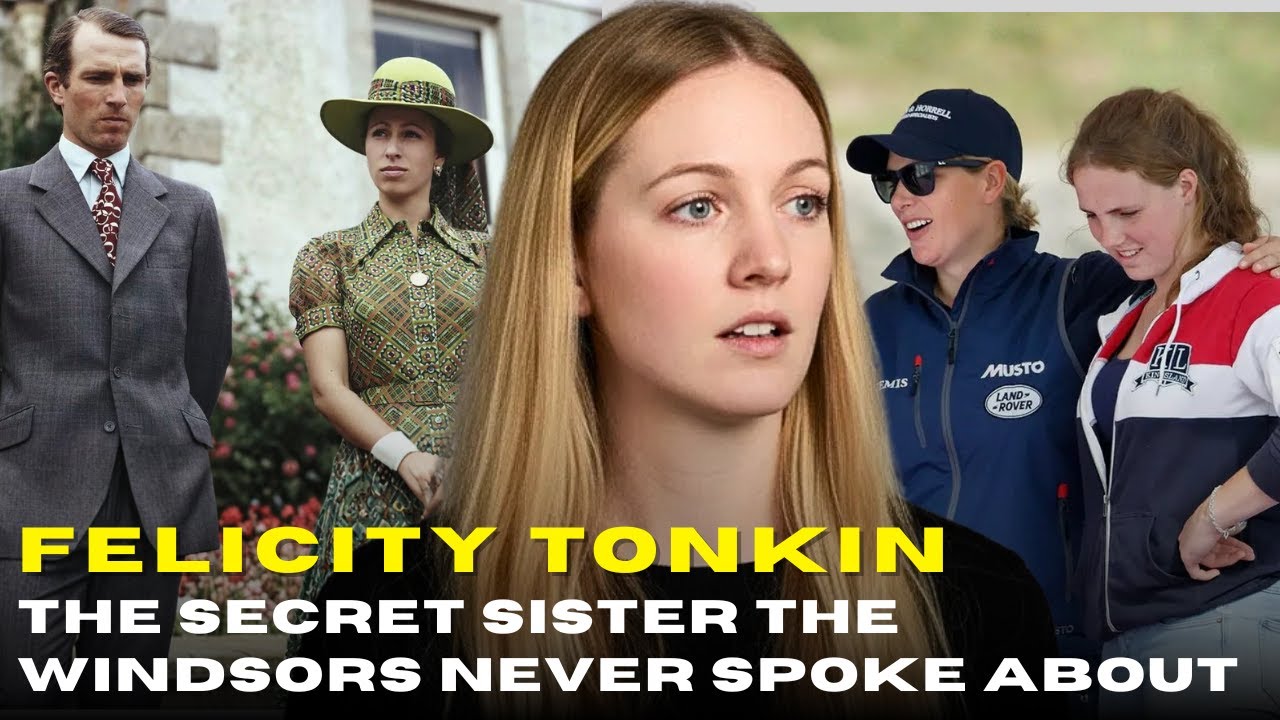
She competed locally in New Zealand, riding horses she trained herself. The physical resemblance between the sisters became uncanny: the same jaw, the same piercing blue eyes, the same mannerisms.
Felicity watched her sister’s rise from 11,000 miles away. Every newsstand, every television update, showed her own features on a woman living in a palace. Her mother occasionally spoke to the press, describing Felicity’s sadness not at the loss of money or titles, but at the loss of connection.
"She just wants to know her father," Heather said in a rare interview. "She just wants to know where she comes from."

The summer of 2012 brought the contrast into sharp focus. At the London Olympics, Zara Phillips won a team silver medal in eventing. The medal was presented by her mother, Princess Anne, who broke protocol to kiss her daughter on both cheeks.
It was a closed loop of royal pride. In New Zealand, Felicity watched the broadcast. By then, those close to her suggested, her reaction was one of adult acceptance.
She had stopped waiting for the phone to ring.
The sisters’ weddings highlighted the divide further. In July 2011, Zara married rugby star Mike Tindall in Edinburgh, a state occasion in all but name. Felicity was not invited.
Four years later, in March 2015, Felicity married Tristan Wade, a working polo player, on their property in Karaka, South Auckland. There were no crowds, no security, no press. The photos, kept private, showed a woman who looked exactly like a royal bride, minus the tiara.
By taking the name Wade, Felicity shed the label associated with the scandal and stepped fully into a new identity.
In 2017, Felicity and Tristan welcomed a son, James. The birth made Mark Phillips a grandfather again. In England, Phillips was frequently photographed with his official grandchildren, Zara’s daughters and Peter’s daughters, playing the doting patriarch.
In New Zealand, there was a little boy with Phillips blood who would likely never meet his grandfather. James Wade and Mia Tindall are first cousins, sharing a grandfather and a genetic legacy. In a normal family, they would play together at Christmas.
In the House of Windsor, they are strangers.
As the years passed, a shift in perspective emerged. For decades, Felicity had been viewed as the victim. But as the toxic reality of modern royal life became clearer, her position began to look less like an exile and more like an escape.
Zara Tindall lives in a fishbowl. Every outfit, every weight fluctuation, every public appearance is scrutinized. She is bound by protocol and expectation.

Felicity Wade wakes up on a farm in New Zealand, works with animals, and goes to the supermarket in sweatpants without fear of headlines. By refusing to acknowledge her, Mark Phillips inadvertently gave Felicity the greatest gift: the gift of irrelevance. He spared her the gilded cage.
Felicity built a successful career as an equine vet nurse, a job that requires intelligence, empathy, and grit. She stitched wounds, delivered foals, and comforted dying animals. She dealt with the messy, real side of life, far from the sterile pageantry of the palace.
In doing so, she proved that nobility is not a title you are born with, but a quality you demonstrate.
The most damning indictment of Mark Phillips is not that he had an affair. His true crime is that he maintained the rejection for 30 years. He had decades to pick up the phone, to get on a plane to Auckland, to say, "I’m sorry.
I want to know you." He never did. Even after his divorce from Anne, even after he raised another daughter with love, he continued to treat Felicity as a contractual liability rather than a human being.
He taught his legitimate children a terrible lesson: that family is conditional, that blood is only thicker than water if the birth certificate has the right stamp.
In the end, the balance of power tilts in an unexpected direction. Zara has the wealth and the fame, but she is public property. Felicity has something no amount of royal money can buy: anonymity.
She can make mistakes without them becoming front-page news. She can raise her son without the crushing weight of dynastic expectation. By being born outside the palace gates, she was spared the toxic radiation of royalty.
She had to earn her self-esteem rather than inherit it.
The House of Windsor tried to erase Felicity Tonkin. They tried to make her a footnote in a biography, a sordid detail to be glossed over. But in her quiet, dignified refusal to disappear, she became the most formidable character in the drama.
She took the hush money and used it to build a loud, vibrant, authentic life. She became a healer of animals, a mother, a wife, and a woman of substance. She proved that you don’t need a title to be noble, you don’t need a castle to have a home, and you don’t need a father to be a whole person.
She is the ghost who refused to haunt them, simply because she was too busy living a better life than they could ever offer.