On a freezing night in late November 2017, the fairy-tale myth of royal life collided with a wall of steel on a dark country road. Inside the twisted wreckage of a car lay Sophie Winkleman, her spine fractured in three places and her body broken. Miles away, her husband, Lord Frederick Windsor, waited by the phone.
In that harrowing moment, the curtain was pulled back to reveal a harsher truth: a royal title can guarantee a reservation at the Ritz, but it cannot prevent a car crash, and it cannot pay the medical bills that follow.
For Lord Frederick, this was the terrifying climax of a life lived inside a golden cage. Unlike his famous cousins, William and Harry, he exists in a foggy zone between privilege and instability. He is expected to bow like a prince but is forced to struggle like a commoner.
There is no state security protecting him, and no endless sovereign grant to soften the blow. As he faced the possibility of his wife's paralysis, he was not worrying about protocol. He was facing the brutal arithmetic of survival that most lesser-ranking royals hide behind velvet ropes.
To understand the depth of this crisis, one must first understand the crushing weight of history Frederick was born into. His father, Prince Michael of Kent, is a figure who embodies aristocracy almost to the point of caricature. With his carefully trimmed beard and soulful eyes, Prince Michael looks less like a member of the modern British royal family and more like a Caesar from a vanished empire.
This is no coincidence. Prince Michael is a first cousin of Queen Elizabeth II. Through his mother, Princess Marina of Greece and Denmark, and his grandmother, Grand Duchess Elena Vladimirovna of Russia, Romanov blood runs thick in his veins.
He is a direct descendant of Tsar Alexander II, speaks fluent Russian, and carries himself as though haunted by the ghost of the Winter Palace.
Frederick was not merely born into Windsor. He was born to be a vessel for Europe's lost grandeur. From the moment he began to walk, he was steeped in a sense of history that was both inspiring and overwhelming.
There is a particular psychological burden that comes with being a descendant of lost monarchies. You are raised with a sense of exile, a feeling that your true place is spiritual rather than material. You are taught that you are special, not because of what you own, but because of who you are.
Yet this lofty sense of dynastic importance collided with the harsh reality of the British parliamentary system. Unlike his cousins, Frederick's branch of the family was not supported by taxpayers. Prince Michael was the younger son of a younger son.
He received no income from the Civil List. He owned no vast country estate like Highgrove or Gatcombe Park. He had a title, a grace-and-favour apartment in Kensington Palace, and very little else.
This created a fundamental paradox in Frederick's childhood. He grew up playing in the gardens of Kensington Palace with Princes William and Harry. They attended the same kinds of schools and moved in the same social circles.
To the outside world, they were peers. But inside their homes, the atmosphere was different. In the Wales household, money was available in practically unlimited abundance.
In the Kent household, money was a constant, gnawing worry. The Kents had to work to secure their daily bread. They sat on boards, wrote books, and attended parties for fees.
They were working royals without an official job title or salary.
Imagine the cognitive dissonance young Frederick experienced. He was told he was a prince in every sense of the word. He was taught to bow and expect respect and reverence.
He lived in a palace. Yet he saw his parents constantly manoeuvring, always worrying about maintaining a lifestyle their bank balance could not support. He learned early that velvet curtains hide peeling paint behind them.
He learned that royalty is merely a performance, and in the Kent household, it was a show that had to be maintained for survival.
If Prince Michael represented the silent, brooding weight of history, Frederick's mother provided the noise, drama, and constant pressure. Baroness Marie-Christine von Reibnitz, known to the world as Princess Michael of Kent, is a woman of formidable intensity. Tall, blonde, cultured, and fiercely ambitious, she stormed into the British royal family in the 1970s like a hurricane.
She was Catholic, divorced, and foreign—a triple combination that left Buckingham Palace's courtiers in a state of shock. Dubbed "Princess Pushy" by the press, she was determined that her family's branch would not be ignored. She compensated for their lack of money with an excess of extravagance and hauteur.
She dressed more royally than the Queen herself. She spoke with a higher tone and greater authority.
For Frederick, being the son of Princess Michael meant being the son of an easy target for criticism. He grew up under the microscope of the British tabloid press. Every misstep his mother made—and there were many—reflected poorly on him.
When she was accused of racism, when she complained about their financial situation, when she quarrelled with other royals, Frederick was the collateral damage. He was the boy who had to go to school the next day and face the mockery of his classmates.
This dynamic creates a very specific kind of child: the observer and the diplomat. Frederick learned to be quiet. He learned to read the room.
While his mother dominated every room with her overpowering personality, Frederick retreated into himself. He developed a protective shell of irony and detachment. He became the calm one, the dutiful son who added no further chaos.
But beneath that calm exterior, a storm was brewing. The pressure to be perfect, to justify his existence, to live up to the Romanov blood while enduring the nasty headlines—it was immense.
The Kents were determined to give Frederick everything he needed to survive in their world. And in the British aristocracy, survival begins with education. Not just any education—it had to be the best.
Frederick was sent to Wetherby School, the preparatory school later famous for William and Harry. From there, he moved to Sunningdale and then to the hallowed halls of Eton College. At Eton, Frederick was surrounded by boys who would inherit thousands of acres, dukedoms, and vast fortunes.
He was Lord Frederick Windsor, but he was a lord who would have to work. This fact his parents drilled into him constantly. "We are not the heirs," was the unspoken motto of the Kent household.
You must have a career.
And Frederick was brilliant. He was not merely a royal coasting on average grades. He excelled in classics, literature, and music.
He was a gifted pianist. He possessed a sharp, dry intelligence that charmed his tutors. He won a place at Magdalen College, Oxford, one of the university's most intellectually rigorous colleges.
There, he studied classics, immersing himself in the tragedies of antiquity. It is tempting to wonder whether he saw echoes of his own family in the plays of Sophocles and Euripides: the hubris, the fall from grace, the inescapable hand of fate. He graduated with a very good degree, proving that his mind matched his title.
Theoretically, by the late 1990s, Frederick was the ideal young prince. Educated, handsome, titled, and cultured, he was a Renaissance man in the making. The world was at his feet.
But there is a dangerous gap between university and real life, a chasm in which many privileged young men lose their way. Frederick was about to fall straight into it.
The late 1990s and early 2000s in London were a period of extravagance and pleasure. It was the height of "Cool Britannia." The city was booming, nightclubs were full, and celebrity culture was exploding.
For a young man like Frederick, fresh out of Oxford, handsome, and bearing a famous surname, the city was a playground. But it was a playground full of traps. Frederick floundered.
He did not immediately embark on a prestigious career. Instead, he became a fixture of the social scene. He was photographed with socialites and models.
He was the eligible bachelor, the mysterious, brooding alternative to the blonde and bland Prince William. The press loved him, but for all the wrong reasons. They portrayed him as a party prince, a symbol of an idle aristocracy.
While the Queen was opening hospitals, Freddie Windsor was opening bottles of champagne.
The story took a darker turn in 1999. Frederick became involved in a cocaine scandal. He admitted to taking the drug.
It was a moment that shattered the pure image the Kent family had tried so hard to build. The reaction was vicious. "Shame!"
screamed the headlines. For Princess Michael, who had spent decades trying to prove her family's superiority, it was a crushing blow. But for Frederick, it was not merely a tabloid scandal.
It was a cry for help. It was a reckless act from a young man who felt trapped—trapped by the expectations of his lineage, trapped by his parents' financial anxiety, trapped by the absence of a clear purpose. What is a "lord" supposed to do in the 21st century?
If you do not open Parliament, and you are not rich enough to be a full-time man of leisure, what are you? You are merely a decorative historical anomaly.
The shame in that period was intense. Frederick retreated into himself. He felt his parents' disappointment and the Queen's judgment.
He stood at a crossroads. He could continue down the path of the dissolute royal, becoming tabloid fodder, trading on his title for free holidays, and ending up forgotten and in debt. Or he could do something radical.
He could get a job.
The transformation of Lord Frederick Windsor from party prince to professional is one of the most underappreciated trajectories in modern royal history. It was not a sudden conversion but a slow, deliberate struggle. He realised that the only way to escape the trap of his birth—high status with little money—was to earn his own.
He turned his back on his bohemian lifestyle and looked toward the City of London. He leveraged his intelligence to enter the world of banking. He started as a financial analyst.
He worked long hours. He learned the language of the market. He worked for J.
P. Morgan, the American banking giant. This was a significant choice.
Working for an American bank meant working in a culture that cared more about what you could do today than who your grandfather was.
This transformation was as psychological as it was professional. For the first time in his life, Frederick had an identity entirely his own. He was not Princess Michael's son.
He was Frederick Windsor, vice president. He earned a salary. He paid taxes.
He underwent performance reviews. This gave him stability and a sense of independence that the murky world of royalty never provided.
But the most important development in that period was not his career. It was his heart. In the mid-2000s, during his new life as a banker, Frederick met Sophie Winkleman.
On paper, it was an unusual match. Sophie was an actress, a profession the royal family has long viewed with suspicion. But Sophie was not a headline-chasing starlet.
She was the daughter of a publisher and a writer. She was educated at Cambridge University. She was highly intelligent, fiercely independent, and had a sharp sense of humour.
She was best known for playing "Big Suze" in the comedy series Peep Show, a character who was a posh, slightly naive aristocrat. The irony of her dating a real aristocrat was not lost on the British public.
Sophie was the antidote to the toxicity of Frederick's royal life. She did not care about protocol. She did not care about the Almanach de Gotha.
She cared about him. She saw past the title and the baggage, and saw the kind, intelligent, slightly wounded man at his core. Their relationship was discreet.
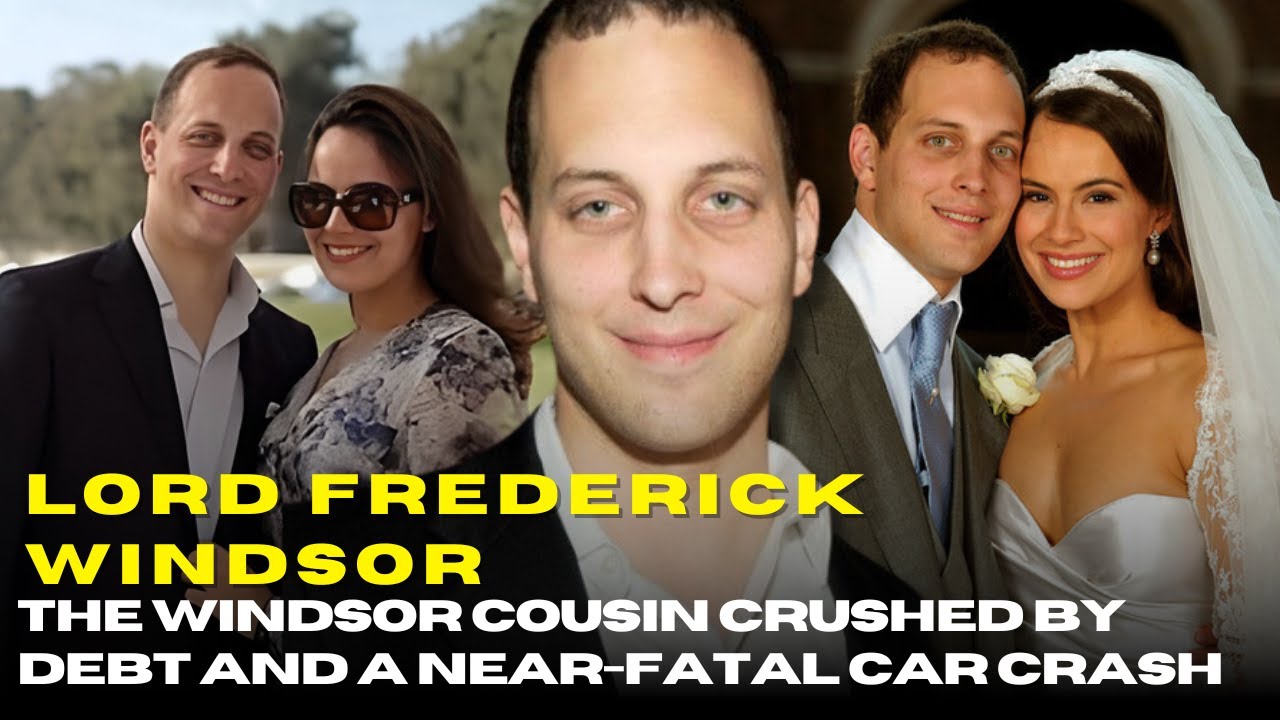
They were seen at literary festivals, quiet dinners, and garden walks. They represented a new kind of royal couple: ordinary people. When they announced their engagement in 2009, the royal establishment breathed a sigh of relief.
Frederick was not marrying a controversial figure. He was marrying a woman of substance.
The wedding took place at Hampton Court Palace. It was a grand affair. Sophie looked stunning in a dress by Rosa Couture, and the guest list was packed with royals.
But the atmosphere was different. It was not a formal state occasion. It was a celebration of two people who had found each other in the maze of London life.
Shortly after their wedding, the couple made a bold decision. They moved to Los Angeles. For a British royal, moving to LA usually signals a desire for fame, but for Frederick and Sophie, it was a practical step.
Sophie's acting career was on the rise, and Frederick, working for a global bank like J. P. Morgan, could transfer his skills to their California offices.
They lived in LA for several years, and by all accounts, they thrived. They loved the privacy they enjoyed. In Los Angeles, a lord is a curiosity, not a piece of constitutional furniture.
They could walk down the street without being recognised. For Frederick, this must have felt like true liberation. He was thousands of miles from the prying eyes of the British press and the suffocating expectations of Kensington Palace.
They had their first daughter, Maud Elizabeth Daphne Marina, in Los Angeles in 2013. Frederick was an actively involved father. He changed nappies.
He pushed the pram. He was living the life of a professional upper-middle-class dad.
By that time, the tabloid image of the man had long faded. He had become a man defined by responsibility, not reputation. He had the title.
He had the beautiful, successful wife. He had the healthy child. And he had privacy.
They returned to London in 2016, settling back into the rhythm of British life, but on their own terms. Sophie continued her work, landing a role in Danny Boyle's series Trust. Frederick continued his work in finance.
By late 2017, life was, if one dares use the dangerous word, perfect. They had welcomed their second daughter, Isabella Alexandra May. They were the golden couple of the lesser royals.
The couple who caused no drama. They had built a fortress of stability. They thought they had insulated themselves against chaos.
But life does not respect careful planning. Chaos is a deer that appears suddenly on a dark road. Chaos is a patch of black ice.
Chaos is a phone ringing in the middle of the night. And on a freezing evening in December 2017, chaos was coming for Lord Frederick Windsor.
November 2017. The English countryside was sinking into the damp, early winter darkness. On the vast, stately grounds of Audley End House, a Jacobean mansion in Essex, the cameras were rolling.
Sophie Winkleman was on set. The project was Trust, a high-profile drama directed by Danny Boyle. The casting irony was stunningly perfect.
The series told the story of the Getty family, another dynasty defined by obscene wealth, kidnapping, and the tragic corruption of the soul by money. Sophie, the wife of a Windsor, was playing a character in a drama about the perils of privilege.
On set, life is like being in a bubble. It was late on the night of 23 November when filming wrapped. Sophie got into the back of a car driven by a chauffeur for the journey home.
The road near Saffron Walden is narrow, a strip of asphalt cutting through the blackness of the desolate fields. Then a shape emerged from the darkness. A deer.
In a fraction of a second, the driver swerved instinctively. The car lost its grip on reality. It did not just skid.
It launched into the air. The vehicle was flung, a tonne of steel and glass becoming a projectile. It veered violently into the path of an oncoming car.
The collision was not a simple slide or bump. It was a head-on crash of devastating force.
In later interviews, Sophie described the sensation with horrifying clarity. She did not remember the screech of brakes. She remembered a huge, terrible bang.
That was the sound of her world breaking apart. Then came the heat. Trapped between twisted metal, amid the wreckage of what had once been a luxury car, Sophie Winkleman was conscious.
She looked down. The violence of the impact had been so severe that her stomach had been torn open. But the real horror was in her spine.
She could feel the bones of her back moving and grinding against each other. Lying there, bleeding, unable to move, Lady Frederick Windsor did not think about her title. She did not think about the Queen.
She thought with a calm, terrifying certainty: "I am dying." She felt a strange peace, a sensation she described as her soul rising. She was millimetres from paralysis.
Her spinal cord was being compressed by shattered bone. Had she moved the wrong way, had the paramedics not been precise, she would never walk again.
Seventy miles away in London, Lord Frederick Windsor was at home, perhaps preparing for the next day at the bank or checking on his sleeping daughters. The phone rang. There is a certain frequency of horror that accompanies a late-night phone call.
When Frederick answered, the news hit him with the force of a physical blow. His wife, an accident, life-threatening injuries. In that moment, the royal identity, the Romanov history, the Kent legacy, the lordship—all of it evaporated.
Suddenly, Frederick was just a man standing in his hallway, paralysed with terror because his wife, the mother of his children, might die before he reached her.
He rushed to Addenbrooke's Hospital in Cambridge. When he arrived, it was not the sterile, calm experience of a royal birth. It was the chaotic, bloody reality of a trauma unit.
Sophie was shattered. Her foot was completely broken. Her back was fractured in three places.
For three days, sensation did not return to the lower half of her body. Frederick sat by her bedside, watching the woman who was the dynamic centre of his life reduced to a body wired up to tubes and drips. The doctors were serious.
They were optimistic, but they were honest. The recovery would be long. The damage was deep.
Sophie survived. Miraculously, the paralysis was not permanent. After weeks of painful care at Addenbrooke's and then at Chelsea and Westminster Hospital, she was allowed home.
But coming home was not the end of the nightmare. It was the beginning of a new, harsh reality. The couple returned to their London residence.
But it was no longer a home. It had become a rehabilitation centre. Sophie could not walk.
She could not stand. She could not hold her two children. For a mother of two young girls, this was a special kind of torture.
Maud and Isabella would run towards her for a hug, and she would have to fend them off, trapped in her bed or on a chair, terrified that a cuddle would dislodge one of her vertebrae.
And here the golden cage of the lesser royals snapped shut. In the public imagination, when a royal falls ill, a battalion of nurses and nannies immediately surrounds them. But for Frederick and Sophie, there was no battalion.
There was only the two of them. Frederick faced an impossible equation. His wife needed round-the-clock care.
She needed help going to the bathroom, bringing her food, managing her pain medication. And his daughters needed a father to dress them, feed them, and take them to school while their mother was incapacitated. But Frederick had a manager at work.
He was a vice president at J. P. Morgan.
In the high-stakes world of finance, sympathy has a short shelf life. You can take a few days off for a family emergency, yes, but you cannot disappear for months to become a full-time nurse without consequences.
Financial panic set in quickly. They were a dual-income family living in one of the most expensive cities in the world. They had a mortgage.
They had school fees. They had living expenses that looked aristocratic on the surface but were upper-middle-class in structure. If Frederick stopped working to care for Sophie, his income would stop.
If Sophie could not act, her income would stop too. They were standing on the edge of a cliff. The title of "Lord" was useless here.
You cannot pay a mortgage with a coat of arms. You cannot barter a place in the line of succession for groceries.
For weeks, they struggled in silence. Frederick turned into a ghost. He would wake up, care for the children, care for his wife, try to manage his work remotely, and then collapse.
The stress was soul-destroying. He watched his wife suffer, dealt with his children's confusion, and stared at a bank balance bleeding money. There is an ingrained pride in the aristocracy, especially among the less wealthy relatives like the Kents.
You do not ask for help. You do not admit you are drowning. You maintain your composure.
You keep up appearances. Admitting you cannot afford a private nurse, or that you are worried about grocery bills, means admitting the failure of your class. So Frederick said nothing.
He cooked. He cleaned. He carried his wife, risking his own back.
He tried to be the hero in a story with no audience. He was fighting a war of attrition against costs and finances, and he was losing.
The house, once a place of laughter and warmth, turned into a pressure cooker. Sophie, trapped in her ailing body, watched her husband wither under the strain. She saw the exhaustion in his eyes, the grey creeping into his hair.
She realised he was breaking. She realised that the modern royal experiment—the idea that they could live without state support—was failing under the weight of an ordinary tragedy. They were isolated.
The senior royals—the Queen, Charles, William—lived in a world of palaces and retinues. They had no idea what it meant to worry about laundry or making dinner while recovering from a spinal fracture. For them, having staff was as natural as oxygen.
The idea that Frederick was doing all this alone would not have occurred to them unless they were told. But Frederick was not going to tell them. He was not going to beg.

He is the son of Princess Michael. He had spent his life trying to prove he was not a burden. He was not about to start now.
So, as Christmas 2017 approached, the lights in the Windsor household were dim. Outside, London was celebrating. Inside, a lord and his wife were facing the harshest winter of their lives.
Trapped in a physical and financial prison, they waited for a breaking point that seemed inevitable. They needed a miracle. Or at least, they needed a meal.
Christmas in the British royal family is a choreographed, intense display of wealth. The walk to church at Sandringham, the crowds lining the road, the tweed coats, the family portrait of a clan that looks safe, united, and invincible. Inside the great house, the fires blaze.
The tables groan under the weight of turkey and pudding, and champagne flows with the smooth rhythm of a dynasty that has not worried about a grocery bill since the 17th century. But in December 2017, a few miles from the centre of royal power, inside Lord Frederick Windsor's London home, there was no wealth. There was only a cold, grey silence of survival.
The contrast between the public image of a Windsor Christmas and the private reality of Frederick's life was never sharper. While his cousins William and Harry were probably arguing about who got the best room at Sandringham, Frederick was arguing with himself about how to get through the day without collapsing. He was exhausted—that kind of exhaustion that seeps into the bone marrow.
A deep, spiritual fatigue born of weeks of sleepless nights, helping an adult woman out of bed, dealing with the confusion of two small children, and staring at a financial spreadsheet that refused to balance. The instinct for stoicism, usually a source of pride, had turned against them. Their refusal to talk left them in painful isolation.
It created a wall of silence behind which tragedies fester. Frederick and Sophie were drowning, but they were doing it with their mouths shut, afraid that asking for help would mean admitting failure.
But the body has a limited amount of energy. By mid-December, the situation was untenable. Sophie was in agony, unable to move without assistance.
Frederick had become a shadow of his former self. His career at J. P.
Morgan was on hold, his income unstable, and his mental health deteriorating under the relentless pressure of being a nurse, a father, and a breadwinner all at once. The golden cage had become a pressure cooker, and the lid was about to blow off.
It is often said that the royal family is cold, an institution that prioritises duty over emotion. Historically, there is truth in this. But it is also a family, and families have information networks that move faster than any official memo.
Rumours began to circulate. A whisper here, a concern raised there. Perhaps it was a mutual friend, or perhaps Princess Michael herself, swallowing her pride, revealed the severity of the situation.
However the news arrived, it reached the office of the man at the top of the operational pyramid: Prince Charles.
At the time, Charles was still the Prince of Wales, the de facto CEO of the family. He is often portrayed as an eccentric, a man who talks to plants and obsesses over architecture. But those who know the inner workings of the palace know another side of him.
He is the patriarch of money and the overseer of finances. He understands, perhaps better than anyone else, the disparities between the rich and the poor within the family. He knew that while he lived in the splendour of Clarence House, supported by the vast revenues of the Duchy of Cornwall, his cousin was facing a crisis that could destroy him.
Charles did not send an official memo. He did not send a "get well soon" card. He did something that reveals the unique and specific mechanics of royal charity.
He sent a chef. It sounds simple, almost banal. A cook in the face of a broken back and financial ruin.
But in the context of the Windsor-Winkleman crisis, it was a stroke of practical genius. Charles ordered his staff at Clarence House to take charge of feeding the Windsor family. He ordered that fresh, nutritious meals be prepared daily in his own kitchens and delivered across London to Frederick and Sophie's door.
Let us pause to consider the psychological weight of this gesture. For Sophie, lying in bed unable to stand, the arrival of these meals was a lifeline. It meant she no longer had to worry about whether Frederick was eating.
It meant her children were getting healthy food. In interviews years later, she spoke of this intervention with a reverence usually reserved for spiritual experiences. "He was wonderful," she said.
She described how the Prince's staff embraced her family with total support. "It wasn't just the food." The message it carried was the most important part.
It was a message from the future king. You are not alone. You are under my protection.
But for Frederick, the emotions must have been more complex. To be in your forties, a vice president at a major bank, with a noble title, and then have to rely on your cousin's charity to feed your children—it is a humiliating experience. It is a stark reminder of your place in the hierarchy.
It reinforced the truth that no matter how hard he worked, no matter how independent he tried to be, he was still a satellite orbiting the senior royals. Nevertheless, Frederick swallowed his pride. He accepted the food boxes from the Clarence House kitchen with the grace of a man who knows he has no other choice.
He realised this was not the time for vanity. This was the time for survival.
Charles's intervention bought them time. It eased the immediate daily pressure on Frederick, allowing him to focus on two things: caring for his wife and saving his career. This moment in late 2017 is a perfect microcosm of the two-tier monarchy.
On one level, you have the Sovereign Grant, the official state money that funds the monarch and the heir. On the other level, you have the family charity fund—an informal, unplanned support system that keeps the lesser royals from absolute poverty. It is a system based on patronage, not policy.
It depends on the generosity of the head of the family. Had Charles been a crueller man, or had he decided the Kents needed to be taught a lesson, Frederick and Sophie would have faced bankruptcy. Their survival did not depend on the state.
It depended on the whim of a prince.
After the crisis was stabilised by Charles's intervention, the long, painful road to recovery began. This was not a movie montage where the patient heals and walks within a week. It was a slow, agonising struggle that stretched through the winter and into the spring of 2018.
Sophie Winkleman had to relearn how to control her body. The woman who once moved between film sets and glamorous dinner parties now celebrated the triumph of wiggling her toe. It was a humiliating reduction of the self, and Frederick was present for every painful step.
This period forged a new dynamic in their marriage. Before the accident, they were successful partners—the banker and the actress—living parallel lives of achievement. Now they became complementary halves.
Frederick became Sophie's physical strength. Sophie became Frederick's emotional anchor. As he carried her, washed her, and encouraged her, the last remnants of the "playboy prince" dissolved.
In his place stood a man of deep, quiet resilience. He returned to his job at J. P.
Morgan, but he returned a changed man. The ambition to climb the corporate ladder had been replaced by a desperate need for security. He was not working for a bonus to buy a sports car.
He was working to fill the savings account that the collapse had drained. He was working to ensure that if this ever happened again, they would not have to wait for charity from Clarence House.
The crash and its aftermath revealed a crack in the British royal family rarely seen by the public: the enormous gap between the working royals and the non-working royals. To the average person, a royal is a royal. They all live in palaces.
They all wear crowns. They all have money. But Frederick Windsor's story proves this is a lie.
There is a brutal class system within the family itself. At the top, you have the first-class royals—the King, William, and Kate. They have security details, travel budgets, and state-funded palaces.
They are the company's executives. Then you have the gig-economy royals, like the Kents and the Gloucesters, and now people like Beatrice and Eugenie. They carry the titles, but they have to pay for the housing they occupy.
They have to struggle to make a living. And as Frederick discovered, when disaster strikes, they have no safety net except the charity of their wealthier relatives.
This reality makes Frederick's struggle relatable to the middle class in a way that William's life can never be. William will never worry about a mortgage. William will never worry about losing his job if he takes leave to care for Kate.
But Frederick did. He lived the same anxiety that millions of Britons face: the fear that one bad event—a crash, a redundancy, a medical diagnosis—could bring everything crashing down like a house of cards.
By spring 2018, Sophie was walking again. The steps were hesitant, painful, and slow, but she was on her feet. The first time she walked into a room without assistance was a victory greater than any red-carpet appearance.
The family began to emerge from their fortress. But they emerged different. The gloss had faded.
They had faced their own mortality and the fragility of their financial position, which cured them of any remaining aristocratic arrogance. They made a conscious decision to stay further away from the spotlight. They appeared at mandatory family events—Trooping the Colour, weddings—but they stayed at the back.
They did not push to the front of the balcony. They did not give interviews to Hello! magazine about their perfect life.
They knew their life was not perfect. It was hard-won.
Frederick, in particular, seemed to embrace a new role: the invisible man. He became the complete opposite of Harry. While his cousin Harry was beginning his loud, public break from the family, complaining about the traps of royal life, Frederick was quietly getting on with it.
He took the Tube to work. He picked his children up from school. He did not write a memoir.
He did not appear on Oprah. He simply went to his office, did his job, and came home to the wife he had almost lost. This quietness was not weakness.
It was strength. It was the silence of a man who knows he has nothing left to prove. He had saved his family.
He had weathered the storm. He had accepted his cousin's help and survived the humiliation of it. He had held firm.
But just as things were calming down, the royal family was about to enter a period of unprecedented turmoil. 2018 brought weddings, but it also brought the first tremors of the "Megxit" earthquake. In the midst of this national drama, Lord Frederick Windsor found himself in a unique position.
A man who understands both the palace trap and the terror of the real world, standing silently between the two factions. He was a living witness that freedom—financial and personal—comes at a very steep price. And yet, after paying that price in sweat and sleepless nights, Frederick emerged from the fire unbroken.
While Harry signed multi-million-dollar deals with Netflix and Spotify to tell the world how hard his life was, his cousin Lord Frederick Windsor was quietly living the reality Harry only theorised about. Frederick was financially independent. He had escaped the goldfish bowl, and he had done it without a single Oprah interview.
The contrast between the two cousins, both born into the same family and both scarred by the public eye, was never more stark. Harry chose the path of the celebrity victim, profiting from his grievances. Frederick chose the path of the stoic survivor, containing his struggles within himself.
While Harry demanded state-funded security, Frederick took the Tube to his office at J. P. Morgan, sitting shoulder to shoulder with commuters reading about his family's dramas in the free newspapers.
For the generation of royal watchers over 50, the demographic that values duty over drama, Frederick quietly became a figure of respect. He was the anti-Harry. He embodied the old-school virtue of simply getting on with it.
There were no complaints about the press, even though the press had savaged his mother for decades. There were no complaints about money, even though he had nearly gone bankrupt caring for his wife. He simply put on his suit, carried his briefcase, and went to work.
This period cemented Frederick's identity. He was no longer defined by his rebellious youth or his mother's scandals. He was defined by his ordinariness.

In a family of peacocks, he became the dove. And in the chaotic ecosystem of the 21st-century monarchy, the dove was the only bird that knew how to navigate the storm without being blown away.
To understand the nature of Frederick's life in those years, one must strip away all the glamour. Being a vice president at J. P.
Morgan is certainly a prestigious job, but it is not a sign of obscene wealth. It is hard work. It involves early mornings, late nights, high-pressure decisions, and the constant anxiety of market fluctuations.
In the City of London, a title might get you a lunch meeting, but it will not close a deal. In fact, it can be a hindrance. There is a suspicion in the financial world of velvet-clad aristocrats who are hired for their connections.
Frederick had to work twice as hard to prove he was not just a royal name on a letterhead. He had to be technically proficient. He had to generate revenue.
This daily grind was the crucible that refined him. It stripped away the last traces of entitlement. When you are accountable to a compliance officer or a regional manager, you cannot trade on your rank.
You are just an employee.
This experience gave Frederick a perspective that his cousin William, for all his good intentions, will never truly have. Frederick knows what it feels like to fear redundancy. He knows what it feels like to wait for a bonus to pay the school fees.
He knows the ordinary pressures of the middle class. And at home, the glamour was absent too. Sophie, after her recovery, returned to work with determination.
She took roles in series and other productions. They were a modern, dual-income couple, balancing childcare, school runs, and the demands of a busy household. There is a deep dignity in this ordinary, daily life.
It is the dignity of self-reliance. When Frederick took his daughter to school holding her hand, he was not doing it for the cameras. He was doing it because it was his turn that day.
The golden cage had been replaced by an ordinary house and a mortgage. And for Frederick, that seemed like a trade he was happy to make. He had found peace in ordinary life.
But time is a merciless thief. As Frederick and Sophie settled into their lives, the generation before them began to fade. His parents, Prince and Princess Michael, were ageing.
The princess who once dominated the social scene was becoming frail. In 2021, she contracted COVID-19 and suffered severe blood clots, a health threat that mirrored the fragility Frederick had seen in his wife. The great, disruptive energy of the Kent household was dimming.
The controversy over the "Blackamoor" brooch in 2017 was their last major headline, a flash of their old notoriety. But it was followed by a retreat into silence. Frederick found himself taking on a new role: the quiet head of the family.
With his father in his eighties and his mother's health declining, the weight of the Kent legacy began to shift onto his shoulders. He had to be the responsible one. He had to ensure that the transition, whenever it came, was handled with the discretion his parents had often lacked.
Then, in September 2022, the last cord connecting him to stability was cut. Queen Elizabeth II died. For the nation, it was the end of an era.
For Frederick, it was the loss of his patroness. The Queen had always had a special fondness for the Kent family. She had paid the rent on their apartment when the scandal broke.
She had invited them for Christmas. She understood the old rules of family loyalty. With King Charles III on the throne, the atmosphere changed.
Charles is a pragmatist. His vision is of a slimmed-down monarchy. He focuses on the core team: William, Kate, and their children.
The outer-circle royals—the cousins and the second sons—are not part of the business plan. They are family, yes, but they are left to their own devices. The Queen's death signalled the final dismantling of the old aristocratic safety net.
The message from the new reign was clear: sink or swim on your own. Fortunately, Frederick had already learned to swim. But the waters were getting colder.
If 2017 was the physical collapse that nearly destroyed Frederick's world, 2024 was the psychological collapse that broke his family's heart. Frederick has a younger sister, Lady Gabriella Windsor. Ella, as she is known, was the golden child—beautiful, intelligent, an Oxford graduate, and free of the scandals that had dogged her brother's youth.
In 2019, she married Thomas Kingston, a financier and former hostage negotiator. He was handsome, charming, and successful. He was, by all accounts, a perfect addition to the family.
He was a mirror of Frederick: another City man, another financier, another stabilising force in the chaotic orbit of the Kent family. Frederick and Thomas were close. They were brothers-in-law, but they were also peers.
They understood the unique pressure of marrying into, or being born into, this strange family. They were the men in grey suits standing behind the women in tiaras.
On 25 February 2024, that mirror shattered. Thomas Kingston was found dead at his parents' home in the Cotswolds. A weapon was found at the scene.
It was suicide. The shock was seismic. Thomas was 45.
He was healthy, wealthy, and seemed happy. There were no public warning signs. For Frederick, this tragedy must have been a devastating re-traumatisation.
Seven years earlier, he had sat by a hospital bed, terrified of losing his partner. He had begged God for a second chance. And he had been granted one.
Now, he watched his beloved sister face the same scenario he had survived, but with a definitive, non-negotiable ending. He saw Ella become a widow at 42. He saw the devastation in his parents' eyes—the once-haughty princess reduced to a grieving mother, her arrogance dissolved by the pure pain of watching her daughter's life shatter.
But this time, Frederick was not the one needing help. He was the one providing it. In the days following the death, Frederick became the pillar.
He was the one standing by his sister. At the funeral, he was the picture of stoic calm. His face, etched with the lines of a man who has seen too much of life's dark side, was a mask of resolve.
He did not speak to the press. He did not post on social media. He simply stood there, a silent guardian, protecting his family's grief.
Thomas Kingston's death forced Frederick to confront the darkest truth of the Kent family curse. It seemed that tragedy was woven into their DNA. From his grandfather's death in a plane crash in 1942, to his mother's traumatic childhood, to the near-fatal accident that almost claimed his wife, and now this.
It felt as though the universe was demanding the Kent family pay a tax for their titles. There is a complex psychological state known as "survivor's guilt." Why did Sophie survive the crash while Thomas did not survive his demons?
Why was Frederick allowed to keep his happy ending while his sister was thrown into a nightmare? In the aftermath of February 2024, Frederick's quiet routine—the bank job, the school runs—must have felt both precious and precarious. He knew better than anyone how quickly it could all vanish.
Every time he kissed Sophie goodbye in the morning, every time he hugged his daughters, it must have been accompanied by a renewed intensity, a desperate gratitude.
He had learned the lesson that Harry seemed to have missed. Peace does not lie in fighting the institution or in fleeing from it. Peace lies in the small, boring, beautiful moments of ordinary survival.
It lies in the ability to pay a bill, walk a dog, or hold a hand. Frederick Windsor had become the elder realist of the royal family. He had witnessed the car crash.
He had witnessed the suicide. He had witnessed the bank balance hitting zero. And through it all, he kept going.
As spring 2024 turned to summer, the royal family faced more shocks. The King and the Princess of Wales were diagnosed with cancer. The institution was reeling.
But in the background, Lord Frederick was steady and silent. He was no longer the party prince. He was the spare heir who had learned how to become a whole person.
But the story does not end with a funeral. It ends with a question. In a world where the monarchy is shrinking, where the magic is fading, and where tragedy accumulates, what is the future for men like Frederick?
Is he a relic of a bygone era? Or is he the only model of royalty that can survive the 21st century? The answer to that question will not be found in the theoretical debates of royal commentators, but in the stark, practical resolution of the tragedy that had just befallen them.
As the funeral hysteria subsided and the press moved on to the next scandal, Frederick was left to deal with the wreckage of his sister's life. And here, in the quiet after the inquest, the final piece of his evolution fell into place.
By winter 2024, the shock of Thomas Kingston's death had turned into cold bureaucratic reality. The inquest held in Gloucestershire delivered the final, painful piece of the puzzle. It was not a story of a man hiding a secret life or crushing debts.
It was a tragedy involving modern medicine. While the coroner recorded a verdict of suicide, the inquest heard harrowing evidence that the act was likely impulsive, possibly the result of an adverse reaction to medication prescribed for work-related stress. These details stripped the tragedy of any noble meaning, leaving only the cruel randomness of chemistry.
A pill taken to help a man sleep had ended his life. It was another reminder—after his own drug scandal in the 1990s, after Sophie's bizarre deer accident—that the line between having everything and losing everything is terrifyingly thin.
But this time, the Kent family did not retreat into their old, haughty silence. Lady Gabriella spoke out, showing a courage that astonished the press. She warned the public about the side effects of medication.
Beside her, Frederick stood silently, supporting this new campaign. In the months that followed, Lord Frederick Windsor underwent a subtle but significant transformation. For years, he had avoided the charity circuit that royals often use to justify their existence.
But his brother-in-law's death changed the calculus. Frederick began working with James' Place, a charity dedicated to saving the lives of men in suicidal crisis. It was not a glamorous patronage.
It was hard, necessary work. He was a man who had seen the horror of male suicide up close, and he was using his platform to say: "I know. I have been there."
That was the final step in his transformation. The party prince, stumbling out of nightclubs, had become a middle-aged father, quietly using his grief to help strangers. He was not doing it for a Netflix documentary.
He was not doing it for a knighthood. He was doing it because he had looked into the eyes of his widowed sister and realised that titles cannot stop bullets. But perhaps empathy can.
He represents a dignity that is rapidly disappearing from public life: the dignity of silence. In an age where everyone is fighting to be a victim, where every trauma is monetised and every family dispute is broadcast on a podcast, Frederick chose the radical path of privacy. He proved that you can be royal and normal at the same time.
You can be special and still suffer.
Lord Frederick Windsor will probably never get a statue. He will never be king. History books will perhaps place him in the margins of chapters about his more famous relatives.
But if you look closely at his life, you will see a story far more compelling than the fairy tales we are fed. It is the story of a boy born inside a museum who walked out to discover the real world, only to find that the real world is a dangerous, harsh place. It is the story of a man humiliated by a car crash, insulted by his material circumstances, and heartbroken by the suicide of a loved one.
Yet he refused to let those things define him.
Today, if you pass by the J. P. Morgan offices in London, you might see a tall, dark-haired man in a grey suit walking towards the Tube station.
He looks like any other banker, worried about the markets, checking his phone for a message from his wife. You would not know his great-grandfather was a king. You would not know his father is a prince.
And that is precisely the point. Lord Frederick Windsor spent the first half of his life trying to live up to his name. He spent the second half proving he did not need it.
He is no longer the bankrupt royal. He is simply Frederick. And in the end, that is the noblest title of all.