On the evening of August 27, 1988, nineteen-year-old Russell Hol left his family’s home on Birch Street in Clearwater, British Columbia, and drove north in his 1981 Ford pickup toward Tonqua Lake, where he and four friends from Clearwater Secondary had planned a final bonfire before they scattered in different directions—one to trade school, one to the Alberta oil patch, one to a logging camp north of Prince George. Russell had spent the summer working at his uncle’s lumber yard and was set to begin a trades program at Thompson Rivers University in January. He played a battered secondhand Yamaha guitar, badly by most measures but with enough sincerity that people did not mind. Before leaving, he told his fifteen-year-old sister Paula she could not come along.
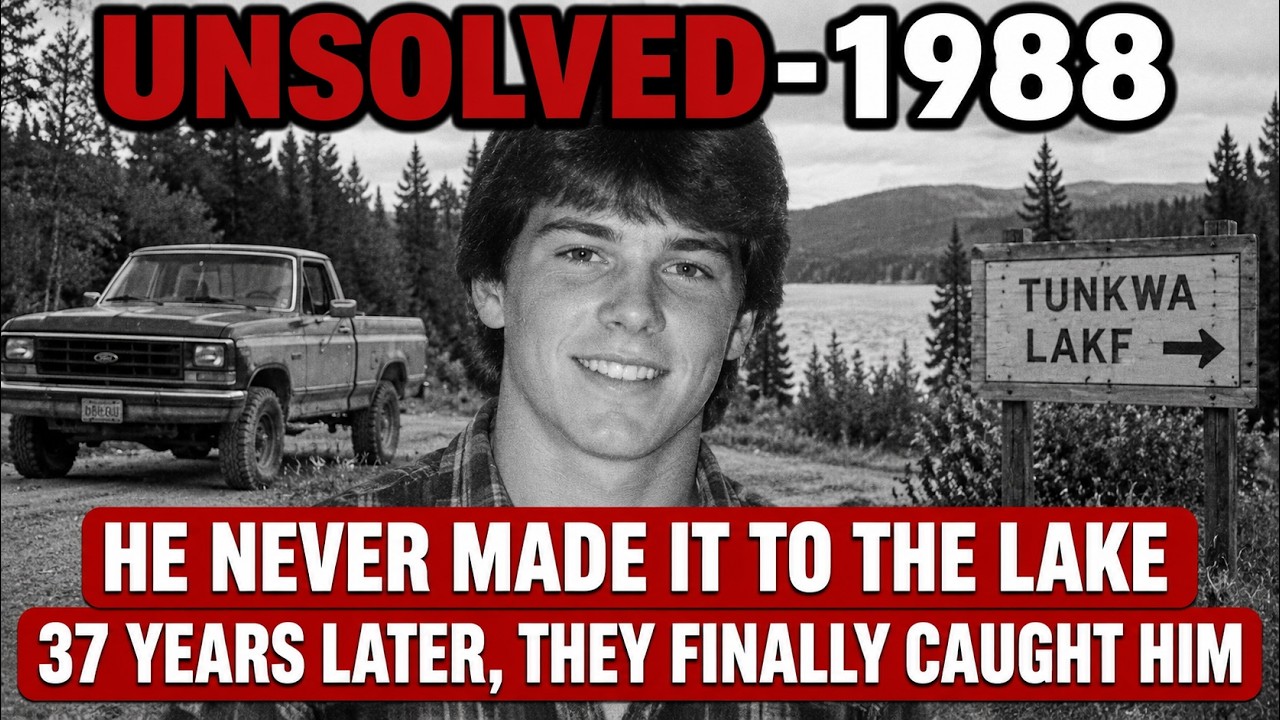
Maybe next time, he said. That was the last full conversation they ever had. He waved at his mother through the kitchen window as he backed out of the driveway. He never arrived at the lake.
His friends waited until nearly eleven, then called his house from a pay phone. By one in the morning, his mother had contacted the RCMP. The following dawn, a logging truck driver spotted Russell’s pickup on the gravel shoulder of the highway near the old Decker Road junction, about four kilometers from Marawn’s General and Gas, a local store where Russell had worked part-time the previous summer. The engine was cold.
The driver’s door was unlocked. The keys were still in the ignition. His wallet lay on the seat. Beside it sat a cassette tape, a Tragically Hip album still in its case, ready to be played.
There was no blood, no sign of mechanical failure, nothing to suggest he had run or walked away. Something had stopped him on that highway and taken him from his truck without leaving enough behind to explain itself. Constable Ray Foss of the Clearwater RCMP detachment was the first officer on scene. Over the following seventy-two hours, searchers covered the highway shoulder, the treeline on both sides of the road, and the drainage ditches and creek beds within two kilometers of the truck.
A cadaver dog was brought in from Kamloops. They found nothing—no clothing, no Russell. On the second day, a cigarette butt was recovered on the gravel shoulder about thirty meters south of the truck. It was a brand Russell was not known to smoke.
A single dark hair was also lifted from the passenger-side door handle. It was not Russell’s color or length. Both items were bagged and logged under case file E883271 and sent to the RCMP forensic lab in Vancouver. In 1988, forensic DNA analysis was in its earliest infancy.
The hair could be examined for basic physical characteristics, but it could not be profiled. The lab noted it was inconsistent with the victim’s known hair and returned it to the evidence file, where it sat for the next thirty-six years. The case went cold. Foss worked it for four months before caseload pressure and the absence of new evidence forced a reduction in active investigative hours.
A secondary review in the spring of 1989 came up empty. Russell’s name remained in federal missing persons databases. The community searched on its own through September and October of 1988, covering territory the RCMP had not reached. Flyers went up.
Gary Hol, Russell’s father, posted a five-thousand-dollar reward he did not have, which remained on the corkboard inside Marawn’s General and Gas for two full years before the store’s owner, Dennis Marshand, quietly took it down, saying he needed the space. In 1997, nine years after Russell disappeared, a hunter working the backcountry south of the Decker Road junction took his dog into the treeline in search of grouse and found partial human remains in a shallow depression approximately eighty meters from the highway. Dental records confirmed they belonged to Russell Hol. The manner of death was ruled homicide.
He had not walked into those trees. He had been taken there. Russell was buried in the Clearwater Municipal Cemetery in October of 1997. Paula planted a mountain ash beside the stone the following spring.
She never let the case become background. From the time she was nineteen until she was fifty-two, she called the RCMP every August 27th, the anniversary of her brother’s disappearance. She kept a binder with every detective who had touched the file, every document she had been permitted to see, every newspaper clipping, every tip that had gone nowhere. By 2015, it ran to three volumes.
The hair sample from Russell’s passenger door handle remained in storage at the RCMP E Division property facility in Vancouver. It was reviewed twice during cold case audits, in 2001 and 2014, and both times returned as forensically inconclusive with the technology then available. In 2022, a systematic review of BC cold cases with preserved biological evidence flagged E883271 for reprocessing under the RCMP’s expanded cold case DNA initiative. The hair was extracted and subjected to next-generation sequencing, which produced a partial nuclear DNA profile from the follicle root—something that had been impossible in 1988.
That profile was submitted to a genealogical database in January 2024. Sergeant Priya Sandu, a methodical six-year veteran of the RCMP E Division cold case team, read the resulting genealogical analysis twice before calling her supervisor. The process had mapped genetic matches outward from the closest relatives in an ancestry database toward the contributor, building an identity from biology alone. The family tree that emerged had roots in Quebec and the prairies, with branches that had migrated west in the post-war decades.
One branch led to a male individual of the right age. Someone who would have been forty-four years old in August 1988. Someone who had been living within forty kilometers of the Decker Road junction for his entire adult life. Sandu pulled the name and compared it to the original case file.
She found a witness log from October 1988 containing an eleven-minute interview with a cooperative general store owner who had confirmed he saw Russell Hol’s truck pass his store heading north that evening, but had not seen it return. His name was Dennis Allen Marshand. Sandu drove to Clearwater in March 2024, three days after confirming the genealogical match. She did not call ahead.
She located Marshand at his house, seventy-seven years old, in his garden, wearing rubber boots and pulling dead growth from last year’s tomato plants. He looked at her identification. His face did not change. It went very still.
He provided a cheek swab without protest. Nine days later, the results came back. The nuclear DNA extracted from the hair on Russell Hol’s passenger door handle matched Dennis Allen Marshand. The match was conclusive.
He was arrested at his home on April 11, 2024—a clear spring morning, thirty-six years, seven months, and fifteen days after a nineteen-year-old boy in a noisy Ford pickup drove north toward a bonfire he never reached. The arrest moved through Clearwater the way seismic events move through small communities. Men who had known Marshand for forty years stood in their kitchens trying to arrange a new understanding of a man they had believed they understood completely. He had attended community events.
He had sponsored the minor hockey team. He had given people credit when money was short. His son Trevor closed the store the afternoon of the arrest and did not reopen it for two weeks. Paula Hol was in Kamloops when Sandu called.
She pulled her car to the side of the road. Sandu told her they had made an arrest. She told her the name. Paula had been in Marshand’s store hundreds of times as a child.
She had bought penny candy from the jar on the counter while her brother worked weekend morning shifts. She asked Sandu one question: did he know Russell well enough to know where he was going that night? Sandu told her yes. Paula sat in her car for a while, then called her mother.
Carol Hol was eighty years old. She had outlived her husband, outlived the active investigation, and had lived to bury her son twice—once in grief, once in the ground. When Paula told her they had a name, Carol was silent so long that Paula asked if she was still there. Carol said, I’m here.
I want to know his name. Paula told her. Carol said, I know that name. Dennis Allen Marshand was charged with first-degree murder in April 2024.
His defense raised procedural challenges related to the genealogical DNA evidence and the chain of custody of the 1988 hair sample. All were dismissed. Facing a forensic case he could not contest, he accepted a guilty plea in November 2024 and was sentenced to life imprisonment with no eligibility for parole for twenty-five years. At seventy-seven, the mathematics of that sentence are what they are.
He made a brief statement before sentencing. He said he was sorry. He did not say for what specifically, or to whom. The judge noted that the victim’s family had waited thirty-six years for this proceeding.
Paula Hol stood up and read from a handwritten page she had prepared the night before. She described her brother in the present tense—not because she forgot he was gone, but because she had decided that what Russell Hol was did not end on a highway in 1988. She read the part about the guitar. She read the part about the twelve-dollar Yamaha and the four chords he played with feeling.
She read the part about building things that last. Then she folded the page, sat down, and did not look at Dennis Marshand. Russell Hol was nineteen years old. He was going to build things.
He had a guitar, a sister who adored him, and a noisy truck everyone in Clearwater could hear coming from half a block away. He had a bonfire to get to and friends who waited for him. When his name was finally spoken in that courtroom alongside the name of the man responsible, his sister stood up and refused to speak of him as though he were only what had been done to him. Justice found Russell Hol after thirty-seven years.
It came from a single hair caught on a door handle, and from a sister who made a phone call every August 27th for thirty-two years.