During the German occupation of France in World War II, the French Resistance waged a hidden war not only against the occupiers but also against the French men and women who collaborated with them. These collaborators knew the risks. The Resistance hunted informers, struck at police officers, and executed those who helped the Germans consolidate their hold on the country. Women accused of relationships with German soldiers had their heads shaved in public and were beaten in the streets.
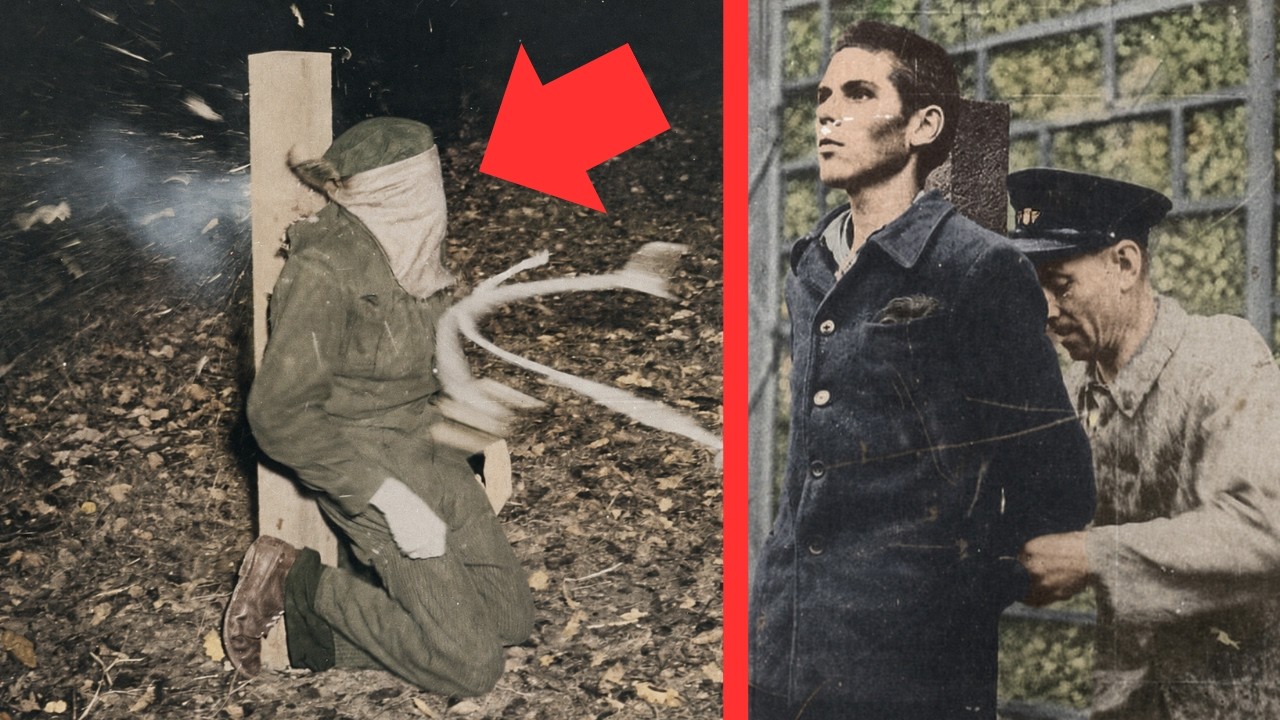
Across French towns and cities, the Resistance carried out a brutal campaign of purification, rounding up enemies and shooting them before crowds of thousands. The question was not whether collaborators would face punishment, but how far that punishment would go. The reasons for executing French collaborators were many and varied. The Resistance viewed collaboration as treason and a direct threat to the struggle against German occupation.
When the Allies landed on the beaches of Normandy on June 6, 1944, nobody knew whether the invasion would succeed. Some believed the Germans would push them back into the sea. In that uncertain moment, the Resistance understood that striking at its enemies was as much about confronting the danger as it was about revenge. The executions were not all carried out under the same circumstances.
Some collaborators were deliberately killed or assassinated during the occupation simply because they were known to be helping the occupiers. Others were executed after quick show trials or with no legal basis at all, swept up in chaotic acts of vengeance. After France fell in June 1940, the country was divided between the German-occupied zone and the authoritarian Vichy regime led by Marshal Philippe Pétain. Vichy France collaborated with the Nazis, imposing oppressive laws on the population and helping to persecute and deport many people.
Collaboration was not limited to government officials and powerful politicians. French police officers, members of the militia, informers, journalists, and sometimes ordinary civilians worked directly with the occupation authorities. For Resistance groups, informers posed an especially grave danger. A single informer could reveal the names of Resistance members, identify safe houses, or expose weapons caches, radio operators, and escape routes.
The consequences could include torture, execution, or deportation to concentration camps. So Resistance organizations sometimes ordered the killing of suspected informers before they could betray more people. From the Resistance perspective, these killings were not merely punishments; they were meant to protect secret networks from destruction. Some collaborators actively hunted Resistance members.
The Milice, a paramilitary organization created by the Vichy government and Prime Minister Pierre Laval, was known for particular brutality. Its members arrested Resistance fighters, tortured prisoners, and took part in executions. They were the men who actually pulled the trigger to kill Resistance members. Resistance fighters did not regard the Milice as mere political opponents but as armed enemies helping the Germans suppress the liberation of France from Nazi tyranny.
As a result, militia officers and other armed collaborators became important targets for assassination squads. Killing prominent collaborators also served as a warning. Resistance organizations wanted to demonstrate that collaboration with the occupiers carried severe consequences. The assassination of an informer, a police officer, or an openly pro-German official could discourage others from helping the Germans.
It could also reassure the French people that the occupation authorities and their French supporters were not above accountability. Some attacks were deliberately carried out to weaken the occupation machine itself. French police officers, railway officials, and local administrators supplied German soldiers with information, guarded strategic sites, and helped arrest the persecuted and Resistance members alike. When collaborators played an operational role in the occupation, they were, in the eyes of the Resistance, simply military targets, and their deaths were part of the armed struggle to liberate France.
Beneath all this lay a vast reservoir of anger built up during four years of occupation. The French suffered from food shortages, forced labor, deportation, and brutal German reprisals. For every German soldier killed by Resistance activity, hundreds of Frenchmen were often executed in response. When the German forces withdrew, that fury was frequently directed against those who had benefited from the occupation or supported it.
The Resistance saw this as vengeance for their friends and relatives who had been arrested, tortured, deported, or killed. There was never a single standard of justice. France contained many Resistance movements with different beliefs, ideas, and levels of discipline. Some groups carefully investigated collaboration charges and required senior approval before carrying out an execution.
Secret courts were sometimes held in hiding to discuss death sentences. But many other groups, especially from 1944 onward and under desperate conditions, shot and executed people without asking any questions. This was linked to the idea of savage purge, where people were shot as soon as they were captured. Violence against collaborators intensified with the Allied invasion of Normandy.
The criminal authority of the state began to collapse, and the Vichy regime was falling apart as well. Nobody was fully in control. Charles de Gaulle issued his orders from his safe haven in Britain, but formal courts were not available. During that period, thousands were shot without the usual judicial procedures.
Resistance units rounded up large numbers of people, and some were killed by local armed forces or angry civilians. Some of those executed had undoubtedly committed serious crimes, such as reporting Resistance members, torturing prisoners, or serving in armed collaborationist organizations. Others were killed on evidence that was, at best, flimsy. Some Resistance members also used the armed campaign to settle personal scores.
It is believed that in these executions, somewhere between eight thousand and ten thousand people were killed without any questions being asked. One example was the execution of militia members in the city of Grenoble. An eyewitness who saw the execution directly described the scene. The crowd rushed forward to watch as if attending a circus, laughing and cheering loudly, racing to surround the execution sites.
People pushed each other to get a good view. There was furious anger that day, and those who had suffered under the occupation wanted to see justice carried out. Six men were led to their execution site where wooden posts had been driven into the ground. Resistance officers approached the men and tied them to the posts by their arms and legs so they could not move.
The six condemned men walked toward the execution posts without begging or resisting, then turned and leaned their backs against them. The youngest prisoner was only nineteen years old, and the oldest was twenty-six. The two youngest were tied to the posts at the ends. They were not heroes by any means.
They had opposed France, and some were still firing their weapons on the day of liberation. But nobody denied that they too would face death. They did not kneel, they did not sigh, and they did not avoid the rifle muzzles of the firing squad. Particular attention was paid to the nineteen-year-old boy.
He was looking at the sky above the firing squad. But he would never feel the rain again, and he would never see the beautiful Alps above the city. He stood there until the firing squad suddenly opened fire without any signal. The bullets seemed to pierce the chest and heart of the dead man, though the eyewitness was not certain.
The shooting was carried out in two volleys. The boy leaned forward and then fell backward onto the post, never to look at the sky again. Not everyone accused of collaboration was executed. Marshal Philippe Pétain survived execution, perhaps because of his advanced age, and many others were sentenced to prison instead.
Women had their heads publicly shaved for allegedly having relationships with Germans. But the execution of French collaborators had many different causes. It was a defensive measure aimed at protecting Resistance networks, an attempt to punish traitors whose guilt had been established, and a means of intimidating others who might consider helping the Germans. During the liberation, thousands were led through French cities and towns and shot before large crowds.
The violence reflected both the desperation of the occupation and the determination of the Resistance to settle accounts before the war was truly over.