In August 1969, a dairy farm in Bethel, New York, became the site of one of the most defining cultural moments of the twentieth century. What began as a planned paid concert for an expected crowd of fifty thousand turned into a free festival attended by nearly half a million young people, a gathering that would forever change how America understood its youth, its music, and its counterculture. The idea for Woodstock originated with four young entrepreneurs in their twenties: John Roberts, Joel Rosenman, Artie Kornfeld, and Michael Lang. Lang had already organized a successful music festival in Miami, Kornfeld was the youngest vice president ever at Capitol Records, and Roberts and Rosenman were businessmen from New York City.
Together they formed Woodstock Ventures with a single goal: to stage the largest music festival the world had ever seen. The first major breakthrough came when Creedence Clearwater Revival agreed to perform, lending credibility and drawing other major acts to the lineup. But securing a venue proved more difficult than securing bands. The town of Wallkill, New York, initially agreed to host the event, but locals worried about an influx of counterculture youth during a time of anti-war protests and social upheaval.
With only a month to go, the festival had no home. A local dairy farmer named Max Yasgur stepped in. He agreed to lease part of his six-hundred-acre farm in the Catskill Mountains to the organizers. The location was beautiful, but the infrastructure was far from ready.
Ticket booths were unfinished, entrances were still under construction, and the fences designed to keep the event organized were not fulfilling their purpose. People arrived in enormous numbers days before the music was scheduled to begin, jamming roads and abandoning cars to walk miles through traffic. According to Michael Lang, the organizers may have underestimated the effort required to build the physical grounds. But with the gates overrun and tickets impossible to collect, they made a costly decision: Woodstock would be free.
It was a financial gamble that lost them a substantial amount of money, though they later recovered part of the loss through a documentary film that won an Academy Award. On August 15, 1969, at approximately five in the evening, with the sun beginning to set and hundreds of thousands of people gathered in the field, the festival officially began. Richie Havens opened with a soulful set on his wooden guitar, his songs of freedom and peace setting the tone for everything that followed. Over the next three days, thirty-two professional acts took the stage, including Sweetwater, Bert Sommer, Tim Hardin, Ravi Shankar, Melanie, and Arlo Guthrie.
Joan Baez, six months pregnant, closed out the second day with a powerful performance in the pouring rain. The weather turned the grounds into a massive mud pit, and performers battled the elements along with the crowd. Widespread use of hallucinogenic drugs and a strong anti-war sentiment contributed to the peaceful atmosphere that prevailed, even as conditions deteriorated. The festival’s chief medical officer, Dr.
William Abruzzi, later remarked that the attendees were beautiful people, noting there was no violence at all despite the enormous crowd. The sheer scale of the gathering created serious challenges. With limited toilets, food, and water for hundreds of thousands of people, sanitation became a major issue. Only about six hundred toilets served more than four hundred thousand attendees.
A medical tent was staffed by volunteer doctors and nurses who dealt mostly with minor issues like upset stomachs, blisters, and exhaustion. But there were also tragic losses. Two young people died during the festival, one from a drug overdose and another in an accident involving a tractor. There were also reports of eight women experiencing miscarriages, a stark reminder of the difficulty of providing adequate medical care in such an uncontrolled environment.
Remarkably, order was maintained with only about a dozen police officers. The organizers brought in the Hog Farm, a well-known hippie commune, to assist with the crowd. They created a playground for children, ran a free kitchen, and set up a special area for those who had overdosed. The police chief of Monticello, a nearby town, said that despite the unconventional appearance of the attendees, they were the most courageous, compassionate, and well-behaved young people he had encountered in his twenty-four years on the force.
Another officer recalled how hippies helped push a police car out of a traffic jam, a small moment of cooperation that challenged the stereotypes surrounding the counterculture. The media’s initial response was largely negative. The New York Times called the festival a shocking affair and questioned what kind of culture could produce such chaos. Coverage focused on drug use, nudity, and poor sanitation.
But a new generation of journalists began to sense something deeper at work. They saw a generation rejecting the norms of the past and embracing a new way of life, and their stories began to reflect that shift. Television news recognized the significance of the event and helped spread its message across the country. The festival also introduced many Americans to Eastern philosophies.
Swami Satchidananda conducted the opening ceremony, bringing concepts of yoga and meditation to a generation searching for new ways of thinking. His presence set a tone of peace and mindfulness that resonated throughout the event. Artie Kornfeld secured a deal with Warner Brothers to film the festival. A young Martin Scorsese was brought in as one of the editors, and the crew captured one hundred twenty miles of footage.
The resulting documentary, which won an Academy Award, further cemented Woodstock’s place in cultural history, though Scorsese and his team did not receive the financial rewards their work deserved. Baron Wolman, the first chief photographer of Rolling Stone magazine, captured the festival from the inside. His photographs, which remained largely unseen for forty-five years, offer an intimate view of the event. One image shows the fences meant to contain a crowd of fifty thousand, now a symbol of the organizers’ underestimation and the overwhelming desire of young people to be part of something larger.
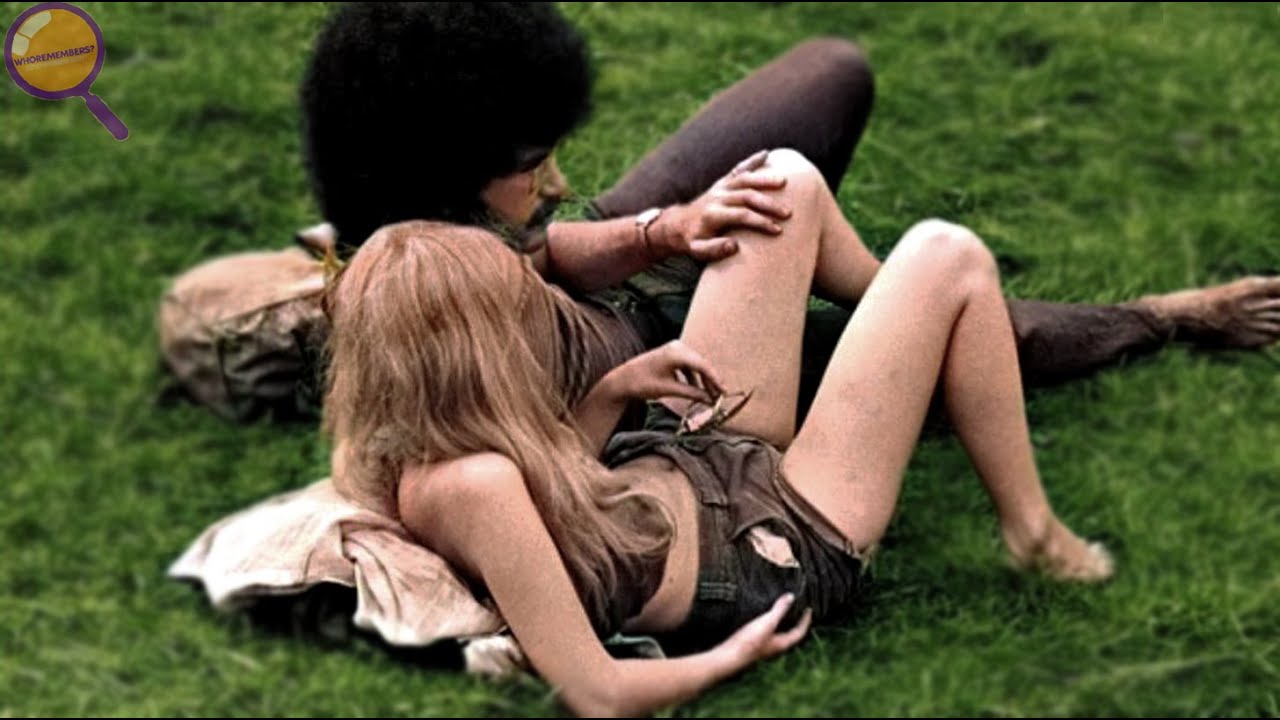
Another captures a roadside moment of connection between attendees and the local community. A photograph of military helicopters arriving at Woodstock, typically associated with the Vietnam War and the establishment the counterculture was challenging, became a symbol of cooperation. Wolman’s pictures also reveal quieter moments: a man carrying a suitcase through the crowd, a couple embracing, a lone individual finding solitude amidst the masses, and farmers milking cows in the middle of the festival. He photographed Grace Slick, who cemented her status as an icon of the era with her powerful stage presence, and Jimi Hendrix during his legendary performance of The Star Spangled Banner.
George Harrison is seen in a moment of peace and introspection, and a candid shot of Janis Joplin captures her grappling with the sheer magnitude of the event. Wolman later admitted that at the time, he did not fully grasp the historical significance of what he was witnessing. The aftermath of Woodstock was complicated. The grounds were left covered in trash, and the cleanup effort was extensive.
The local community, understandably, was less than enthusiastic about repeating the experience. Max Yasgur decided not to host another festival, and the town passed a law to prevent future events of that scale. Despite the criticism of the conditions, Yasgur himself was deeply moved by what he had witnessed. On the final day, he addressed the crowd, telling them they had shown the world something remarkable: half a million young people gathered for three days of joy and music.
Woodstock 1969 was a unique moment in time, an unlikely convergence of music, culture, and social change that captured the spirit of an entire generation. For the young organizers who had dreamed it up, it was a creation they knew would last far beyond the last notes. The Bethel Woods Center for the Arts, which opened in 2006, now stands on the grounds where the stage once stood, preserving the memory of a festival that remains a powerful symbol of what was possible when peace, love, and music came together.
It has been more than fifty years, and no festival of its kind has ever been quite the same.