For forty years, the murder of Robin Brooks remained an open wound and a dead end. The young woman was found dead in her Sacramento apartment in 1980, stabbed repeatedly in an attack that left investigators with blood, fingerprints, and biological evidence they could not use. The technology to identify the killer did not yet exist. The case went cold, and for decades, no one could say who had taken her life.
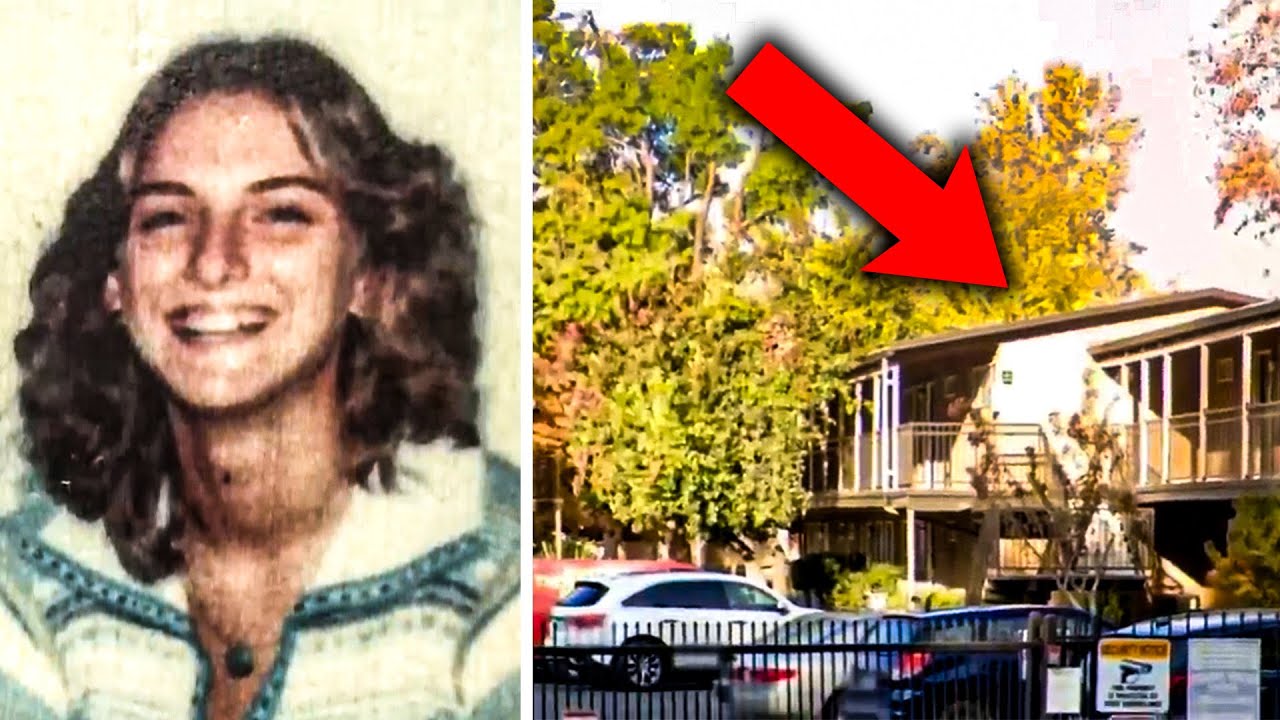
Robin Brooks was born on March 13, 1960, in Virginia. As a child, she moved with her family to the small town of Highland, New York. She was cheerful, sociable, and able to find common ground with nearly anyone. She was especially close to her older sister, Maria.
After school, Robin decided to move to California, drawn by the climate and by the fact that Maria had already settled there. Following her sister, Robin rented an apartment in Sacramento and found work. A few months later, an opportunity arose to move into the apartment complex where Maria lived with her boyfriend. Just before turning twenty, Robin took the apartment.
To pay the rent, she took two jobs. One of them was as a cashier at a donut shop only a few meters from her building. She chose the evening shift so it would fit around her other work. In the month and a half she lived in the complex, she made friends at work and in the neighborhood, and she was happy to see her sister every day.
On April 24, 1980, Robin was scheduled to begin her shift at the donut shop at four o’clock. She never arrived. This was out of character; she had never missed a shift and usually came early. After waiting several hours, one of her colleagues walked to her apartment and knocked.
There was no answer. After several attempts, he returned to the store and told the others. They were deeply disturbed. Robin had become close with everyone there, and they feared something was wrong.
They considered calling the police but realized officers would not search for an adult who had simply failed to show up for work. So one of them made a less conventional decision: he volunteered to open the front door of her apartment and check on her. Together with other employees, he went to her home. They knocked for a few minutes, then let themselves in.
What they found was a shocking scene. Robin was lying on her bed in the living room. There was blood everywhere. The police were called and confirmed she was dead.
She had multiple stab wounds. The attacker had apparently used a knife and, in the process, punctured a water mattress several times, spilling its contents onto the floor. The front door showed no signs of forced entry until the colleagues opened it. The back door was locked from the inside.
Investigators concluded the killer had entered through a window, and they soon found fingerprints on the windowsill to support that theory. The medical examiner determined Robin had been sexually assaulted, and biological material of the perpetrator was recovered. Small traces of blood that did not match the victim were also found in the apartment. Detectives believed the killer had cut himself during the attack.
All of this evidence was sent to the lab, but in the early 1980s, DNA testing was not yet available, so it could not be used to identify anyone. Investigators turned to Robin’s acquaintances. Her colleague said that the day before the murder, she had finished her shift at midnight and left in a great mood, joking as usual. She had also mentioned washing her bedding before her shift and wondering whether it would dry by the time she returned.
The bed in her apartment was unmade, which led the detective to believe the killer had attacked her almost immediately after she got home. Her sister added something disturbing. A few days before her death, Robin had mentioned that a man was following her. She gave no details that could identify him, only saying that he repeatedly came to the store where she worked and acted strangely, trying to get her to like him.
She had not felt threatened enough to worry about her safety, so she had not taken it seriously. Police could not identify the man. They had no leads. They interviewed neighbors, who reported hearing no screams or sounds of a struggle.
No one had seen anyone approach the apartment. Investigators learned that Robin had not gone straight home after work that night. She had stopped by a party at a friend’s place, stayed a while, and left alone. There had been no conflicts.
Everyone at the party was interviewed, and none were considered likely suspects. The investigation reached a dead end. Robin had no enemies, no boyfriend, and no one from her past who might want to hurt her. The blood and biological material could not be matched, and the fingerprints did not appear in any available database.
Detectives theorized that the killer was the man from the donut shop, that he had followed her home, learned her address, entered through the window while she was at work, and waited for her. When she arrived, he assaulted, raped, and killed her, then fled. But there was no evidence to prove it. The case was eventually frozen.
It was not resumed until 2004, twenty-four years later. By then, DNA testing was firmly established. Investigators sent the blood and biological material to the lab, and a DNA profile was extracted. It was uploaded to the FBI database, but there was no match, meaning the killer had no criminal record, or at least none that would have placed his DNA on file.
Then came an alarming discovery. The killer’s DNA profile matched another crime. Three weeks before Robin’s death, an unknown man had broken into the home of another young woman, sexually assaulted her, and fled, leaving her alive. It happened at night, and the victim had not seen her attacker’s face.
Medical experts had extracted his biological material. Detectives tried to use this connection to identify Robin’s killer, but all leads went nowhere. The case was frozen again. For years, the only action was periodically checking the profile against the database in case the killer came to police attention.
In 2017, the detective assigned to the case learned about a new tool called DNA phenotyping. Genetic experts could study a DNA sample and produce an approximate portrait of the suspect based on the genetic markers. The method was not precise, but it could serve as a guide. Investigators turned to a company called Parabon, which conducted such research.
They prepared a rough portrait. The suspect appeared to be a man of African descent. Investigators could not find anyone similar among the people connected to the case. Two portraits were prepared, one showing how the suspect might have looked in 1980 and another in 2017.
Both were leaked to the media. Robin’s relatives offered a ten-thousand-dollar reward for information. The police received several tips, but none led anywhere. The killer’s identity remained a mystery.
In 2020, the case received additional funding as part of a program for unsolved murders. By then, a new DNA analysis tool was in active use, one that allowed investigators to find even distant relatives of the person who left the DNA sample. This required that a public or state database contain at least one relative of the suspect. Robin’s killer’s sample was handed to Parabon.
It took months to trace all possible relatives and follow their pedigrees. Finally, a name emerged: Philip Wilson, seventy-one years old. The research pointed to him, but it did not prove his guilt. Police needed his DNA to compare with the sample from the victim’s apartment.
Because the law did not require him to provide a sample, investigators resorted to surveillance and subterfuge, waiting for him to discard something he had touched, a bottle, a cigarette butt, or another object with his DNA on it. Once they obtained it, the lab extracted his profile. It was a perfect match. Four decades after the murder, they finally had their suspect.
On February 24, 2020, Wilson was arrested. He denied involvement, but the evidence was strong. His fingerprints matched those found on Robin’s windowsill. His biography also added weight to the case.
At the time of the murder, he was thirty-one years old and lived just a few streets from her apartment complex. He was a regular customer at the donut shop where Robin worked. This fit the theory that the killer was the man who had been harassing her at work. Wilson had no serious criminal history, which explained why his DNA and fingerprints were not in any database.
The trial did not begin until 2022. By then, Wilson and his lawyer had prepared a defense. They claimed that on the night of the murder, Philip and Robin had a consensual relationship. According to this account, Wilson went home afterward, and someone else broke into the apartment and killed her.
As for his blood at the crime scene, his lawyer argued that Wilson had injured himself at work and that the wound had reopened while he was at Robin’s home. The prosecution found this version absurd. Robin had no romantic involvement with anyone, and she had complained about a strange man harassing her at work, most likely Wilson. She was annoyed by his behavior, not sympathetic to him.
Furthermore, no traces of DNA from other men were found in the apartment. It would be strange to assume Wilson left his blood and fingerprints while the actual killer left nothing at all. The defense also tried to point to another suspect: Maria’s ex-boyfriend, who had lived with her at the time. By the time of the trial, that man was dead, and his lawyer used this to suggest he had been violent and threatening toward Robin and her sister.
But nothing could be confirmed. Philip Wilson was found guilty of murder. The sentence was pronounced on his birthday. He received life without parole.
He was in poor health, so his time in prison was unlikely to be long. Robin’s family thanked the detectives for finally closing the case. Her sister admitted she still felt guilty because Robin had followed her to California. As for the woman assaulted three weeks before the murder, that crime was time-barred, and Wilson received no additional punishment for it.
Investigators were left wondering whether he had other victims. Criminals who commit such acts rarely stop after a few weeks. Some assumed Wilson had not planned to kill Robin that night. He had broken in intending to assault her, but she saw and recognized his face because he had come to her shop repeatedly.
Fearing imprisonment, he may have decided to kill. And after that, he may have restrained himself from committing further crimes. The case was closed, but the question of what else Philip Wilson had done remained unanswered.