Even as Adolf Eichmann’s ashes were scattered over the Mediterranean in 1962, following the only execution Israel has ever carried out, his family name continued to echo through the decades. The architect of the Holocaust’s deportation machine was dead, but his five-year-old son, Ricardo, had only just begun to grasp the weight of the name he carried. Born in Buenos Aires in 1955, while his father lived under the assumed identity of Richard Klement, Ricardo grew up in the shadow of a man he barely knew. Eichmann, hiding from Nazi hunters, curiously never changed the name of his wife and four children, a fact that ultimately led to his capture by Israeli secret services in 1960.
Ricardo was taken by the hand to a bus stop, bought chocolate at a candy store, and then left to sit on the stairs every night, waiting for a father who would never come home. The story of the descendants of the Third Reich’s most infamous criminals is not a single story but a collection of fractured lives, each grappling with an inheritance no one asked for. Across Europe and the Americas, the children and grandchildren of the men who engineered the Holocaust have chosen radically different paths. Some have dedicated their lives to memory and reconciliation.
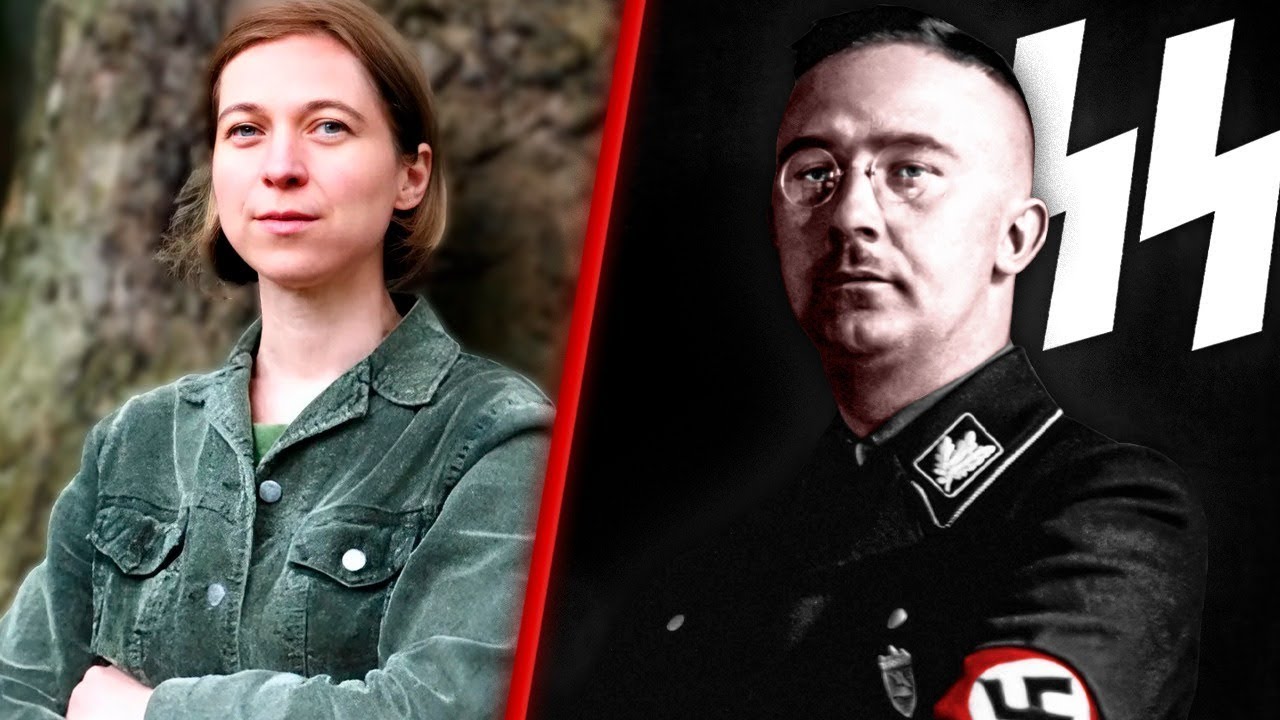
Others have sunk into denial, activism, or silence. A few have found redemption in the most unexpected places. Katrin Himmler was born twenty-two years after her great-uncle, Heinrich Himmler, the fearsome leader of the SS, took his own life. As a child and young woman, she wanted to change her surname.
The name itself was not a social problem—no one insulted her for carrying it—but the history that came with it was an enormous burden. She felt blocked by her family’s past and could not continue her life normally. Revisiting that past, she concluded, was the only way to get rid of it. Her research led her to write a book exposing her family’s complicity with the regime, and she uncovered her grandfather’s own troubling involvement.
Gerhard Himmler, Heinrich’s older brother, had joined the SS, worked in Reich broadcasting, and denounced employees to the regime. Katrin came to believe he was an opportunist who returned favors to his brother, and she found a letter where he recommended that Himmler stop protecting a Jew, a recommendation that amounted to a death sentence. Her grandfather’s end was a confusion, with three versions of his death circling, including an accidental bite of a cyanide capsule and an anonymous burial among the bombed-out ruins of Berlin. Katrin’s own life took a defiant turn when she married a Jew, a descendant of Warsaw Ghetto survivors whom she had met during her research.
She has said that if Heinrich Himmler came back to life and found out she had married a Jew descended from Holocaust survivors, he would probably return to his grave. She lost much of the shame she once felt, building good contacts with survivors and their children who suffered so much because of the Germans and her family. Ricardo Eichmann’s path was different. After his father’s execution, his mother, Vera, brought him and his older brother back to Germany for an education.
Money was scarce, as the widow of a Nazi war criminal had no right to a pension, so Vera’s family helped financially, but emotionally, Ricardo was alone. He knew his father was dead but not the circumstances, and his mother kept all the newspaper clippings about him under the sofa. It was a taboo subject that remained so until her death. As an adult, Ricardo confronted the past directly.
He traveled to see deportation orders his father had signed, determined that no one could say he did not believe in what Eichmann had done. He met with the Israeli Mossad agent who had observed his family in Buenos Aires and kidnapped his father. When the agent asked if he felt bitterness, Ricardo responded that he did not. Adolf Eichmann deserved to be brought to justice, though he disagreed with the death penalty.
He also wanted to be a pilot but abandoned his training during a chemical attack drill when trainees were asked to enter the Eichmann chambers. He dropped out and began studying archaeology, a career that uses ancient objects to make sense of the past. He rejected advances from neo-Nazi groups who told him Nazism ran in his blood. He did not want to become a symbol of Nazi revisionism, nor did he want sympathetic stories told about him.
It would be an affront to the six million dead, he said, to try to stir up compassion for himself. When journalists pressed him on why he had opened up, Ricardo said he did it for his children, so they might not have to ask about their grandfather. Rainer Höß, grandson of Rudolf Höß, the commandant of Auschwitz, chose a life of activism. Born in 1965, eighteen years after his grandfather was executed at the camp, Rainer first learned the truth about his family at school when he was fifteen.
He ran away from home, cutting all ties. After his parents divorced, he searched German archives for the true story of his grandfather, eventually gaining access to his grandfather’s archive. He participated in documentaries, gave talks in schools, and wrote a book about being part of a terrible family. He visited Auschwitz in person, and in 2013, during one of those visits, he met Eva Mozes Kor, a survivor who had been tortured by his grandfather.
Striking up a conversation, the two found a remarkable connection. One year later, as an act of mercy, she adopted him. He was almost fifty, she was eighty, and together they worked in her association dedicated to gathering survivors of medical experiments at Auschwitz. His life has not been without accusation.
Some in the Israeli press accused him of exploiting his story, and an investigation implicated him as a suspect in the illegal Nazi memorabilia market. He has said he would kill his own grandfather if he had the chance to meet him. Kai Höß, another grandson of the Auschwitz commandant, discovered the family secret in his sixth-grade history class when the teacher mentioned the name Rudolf Höß. The realization that he was a direct descendant of the architect of the massacre that killed more than 1.
1 million people was shocking and unbelievable. It felt like a curse. His father, Hans Jürgen, had been a silent man who rarely spoke of the past, and Kai believed it was precisely that silence that kept the truth hidden. Reading his grandfather’s memoirs, which his mother kept at home, broke his heart.
He was overwhelmed by shame, guilt, and disbelief. Shortly after learning the truth, his parents divorced, and Kai spent thirty years away from Germany, working in the hotel industry, traveling the world, and avoiding a home that no longer existed for him. He never spoke with his father until one day the phone rang and he recognized his father’s voice. Together, they decided to face the past, participating in a documentary and visiting Auschwitz.
The most powerful moment for Kai was meeting a ninety-year-old woman who had suffered in the camp, sitting in his home, having coffee, and seeing her smile. It proved to him that reconciliation, understanding, forgiveness, and love were possible. In the year 2000, Matthias Göring, a distant relative of Hermann Göring, hit rock bottom. His physical therapy clinic had declared bankruptcy, he lost his home, and his wife left him, taking their son.
Depressed and desperate, he prayed for the first time in his life. He had been raised in a family steeped in national socialist heritage, where he learned to hate Jewish people. He grew up understanding that Israel and the Jewish people were to blame for the family’s financial struggles. His prayer was answered, he believed.
Within minutes, the phone rang with a job offer. He immediately began reading the Bible and enrolling in theology classes. Two and a half years later, he heard a voice telling him he was to guard the walls of Jerusalem. He traveled to Israel and decided to convert to Judaism, becoming a nationalist Israeli.
His family believed he was crazy. He has said he used to feel cursed by his name but now feels blessed, telling Israeli journalists that if he could change his way of being after forty-four years of hating the Jewish people, anyone could. In southern Chile, Waltrud Boß, daughter of Aribert Heim, the SS doctor known as Dr. Death, spent her life believing her father was dead.
Heim, accused of collecting skulls and injecting gasoline into victims’ hearts at Mauthausen concentration camp, had disappeared in 1962. Waltrud was born in 1942, when her parents were already separated, and he only signed her birth certificate. Her mother told her he was dead, and the Red Cross confirmed it. She grew up in postwar Austria, becoming a pharmaceutical chemist and working in Geneva, serving high-profile clients.
At one point, she married a Chilean man and settled in the south of Chile. Her peaceful life ended in 2006 when Nazi hunters, following a lead, discovered her whereabouts. The press, police, and the Simon Wiesenthal Foundation crowded around her door. She begged them to leave her alone.
To a German television crew she said that following her forever would not find her father because she did not know him. Journalists who spent years investigating her case agreed that she likely lived most of her life deceived, and that even if she had contact with her father, it was highly unlikely she helped him hide. Jennifer Teege, a Black German woman, was thirty-eight years old when she discovered her grandfather was Amon Göth, the commandant of Plaszow concentration camp, the villain of Schindler’s List. Abandoned by her biological mother at one month old and placed in an orphanage, she was later adopted.
She had built a successful life in Hamburg, with a husband and children. Browsing a library, she was drawn to a slim red book titled I Have to Love My Father, Don’t I? Flipping through its pages, she found the author was her biological mother, who had reconciled with the fact that her father was a mass murderer. Jennifer was shocked.
The discovery sent her into a deep depression. With her family’s support, she underwent therapy and eventually visited Plaszow, spoke with survivors, and listened to the bitter truth about her grandmother, who had been Göth’s mistress and denied his crimes until her death. In 2013, Jennifer wrote a memoir narrating her experience, titled My Grandfather Would Have Shot Me, referring to Göth’s probable reaction to a Nigerian granddaughter. She came to understand that responsibility is not the same as guilt, writing that there is no such thing as a Nazi gene.
And then there were Hitler’s own heirs. When Adolf Hitler died in 1945, he left no direct descendants. But his half-brother Alois had two sons who carried the cursed surname. William Patrick Hitler, who moved to Germany in the 1930s and was despised by his uncle, eventually fled to the United States, enlisted in the Navy, and fought against the Germans.
He changed his name to Stuart-Houston to distance his heirs from the Nazi legacy. His four sons, Hitler’s great-nephews, made a pact never to have children, to end the Führer’s bloodline. They lived in anonymity on Long Island, and only one, Alexander, ever spoke to a journalist. He was asked about the pact but never answered.
He and his brothers kept their commitment, viewing it as the only way to free themselves from Hitler’s shadow. The descendants of the Third Reich’s leaders did not inherit evil, but they inherited a burden. Each of them faced the same impossible choice: confront the past, deny it, or let it define them.
Their stories are not tales of redemption but of reckoning—proof that the sins of the fathers, while they may fall on the sons, do not have to become their own.