They were among the most feared resistance fighters of the Second World War, men and women who showed no mercy in their actions. The French Resistance fought alongside the Allies after D-Day and contributed greatly to the liberation of their country. But under German occupation, they faced brutal treatment, including torture and execution, if they fell into enemy hands. And the Resistance did not have to worry only about the Germans.
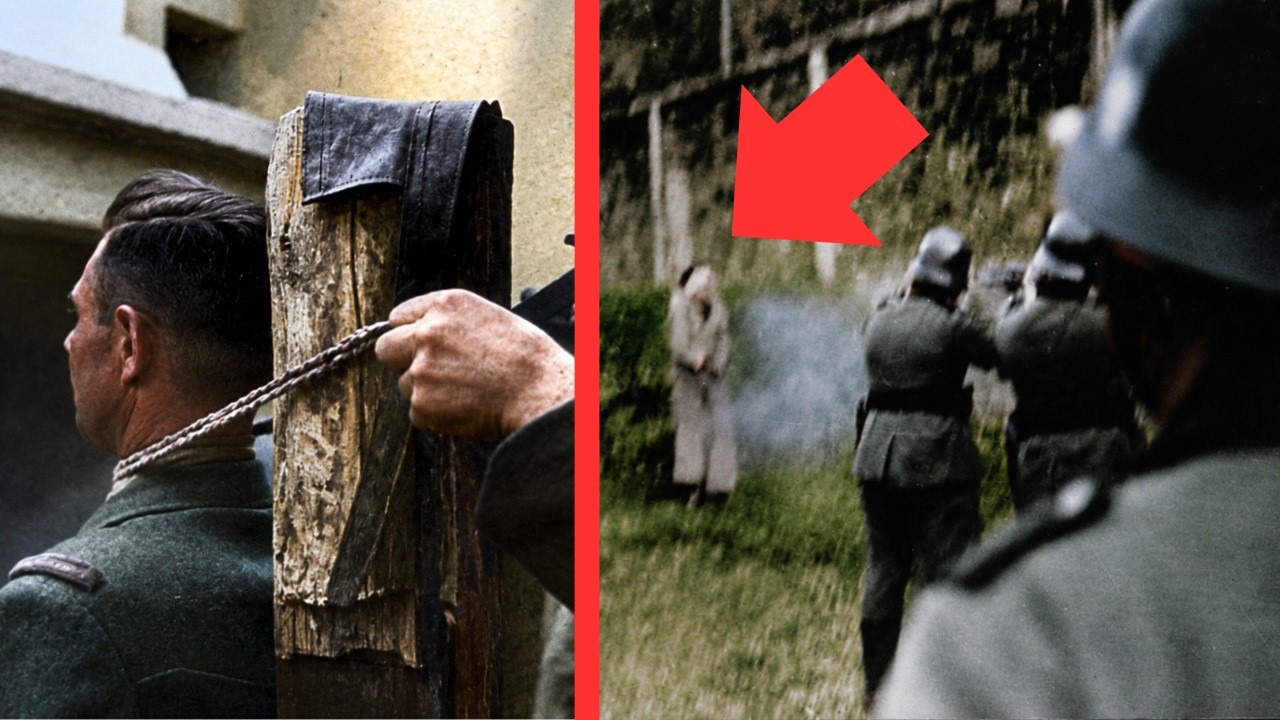
They also had to fear internal French enemies such as the Milice and other collaborators who reported them to the authorities—and sometimes they feared those French enemies more than the Germans. Throughout the war, dozens of French Resistance members were executed by firing squad on German orders, with the occupiers convinced this was the best way to deal with them. But why were these executions so vicious and terrifying? The German occupation forces executed Resistance members for a combination of military, political, and ideological reasons.
From the German perspective, Resistance fighters were viewed as illegal soldiers, bandits, or rebels who fought unlawfully. They were classified as saboteurs, and that classification meant that, in the eyes of the German occupiers, these men and women were not entitled to the protection normally granted to prisoners of war. One of the Resistance’s main roles was to sabotage the German war effort. They blew up railway lines carrying troops and supplies, destroyed bridges and telephone lines, damaged factories producing equipment for Germany, and cut electrical cables and communication networks.
The Germans saw these acts as attacks on their operational capabilities, and captured saboteurs were sentenced to death quickly or executed without any trial at all. Resistance groups also carried out assassinations and ambushes against German soldiers, military police, SS members, Gestapo officers, and French collaborators working with the occupation authorities. Whenever a German soldier was killed, occupation authorities regularly ordered swift reprisal operations, leading to the execution of Resistance members. They also carried out other work, such as helping the Allies prepare for their invasion set for June 1944 by passing information and stockpiling weapons, explosives, and other material useful for the Normandy landings.
German military doctrine had been heavily influenced by what they had already seen in the First World War. Hitler hated the idea of resistance and what he called irregular warfare. As a result, Resistance members were often brutally tortured and then shot. Hostages with ties to the Resistance were also executed after attacks on Germans, and entire villages faced punishment if they were said to support the Resistance.
The Germans were terrifying in their executions, showing mercy to few regardless of age. At just seventeen, the young French Communist activist Guy Môquet was taken hostage during the occupation of his country. He was imprisoned at Fresnes Prison, but in the wake of a high-profile assassination, Môquet was chosen for execution despite being a teenager. Inside a camp at Châteaubriant, Môquet was tied to a firing range as part of a group of nine.
He refused the blindfold. A firing squad of German soldiers stood before him with their rifles raised, and they shot him without mercy. But many prominent Resistance members were also killed by brutal treatment rather than direct execution. Their intense torture sessions became a means of execution and death in themselves.
Jean Moulin, who had worked to unify resistance networks, was arrested by the Germans and tortured by the notorious German officer Klaus Barbie. Barbie was known by the nickname the Butcher of Lyon for his horrifying methods of dealing with Resistance fighters. Moulin’s fate in captivity was terrifying. According to witnesses, the nails of his fingers and toes were torn out using hot needles as torture instruments.
Moulin’s fingers were then placed in a door frame inside his torture cell, and the door was slammed violently on them again and again. The manacles cut his skin and broke both of his wrists. He was also beaten severely by Gestapo agents until his face was unrecognizable. After each torture session, Moulin, shattered and beaten, was paraded before other prisoners suspected of being in the Resistance.
The last time he was seen alive was when he was carried out in a coma. His head was greatly swollen, yellowish in color, and wrapped in bandages. But Moulin never woke from that coma, and he was effectively killed by the ordeal of torture he had endured. The preferred method of execution for suspected French Resistance members was death by firing squad.
The Germans often carried this out in public, but many were executed in secret locations, in forests, and in open spaces. The executions were not secret in their procedure—they were routine and highly organized. Strangely, although many prisoners were killed during the war in pits with a single bullet to the neck, German firing squads carried out Resistance executions in a very formal manner. German officials led the condemned toward wooden stakes driven into the ground.
Then they bound them to these stakes with ropes so they could not move. There were also some cases in which victims were shot next to walls without being tied. Many condemned prisoners were not given blindfolds, and they were forced to watch their final seconds while facing their executioners. As for the number of executioners, there were often dozens of soldiers, depending on how many men were to be executed.
An order was then given for the firing squad to raise their rifles, and they usually stood only a few yards from their victims. When the order to fire was given, they shot their motionless targets. Afterward, many victims were buried in graves, and some remained inside those pits because the execution site was so remote and hidden. Priests were often not allowed to accompany the condemned to the execution sites, though sometimes German military chaplains were present.
The Germans also had a habit of disposing of bodies anonymously in various places to prevent the remains of executed Resistance members from becoming shrines. Some executions were carried out so quickly that families of Resistance members only learned of their loved ones’ deaths when their names appeared in local notices. One of the most prominent places where the Germans executed members of the French Resistance during World War II was inside Fort Mont-Valérien. Inside this fort in a Paris suburb, 1,008 people were executed by German army firing squads.
They were led toward an embankment near a wall and eliminated in rapid succession. Executions took place on many days each week, and local residents often complained about the sound of gunfire. But what must be said is that these executions did not stop the Resistance at all. They were never flexible in their pursuit of freeing France from German occupation.
Although the executions terrified the civilian population and destroyed many Resistance cells and networks, they ultimately failed to eliminate the movement. As the war progressed, especially after Germany’s defeat at Stalingrad and the Allied landings in Normandy in June 1944, Resistance organizations grew and became more coordinated. Thousands of new volunteers joined despite the risk of execution, and they played an important role in disrupting German communications, gathering intelligence, and supporting the liberation of France as well. The executions were therefore meant to be both punishment and deterrent.
The German authorities hoped that killing captured Resistance members quickly—and often innocent hostages—would discourage future attacks. In practice, the brutality of these shootings and executions strengthened public support for the Resistance and deepened opposition to German occupation.