The phone call came in 1976, and it nearly never happened. A filmmaker named George Lucas was desperately searching for a toy company to make merchandise for a movie he had not even finished filming, a space fantasy called Star Wars. Nobody knew what it was. Nobody believed it could succeed.
Lucas approached Hasbro, the industry giant, and was turned down. He went to Mattel, and was turned down again. The two biggest toy makers in the world looked at a story about space wizards, laser swords, and a walking carpet named Chewbacca and concluded that it would never sell. But a company in Cincinnati said yes.
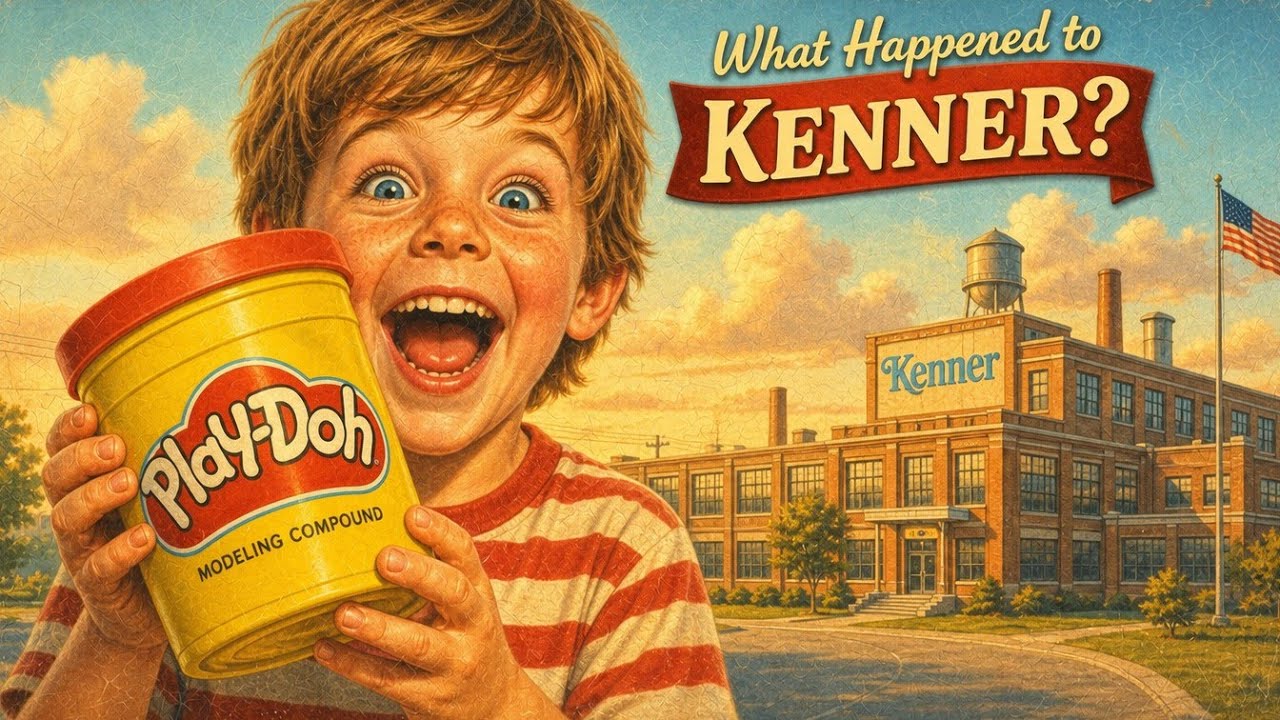
Kenner, a firm that had built its fortune on soap bubble guns, Play-Doh, and a toy oven that cooked with a light bulb, agreed to make toys for a movie that everyone else had refused. The deal was signed in April 1976. The movie opened in May 1977. By June, Star Wars was the highest-grossing film in the history of cinema, and every child in America wanted an action figure.
Kenner did not have a single one to sell. The molds were not ready. The factories were not running. The plastic had not been poured.
Christmas was coming, and there was no Luke Skywalker, no Darth Vader, no R2-D2. There was nothing. The CEO of Kenner, a man named Bernie Loomis, made what he later called the loneliest decision of his career. He decided to sell empty boxes.
The Early Bird Certificate Package was a box with a certificate inside. The certificate promised that four action figures, Luke Skywalker, Princess Leia, Chewbacca, and R2-D2, would be mailed to the buyer’s home in the next two to six months. The price was roughly twenty dollars for a box with nothing in it except a promise that the toys would arrive later, maybe. Parents bought it anyway.
Thousands of them. On Christmas morning 1977, children across America tore open their presents and found a piece of paper. For some, the disappointment was immediate. But for most, the paper was enough.
Star Wars was everything that year. It was the movie, the lunch box, the bed sheets, the poster on the wall, the conversation at school. A promise of Luke Skywalker, even on a scrap of paper, was better than anything else under the tree. The figures finally arrived in February and March 1978.
They were simple, with five points of articulation, no elbows, no knees. A figure could stand, raise its arms, turn its head, and that was it. But they were perfect because they were Star Wars, and they were yours. In the first full year of production, Kenner made one hundred million dollars from the deal that Hasbro and Mattel had both laughed at.
By 1985, the company had sold three hundred million action figures into three hundred million bedrooms around the world. Kenner had started much smaller. The company was founded in 1947 when three brothers, Albert, Philip, and Joseph Steiner, turned a building on Kenner Street in Cincinnati into a toy factory. They named their company after the street because they could not think of a better name.
Their first product was Bubble Magic, a plastic pistol that blew soap bubbles. Two years later, the Bubble Rocket, a bubble-blowing rocket launcher, sold a million units in a single year. The brothers learned a lesson that would define the company for the next fifty years: children did not want things that sat still. They wanted things that moved, that flew, spun, raced, and screamed.
The catalog that followed was a childhood staple for generations of Americans. Play-Doh, that salty, chemical, slightly sweet material that was not a toy but a medium for creation, came from their factory. The Give-A-Show Projector let children load thin plastic film strips and project Superman, Popeye, and the Flintstones onto the bedroom wall, turning every child into a movie theater, audience, and projectionist at once. The Easy-Bake Oven used a one-hundred-watt bulb to bake real cake from real mix in pans the size of a hockey puck, producing something that tasted terrible but was real, and was yours.
Spirograph made children feel like artists with plastic gears and colored pens. The girder and panel sets let them build entire cities across the living room floor. The SSP racers, which stood for supersonic power, a claim that was a lie, screamed across kitchen floors when a rip cord was pulled, sounding like a jet engine shrunk down and stuffed into a piece of plastic. Decades before all of this, a young puppeteer in New York had been hired to bring Kenner’s Gooney Bird mascot to life in television commercials.
His name was Jim Henson. He had not yet created the Muppets. He had not yet made Sesame Street. He was just a man with a camera and a talent for making things come alive, and Kenner gave him his start.
The man who would someday give the world Kermit the Frog began his career selling soap bubble guns for three brothers on Kenner Street. The brothers sold the company in 1967 to General Mills, a cereal company. The men who made Cheerios now owned the men who made Spirograph. It was a good deal for the Steiners, who walked away wealthy.
For Kenner itself, it was a slow death sentence that took thirty-three years and four different owners to arrive. General Mills did not know how to run a toy company. In 1985, they spun Kenner off alongside Parker Brothers to form Kenner Parker Toys. Two years later, Tonka, the company of steel dump trucks, bought them.
Four years after that, in 1991, Hasbro bought Tonka, and with Tonka came Kenner and its three hundred million Star Wars figures. Each acquisition brought press releases about synergies and strategic alignment, and each brought something else: layoffs. Manufacturing moved first to Mexico, then to China. The distribution center in Cincinnati closed.
The workforce shrank. The hallways got quieter. A man who worked at Kenner for nearly fifteen years described the decline in eleven words: “Every time there was a buyout, we had cutbacks. ”
In the year 2000, Hasbro closed the Kenner office in Cincinnati.
The toys were not bad. The designers were not failing. The market had not moved on. A corporation in Rhode Island had simply decided that running a design studio in Ohio was redundant.
The building emptied over weeks. Fifty-three years of toys, from bubble guns to Star Wars to Jurassic Park, walked out the door in cardboard boxes. The designers who had hand-painted the faces of the first action figures cleared their desks. The engineers who had figured out how to make an SSP car spin at ten thousand rpm turned in their badges.
The people who had tested Play-Doh by smelling it, squeezing it, and rolling it between their fingers to make sure the texture was right, said goodbye to a building that smelled like every toy they had ever made. Some moved to Hasbro’s headquarters in Rhode Island. Some retired. Some started their own design firms in Cincinnati, carrying the Kenner DNA inside them like a seed.
The Kenner name was briefly revived by Hasbro in 2010 as a label on a line of vintage-style Star Wars figures. But a label is not a company. A label does not have a building on a street in Cincinnati. A label does not have three brothers looking out a window at a street sign and saying, that will do.
On the living room floors of America, in attics, basements, landfills, and memory, the toys remained. But the company was gone. The street is still there. The building that gave it meaning is not.
All that survives is the smell of a Tuesday afternoon when you were three years old, the newspaper spread on the table, the can of Play-Doh open, the world made of something you could shape with your own hands. That was Kenner. And it is gone.
But the smell is still in your head, and nobody can close that down.