On 3 January 1981, Princess Alice, Countess of Athlone, died at Kensington Palace in London, a few weeks short of her ninety-eighth birthday. With her death, no grandchild of Queen Victoria remained alive. Her life had begun at Windsor Castle in 1883. Between those two dates, she lived through six reigns, attended four coronations, followed her husband to postings in South Africa and Canada, and watched her only brother join the Nazi party.
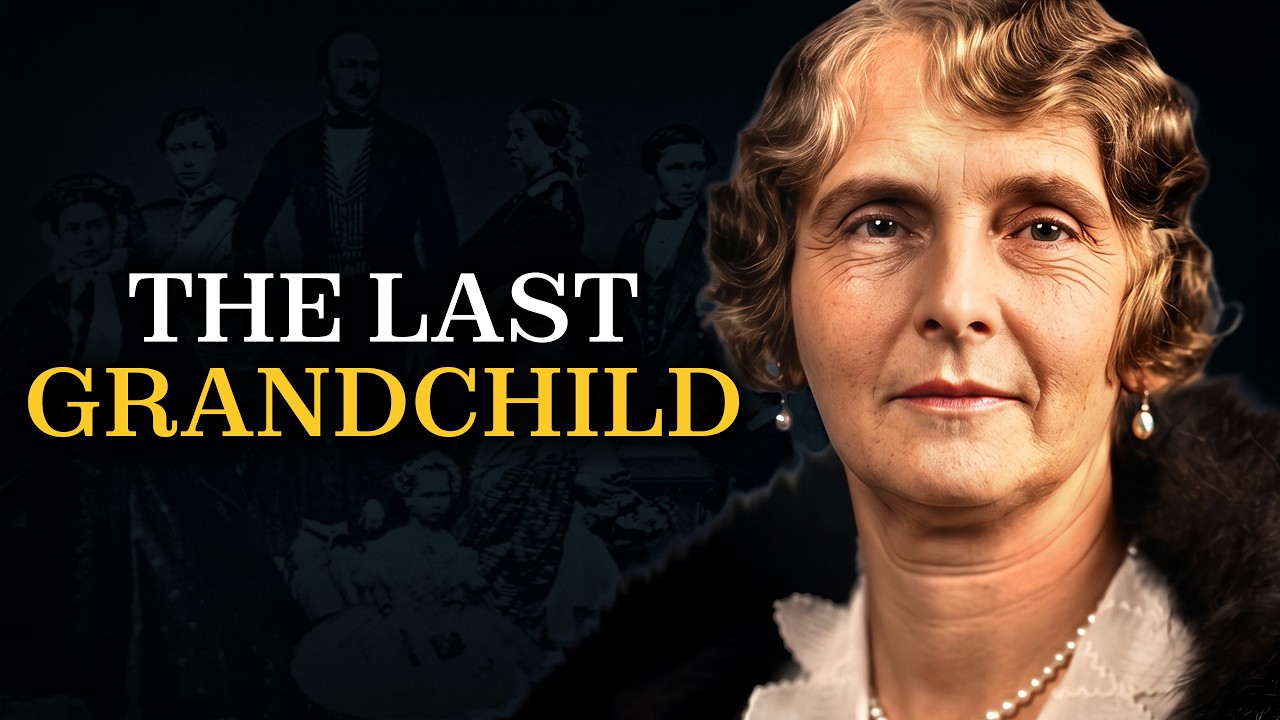
She welcomed Churchill and Roosevelt to wartime Canada, crossed the Atlantic in her eighties to raise money for a Caribbean university, and carried the grief of two lost sons and a brother who chose the side she spent the war opposing. Princess Alice of Albany entered the world at Windsor Castle on 25 February 1883, the first child of Prince Leopold, Duke of Albany, the youngest son of Queen Victoria, and his wife Princess Helena of Waldeck and Pyrmont. At her christening in the private chapel at Windsor on 26 March 1883, she received the names Alice, Mary, Victoria, Augusta, Pauline. Queen Victoria agreed to act as godmother, and the other sponsors included King William III of the Netherlands and the German Empress Augusta.
Her father suffered from hemophilia, a hereditary disorder that prevents the blood from clotting normally. Among Queen Victoria’s descendants, the condition passed quietly through daughters and struck some of their sons. In March 1884, with Alice barely thirteen months old, Leopold suffered a minor fall in Cannes on the French Riviera, and the injury brought on a cerebral hemorrhage. He died on 28 March, aged thirty.
His widow, Helena, carried their second child at the time. Charles Edward arrived in July 1884, about four months after his father’s death, already holding his father’s title of Duke of Albany. Alice, his elder by about seventeen months, remained his only sibling for the rest of their lives, and two world wars would later put them on opposite sides. Helena now raised two fatherless children on her own.
Home lay at Claremont House in Surrey, an estate Queen Victoria had bought in 1882 as a wedding gift for Leopold and Helena. Claremont remained the backdrop to Alice’s childhood until the family left for Germany in 1899. Alice grew up deep inside the Victorian royal court, with Queen Victoria as both her grandmother and her sovereign. Alice belonged to a crowded generation of grandchildren who married into royal houses across Europe.
Two first cousins show the pattern: Alix became Empress Alexandra of Russia, while Victoria Eugenie, known in the family as Ena, became Queen of Spain. Each of them, like Alice, carried something into her marriage that nobody could see: the hemophilia gene, which they unknowingly passed to sons of their own. In 1899, the rules of royal succession pulled the family out of England. Queen Victoria’s second son, Alfred, reigned as Duke of Saxe-Coburg and Gotha, a small German state, but lacked a surviving male heir.
When another of Charles Edward’s uncles renounced his claim, the succession settled on Charles Edward himself, then fifteen years old and raised at Claremont. Helena decided to accompany her son. Alice spent the years from about sixteen to twenty away from England, living in Saxe-Coburg and Gotha, one of the many states inside the German Empire. While she lived in Germany, Queen Victoria died, and the only reign Alice could remember gave way to that of her uncle, Edward VII.
On 10 February 1904, about two weeks short of her twenty-first birthday, Alice married Prince Alexander of Teck at St. George’s Chapel inside the castle where she entered the world. His elder sister, Princess Mary, held the title of Princess of Wales at the time and would later become Queen Mary, consort of King George V. The match seems to have grown from real affection.
One guest, Lady Violet Greville, observed that unlike most royal brides, this bride looked the picture of happiness. Alice’s first child, a daughter named May, arrived in 1906, and a son, Robert, followed in 1907. A second son, Maurice, arrived in 1910 and died the same year. Because Leopold had suffered from hemophilia, Alice inherited the faulty gene from him without any doubt, placing her among what geneticists call obligate carriers.
Carriers rarely show symptoms, but each son born to a carrier faces an even chance of inheriting the disorder in full. Whatever caused Maurice’s death in infancy, Alice lost him. Her family tree pointed in two directions at once. Her mother and her husband both carried German titles, and her brother now ruled a German duchy.
Yet her own rank as a princess flowed from her British father. Before 1914, such mixed ancestry raised few questions in a royal family that took its German connections for granted. Then the First World War put Alice and Charles Edward on opposite sides. He held a commission in the German army while his sister lived in England.
In 1917, King George V permanently stripped Charles Edward of his British titles as punishment for taking up arms against the country where he grew up. Inside Britain, anti-German feeling turned virulent, and the royal family, with its tangle of German names and titles, looked badly exposed. By 1917, the pressure pushed King George V to abandon the Germanic titles held within his family. His dynasty took the name of Windsor, after Alice’s birthplace.
Alexander gave up his title as Prince of Teck, and on 5 November 1917, King George V raised him to the peerage as Earl of Athlone and Viscount Trematon. Alice’s husband and children lost their Württemberg princely titles, yet she kept her rank as Her Royal Highness, Princess Alice, because a granddaughter of a sovereign through one of the sovereign’s sons held that title and style in her own right. In 1924, King George V appointed the Earl of Athlone Governor General of the Union of South Africa, a post he held until 1930. Alice spent most of her forties in South Africa, from the age of forty-one to forty-seven, taking on the public role described as that of vice-reine.
The Athlones toured widely, and by most accounts, the tours won them real popularity. At Muizenberg on the coast, they built a beach house, a private retreat away from the formality of official residences, which survives today as a South African national monument. Those same years, however, brought news from Europe that no distance could soften. Robert, Viscount Trematon, had inherited his grandfather’s illness.
Although he survived childhood and reached early adulthood, hemophilia meant that any injury, however ordinary, could still kill him. In April 1928, aged twenty, he met with a car accident while driving in France. Because his blood would not clot, a cerebral hemorrhage followed, the same kind of bleed that had killed his grandfather Leopold in Cannes forty-four years earlier. He died on 15 April 1928.
Alice turned forty-five that year. News of the accident reached her in South Africa, thousands of miles from France, and with the transport of the 1920s, the journey back to Europe took far too long. She missed her son’s funeral. She stayed at her husband’s side as vice-reine until the term ended in 1930 and carried her grief through a long round of public engagements far from England.
While Alice built a public life in the service of the British crown, Charles Edward moved in the opposite direction. The war cost him his British titles in 1917, and the German Revolution of 1918, which swept away the emperor in Berlin along with the ruling princes of every German state, then removed him from his throne in Coburg. He lost that throne at thirty-four. Bitterness followed.
Charles Edward drifted into the radical right-wing politics that flourished in defeated Germany, and by the early 1930s, he openly supported Adolf Hitler. He joined the Nazi party in 1933. Over the following years, he rose to the rank of SA-Oberführer in the SA, the party’s paramilitary wing, and also took on the presidency of the German Red Cross. An organization founded to relieve the suffering of the wounded now answered to a senior figure in Hitler’s movement.
For Alice, her brother’s choices became a source of lasting sorrow. In her 1966 memoir, she wrote about his decisions and the wedge they drove between them. Alice’s public causes never depended entirely on her husband’s appointments. Sources credit her with founding the National Children’s Adoption Association in 1917, and she championed the welfare of adopted children for decades afterwards.
In 1933, she took up a far more contentious cause when she agreed to become patron of the Malthusian Ball, an event organized by the International Birth Control Movement at a time when few members of the royal family would have wished to be linked to contraception in any way. In public, she argued that working-class and poor families deserved the same access to contraceptives as the wealthy, so that they would be spared the burden of raising children without the necessaries of a civilized life. In Britain, Alice put her royal name behind birth control for poor families, while in Germany, her brother put his behind Hitler. In 1938, before that war began, the Athlones visited Bahrain and Saudi Arabia, and Alice became the first British royal to set foot in Saudi Arabia and to meet its ruler, King Abdulaziz.
She undertook the trip at fifty-five. In 1940, Lord Tweedsmuir, the popular governor general of Canada, otherwise known as John Buchan, died suddenly, and Canada found itself without a viceroy in the middle of a global war. Prime Minister William Lyon Mackenzie King wanted a replacement who could unite Canada and strengthen its ties to the British war effort. On his advice, King George VI chose the Earl of Athlone.
Alexander already knew the work of a governor general from his six years in South Africa, and Alice, now fifty-seven, brought long experience of public duty abroad along with close family ties to the crown. From 1940 to 1946, the Athlones lived mainly at Rideau Hall, the Governor General’s residence in Ottawa. With her homeland under siege, Alice accepted a string of honorary posts in Canada, among them honorary commandant of the Women’s Royal Canadian Naval Service and honorary air commandant of the Royal Canadian Air Force Women’s Division. She inspected troops and visited hospitals in person, and she took a particular interest in the members of the RCAF Women’s Division stationed in Ottawa.
In 1944, she established the Princess Alice Barracks cabin at Britannia Bay as a summer retreat where those women could rest. In 1943 and 1944, the Athlones played host to the two Quebec conferences codenamed Quadrant and Octagon, held in Quebec City at the Citadel. At those meetings, Winston Churchill and Franklin Roosevelt sat down with Mackenzie King to plan the course of the war. Alice, born into the court of Queen Victoria, now welcomed the men deciding how to fight Nazi Germany.
Her own brother belonged to the regime those men met to defeat. Alice’s links to the Dutch royal house ran deep because her mother belonged to a family closely related to that of Queen Wilhelmina, and King William III of the Netherlands had appeared among Alice’s own godparents. Princess Beatrix of the Netherlands in turn counted Alice as a godmother. So when Crown Princess Juliana fled the Nazi occupation of her country, the Athlones welcomed her to Ottawa, where she lived with her daughters.
Juliana gave birth to Princess Margriet in Ottawa in January 1943. A birth in Canada threatened to complicate Margriet’s nationality, so the Canadian government temporarily declared the maternity ward of the Ottawa Civic Hospital extraterritorial, and Margriet inherited only Dutch nationality. In 1948, Alice attended the investiture of Juliana as queen of the Netherlands, eight years after welcoming her to Ottawa as an exile. The Second World War settled any question about Charles Edward’s loyalties.
Throughout the conflict, he remained fully integrated into the Nazi regime, even as his sister and her husband stood before Canada and the wider empire as public faces of the British war effort. Allied victory in 1945 brought his downfall. American forces arrested him in Coburg, and after a period in prison he faced a denazification court. The court fined him heavily and formally penalized his actions.
He came out of the process impoverished and in failing health, and in 1954 he died in Coburg, the town where he once reigned as Duke. Most of the British royal family refused to associate with him. Alice did not, and she quietly visited Charles Edward in Germany after the war out of a steadfast sisterly loyalty, even though her later memoir leaves little doubt about the sorrow his choices caused her. When the Athlones returned to Britain after the war, Alice did not retire.
In 1950, at sixty-seven, she became the first chancellor of the University of the West Indies, an institution then only a couple of years old, and she held the post for twenty-one years, until 1971, when she reached eighty-eight. She treated the chancellorship as real work, traveling to the Caribbean frequently and keeping up the journeys well into her eighties. On those visits she raised funds for the university and argued passionately for its development. Back in Britain, her charitable work carried on alongside the Caribbean trips.
In 1966, at eighty-three, Alice published her memoir, For My Grandchildren, some reminiscences of her royal highness, Princess Alice, Countess of Athlone. Historians still treat it as a primary source. Alice outlived almost everyone the book describes. She lived through six reigns: those of Queen Victoria, King Edward VII, King George V, King Edward VIII, King George VI, and Queen Elizabeth II.
Four British coronations took place in her presence: Edward VII’s in 1902, George V’s in 1911, George VI’s in 1937, and Elizabeth II’s in 1953. Queen Victoria’s nine children produced forty-two grandchildren between them. Alice outlived every one of the other forty-one, including the two cousins whose sons inherited hemophilia. In her final years she alone could speak of Queen Victoria as a grandmother from personal experience.
Alice spent her final decades at Clock House in Kensington Palace, where into extreme old age she kept the upright posture of her Victorian upbringing along with an intellect that stayed sharp. Her obituary in the New York Times noted that to the end of her life, she rode in the carriage processions with other members of the royal family. Contemporaries and historians alike remember Alice for her unpretentious energy and her lack of royal stuffiness. No scandal touched her long public life.
Of Alice’s three children, only May outlived her. Lady May Abel Smith lived on until 1994, while Maurice died in infancy, and Robert died after his accident in 1928. Alice outlived Robert by fifty-three years. Her own death came peacefully on 3 January 1981, just weeks before her ninety-eighth birthday.
Five days later, her funeral took place at St. George’s Chapel, Windsor, the same chapel where she had married Alexander seventy-seven years earlier, and she joined her husband and Robert in the royal burial ground at Frogmore. When the New York Times reported her death, its headline identified her simply as a grandchild of Queen Victoria. After nearly a century that carried her from Windsor to Coburg, South Africa, Canada, and the Caribbean, a foreign newspaper still reached back to her birth and to the grandmother who agreed to act as her godmother to introduce her to its readers.
When Alice died in 1981, the last firsthand memory of Queen Victoria as a grandmother died with her. Charles Edward met a very different end. He left Claremont as a boy to become a German Duke and died impoverished in Coburg in 1954, while the sister who never abandoned him outlived him by twenty-seven years and received a royal funeral in the chapel where she married.