At dawn on June 27, 1874, in a place the Comanche called the Wrinkled Earth, a young buffalo hunter named Billy Dixon stepped out of a saloon with a dirt roof to fetch his horse. He was twenty-three years old and had been awake since two in the morning. What he saw coming over the low rise east of the trading post would stay with him for the rest of his life. At first he thought it was buffalo, a dark line moving fast across the horizon.
Then the line broke apart, and the pieces became horsemen. The horsemen became hundreds, and the hundreds became a wave. Behind him, someone shouted one word: Indians. Dixon dropped his horse’s reins.
He ran, not toward his horse, but back through the door. Behind that door, in three low buildings of cottonwood logs and mud, twenty-eight men and one woman were about to fight for their lives against the largest, best-armed native fighting force ever assembled on the southern plains. This is the story of the next three days at a place called Adobe Walls. To understand what happened there, one must understand a treaty that was already dead.
In October 1867, at Medicine Lodge Creek in southern Kansas, the United States government sat down with leaders of the Comanche, Kiowa, southern Cheyenne, and Arapaho. The government presented a paper. The paper said the land between the Arkansas and Cimarron Rivers would be Indian hunting ground forever, as long as the buffalo remained. The old chiefs signed.
Ten Bears of the Yamparika Comanche said something the interpreter struggled to translate: I was born upon the prairie where the wind blew free and there was nothing to break the light of day. I want to die there, not within walls. The paper was folded and sent to Washington, where it was filed and quietly ignored. But everyone on both sides knew the treaty was worth only as much as the men enforcing it.
By 1872, those men were the buffalo hunters. Between four and five thousand of them worked the plains at any given time. They came from Kansas, Missouri, and Illinois with wagons loaded with heavy rifles, skinning knives, and salt. They came because a well-tanned buffalo hide brought about three dollars in Dodge City, and a skilled hunter could kill sixty to a hundred animals in a single afternoon.
In 1872 alone, more than one and a half million hides were shipped east from Dodge City. In 1873, another million. By the spring of 1874, the great northern herds had vanished. So the hunters moved south.
The south was Comanche country. The south was treaty land. The south was where the last great herd on earth still grazed along the headwaters of the Canadian and Red Rivers in north Texas. The Comanche watched the wagons come and understood what it meant.
If the buffalo went, they went too. There was a winter of hunger unlike anything they had known. And in the spring of 1874, along the north fork of the Red River, a Kwahadi Comanche called for a Sun Dance. The Comanche did not usually hold Sun Dances.
That was a Cheyenne and Sioux ritual. But something had changed, something big enough to bring the Kwahadi, the Kotsoteka, the Yamparika, and the Nokoni together to talk. The man who called them was a young medicine man named Isatai, which meant Coyote Droppings. It was not a joke.
Comanche names often carried a protective ugliness meant to divert evil spirits. Isatai was about twenty-five, small, thin, quiet, but he saw visions. In one vision, he said he climbed into the clouds and spoke face to face with the Great Spirit. He said the white man could be driven from the plains.
He said the buffalo could be brought back. He said he could vomit cartridges by the wagonload, stop bullets in midair, and paint warriors and horses with a yellow paste that made them impossible to kill. To prove it, he performed acts the survivors talked about for the rest of their lives. He predicted a comet, and it appeared.
He said the drought would end on a certain day, and it did. He revived at least one man from a state that seemed like death. Whatever one thinks of that, the people who were there believed him. So did a young war chief named Quanah Parker.
Quanah was not yet the famous chief he would become. He was in his twenties, the son of a Comanche war chief and a white captive named Cynthia Ann Parker, who had been taken as a child in a raid on Fort Parker in 1836 and raised as one of the Comanche until Texas Rangers recovered her in 1860. Quanah watched the rangers ride away with his mother across the plains. He never saw her again.
She died a few years later, refusing food, refusing to speak English, trying to escape back to the people she considered her own. Her last words to her white relatives were that she wanted to go home. Home was the plains. Home was the lodges.
Home was gone. Years later, her family found her sitting in a corner of the house, moving her hands in a slow, careful pattern. It took a while for anyone to understand. She was mimicking the motion of scraping a buffalo hide, stroke by stroke, the way she had done for twenty-four years in a lodge on the plains.
In some quiet part of herself, she was still there. When Isatai stood before the assembled tribes and said the time had come to drive the white hunters back into Kansas, Quanah Parker was the first war chief to raise his hand. Over the following weeks, messengers went out to every camp on the southern plains. Come to the medicine dance, they said.
Come hear what Isatai has to say. And they came. The Kiowa came, led by Guipago, Satanta, and Setaint. The Cheyenne came, among them White Shield and Little Robe.
Some Arapaho came too. In the last week of June 1874, between seven hundred and a thousand warriors on horseback gathered along the tributaries of the Red River, most of them painted yellow as instructed. The target was a small buffalo hunters’ camp built that spring in the heart of Comanche territory, a place the older warriors remembered from ten years before. It was called Adobe Walls.
The name was misleading. There were no walls, not really. What stood there was the ruin of an old trading post built by William Bent in the 1840s and abandoned after the Comanche and Kiowa made life there impossible. The low, crumbling walls of sun-dried mud gave the place its name.
In 1864, a colonel named Kit Carson had fought a desperate battle there with 335 soldiers against over a thousand warriors, surviving only by using mountain howitzers and retreating under cover of darkness. That was the first battle of Adobe Walls. It should have taught the Americans something. If it did, they forgot by the spring of 1874.
In April of that year, a trader from Dodge City named Charlie Myers rode into the Texas Panhandle and chose a site a mile northeast of Bent’s old ruins. He built a store with log walls, a board roof, and a dirt floor. Another trader, Charlie Rath, built a second store 150 yards away. A man named James Hanrahan built a saloon between them.
A blacksmith named Tom O’Keefe set up a shop nearby. Around the whole site, they built a corral of cottonwood logs. That was Adobe Walls in June 1874: four buildings, one corral, and a hand-dug well. The hunters knew something was wrong.
In late May, small hunting parties had been ambushed. Two men were killed near the Salt Fork of the Red River. Two more vanished from a camp on the Paloduro. A wagon train had been attacked coming from Dodge.
James Hanrahan himself had been chased for miles by a Cheyenne band and reached the post only after killing his lead horses to lighten the wagon. But hunters being hunters, they consoled themselves with the usual excuses. Small camps would be attacked. A trading post with four buildings and sixty rifles inside would not be.
That was their logic. It was wrong. On the evening of June 26, 1874, there were twenty-eight men at Adobe Walls, plus one woman, Mrs. Hannah Olds, the wife of the cook at Rath’s store.
Some of these men would become famous. James Hanrahan was tough and shrewd. Billy Dixon was quiet and deliberate, an extraordinary shot even by the standards of a place where marksmanship was life and death. And in the saloon that night, sitting in a corner playing cards with an older man, was a slim, dark-haired twenty-year-old from Illinois named Bartholomew William Barclay Masterson.
Everyone called him Bat. He would live to be the last surviving defender of Adobe Walls, dying in New York City in 1921 at his desk at the Morning Telegraph, still writing, still remembering. Around two in the morning on June 27, a main roof beam in Hanrahan’s saloon let out a sharp, sudden crack. The building was new, the wood still full of sap.
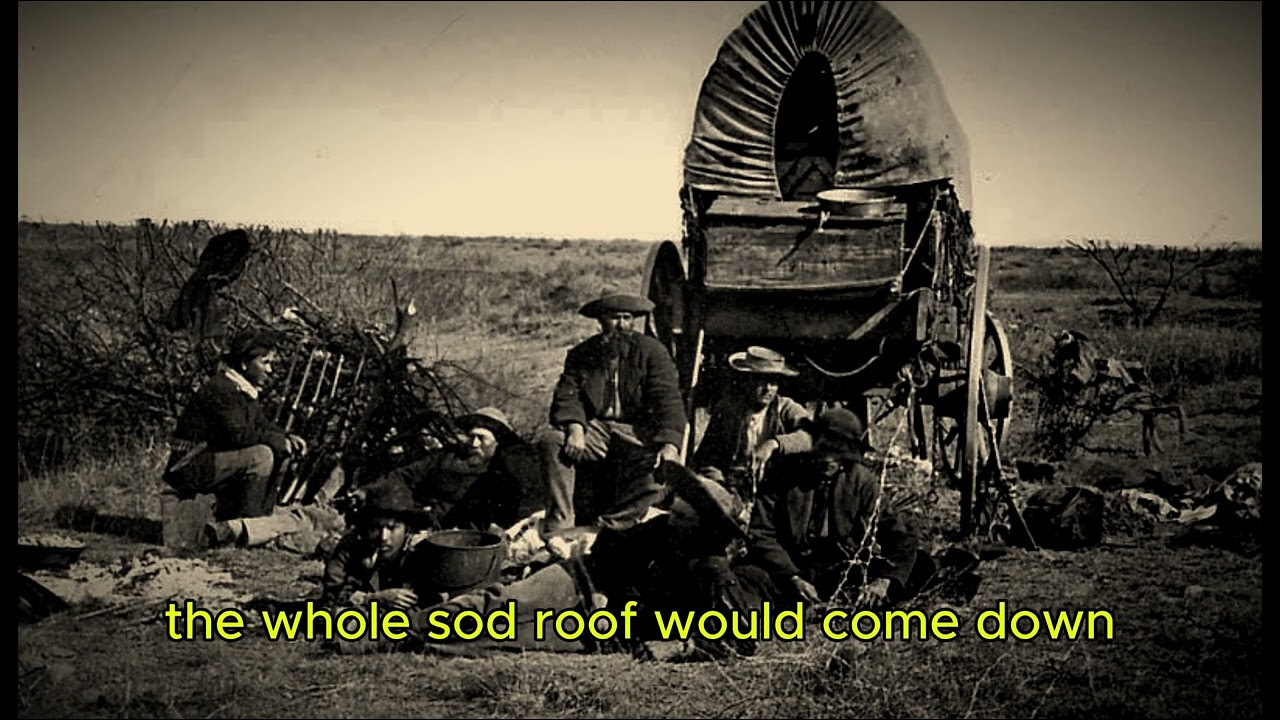
Two men sleeping near the north wall sat bolt upright. Hanrahan came out of his bedroom in his long underwear with a lantern. If the beam broke, the whole sod roof would collapse onto the barrels of whiskey and gunpowder stacked below. So at two in the morning, with the moon still up and the wind blowing gently from the west, all twenty-eight men dressed, lit lanterns, took tools, and went out into the yard to cut a new ridgepole from the cottonwood grove by the creek.
They worked for the next three hours. As dawn broke gray in the east, they were still working. A mile to the east, along a low ridge parallel to the creek, seven hundred warriors sat on horseback, painted yellow, singing softly, taking their positions. Isatai was not with them.
He was on a hill a mile behind, wearing only a hat of sagebrush stems and a coat of yellow paint, watching. He had told the war leaders that morning that his medicine was strong, that every man in the buffalo camp would still be asleep. The warriors could ride in, drag the sleepers from their blankets, and finish it before full daylight. There would be no battle.
Just killing. What Isatai could not know was that a piece of green cottonwood in a saloon roof had cracked at exactly the wrong time, and every man he had promised would be sleeping was awake. Billy Ogg, hired to bring in the horses, was the first to see them. He was walking through the tall grass when he heard hoofbeats, not one or two or twelve, but thousands, a sound like a train passing through the earth.
He turned and saw a line of horsemen three hundred yards away, painted yellow, coming straight at him. Ogg ran, waving his rifle over his head, screaming at the top of his lungs. In the yard between the buildings, Bat Masterson looked up. He saw the warriors coming.
He spoke one word the other men remembered because he said it so quietly and clearly. Indians. Two men did not make it. They were the Shadler brothers, Ike and Shorty, freighters from Dodge City who had arrived late the night before and slept in their wagon with the oxen tied to the wheel.
When the first wave of horsemen came around the corner of the buildings, one brother woke and ran for the door of Myers’s store, fifty feet away, with men waving him in. But he stopped. He turned back to wake his brother. They found him there.
Their small dog died trying to protect them. They were the first two men killed in the second battle of Adobe Walls. Inside the buildings, the fight had begun. In Hanrahan’s saloon were nine men.
In Myers and Leonard’s store, eleven. In Rath’s store, seven, plus Mrs. Olds. Every one of them was a professional shooter, which meant shooting was how they made their living.
In that first hour, they fought with pistols and repeaters at close quarters, because the warriors came so fast the long-range Sharps and Remington buffalo guns were useless. Warriors rode right up to the walls. They beat on doors with rifle butts. Quanah Parker rode his warhorse onto a store porch and threw a lance through a shutter.
One warrior put his gun through a crack and fired straight into the room. He killed nobody. He was himself killed a moment later by three separate shots. At Hanrahan’s saloon, Billy Dixon fired a .
44 Sharps as fast as he could reload. Bat Masterson was beside him with a . 50 Sharps. When their ammunition ran out, a hunter named Mike Welch crawled under fire across the open yard to Rath’s store and came back with a box of cartridges.
Nobody knew how he survived. In the open space between the buildings, a hunter named Billy Tyler ran from the corral toward Myers’s store. He was hit at the doorway; the bullet went through both walls of his chest. He fell inside, still holding his rifle.
His friends carried him to a corner and put a folded blanket under his head. He lived about two hours. His last words were that he was thirsty. He was given water, drank a little, and died.
He was the third man killed that day. Something else happened in that first hour. There was a bugle in Rath’s store. Nobody was quite sure where it came from.
But during the third wave of the attack, they began to hear a bugle playing from the native lines. A cavalry bugle. Clear cavalry calls: Charge. Rally.
Retreat. Charge again. It went on for more than an hour, every note distinct. The hunters concluded it was probably a deserter from the Buffalo Soldier regiments, black cavalrymen who had gone over to the Comanche, or a mixed-blood man raised among them who knew the calls and was now using them to coordinate seven hundred warriors like an army unit.
Nobody ever knew the truth. At some point, the bugler ran into the open, either to retrieve a can of food from the Shadler wagon or to sound another call. He was dropped by a hunter named Harry Armitage from about two hundred yards. The bugle fell silent.
By eight in the morning, the first great attack was over. The warriors had charged in three, perhaps four separate waves. They had reached the walls. They had touched them.
They could not get in. Later, when the hunters had a chance to survey the ground, they found fifteen bodies close enough to the buildings that they had not been recovered. Fifteen men painted yellow. The hunters buried what they could.
On the hill to the east, Quanah Parker was pulling his men back. He had been hit himself, a bullet between shoulder and neck. Not serious, but an ill omen. Isatai had promised the bullets would not touch them.
Yet here was Quanah bleeding, watching his cousin dragged from the field with a broken leg, hearing Little Robe argue with Guipago about what to do next. Quanah rode back a mile to where Isatai still stood on his hill, painted yellow, watching. What was said between them was never recorded. What the warriors remembered was that Quanah was very quiet when he returned.
And Isatai, for the first time in weeks, could not look anyone in the eye. The rest of that first day was strange. There was no mass charge. The warriors circled the site at about six hundred yards, staying just beyond effective rifle range.
They fired scattered shots. They shouted. They came close and backed away. The older warriors understood: they were waiting, waiting to see if Isatai’s medicine would return, waiting to see if the hunters would run out of water or ammunition or courage.
Inside, the men calculated their situation. They had food; Rath’s store was a general store and its shelves were still full. They had ammunition. They had water, though not much.
There was one well in the open yard between the buildings, and fetching water meant crossing forty feet of open ground under rifle fire. They took turns. Billy Ogg, the man who had raised the alarm, went for water twice and came back both times with bullet holes in his hat and his head intact, thanking God in Swedish. Late in the afternoon, the men reorganised.
They dragged the dead oxen away so the smell would not hang over them in the July heat. Hanrahan poured drinks for everyone. He said that given the trouble outside, the whiskey was on the house that night. Nobody laughed much, but everyone drank, then returned to windows and rooftops.
The second attack never came. What came instead, on the night of June 27 and the morning of June 28, was something worse in some ways. The men stayed awake nearly all night. At the first hour after dark, there were drums.
In the second hour, singing. Old songs, the ones the old warriors sang for their dead. In the third hour, in the tall grass, lone voices began calling out in broken English and trade jargon. They called the hunters by name when they knew them.
They told them what they would do when they returned in the morning. They said it in a tone designed to keep men awake. Nobody at Adobe Walls slept well that night. Bat Masterson, in his old age, told an interviewer that the worst part of the fight was not the first attack.
It was the second night, when you had time to think. The singing stopped just before dawn. He said when it stopped, the silence was worse. When the sun rose on June 28, the second day of the siege, the warriors had pulled back.
They were still there, in small groups at the edge of rifle range, watering their horses at Adobe Creek, smoking pipes. They were waiting for the hunters to come out for water, because the well sat in the open. Every time a man exposed himself, there would be fifty rifles ready at six hundred yards. It might have worked, except the hunters had thought ahead.
Before dawn, in darkness, Billy Ogg had crawled to the well and filled twenty-two containers. There was enough water for two more days. The men refused to give the warriors what they wanted. No one left the buildings.
No one was a target. By late afternoon of the second day, the warriors had withdrawn farther. By dusk, they had pulled back behind the hills. The songs did not begin again that night.
Their medicine, whatever it had been, was fading. The younger warriors talked of going home. The elders argued about what to do with Isatai. Quanah moved between camps, trying to hold things together.
On the morning of the third day, June 29, the war party was, in a sense, already defeated. They had gathered on a bluff about a mile east of the buildings, a group of about fifteen men, looking at the trading post and arguing about whether to go home. The older war leaders had had enough. Younger men still wanted one final attack.
Quanah, wounded, sat on his horse listening. Isatai sat nearby, silent and humiliated. Down at the Adobe Walls, in that same moment, someone looked through a telescope and counted the group on the bluff. A man said the words that set in motion what followed.
He said, Billy, why don’t you try them with the big fifty? The big fifty was a Sharps 1874, a long heavy-octagon-barrel rifle designed for buffalo at distances most guns could not reach. It fired ninety grains of black powder and a lead bullet weighing over 500 grains. Billy Dixon borrowed it.
He walked to a window at the north end of the saloon, rested the rifle on a barrel, and set the rear sight to what he thought was the right elevation. He aimed not at any one man but at the group. He said later he did not expect to hit anything. He said the shot was, in his own words, a chance shot, a guess, a scratch.
He held his breath. He pressed the trigger. The heavy rifle boomed and kicked back. A second passed.
Then two. Three. Four. A mile away, a warrior fell from his horse.
He was not killed. Witness accounts gathered from the Comanche years later say he was hit in the elbow, his arm broken, and he survived. But what mattered was what happened next. The warriors on the bluff scattered.
Some stared in disbelief. They had heard the rifle report a moment after their comrade fell, and they understood what had happened. A single rifle had hit a man from a mile away. If a rifle could kill at that distance, there was no safe place in the country.
They rode off the bluff. They gathered their dead where they could. They began the long ride home. Later, the U.
S. Army sent a survey team to measure the distance from the north window of Hanrahan’s saloon to the spot where the warrior had fallen. The distance was 1,538 yards, nine-tenths of a mile. No longer shot in combat had ever been recorded.
Ballistic studies conducted in the twentieth century confirmed that the shot was technically possible. Dixon himself, when a journalist asked him about it years later, said the same thing he always said: it was a lucky shot. Then he paused and added something else. But I was not lacking in confidence in my aim.
The war party dissolved within days. The Kiowa chiefs rode east toward Indian Territory. Some Cheyenne went north. The Comanche bands returned to the Red River tributaries.
Isatai went with them, but not with Quanah. In the villages, the medicine man met a wall of anger. Cheyenne warriors who had lost men at Adobe Walls flogged him publicly with whips. He spent the rest of his long life trying to explain what had happened.
His explanation was always the same: one of the warriors had killed a skunk the night before the battle, a violation of a taboo, and the taboo had broken his medicine. Nobody believed him. He withdrew from public life, lived quietly, and died an old man. As far as anyone knew, he never had another vision.
Quanah Parker did something different. He returned to his village, rested, recovered from his wounds. The Battle of Adobe Walls was not the end of the fighting. It was the beginning.
On July 11, 1874, word reached Fort Sill in Indian Territory. General William Tecumseh Sherman issued the order the army had been waiting to issue for three years: a full-scale offensive against all native peoples not on reservations. The war that followed is known as the Red River War. It lasted from July 1874 to June 1875.
On September 28, 1874, Colonel Ranald Mackenzie led five columns of soldiers into Palo Duro Canyon. There he found the winter camps of the Comanche, Kiowa, and Cheyenne, gathered in a place they had believed safe. Mackenzie attacked at dawn. He took the horse herd, more than 1,400 animals, drove them out of the canyon, and ordered his men to shoot every one.
It took two days. The bones of those horses remained visible on that plateau twenty years later. Without horses, the tribes could not hunt buffalo, could not raid, could not move fast enough to escape the soldiers, could not survive on the plains. That winter, small groups began drifting toward the agencies at Fort Sill and Anadarko.
Quanah Parker and the last of the Kwahadi Comanche held out longest. On June 2, 1875, Quanah rode into Fort Sill at the head of about four hundred men, women, and old people. He gave up his rifle. He gave up his horse.
In a sense, he gave up his name. The war was over for him. But something unexpected had begun. In the years that followed, Quanah Parker became a citizen.
He learned English. He learned to read. He hired lawyers. He negotiated leases with cattle companies on Comanche land.
He argued with agents and congressmen. He went on a wolf hunt with Theodore Roosevelt in Oklahoma in 1905. He built a large wooden house near Cache, Oklahoma, and painted white stars on its red roof. The house still stands.
He kept his Comanche name and his mother’s western name, and in the last thirty years of his life he became a bridge between two worlds that hated each other. He died in 1911, still speaking for his people. Bat Masterson lived longer. He moved north from Adobe Walls to Dodge City, became a marshal, wore a badge in Kansas and Colorado, gambled, drank, and watched the West change around him.
In 1902 he moved to New York City and became a sportswriter for the Morning Telegraph, writing a boxing column for nearly twenty years. On October 25, 1921, he sat at his typewriter to write his weekly column. He wrote three sentences, then stopped. His head slipped forward onto the keys.
He was sixty-seven. The three sentences he had just written were about Adobe Walls. There was no rich man and no poor man there, he wrote. Everyone got the same chance.
Everyone ate the same food. Everyone was of equal value when the trouble started. They were the last words Bat Masterson ever wrote. Billy Dixon settled on the same land where he had fired the great shot.
He served briefly as an army scout during the Red River War, and in September 1874 he held out with four other men against a war party at a place known as the Battle of Buffalo Wallow, for which he received the Medal of Honor, one of only eight civilians ever awarded it. In the 1880s he settled down, married, built a home, and tried to farm. He was not a good farmer, but he was a good neighbour and a quiet man. He died in 1913 of pneumonia at the age of sixty-two.
He was buried at the site of the trading post he had helped defend. A small monument stands there today in a very remote part of Texas. If you drive to see it, you can stand where his window was and look east toward the bluff. It is a very long way.
You narrow your eyes to make out the edge. And even then, you cannot quite believe a man with a black-powder rifle, more than 150 years ago, fired a bullet across all that empty space and hit something. But he did.