The ruler of Dubai, Sheikh Mohammed bin Rashid Al Maktoum, has lost his last brother. Sheikh Ahmed bin Rashid Al Maktoum died at the age of seventy-six. The emirate announced ten days of mourning, and the national flag was lowered to half-staff. Sheikh Ahmed was one of Dubai’s most influential figures, holding senior government positions for decades.
Yet unlike his brothers, his private life remained something of a mystery. His death raised questions not only about its cause but also about his family, his legacy, and the quiet traditions of a ruling house that guards its privacy fiercely. Sheikh Ahmed was the youngest of four brothers who together built modern Dubai. Their father, Sheikh Rashid Al Maktoum, had laid the foundations of the city’s transformation.
After his death, his four sons divided the core responsibilities of governing among themselves. The eldest, Maktoum, became the ruler of Dubai. Hamdan took charge of the state treasury and served as the country’s finance minister. Mohammed oversaw defense, drove the emirate’s largest economic projects, and later became crown prince.
The youngest, Ahmed, received his military education in England before returning home to serve as deputy chief of Dubai’s police and public security services. Beyond his official duties, Sheikh Ahmed left a lasting mark on Dubai’s sporting and business life. He founded and managed a real estate and investment company known as ARM Holding. In the 1960s, he supported a group of local young men who had started a small football team, and he even played alongside them.
That humble team grew into the famous Al Wasl Club, which under his patronage became one of the most successful clubs in the emirate, winning the national title eight times. His true passion, however, was horses. He established the Jebel Ali racecourse, and his horses won prestigious international races, bringing recognition to Dubai’s equestrian world. As public as his career was, Sheikh Ahmed’s family life remained largely unknown.
The world knows a great deal about Sheikh Mohammed’s wives and children, but almost nothing was ever written about Ahmed’s. Even after his death, journalists detailed his career and achievements while making no mention of a wife or children. This silence itself became a source of curiosity. Some information did surface.
One publication reported that the sheikh had a daughter named Ree, and it was widely assumed that his luxury yacht, named Ree 1, was christened after her. Confusion sometimes arose over whether Sheikh Rashid, the British equestrian Natalie Lancaster’s husband, was Ahmed’s son. In fact, he was Ahmed’s nephew, the son of his sister Hessa. That couple raised three daughters and was well known in the equestrian world, but no official records ever confirmed the identities of Sheikh Ahmed’s own wife or children.
The lack of public information about the family of Dubai’s ruler’s brother is not unusual in Arab ruling dynasties. The wives of his brothers are also rarely seen in public. Sheikh Maktoum’s wife, Sheikha Alia, was known in equestrian circles, and Sheikh Hamdan’s wife, Sheikha Rawda, was involved in charitable and cultural projects, yet no photographs of either woman have ever been made public. Ahmed’s family, however, remained even more obscure, and that mystery fueled ongoing speculation.
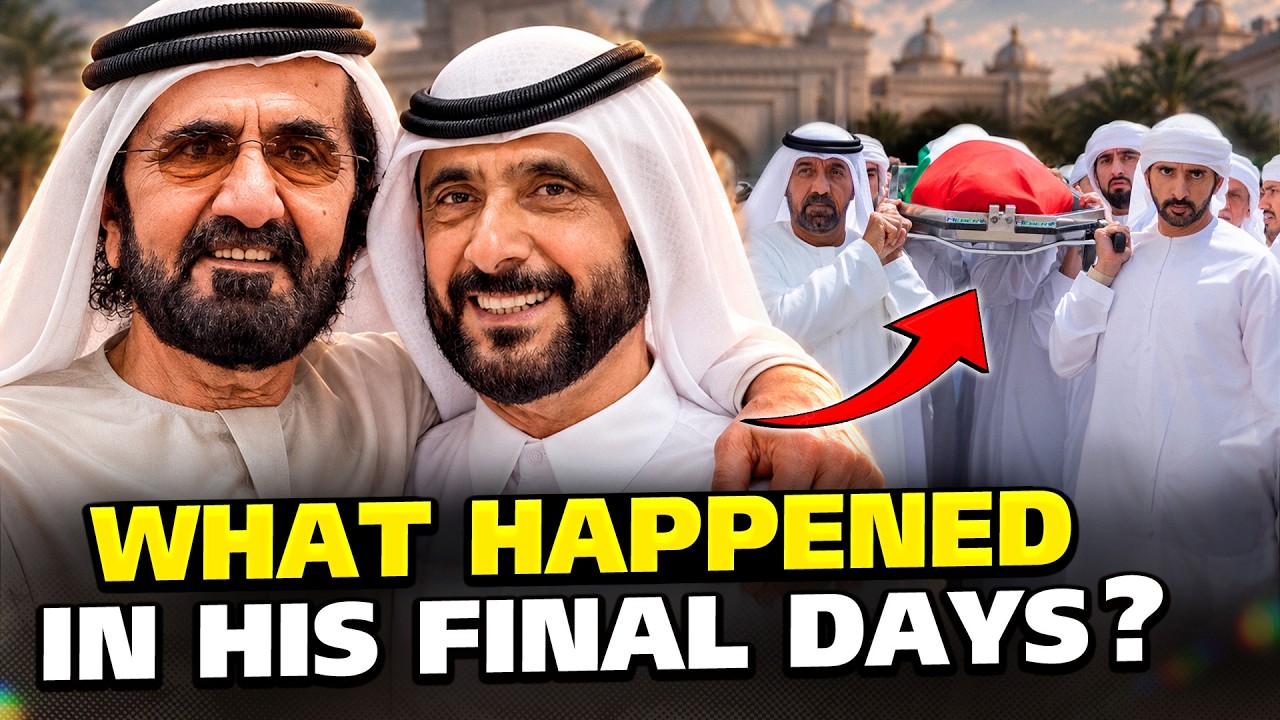
What raised the most questions of all was a detail from the mourning ceremonies. During the condolences, it was not Sheikh Ahmed’s own children who received the mourners. Instead, Dubai’s ruler’s sons took on that responsibility. Crown Prince Hamdan and his brothers Maktoum and Ahmed led the funeral procession and accepted the condolences on behalf of the family.
Observers immediately asked why the nephews had replaced the deceased sheikh’s own children in this official duty. On online forums, many speculated that Sheikh Ahmed had only daughters and that this was the reason his nephews represented him at official events. In Arab society, a man having no sons is a deeply personal and sensitive matter. Ruling families traditionally avoid public discussion of health issues, childlessness, or the absence of an heir.
That silence only intensified interest in Sheikh Ahmed’s private life. The cause of Sheikh Ahmed’s death was not announced by the family. This, too, followed a familiar pattern. His eldest brother Maktoum had died in 2006 during a visit to Australia, with foreign media reporting a heart attack.
Had he died in Dubai, the cause might never have become public. He was only sixty-two. Fifteen years later, in 2021, his brother Hamdan died after undergoing a complex surgery abroad months earlier, but no official cause of death was given. On September 21, Sheikh Mohammed lost his last brother, Ahmed.
Again, the family released no details about the cause. In line with Islamic tradition and the customs of Arab ruling families, the illness and final days of a ruler or a member of a ruling family are rarely discussed in public. There is a belief that a ruler, or anyone in the ruling house, should be remembered by the people as strong and dignified, and that excessive medical information diminishes the peace and honor of the deceased. Still, some details of Sheikh Ahmed’s final days did emerge.
Mohammed Saeed Al Shehi, the CEO of ARM Holding, revealed that he had visited the sheikh just days before his death. As he was leaving, Ahmed told him, “See you again, Bu Qasim. ” No one suspected that those words would be their final farewell. Sheikh Mohammed’s own parting words for his younger brother were equally moving.
Writing in tribute, he said, “You have left our sight, but not our prayers and hearts. ” Behind those few words lay decades of shared life and the grief of a man who had lost all of his brothers one by one. In the days that followed, people began sharing memories of Sheikh Ahmed’s quiet kindness. One of the most touching stories concerned the Al Wasl football club, which he had overseen for many years.
Years earlier, a club employee had died, leaving behind a family that included a three-year-old daughter. When Sheikh Ahmed learned of the situation, he gave orders that the employee’s salary should continue to be paid to the family until the girl turned eighteen. Another resident of Dubai remembered how Sheikh Ahmed had quietly covered the cost of his father’s medical treatment abroad for years and personally checked on the man’s condition, preferring to help people in silence without seeking any recognition. Dubai’s farewell to Sheikh Ahmed did not end with the funeral.
A few days later, a large-scale charitable program was organized in his memory. Thousands of volunteers gathered to prepare more than ten million meals for the people of Gaza. The initiative was named the Ahmed bin Rashid Humanitarian Bridge. Representatives of the Al Wasl football club took part as well.
In this way, people honored the sheikh’s memory by helping those in need, a cause he himself had cared about deeply. With Sheikh Ahmed’s passing, another chapter in the history of Dubai’s ruling family came to a close. Outside the emirate, his name may not have been as widely recognized as those of his famous brothers, but he played an important part in the building of modern Dubai and left behind a legacy of quiet generosity.
The story of his life is not one of public spectacle but of steady contribution, hidden charity, and a devotion to family and community that remained private even in death.