On September 4, 2025, at 8:45 in the morning, Beatriz Uscanga received a phone call from her eighteen-year-old son, Sebastian Mendez Hernandez. He was at the Nueva Central Camionera in Tlaquepaque, Jalisco, the central bus terminal in the Guadalajara metropolitan area. He told her he was waiting for a vehicle that had been sent to pick him up and take him to a job interview. The opportunity had come through someone who had contacted him directly.
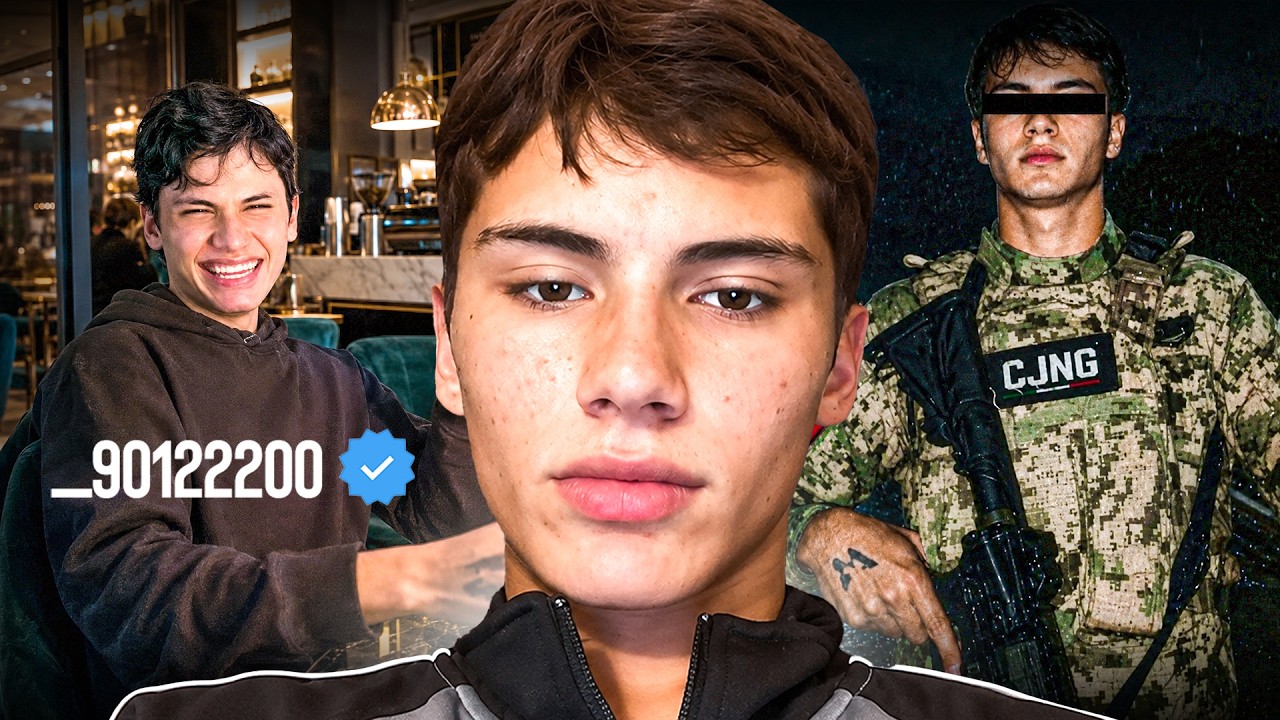
He had traveled from Querétaro to Jalisco on BlaBlaCar, the ride-sharing platform, covering hundreds of kilometers for what he believed was a legitimate employment prospect. After that call, Beatriz never heard from her son again. His phone went dark. His location disappeared.
Sebastian had been born and raised in Veracruz, the port state on Mexico’s Gulf Coast, before relocating to Querétaro, a city in central Mexico. He worked at a restaurant, saved what he could, and planned to return to his education. He had a background in lower division soccer, the kind of football that is not glamorous: early mornings, long travel, and physical discipline. He was also a young man comfortable in front of a camera, with an Instagram presence built around his athletic build and lifestyle.
The label “Instagram model” got attached to him because of how his photographs read, not because of any formal modeling work. The images were the ordinary documentation of an eighteen-year-old’s life, but they would become the raw material for a very different story. What Sebastian did not know was that the Tlaquepaque bus terminal had already been identified by authorities and advocacy groups as a site of systematic forced cartel recruitment. Young people traveling alone to the area, often in response to job offers, had been disappearing from that location with enough regularity that it constituted a documented pattern.
In July 2025, two months before Sebastian disappeared, authorities had pulled two young men out of that same terminal as they were being prepared for transportation to Sinaloa under the cover of a job offer. One was twenty years old. One was fifteen. They were found in time.
Sebastian was not. Beatriz was in Cosamaloapan, Veracruz, when her son disappeared, hundreds of kilometers away. She made the decision that many mothers in her position make: she got on a bus. She traveled more than 900 kilometers.
When she arrived in Jalisco, she began the work that the Jalisco State Attorney’s Office would later be accused of failing to do. She searched. She connected with Madres Buscadoras de Jalisco, a collective of mothers who had spent years looking for their own missing children. She gave interviews and stood in front of cameras and reporters, saying she would not leave without her son.
The Fiscalía de Jalisco moved slowly. Beatriz described the response as negligent. A month passed. Then another.
No body. No ransom demand. No contact. But reports began connecting Sebastian’s case to a broader pattern of Jalisco New Generation Cartel recruitment.
The cartel, one of the most powerful and violent criminal organizations in Mexico, had been documented using fraudulent job advertisements to recruit young men. Once they were lured to a location, they were not given the job they had been promised. They were given a choice that was not really a choice: participate or face the consequences of refusing. Investigators described a pipeline that moved young men from fraudulent job offers through isolation, training, and integration into the cartel’s operational structure.
Recruits were stripped of their phones and identification upon arrival, isolated from contact with family, and given military-style instruction under conditions that made refusal dangerous. In some documented cases, recruits were filmed stating they were there voluntarily, a deliberate creation of false consent designed to prevent families from filing disappearance reports and to create a false paper trail. The term used by advocates to describe men like Sebastian is carne de cañón, cannon fodder: expendable personnel placed in positions of maximum risk because they are the most replaceable. Then, on November 16, 2025, while searching alone in the center of Guadalajara, Beatriz was intercepted by a group of four or five people.
They surrounded her. They beat her. Kicks, injuries to her back. She lost a tooth.
Warnings were delivered to stop searching, to leave Jalisco, to go home. A mother looking for her missing eighteen-year-old son had been physically attacked and told to disappear from the search. She did not stop. Meanwhile, the internet had found a different version of Sebastian’s story.
Posts and Reddit threads in communities like r/narcofootagemexico told a specific tale: that Sebastian had chosen this, that he had wanted to try new experiences, that he had looked at what the cartel offered and decided it was more interesting than anything else available to him. According to the viral account, Sebastian had been taken under the wing of Hugo Gonzalo Mendoza Gaitán, known as El Sapo, described as a key figure in the cartel’s training infrastructure. The claims grew: Sebastian had been given command of his own armed group, deployed to Zacatecas, one of the most violently contested states in Mexico’s cartel wars. He had allegedly overseen the destruction of eight military trucks.
He had risen far enough to be trusted with a role in the personal security apparatus of senior cartel figures. The post that gained the most traction claimed to come from an eyewitness who had gone through the same brutal initiation alongside Sebastian: in one of the cartel’s so-called terror schools, Sebastian had been forced to use the severed head of an injured fellow trainee like a soccer ball. The detail connected directly to his athletic background and traveled because of its specificity and extremity. The criminal charges connected to Sebastian’s alleged activities, according to family and advocacy accounts, carried the potential for a sentence reaching as much as 130 years.
Then, on approximately February 11, 2026, five months after Beatriz had received the last call from her son, Sebastian Mendez Hernandez was found. He was alive. But he was not located through a family search or a human rights investigation. He was detained by authorities in Tepeji del Río, Hidalgo, a municipality in central Mexico, far from where he had disappeared.
He had been registered by local authorities with an incorrect state of origin, listed as being from Sinaloa rather than Veracruz, which the family described as yet another indication of how little attention the system had paid to the actual circumstances of his case. He was found alive. He was also found as a criminal defendant. The collective Buscando a Luis Alan SM confirmed his localization and noted the central injustice immediately: Sebastian had been judged and detained without any consideration of the fact that he had been deceived by a false job offer and allegedly forced into the organization that put him there.
The justice system treated him as a cartel operative. His family’s account, the fraudulent job advertisement, the disappearance at the bus terminal, the months of silence, did not appear to have entered the legal calculation that led to his detention. A person can be simultaneously accused of participating in crimes and a victim of the organization that put them in a position to commit those crimes. Those two things are not mutually exclusive.
International frameworks for trafficking recognize that victims of trafficking can be simultaneously victims and perpetrators of crimes committed during their exploitation. Mexican law has provisions that could in theory account for forced recruitment in sentencing and prosecution. Whether those provisions would be applied in Sebastian’s case depended on whether the justice system was willing to investigate the circumstances of his recruitment with the same rigor it applied to the circumstances of his alleged crimes. Beatriz’s response was to push for what advocates call a defensa integral, an integrated defense that would require the justice system to examine not just what Sebastian allegedly did, but how he came to do it.
Her argument was that her son was trafficked: that the people who placed a fraudulent job advertisement, contacted a young man, transported him to Jalisco, and then integrated him into a criminal organization under threat, are the primary criminals in this story. And that prosecuting Sebastian without prosecuting the system that recruited him mistakes the exploited for the exploiter. The argument is not unique to Sebastian’s case. In the first half of 2025 alone, approximately 7,400 people were reported missing across Mexico, the majority of cases, according to researchers, connected to forced recruitment by organized crime.
The Rancho Izaguirre case, which federal investigators documented in connection with the cartel’s recruitment operations, found identification documents belonging to people from multiple Mexican states at a single training location: young men pulled from Querétaro, Jalisco, Veracruz, and Sinaloa, each reached through some version of the same fraudulent promise that had brought Sebastian to a bus terminal at 8:45 in the morning. The story of Sebastian Mendez Hernandez is still being written. He is alive. He is detained.
His family is fighting. He had tattoos: a black butterfly on his left hand, an inscription behind his right ear, Arabic lettering on both calves, a cross on his right arm. He had wavy dark brown hair, a scar on his right abdomen, and a mother who traveled 900 kilometers, got beaten, and kept going. The headline says “Instagram model turned cartel hitman.
” A young man disappeared. His mother searched for him and was beaten for it. He was found alive, but trapped inside a criminal case that may not fully account for how he got there. The viral story has already decided what happened.
The documented record tells something more complicated. And somewhere between those two versions of events is a young man with a black butterfly tattooed on his left hand waiting to find out which version of his life the system is going to hold him responsible for.