The real Old West had little in common with the one Hollywood built. Its bankers drowned in the bay after their schemes collapsed, orphaned boys slipped through jail chimneys, and games of faro moved more money than many banks ever held. These thirty stories reveal a frontier far stranger, and far more human, than the movies ever showed. The men who rode through that world were often more superstitious than brave.
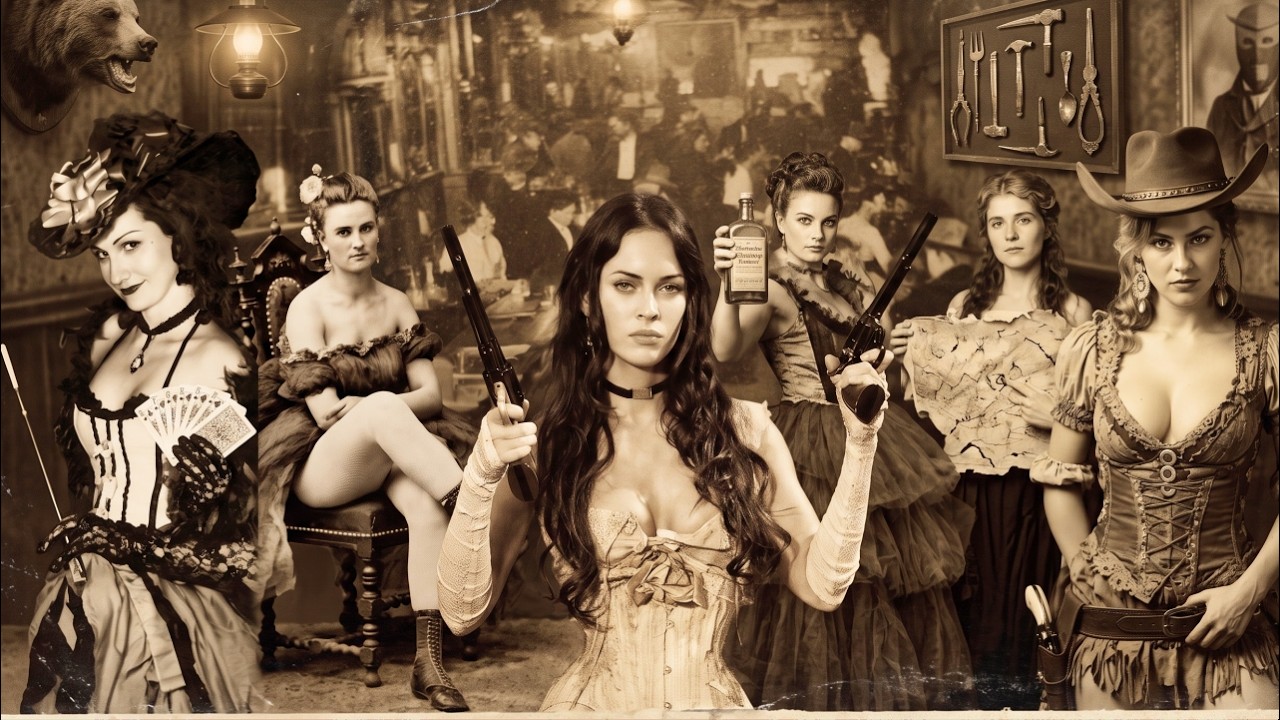
In mining camps, no one whistled inside the tunnels for fear of waking the dead buried in the rock. Cowboys trusted their horses more than their guns, and if an animal refused to continue down a trail at night, they turned back without argument. When Wild Bill Hickok was shot in the back while holding two aces and two eights, the combination became known as the dead man’s hand, and many players refused to touch it. In a place where death waited around every corner, superstition was not ignorance.
It was survival. Much of the frontier economy was built on fraud. During Nevada’s silver rush between 1860 and 1880, hundreds of companies sold stock in San Francisco, New York, and even London, yet most never pulled a single ounce of silver from the ground. Promoters sold hope to investors who would never see the mines.
A rumor of a new vein could send a stock soaring, and the owners would sell everything before the truth came out. William Ralston, the founder of the Bank of California, bet heavily on the mines, wrecked his own bank, and was found dead in the bay one day after the collapse in 1875. The scams that would later plague Wall Street were already running in the West, just with dust on their boots. The last great gold rush arrived too late.
In 1890, the government officially declared the frontier closed, but Colorado never got the message. A year later, a cowboy named Bob Womack found gold near Cripple Creek, and the town exploded with fifty thousand people, an opera house, electric lights, telephones, streetcars, and more than four hundred million dollars in gold. Beneath that shine was a darker story: children worked in the tunnels, the governor sent the militia to crush a strike for fair pay, and Womack himself sold his claim for almost nothing and died poor. While saloons staged their famous brawls, another war raged in the shadows, and Hollywood never told it.
Chinese immigrants, barred from the courts, the banks, and the police, built their own parallel system known as the Tongs. In theory, these were mutual aid associations. In practice, they became criminal empires. The two largest, Hip Sing and On Leong, fought for control of gambling, opium, and protection rackets in San Francisco, Sacramento, and Portland.
Their gunmen, called hatchet men, killed rivals in broad daylight. Between 1880 and 1900, dozens died every year, and the police looked the other way. To the authorities, a death in Chinatown was a Chinese problem. Billy the Kid was just fourteen when he committed his first crime.
Before he became the most wanted gunslinger in the West, William Bonney was an orphaned boy in Silver City, New Mexico. His mother died of tuberculosis in 1874, and his stepfather abandoned him. In 1875, he stole clothes from a laundry, was arrested, and escaped through a jail chimney because he was skinny enough to fit. It was the first of many escapes, and it turned him into a fugitive for the rest of his life.
The legend speaks of a born killer. The record shows an abandoned child no one tried to save. The most famous job in the West paid almost nothing. In 1880, a cowboy spent about ninety days driving cattle from Texas to Kansas, sleeping on the ground, for twenty-five to forty dollars a month.
At the end he might pocket seventy-five to a hundred and twenty dollars, but his saddle, bridle, rope, and boots cost up to sixty dollars, and his work clothes another fifteen. Once he reached Dodge City, the saloon and the poker table took the rest in a night or two. Records show cowboys heading home owing money to their own bosses. Fire was the frontier’s most patient enemy.
Kerosene lit every saloon, hotel, and home, and one bump into a table could turn a floor into a carpet of flame. Towns were built of dry wood, packed tightly together, with no fire hydrants and no fire departments. San Francisco burned to the ground six times between 1849 and 1851. Chicago lost seventeen thousand buildings in 1871, and legend blamed a lantern knocked over in a barn.
Whatever the fire took, no one gave back. The West also knew financial disaster long before Wall Street did. In the 1880s, British investors poured millions into American cattle. Herds grew beyond control, grazing land ran out, and warnings went unheard.
Then came the winter of 1886–1887, which cowboys called the great die-up. Back-to-back blizzards with temperatures forty degrees below zero killed millions of cattle. By spring, carcasses lay as far as the eye could see. Foreign companies went broke, credit dried up, and entire ranches vanished.
The circus paid better than the ranch. While a cowboy earned thirty dollars a month sleeping on the ground, circus performers traveled by train and ate three hot meals a day. In 1880, Barnum’s operation moved on five trains with twenty-five cars each. When the circus came to town, banks closed, schools let out, and families walked miles to watch elephants step off the train cars.
So-called freaks often earned more than doctors. General Tom Thumb became a millionaire and dined with the Queen of England. Nor was anyone sold an illusion about danger. The Pony Express recruited riders with ads that practically admitted the job might kill you, preferring orphans.
The route crossed nearly two thousand miles of desert and mountains, with a lone rider galloping and switching horses at every stop. Mines advertised tunnel work while openly mentioning the risk of cave-ins. The lines of applicants only grew longer. Women changed the Constitution without the right to vote.
In 1874, an American woman could not vote, could not open a bank account on her own, and in many states had no right to custody of her own children. The Woman’s Christian Temperance Union appeared on the surface as a crusade against alcohol, but behind the scenes it was a political machine pushing for voting rights, education, and protection from abusive husbands. With more than 150,000 members, it was the largest women’s organization in the country. Prohibition in 1919 bore the fingerprints of forty years of that work.
The West was also divided over silver. Between 1880 and 1896, eastern bankers backed gold while western miners and farmers demanded silver be used as money. More silver in circulation meant better prices for those who farmed and owed money. In 1896, William Jennings Bryan took the Democratic convention stage and declared, “You shall not crucify mankind upon a cross of gold.
” The crowd went wild for half an hour. He lost the election, but the speech became legend. Duels were legal in Nevada until 1903, and Arizona kept the practice alive until 1907. The last recorded duel in the West took place in Nevada in 1897 between two newspaper editors who settled a press feud with bullets.
Both survived, went to trial, and received suspended sentences. Real duels were rare, full of rules and paperwork, and almost nobody died. California’s farms were built by Chinese hands. After finishing the railroads, thousands of Chinese workers went to the fields, using irrigation techniques centuries old to drain the Sacramento River Delta with shovels and wheelbarrows.
Records show that farms with Chinese workers produced up to three times more. Then came the Exclusion Act of 1882. Crops rotted in the fields, and farmers begged Congress to reverse course. The California that feeds America was built largely by men the country decided to drive out.
A judge could hand your child over to a stranger. After the Civil War, courts in the South took orphaned children or children from poor families and placed them with farmers until they turned eighteen. For newly freed black children, this apprenticeship became forced labor, with no pay, no right to leave, and physical punishment allowed by law. Court records from North Carolina and Maryland document children as young as six bound for more than a decade.
Congress received detailed reports, filed them away, and moved on. Entire towns were built knowing they could disappear. Abilene, Kansas, was a handful of cabins in 1867, then exploded when the railroad arrived with Texas cattle. Within three years, it had hotels, banks, and saloons running day and night, and Wild Bill Hickok served as sheriff.
In 1872, local farmers, fed up with the fever spread by ticks on Texas cattle, drove the herds out, and the town died. Dodge City, Ellsworth, and Caldwell followed the same cycle. These towns were machines built around cattle money. What conquered the West was not the revolver but the windmill.
Early settlers on the Great Plains gave up within months because there was no surface water. In 1888, a Chicago businessman launched the air motor windmill, pulling water from dozens of feet underground using nothing but wind. Hundreds of thousands of windmills soon spun from Texas to Dakota, and every steel tower meant one more family could stay. No one saw the limit, and when the drought of the 1930s came, that limit came due.
The government paid people to kill wolves. Starting in the 1860s, western states offered bounties, and between 1915 and 1940 the federal government took over with hunters, poison, and traps. Between 1. 8 and 2 million wolves were wiped out.
Without predators, deer and elk multiplied, ate the vegetation, and threw entire ecosystems out of balance. Rivers changed course and trees stopped growing. Yellowstone had no wolves again until 1995, when fourteen animals from Canada were released, 130 years after the killing began. Poker was not the game of the Old West.
Faro was. Its house edge was small, around three to five percent, which is why people called it the honest game. In Tombstone in 1881, there were more faro tables than any other type of business. Doc Holliday, the most feared gunfighter of the West, was a professional faro dealer.
That was his real job. Wyatt Earp managed gambling tables. The fortunes of the frontier’s most famous names came from a deck of cards. The most powerful man in town was not the sheriff but the telegraph operator.
In an isolated town, he alone knew things before everyone else: the price of cattle in Chicago, election results, the train carrying money arriving on Friday. Some sold that information before the news got out. Outlaws knew the risk and often cut the telegraph line before robbing a train. Whoever controlled that copper wire controlled the town.
In 1849, when cholera swept the plains, trained doctors opened veins to remove bad blood and prescribed calomel, literally mercury. Many died from the treatment, not the disease. Native healers isolated the sick, kept the water clean, and used plants science would later confirm, willow bark, garlic, valerian. In several outbreaks, native villages buried fewer people than white towns.
The railroads conquered the West from Washington. Their lobbyists handed out free stock, paid trips, and funded campaigns. In 1872, the Credit Mobilier scandal exposed how Union Pacific’s builders had given shares to members of Congress for their votes, and almost no one paid for it. The railroads got free land, millions in subsidies, and no control over rates.
A rule invented by prospectors 150 years ago still decides who gets water in the American West. During the gold rush, there were no judges, so miners agreed that whoever reached the river first used the water first. That rule became law. Ranchers in Wyoming hold water rights older than the city of Las Vegas.
In 1864, a Chinese man named Hung Wa placed an ad offering workers to build railroads. The Central Pacific hired him, and he led roughly twenty thousand Chinese workers through the granite of the Sierra Nevada with gunpowder. He watched the final spike driven in 1869. In 1882, the country banned Chinese immigration, and naturalization was still denied.
Hung Wa died in 1915, never an American citizen. The last great cattle drive of the classic era took place in 1895, from Texas to Nebraska, led by Charles Goodnight at fifty-nine years old, the same man who had opened the trail at thirty. The Old West did not end with a single gunshot. It faded away year after year, as the same cowboys who built it grew old along with it.
The frontier was not cut off from the world. Three years after Alexander Graham Bell filed his patent, Denver had commercial telephone service in 1879. By 1880, San Francisco and Kansas City had phone lines, and Tombstone got theirs around the time of the gunfight at the OK Corral. Wyatt Earp walked through a town that had telephones.
On the night of October 8, 1871, while everyone talked about the Great Chicago Fire, a firestorm swallowed the town of Peshtigo, Wisconsin, moving faster than a man could run. In about an hour, between 1,500 and 2,500 people died, making it the deadliest wildfire in American history. Some rushed to the river and died in the water. Chicago, where around three hundred died, got all the coverage.
Peshtigo got none. Calamity Jane existed on paper before she existed in real life. In the 1870s, Martha Jane Canary was an ordinary worker driving wagons and scouting. Dime novel writers invented a gun-toting heroine using her name, and she realized the lie paid better than the truth.
She starting living the character, selling autographs and telling stories that never happened. As she lay dying in 1903, she asked to be buried next to Wild Bill Hickok, the great love of her life, though that romance probably never existed. In 1849, while thousands arrived in San Francisco seeking gold, the Daily Alta California became the first daily newspaper in the state and the strongest voice in the West. In the 1860s, an unknown young reporter worked in its newsroom.
His name was Mark Twain. The newspaper paid for his cruise through Europe and the Holy Land in 1867, and the letters he sent back became The Innocents Abroad, the book that launched his career and outsold Tom Sawyer during his lifetime. The image the world has of the Old West was not created in the East.
It was printed in a San Francisco press room by men who had arrived by ship around Cape Horn.