In July 1999, the nation learned that John F. Kennedy Jr. , his wife Carolyn Bessette Kennedy, and her sister Lauren Bessette had perished when their Piper Saratoga aircraft plunged into the Atlantic Ocean off Martha’s Vineyard. The loss extinguished the most tantalizing political “what if” in modern American history.
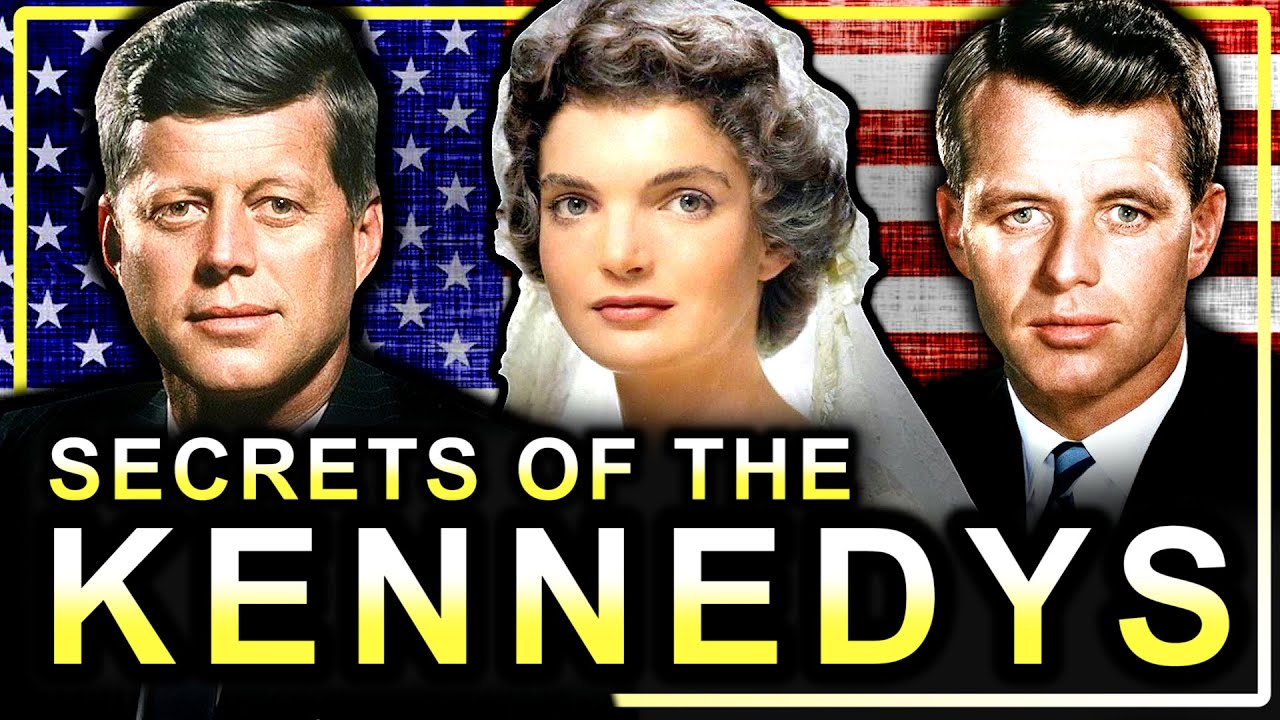
Born into the spotlight, John Jr. was the son of President John F. Kennedy and Jacqueline Bouvier Kennedy, and his birth in 1957 had made him the first child of an incumbent president born in the White House. At age three, he offered a salute to his father’s casket, an image that forever linked him to the tragedy that defined his family.
His mother shielded him and his sister Caroline from the Washington glare, raising them in New York’s private schools. John Jr. attended Brown University, where he studied American history, struggled with distractions, and relied on his mother’s discreet guidance. After graduation, he navigated the opulent world of Manhattan’s elite, his name both a crown and a burden.
He pursued a legal career, passing the bar on his third attempt and serving as an assistant district attorney in Manhattan, where he prosecuted violent crimes with notable resolve. In 1995, he founded George magazine, blending politics, the arts, and celebrity culture into a commercially successful publication that reflected his eclectic interests. The following year, he married Carolyn Bessette, a public relations executive, in a ceremony on Cumberland Island that captivated the media. As the 1990s drew to a close, speculation grew that John Jr.
might follow his father into elected office, with some imagining him as governor of New York or even president by 2004. He never publicly declared such ambitions, but the possibility hovered over his public life. The story of the Kennedy dynasty, however, did not begin with John Jr. ’s promise.
It began with his grandfather, Joseph P. Kennedy Sr. , the son of Irish immigrants who set out in Boston in the early twentieth century to transform his family’s standing. By 1919, Kennedy perceived a golden opportunity in the impending Prohibition era, and he allegedly established a network of bootlegging operations that produced enormous profits.
While the extent of those operations has been disputed by historians who found no evidence he was a major bootlegger, the rumors followed the family for generations and were used against his son during the 1960 presidential campaign. At the same time, Kennedy entered the volatile world of Wall Street. His investments thrived during the bull market of the 1920s, and in 1928 he purchased a chain of movie theaters for $8 million, selling it a year later for a $15 million profit. Sensing an impending downturn, he liquidated most of his stock holdings by 1929, just before the Great Crash.
He then bought stocks back at rock-bottom prices during the Depression, exponentially multiplying his fortune. Real estate added to his wealth, including the purchase of the Somerset Hotel in Boston in 1926 and the profitable lease of the iconic building at 14 Wall Street in New York in 1929. Hollywood also drew Kennedy westward. In the late 1920s, he took control of several film studios, including FBO Studios, which he sold to RCA in 1929 for $4.
6 million, helping form what became RKO Pictures. By 1935, his fortune had grown from $4 million to an estimated $180 million. He was appointed the first chairman of the Securities and Exchange Commission by President Franklin D. Roosevelt in 1934, where he helped establish foundational regulations for American markets.
By 1957, his wealth was estimated at up to $400 million, placing him among the richest men in the United States. His ambition extended beyond money. Joseph Kennedy invested heavily in the education of his nine children, sending them to Harvard, Stanford, and Radcliffe. He intended his eldest son, Joseph Jr.
, to carry the family into politics, but Joseph Jr. was killed in World War II in 1944. The mantle fell to the second son, John F. Kennedy, who won a seat in the U.
S. House of Representatives for Massachusetts in 1946 and ascended to the Senate in 1952, defeating incumbent Henry Cabot Lodge Jr. with the help of his family’s formidable campaign machinery. On November 8, 1960, John F.
Kennedy defeated Vice President Richard Nixon in one of the closest presidential elections in American history, becoming the first Irish Catholic president. The presidency represented the fulfillment of Joseph Sr. ’s dream, the culmination of a journey from immigrant roots to the pinnacle of American power. Wealth had been instrumental throughout, allowing the family to influence media, fund robust campaigns, and operate at the level of the old money elite.
The family’s social ascent also depended on carefully cultivated alliances. John F. Kennedy’s marriage to Jacqueline Bouvier in 1953 united the new money Kennedys with a distinguished old money lineage. Jackie’s ancestry traced back to early French immigrants, and her family’s wealth and social connections spanned generations.
Her grace, style, and cultural refinement helped soften the Kennedy image and lend it legitimacy among the established elite. As first lady, she restored the White House with historical authenticity, hosted a televised tour in 1962 that reached millions, and established the White House Historical Association. The term “Camelot,” invoked by Jackie in an interview after her husband’s assassination, cast a near-mythical aura over the administration and fused the Kennedy legacy with the noble ideals of Arthurian legend. The presidency itself transformed how America viewed its leaders.
John F. Kennedy’s youthful energy and optimistic charisma, along with Jackie’s elegance, set a new standard for political communication and cultural vitality. The administration brought the arts to the White House, and the National Endowment for the Arts was established during their tenure. Yet the era was also marked by crises, including the Bay of Pigs invasion, the Berlin crisis, and the initiation of the Apollo space program.
Tragedy shadowed the dynasty relentlessly. Joseph Jr. ’s death in 1944 was followed by the assassination of President Kennedy in Dallas in 1963, the assassination of Senator Robert F. Kennedy in 1968, and the Chappaquiddick incident involving Ted Kennedy in 1969.
Each time, the family responded with a composed public resilience that reinforced their stature. Jackie Kennedy’s poise after her husband’s murder left a deep impression on the American public, further associating the family with an old money ethos of stoic endurance. The family’s properties became landmarks of their legacy. The Kennedy Compound at Hyannis Port, purchased by Joseph Sr.
in 1928, served as a campaign nerve center in 1960 and later as a summer White House. The main house, a classic Cape Cod structure spanning nine thousand square feet with twelve bedrooms, was joined by neighboring properties acquired by John, Robert, and Edward Kennedy. In 2012, the main house was donated to the Edward M. Kennedy Institute for the United States Senate, honoring a promise made by Senator Kennedy to his mother.
In Palm Beach, the estate known as the Winter White House had been acquired by Joseph Sr. in 1933 for $110,000. There, John F. Kennedy wrote portions of his Pulitzer Prize-winning book Profiles in Courage and later drafted his inaugural address.
In New York, the Fifth Avenue penthouse Jackie acquired in 1964 became her residence until her death in 1994, a symbol of her resilience and her advocacy for historic preservation. Hickory Hill in Virginia, purchased by Robert and Ethel Kennedy in 1955, hosted the famous Hickory Hill seminars organized by historian Arthur Schlesinger Jr. , gatherings that brought together leading thinkers and shaped American policy debates. The women of the family were central to the old money ethos the Kennedys cultivated.
Rose Fitzgerald Kennedy, born in 1890, came from the influential Fitzgerald family of Boston and married Joseph Sr. in 1914. Her father, John F. Fitzgerald, had served in the state senate, the U.
S. House, and as mayor of Boston, and her upbringing in the lace-curtain Irish American elite taught her the importance of education, refinement, and political connection. Eunice Kennedy Shriver founded the Special Olympics in 1968, hosting the first international games at Chicago’s Soldier Field with one thousand athletes from twenty-six states and Canada. Her advocacy, inspired by her sister Rosemary, also influenced President Kennedy to establish a committee on developmental disabilities that led to the creation of the National Institute of Child Health and Human Development.
Jean Kennedy Smith founded Very Special Arts in 1974 and later served as U. S. ambassador to Ireland, where she played a role in the Northern Ireland peace process. Maria Shriver became a prominent journalist, founded the Women’s Alzheimer’s Movement, and received the Alzheimer’s Association Lifetime Achievement Award in 2017.
Caroline Kennedy served as U. S. ambassador to Japan from 2013 to 2017. Ethel Kennedy, widow of Robert, founded the Robert F.
Kennedy Center for Justice and Human Rights after her husband’s assassination. John F. Kennedy Jr. carried this burden of legacy into the 1990s.
After his mother’s death in 1994, he assumed a more purposeful public role. He resumed his editorship at George magazine, and observers noted that his actions seemed to echo what Jackie herself might have ordained. His marriage, his magazine, and his rumored political future all pointed toward a leader prepared to rekindle the flame of a past Kennedy era. On the day of the crash, he had planned to bring Lauren to Martha’s Vineyard before continuing with Carolyn to Hyannis Port for a family wedding.
Data traces showed the aircraft descending from 2,200 feet to 1,100 feet in fourteen seconds before disappearing. Search crews mobilized from the Coast Guard, Navy, and Air Force, and on July 21, divers recovered the victims from the ocean floor. The National Transportation Safety Board ruled out mechanical or navigational failure, concluding that Kennedy, a pilot still gaining experience, likely became disoriented in darkness and fog. His funeral on July 23 was held at the Church of St.
Thomas More in Manhattan, attended by President Bill Clinton and Senator Ted Kennedy, who delivered a eulogy describing John’s duality as both a family member and a national symbol. The nation mourned not just another Kennedy lost to tragedy, but the disappearance of a promise. In the decades since, questions persist about what might have been. Scholars and commentators continue to debate whether John F.
Kennedy Jr. might have become a unifying figure in an era of deep political divides. That debate, unresolved and unresolvable, testifies to the enduring power of the Kennedy name, a name that rose from immigrant roots to the peak of American power, endured setbacks that would have destroyed lesser dynasties, and left an imprint on the country’s imagination that money alone could never buy.