On September 9, 2024, coordinated violence erupted across Culiacan, the capital of Mexico’s Sinaloa state. Armed clashes broke out in multiple neighborhoods simultaneously. Vehicles burned in the streets. Schools closed.
A Mexican army sergeant was killed in a firefight. The government canceled planned Independence Day celebrations. Convoys of masked gunmen moved openly through the city. An all-out civil war had begun inside the Sinaloa Cartel, long described by US federal prosecutors as the largest, most violent, and most prolific drug trafficking operation in the world.
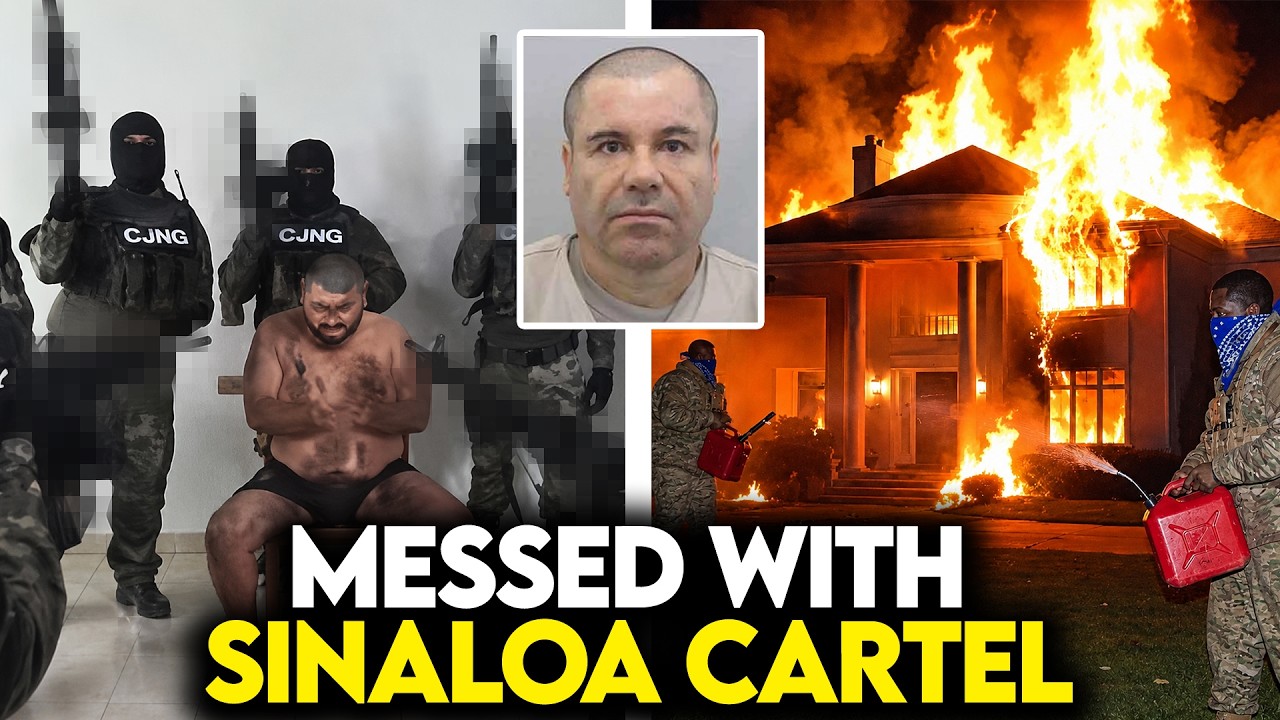
Within the first week to ten days of that conflict, a number began circulating: 28. Local human rights organizations and search collectives, including Sabuesos Guerreras, a group founded by mothers and family members who had spent years searching for the disappeared in Sinaloa, documented a rapid spike in missing persons reports filed with the Sinaloa Attorney General’s Office. The registered count of officially reported disappearances came to roughly 28 to 30 people. That number, 28, would take on a life of its own, presented by some as a hit list of people who had allegedly disrespected the cartel.
The reality was far more disturbing and far more ordinary. The roots of the war lay in the leadership structure that had long balanced the Sinaloa Cartel. Joaquin Archivaldo Guzman Loera, known as El Chapo, was the flamboyant, headline-grabbing figure who was eventually captured, extradited to the United States in January 2017, and convicted by a federal jury in New York in 2019, receiving a life sentence plus 30 years. His partner, Ismael Zambada Garcia, known as El Mayo, was the quiet, methodical co-founder who survived for decades while those around him fell.
After El Chapo’s imprisonment, power transferred to his sons, four brothers collectively known as Los Chapitos. Under their leadership, federal prosecutors alleged, the cartel pivoted from cocaine and methamphetamine toward fentanyl, a synthetic opioid devastatingly addictive and cheap to manufacture at industrial scale. By some estimates, the Chapitos’ alleged fentanyl operation was contributing to the deaths of nearly 200 Americans every day. El Mayo and the Chapitos coexisted uncomfortably after El Chapo’s imprisonment.
El Mayo represented the cautious old guard, deeply embedded in the organization’s infrastructure. The Chapitos represented a younger, more aggressive style of leadership. For years, the tension simmered beneath the surface. Then, on July 25, 2024, everything broke.
According to a letter later released by his attorney, El Mayo believed he was heading to a legitimate meeting. What allegedly happened instead was that Joaquin Guzman Lopez, one of El Chapo’s sons, seized El Mayo, bundled him onto a private plane, and flew him directly into the hands of United States authorities in Texas. Both men landed in American custody on the same day. Joaquin Guzman Lopez’s lawyer denied any deal with the government.
El Mayo alleged he had been kidnapped and betrayed. Among people who operate inside criminal organizations at that level, the alleged act carried only one possible response. The faction loyal to El Mayo, which became known as La Mayiza, understood that the Chapitos had chosen to destroy rather than coexist. On September 9, 2024, La Mayiza answered with open warfare.
Within the first week of that conflict, the demographic picture of the initial 28 missing began to emerge. Independent database reviews by human rights organizations and journalists built a clear profile. 84 percent were male. The highest concentration, 44 percent, fell between 18 and 29 years old.
Another 28 percent were between 30 and 39. The vast majority of the abductions took place on the streets of Culiacan, with the coastal city of Mazatlan emerging as a secondary epicenter. These were not cartel bosses. These were not high-level operators making strategic decisions about drug shipments.
These were young men. And they disappeared for reasons that fell into three distinct categories. The first category was rival operatives. Low-level lookouts known as halcones, neighborhood dealers, and financial associates connected to one faction were systematically targeted by the other.
In a war between two sides of the same organization, both factions already knew who their enemies were at the street level. When the shooting started, those ground-level operators became immediate targets, not primarily for open execution, but for abduction and interrogation. They were taken to extract information about safe houses, weapons caches, and the locations of higher-ranking figures. After giving that information or refusing to give it, they were disappeared, buried in remote locations that families, even with the help of search collectives, might never find.
The second category involved no meaningful connection to the cartel world at all. As gunmen were being killed in open street battles in those first days, both factions faced a brutal logistical problem. They were losing manpower faster than they could replace it. Their solution was to simply take people off the street.
Families across Culiacan reported sons vanishing while walking to work, while stopping at a convenience store, while standing outside their homes. Young men between 18 and 29, the age that both factions considered capable of handling a weapon, were forcibly conscripted by whichever armed group reached them first. They were not asked. They were not recruited.
They were taken. Many of the families who filed those initial 28 missing persons reports were not the families of cartel members. They were mothers who had last seen their sons in the morning before work and never saw them again. They were wives who watched their husbands step outside and disappear.
The third category involved people who had no proximity to cartel operations whatsoever. Delivery drivers stopped at roadblocks who saw things they were not supposed to see. Civilians in the wrong neighborhood when a faction was asserting control. People mistaken for lookouts because of where they were standing.
A father walking with his daughter in Culiacan one evening was stopped by an armed group and taken in front of her. According to reporting from Al Jazeera, he was later found dead, dumped by the road with no explanation offered to his family. He was a father on an evening walk who became collateral to a war. There was a fourth dimension to these disappearances that made them even harder to track.
Both factions, according to researchers who study cartel violence tactics, made a deliberate strategic decision in those early weeks. They chose to pivot away from leaving bodies visible in public places. The reason was operational, not compassionate. Bodies on streets attract military intervention.
Disappearances are harder to count, harder to attribute, and far harder for authorities to act on. By making people vanish, by using clandestine graves, remote dump sites, water wells, and methods of disposal that eliminated evidence entirely, the factions could continue their high-casualty war while keeping official murder statistics significantly below the reality on the ground. Sabuesos Guerreras understood exactly what this meant. The collective had already located more than 650 bodies in clandestine graves across Sinaloa before the civil war even began.
Their founder, Maria Isabel Cruz Bernal, had been watching disappearances slowly rise since July 2024 when El Mayo was first detained. When September 9 arrived, that trend accelerated into something she described as unlike anything the collective had encountered in years of work. The 28 who were registered in the first week were almost certainly an undercount even at the time. The people whose families were too afraid to go to the Attorney General’s office in a city where armed men were openly patrolling the streets would only become visible later, when search teams found remains in locations no one had thought to look.
The 28 did not stay at 28. By September 21, 2024, just two weeks into the conflict, Reuters reported that the official toll had surged to 51 missing alongside more than 50 confirmed deaths. A single day, September 17, recorded 30 murders. Five bodies were found in an abandoned white van on the outskirts of Culiacan with the words Welcome to Culiacan spray painted across its side.
Decapitated bodies were hung from bridges. By December 2024, BBC News confirmed that disappearances in the state of Sinaloa had more than doubled compared to the previous year, surpassing 200 missing people since the war began. The war did not stop. According to data collected by Noroeste, a local Sinaloa outlet, the war between Los Chapitos and La Mayiza has generated over 2,900 missing persons reports and more than 2,400 recorded killings since September 2024.
Total casualties, dead or missing, are estimated by some tracking organizations at over 4,000. Homicides in Sinaloa rose from 44 in August 2024 to 142 in September alone, more than a threefold increase in a single month. The tourism industry in Mazatlan saw kidnapping surge by 83 percent compared to the same period the previous year. The city that had long learned to navigate around cartel power suddenly had no edges to navigate around.
The documented accounts from journalists who covered the Culiacan conflict in those weeks reveal what the 28 actually looked like as human beings. A man stopped while walking with his daughter, taken in front of her, found dead weeks later on the side of a road. A young man who left his home in the morning to go to work and simply did not come back, his family making announcements on local radio stations and in social media search groups. Workers at local businesses caught at roadblocks established by armed convoys, their proximity to a checkpoint sufficient for someone with a gun to decide that the safest thing to do with a potential witness was to make them disappear.
A group of people traveling to Mazatlan were attacked at a convenience store by armed men, taken to a vacant lot, stripped, and shot. Their remains were disposed of in septic tanks. One person survived by hiding in one of those tanks for 24 hours before escaping, eventually contacting Sabuesos Guerreras months later to report the location. The civil war that produced these disappearances did not emerge from nothing.
In April 2023, the United States Department of Justice unsealed a sweeping federal indictment against 28 alleged members, associates, suppliers, and financial facilitators of the Chapitos fentanyl operation. That indictment named the four brothers at the top, along with alleged security leaders, precursor chemical suppliers from China, laboratory managers, fentanyl traffickers, weapons dealers, and money launderers. In November 2023, the alleged head of the Chapitos security apparatus, Nestor Isidro Perez Nunez, known as El Nini, was captured in Culiacan and extradited to the United States in May 2024. In September 2023, Ovidio Guzman Lopez was extradited to the United States and arraigned in federal court in Chicago.
The Chapitos were losing people, losing infrastructure, losing the protective layer that had kept their operation running. The 28 who disappeared in the first week of September 2024 were the casualties of a faction under siege, a Chapitos organization that had lost its security chief and its most publicly visible brother, now facing open war with the co-founder’s loyalists, making desperate, indiscriminate decisions about who to take, who to conscript, and who to disappear to maintain any semblance of territorial control. And La Mayiza, on the other side of that war, was doing the same. Both sides were taking people.
Both sides were using disappearance as a weapon. Both sides were conscripting off the streets. The families of those 28 filed their reports with the Sinaloa Attorney General’s Office because they had nowhere else to go. Some of those families are still searching.
Some have found remains in clandestine graves uncovered by Sabuesos Guerreras and other search collectives working in conditions of genuine personal danger. Some have found nothing at all and continue to live in the uncertainty that forced disappearance is specifically designed to create, not knowing whether to mourn or to keep hoping. The real story of the 28 missing people is that most of them did not disrespect anything. They were taken by a war that needed them for information, for soldiers, or simply to be made to disappear so the war could continue without the inconvenience of visible bodies.
What happened to them was not about consequences for crossing a powerful organization. It was about what happens when that organization turns its violence inward, when the enforcement apparatus built to control outsiders begins consuming the population it once claimed to leave alone. By the time the world had finished searching for a clean explanation of what happened to those 28, the war had already produced thousands more just like them.
The 28 were the first names in a crisis that has since grown larger than any single number was built to hold.